







Introduction:Kenyan coffee is renowned for its intense berry acidity and is highly favored by coffee connoisseurs. But do you know where this unique flavor comes from? This article delves into the variety characteristics of Kenyan coffee, the AA grade standard, the K72 washed processing method, and provides practical pour-over parameters and SOE brewing tips to help you fully grasp the charm of this African star bean.
With its distinctive bright berry acidity, Kenyan coffee has secured a place in the global specialty coffee market. Where does this unique acidity actually come from? How do variety selection, terroir, grading systems, and processing techniques collectively shape the flavors in the cup? Let’s start with the background of the origin and gradually unravel the mysteries of Kenyan coffee.

The history of coffee cultivation in Kenya dates back to the late 19th century, and there are two main accounts. The mainstream view holds that coffee was introduced in 1893 by French Holy Ghost Fathers from Réunion Island (the birthplace of Bourbon coffee), though some suggest it may have come from Ethiopia. According to coffee expert Kenneth Davids’ records in 2001, the British brought coffee to the region around 1900. Notably, Kenya became a British colony in 1895, and the British had a profound influence on local agriculture, including coffee cultivation. The establishment of the Kenya Coffee Board in 1933 and the auction system launched in 1934 remain key pillars of the industry to this day. It was not until the 1960s that Kenya fully gained autonomy over coffee cultivation and processing. Although production once peaked at 130,000 tons annually in the late 1980s, output has since declined to around 40,000 tons, although the local government is actively implementing revitalization plans.
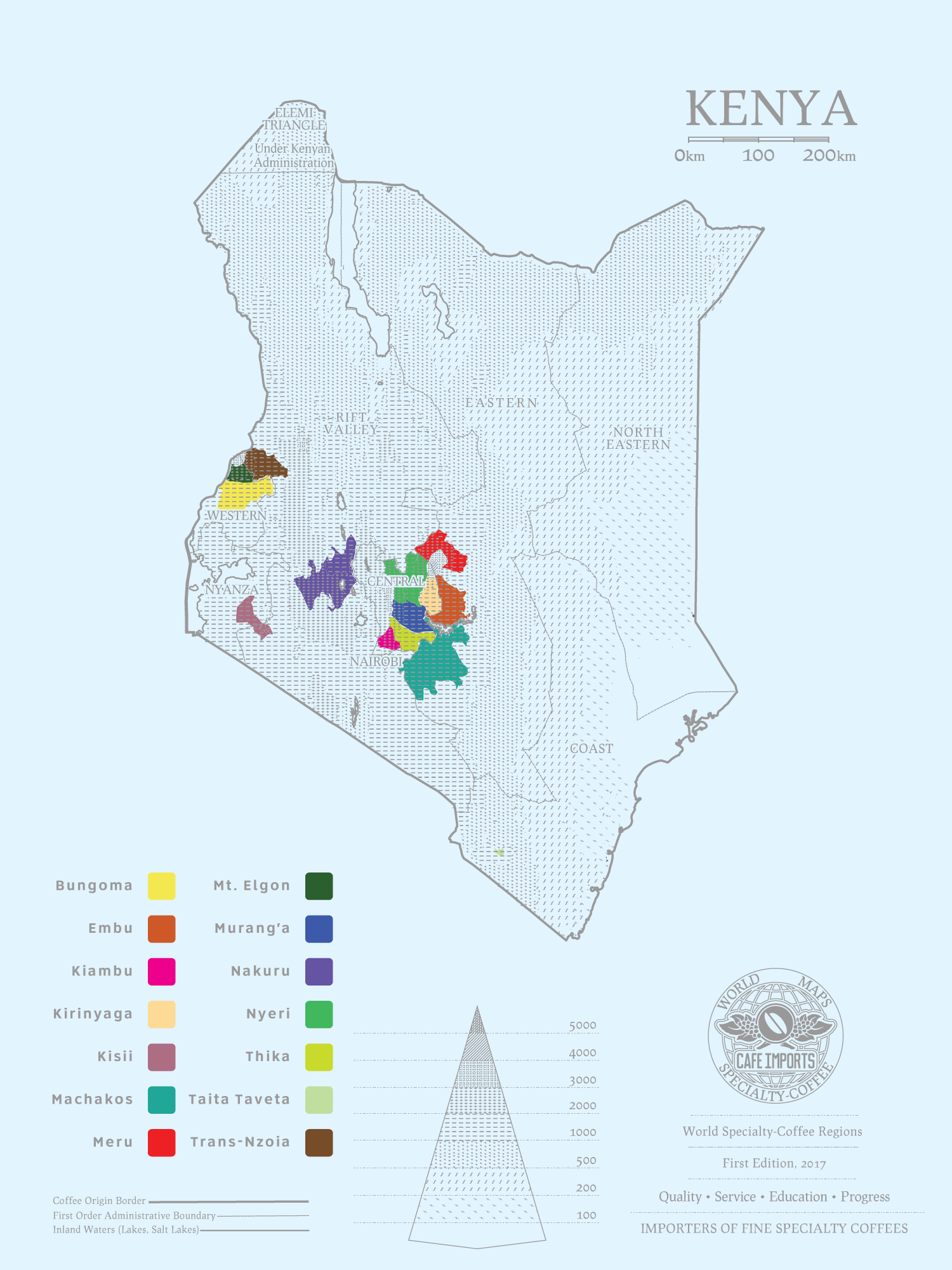
Kenya’s high-quality coffee is primarily concentrated in the central growing regions. According to The World Atlas of Coffee, coffees from Kiambu and Muranga are known for their bright acidity and full body; Nyeri coffees exhibit vivid blackberry-like acidity and rich mouthfeel, often accompanied by citrus or floral notes; Kirinyaga coffees are distinguished by bright fruit acids, moderate body, and delicate sweetness; Embu coffees offer balanced flavors, medium acidity, and a long aftertaste; Machakos coffees feature refreshing acidity and nuanced flavors; Kisii and Elgon coffees are characterized by solid sweetness and mild profiles.
The grading system of Kenyan coffee is mainly based on bean size and divided into eight grades: E (Elephant bean), PB (Peaberry), AA, AB, C, TT, T, and MH/ML. Among them, Grade AA (17/18 mesh) is the most common premium grade, while PB-grade peaberries, due to their rare production and concentrated flavors, also attract significant attention. It’s important to note that coffee bean grades are determined by green bean size before roasting, and grading cannot be altered through screening after roasting. Grade E elephant beans are the largest in size but are scarce; PB-grade peaberries are a unique single-seed form; Grade AB is slightly smaller (16/17 mesh); grades below C gradually decline in quality; Grade TT, though large in mesh size, has lower density; Grade T is noticeably inferior in quality; and Grades MH/ML mostly consist of overripe natural beans.
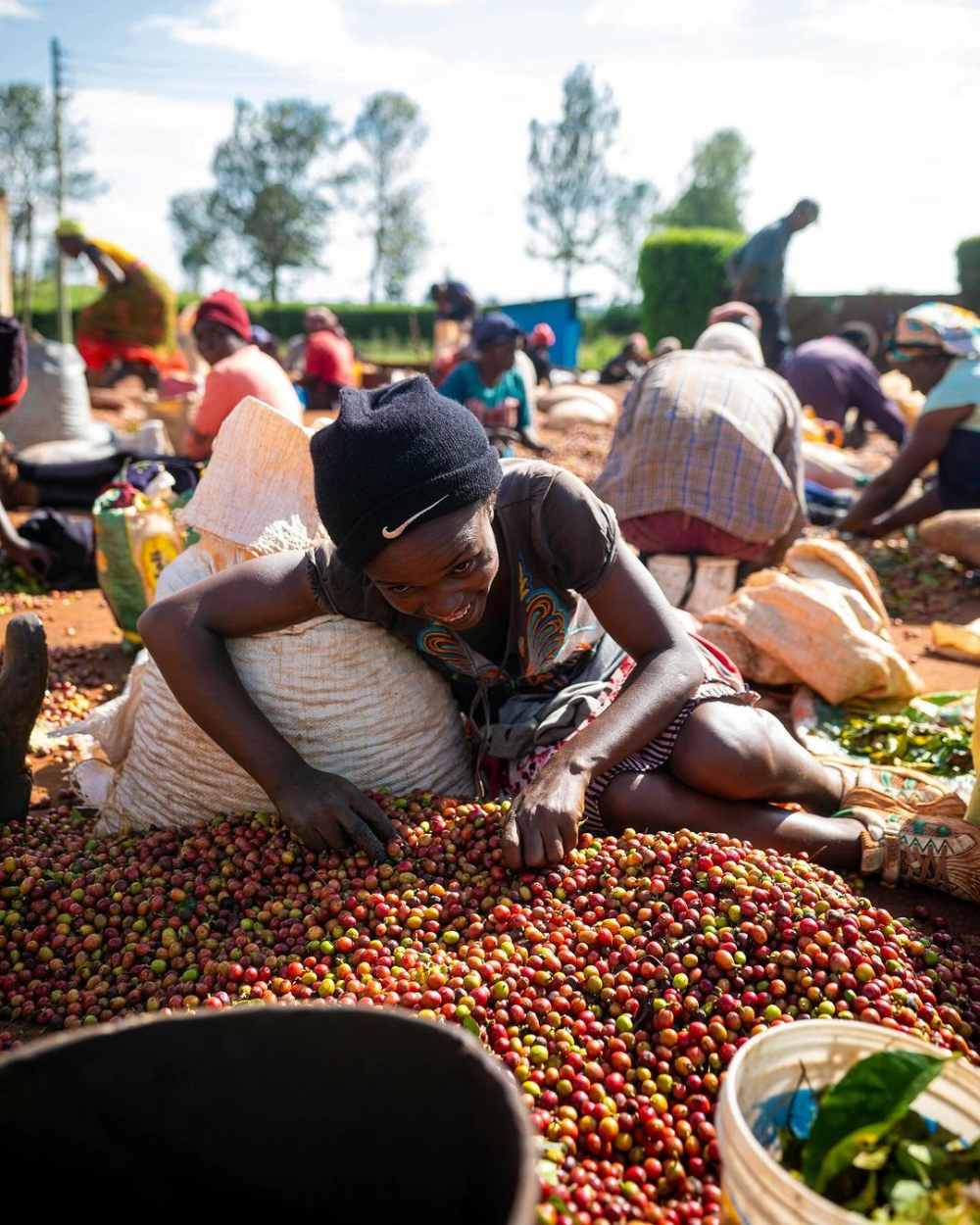
Where does the renowned acidity of Kenyan coffee come from? It is closely related to the local growing environment, variety selection, and processing techniques. Kenya’s red volcanic soils are rich in phosphates, providing ideal growing conditions for coffee trees. The region primarily cultivates the SL28 and SL34 varieties, which are Bourbon mutants, and these varieties inherently possess outstanding berry acidity traits. The unique K72 washed processing method of Kenya is also key, as this process can yield clean, bright flavors without sacrificing body.
The K72 washed processing method involves a rather meticulous process: First, the pulped beans (with the skin removed but parchment still on) undergo a 24-hour dry fermentation, during which they are rinsed and drained every 6–8 hours; this is followed by a 12–24-hour semi-wet fermentation, then most of the mucilage is removed by stirring; finally, another 12–24-hour thorough wet fermentation is carried out to completely eliminate residual sugars and mucilage, after which the beans are placed on drying beds. This multi-stage fermentation process fully develops the unique flavor characteristics of the coffee.
Take the Kenyan Assaliya coffee beans as an example. These beans, grown in the Thika region (at an altitude of 1550–1750 meters) and using the SL28 and SL34 varieties, exhibit typical Kenyan flavor profiles after K72 washed processing. Recommended pour-over parameters are: using a Hario V60 filter, water temperature of 90–93°C, 15 grams of coffee, a 1:15 coffee-to-water ratio, and grind size roughly equivalent to 80% passing rate of a Chinese standard No. 20 sieve (EK43s #10). Employ a three-stage pouring method: first, pour 30 grams of water for a 30-second bloom; second, pour in circles up to 125 grams, then continue pouring after the water level drops to reach 225 grams, with a total extraction time of about 2 minutes.
In addition to pour-over, Kenyan coffee is also well-suited for making SOE (Single Origin Espresso). Commercial espresso machines such as the Lelit Bianca (with a maximum pressure of 11 bar) or home machines (9 bar and above) can be used. It is recommended to use a double shot basket (about 18–20 grams of coffee), with a 1:2 brew ratio (extracting 40 grams of coffee from 20 grams of grounds), and extraction time controlled within 28–30 seconds. Ensure the portafilter basket is dry, and distribute and tamp the coffee grounds evenly to ensure stable extraction.
The brewed Kenyan SOE can be enjoyed directly, and it is recommended to cleanse your palate with water. If you find the espresso too intense, you can adjust it to your preference: mix with cold or warm water to make a 1:4 ratio SOE Americano, or add 1:6 ratio fresh cream to make an SOE latte—both can showcase the unique berry flavor characteristics of Kenyan coffee.
The above content is compiled by CoffeeHunters, a coffee news website.


