








Introduction:The coffee beans commonly used for American-style black coffee mostly come from the Arabica species. These beans not only have delicate flavors but also richer aromas, making them the mainstream choice in specialty coffee. What kind of environment is suitable for growing Arabica? How does it differ from Robusta? This article will delve into the main producing regions and variety characteristics of Arabica, including Typica, Geisha, Bourbon, Caturra, and Kenya SL28 and SL34, helping you understand the key factors that influence coffee flavor.
Many office workers are accustomed to starting their day with an iced Americano, letting the rich aroma of coffee invigorate their spirits. But do you know what kind of beans are typically used to make these black coffees? In fact, most Americanos on the market are made from Arabica beans, which are favored in the specialty coffee market for their delicate taste and diverse aromas.
Commercial coffee beans worldwide are broadly divided into two categories: Arabica (Coffea Arabica) and Robusta (Robusta). There is also a third type, Liberica (Coffea Liberica), but due to its unremarkable flavor and scarce production, it rarely circulates. As the mainstay of specialty coffee, Arabica has very high requirements for growing conditions, which contribute to its unique flavor profile.

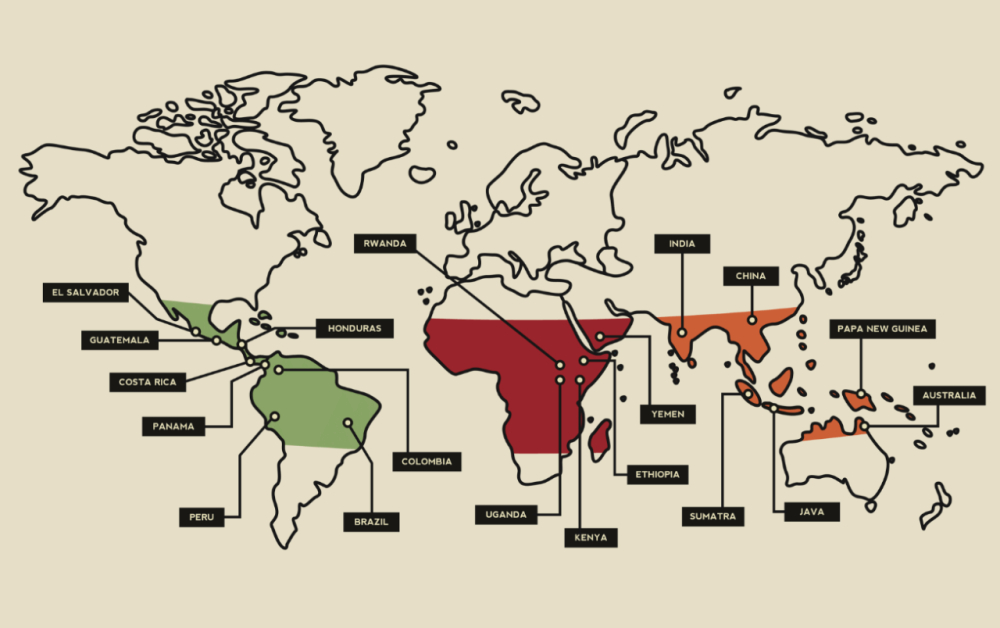
Coffee trees primarily grow within the "coffee belt" between the Tropic of Cancer and the Tropic of Capricorn, covering about 70 countries and regions globally. This region offers the stable high temperatures, ample rainfall, good sunlight, and well-drained fertile soil needed for coffee cultivation. Places such as Brazil, Colombia, Ethiopia, Kenya, and Yunnan in China are located within this coffee belt, and the microclimatic differences across these areas allow Arabica to showcase a diverse range of flavor potentials.
Compared to Robusta, Arabica requires more stringent growing conditions. It is typically planted at altitudes between 800 and 2200 meters. The higher the altitude, the greater the diurnal temperature variation, and the slower the ripening of coffee cherries, which helps accumulate flavor compounds and results in more robust aromas. Additionally, high-altitude regions usually come with stable rainfall, moderate sunlight, and loose, fertile, well-drained soil, though the planting difficulty and cost are relatively higher.
Robusta, on the other hand, contains caffeine levels as high as 2.7% to 4%—twice that of Arabica—giving it stronger natural pest resistance and lower planting barriers. However, its flavor often carries noticeable notes of nuts, grains, or earthiness, with a bold body and low, muted bitterness. It is mostly used in dark roasts or instant coffee production. With the rise of specialty coffee culture, consumers increasingly favor the complex flavor profiles of Arabica, making it the market mainstream.
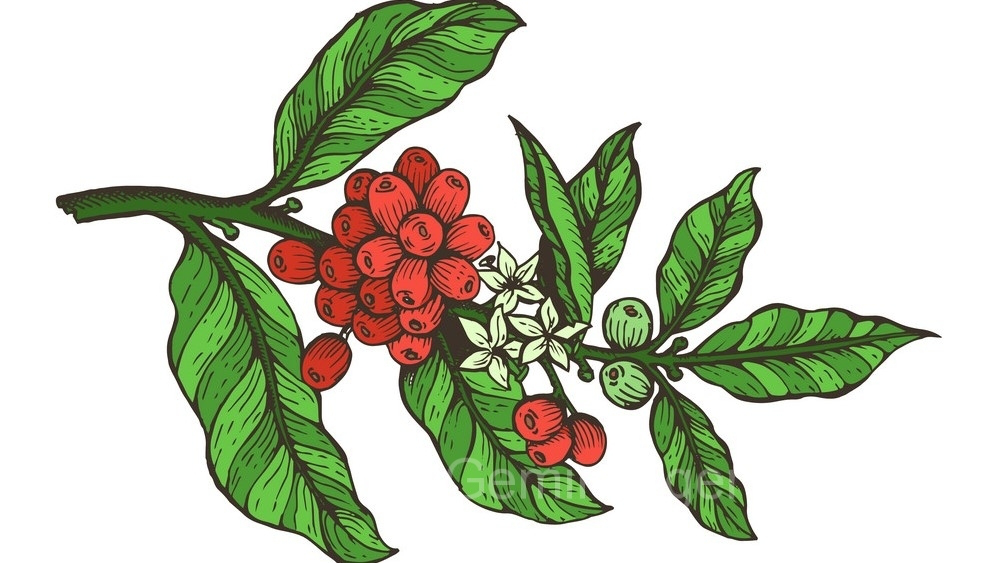
Arabica comes in many varieties, among which the most representative include Typica, Geisha, Bourbon, Caturra, and Kenya’s SL28 and SL34. These varieties mostly originate from ancient Ethiopian landraces, later transplanted and mutated to develop unique flavor characteristics in different regions.
Typica from Jamaica
Typica is the oldest native coffee variety in Ethiopia, discovered around the 15th to 16th centuries. It has a tall tree structure, with leaves that have a bronze hue at the tips, and coffee beans that are long and slender with pointed ends, resembling eggs. Typica coffee often features bright citrus acidity and a sweet aftertaste, and is regarded as one of the most elegant and pure varieties. However, it has relatively low yields and weak resistance to leaf rust, gradually being replaced by other varieties.
In the 18th century, Typica was introduced to Jamaica by Sir Nicholas Lawes and took root in the Blue Mountains. After long-term adaptation, Blue Mountain Typica developed stronger disease resistance, particularly against coffee berry disease. The region’s unique island-type tropical rainforest climate and high-altitude microenvironment give Blue Mountain coffee its delicate and balanced flavor. One coffee shop uses a medium-dark roast to fully highlight the chocolate and nutty aromas of Blue Mountain coffee, while preserving its soft acidity and sweetness, resulting in a well-balanced overall taste.
Geisha from Panama
The Geisha variety originates from Ethiopia and is a derivative of Typica. It has now become one of the representatives of specialty coffee. Geisha is extremely picky about its growing environment, requiring high altitudes, fertile soil, and protection from clouds or shade to avoid intense sunlight. The Finca El Velo estate has noted that growing Geisha requires a lot of shade trees, and traditional pruning is also needed in the early stages, otherwise the plants may easily die.
Geisha coffee trees have thinner leaves, resulting in lower photosynthesis efficiency, and their root systems are fragile, absorbing water and nutrients slowly. Therefore, yields are scarce, especially at high altitudes where fruit ripening takes longer and flavors become even more complex. Currently, Geisha is grown in places like Panama, Guatemala, and Colombia, with Panamanian Geisha being the most highly regarded. Finca El Velo’s Geisha is categorized into Red Label, Green Label, and Volcanic grades, with aromas that include rose, citrus, berries, and honey, making it a favorite among coffee enthusiasts.
Bourbon from Brazil
Bourbon is a natural mutation of Typica, with beans changing from slender to rounder in shape. It was first discovered on the island of Bourbon (now Réunion) off the east coast of Africa and was introduced to Brazil in 1727. Compared to the delicate Typica, Bourbon has stronger resistance to leaf rust and, when grown at high altitudes, can showcase delicate and rich aromas with soft acidity.
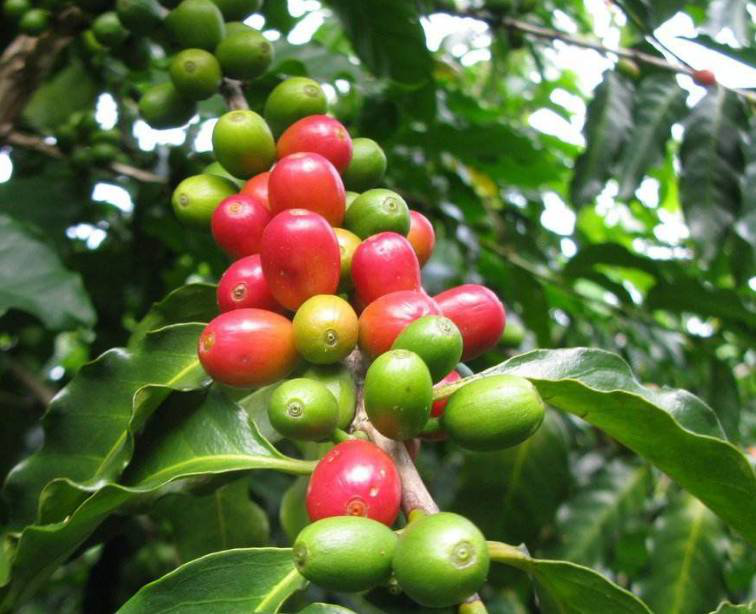
Bourbon coffee cherries change color from green to yellow, then orange, and finally deep red as they ripen—the so-called red bourbon. Brazilian coffee is generally low in acidity but has a rich aroma and a smooth mouthfeel. One coffee shop selected a semi-washed red bourbon with flavors dominated by nuts and chocolate, paired with moderate caramel sweetness, offering a balanced taste suitable for beginners as an introduction to regional flavors.
Caturra from Central and South America
Caturra is a natural mutation of Bourbon, discovered in Brazil in 1937. It has a shorter tree structure, and although its disease resistance is average, it can be densely planted with a high fruit yield, outperforming Bourbon in production. It is widely grown in Central and South America. Caturra thrives at altitudes between 700 and 1700 meters, with better flavors at higher altitudes, though yields slightly decrease.
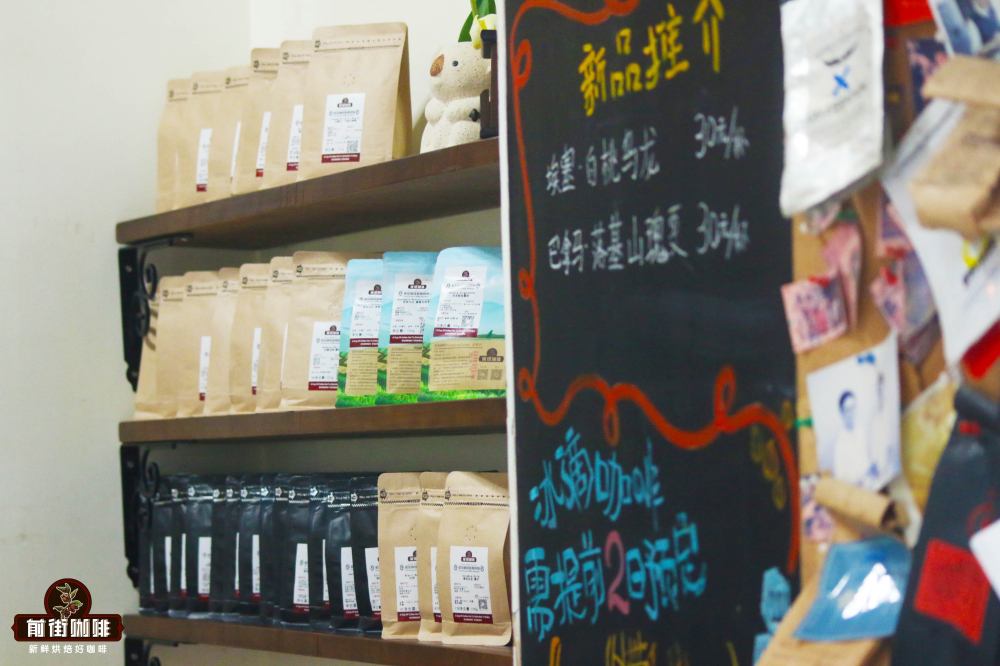
In terms of flavor, Caturra has bright acidity with rich fruity notes. After medium-dark roasting, it exhibits aromas of chocolate and nuts, often receiving praise in coffee competitions. A coffee shop’s recommended Colombian everyday drinker bean uses washed Caturra, highlighting nutty, dark chocolate, and caramel aromas through medium-dark roasting, showcasing the classic characteristics of the region.
SL28 and SL34 from Kenya
Between 1935 and 1939, the Scott Laboratories named a series of selectively bred varieties with the prefix SL, among which SL28 and SL34 are the most well-known. SL28 originates from the Bourbon genetic group, with short, round beans that are thick-bodied, featuring bright acidity and outstanding sweetness; SL34 comes from the Typica genetic group, with oval, slightly flat beans, offering a balanced sweet and sour flavor with a caramel-like aftertaste.
A coffee shop’s Kenyan Assaria coffee beans combine these two varieties. Through a 72-hour washed process, they showcase complex acidity notes such as plum, brown sugar, black plum, and cherry tomatoes, with rich flavor layers.

The above content is compiled by CoffeeHunters, a coffee news website.


