







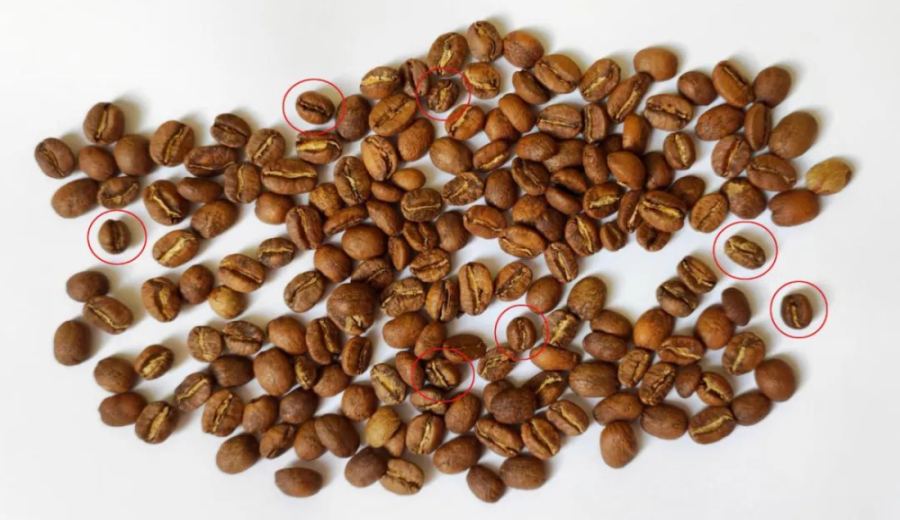
Introduction:Have you ever noticed a few oval-shaped beans mixed in with your coffee beans while brewing? These so-called "peaberry" beans are often mistaken for "male beans," and there’s a common belief that they have superior flavor and greater rarity. However, the difference between peaberries and regular flat beans primarily stems from a growth variation during development, not gender. This article explores the botanical reasons behind peaberry formation, compares their actual differences with flat beans in size, grading, flavor, and roasting, and debunks common market misconceptions.
When selecting coffee beans, observant individuals might notice that some beans have a unique shape — they are perfectly oval, unlike the majority which have one flat side and one bulging side. These specially shaped beans are often mistakenly called "male beans," while the flatter ones are referred to as "female beans." In reality, coffee beans have no gender, and these oval-shaped beans are correctly termed Peaberry, commonly translated in Chinese as “圆豆” (round beans).
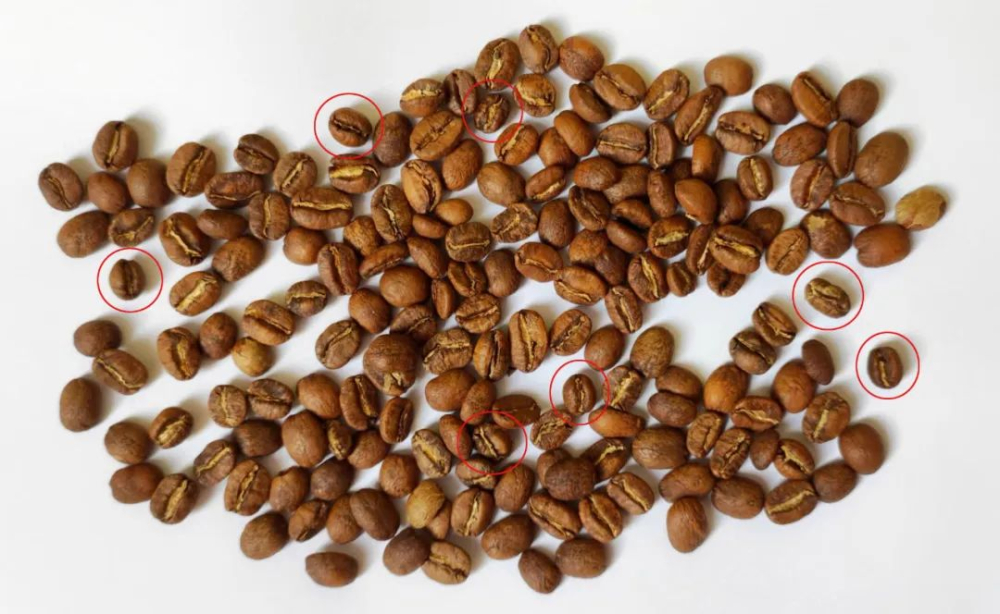
The formation of peaberries mainly occurs due to changes during the development of the coffee fruit. Typically, a single coffee cherry contains two coffee beans, each with a flat side that presses tightly against the other. However, sometimes one of the seeds fails to be properly fertilized, allowing the other seed to take up the space that would have been shared, ultimately developing into a single, rounded bean — this is how a peaberry is formed.
Generally speaking, peaberries of the same variety tend to be slightly smaller in size than flat beans. Taking common coffee bean specifications as an example, flat beans mostly fall within the range of 16 to 18 mesh, while peaberries are generally distributed between 14 and 15 mesh, making them appear smaller and denser overall. Additionally, aside from the common one-cherry-two-beans (flat beans) and one-cherry-one-bean (peaberry) scenarios, there are rare instances where a cherry may produce three beans — known as "triangular beans" — but these are usually considered defective due to incomplete development and seldom appear in specialty roasted beans.
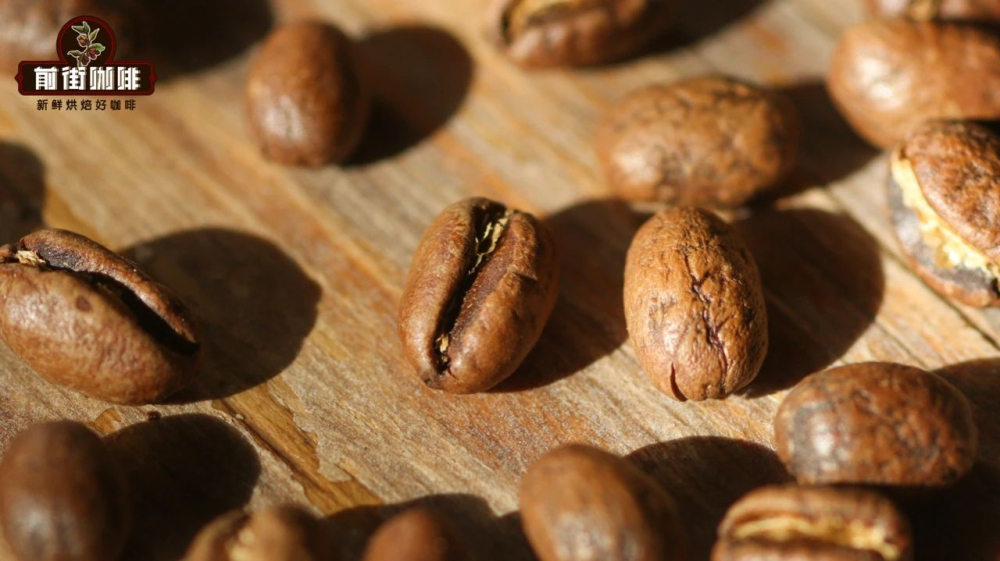
Many well-known producing regions such as Kenya, Tanzania, Jamaica Blue Mountain, and Hawaii Kona separately sort out peaberries and sell them as individual items, often at prices higher than regular flat beans. This leads many consumers to wonder: do peaberries really have a better flavor? In fact, from a flavor perspective, peaberries and flat beans of the same origin and variety show no significant difference in taste. The reason peaberries are separately graded and priced higher is mainly related to the coffee grading systems of various countries.
Many coffee-producing countries tend to grade beans based on size — generally, the larger and more uniform the beans, the higher the grade and price. Since peaberries are smaller in size, if they are mixed into a regular batch of flat beans, they might only qualify for the 14 to 15 mesh grade, resulting in a relatively lower price. However, once they are individually sorted and marketed with the appeal of being “rare,” they can be sold at prices close to or even equal to those of high-grade flat beans of 17 to 18 mesh — this is one of the main reasons why peaberries command higher prices in the market.
From a roasting perspective, however, peaberries have a more uniform shape and similar size, which allows for more consistent heat distribution during roasting. Compared to batches of flat beans with varying sizes, they can sometimes achieve more even roasting results, leading to more stable flavor expression. For baristas or home brewers seeking consistent flavor and optimal extraction, this is undoubtedly a practical advantage. Of course, some producing regions do not use bean size as the primary grading criterion, so they do not specifically remove peaberries — which is also why you might occasionally spot a few peaberries in certain coffee packages.
In summary, the differences between peaberries and flat beans mainly stem from accidental variations during the development process, rather than any so-called gender distinction. Although the market often portrays peaberries as premium, rare, and exceptionally flavorful, they are essentially the same variety as flat beans, with flavor performance determined by origin, processing method, and roast level — not just appearance. For coffee enthusiasts, understanding these differences helps to more rationally assess various marketing claims in the market and make more suitable choices based on personal preferences.
The above content is compiled by CoffeeHunters, a coffee news website.


