







Introduction:Discover how Panama’s Finca El Valle (Emerald Estate) transformed from a ranch into the birthplace of the world’s finest Geisha, its development journey from 1964 to the present, and the differences and characteristics of its Red Label, Green Label, and Blue Label grades. This article provides an in-depth analysis of the origin regions, processing methods, flavor profiles, and recommended pour over parameters for each grade, helping you select and brew this legendary coffee with greater precision.
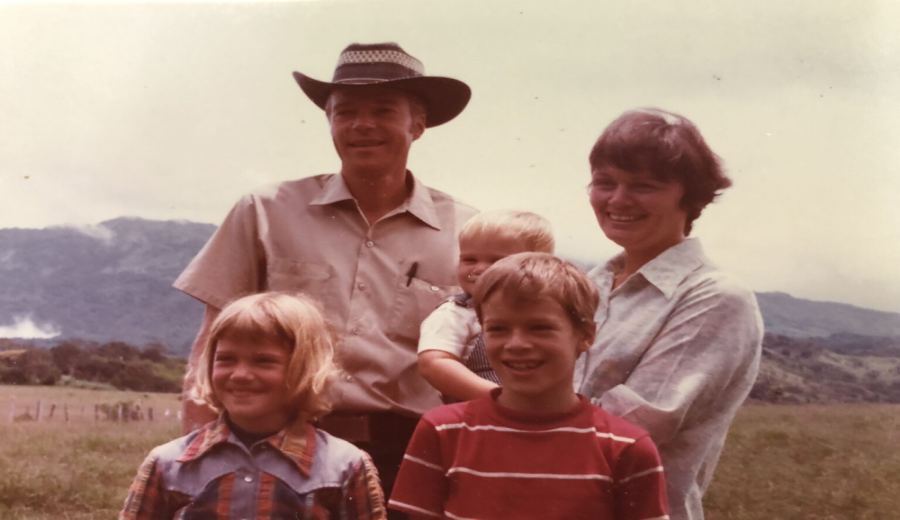
Panama’s Emerald Estate is the cradle that made Geisha coffee famous worldwide. The story began in 1964 when American banker Rudolph Peterson retired and moved to Panama, acquiring a ranch in the Boquete region. Initially, the focus was on livestock farming, with no connection to coffee. It wasn’t until 1987 that his son Price, abandoning his medical career, returned home to help manage the estate, introducing the mainstream coffee varieties Caturra and Catuaí, thus officially entering the coffee cultivation field.
In 1994, the estate built its first washed coffee processing facility, laying the foundation for later in-house processing. In 1996, the Peterson family further acquired the neighboring Jaramillo Estate, a region with high elevation and excellent microclimate that already had coffee plantations, some of which were later found to hold great potential.
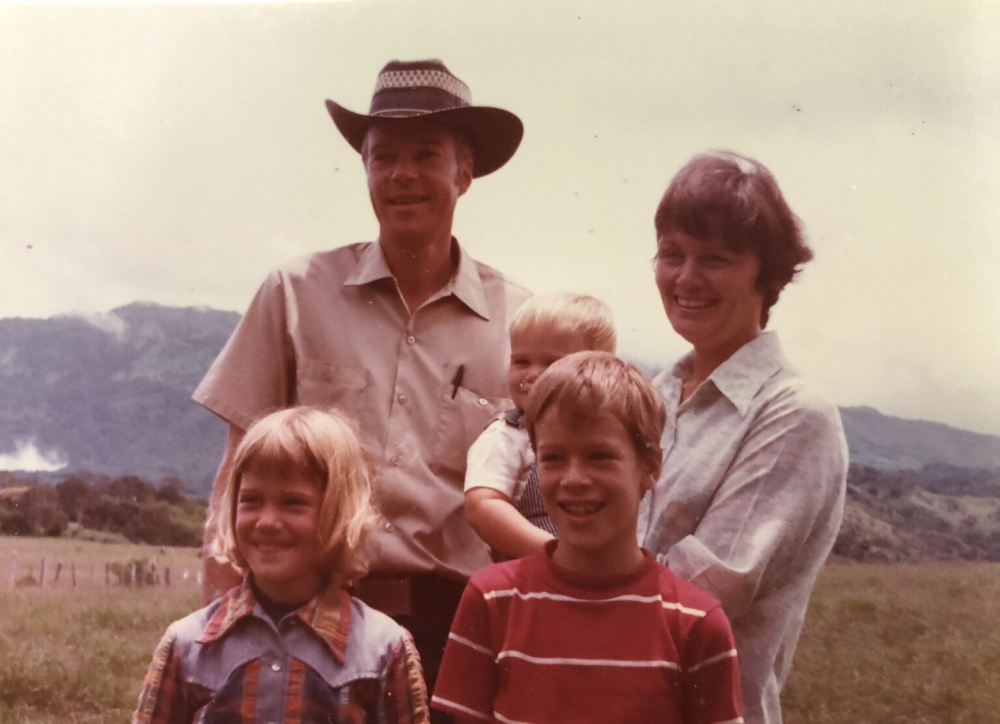
According to records, at that time, Daniel Peterson, who managed Jaramillo, noticed that some coffee trees were growing poorly—tall and spindly with sparse foliage. After being identified by consultant Don Pachi, it turned out they were a variety introduced from Costa Rica thirty years earlier, which had been largely abandoned by farmers due to poor disease resistance. However, Daniel decided to transplant these trees to higher-elevation plots and began studying cupping techniques. These very trees turned out to be the Geisha variety that would later shock the coffee world. In 2004, this ancient Ethiopian variety won the Best of Panama (BOP) competition, forever reshaping the landscape of specialty coffee.
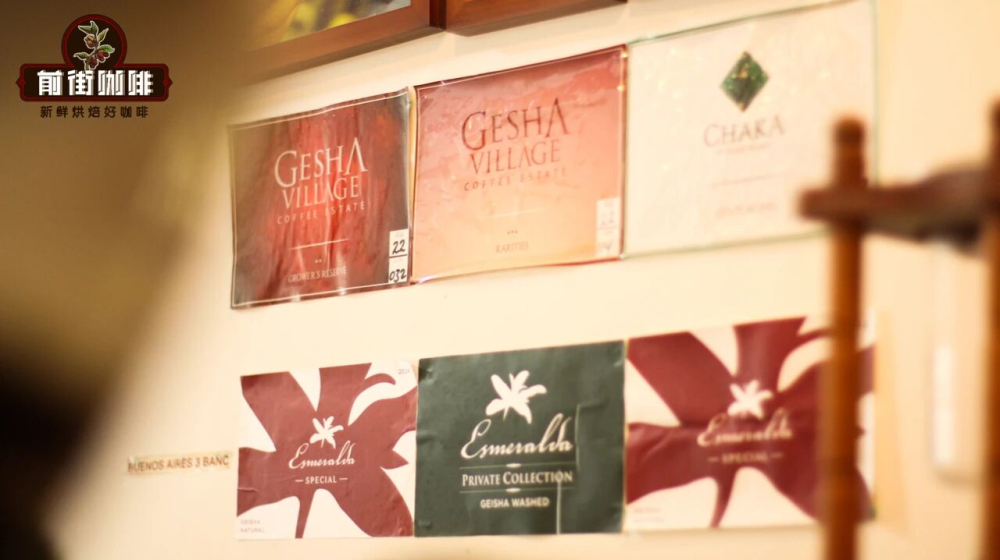
To showcase the purest flavors of Geisha, the Peterson family invested heavily in regional subdivision, meticulous harvesting, and post-harvest processing, also establishing today’s market classification system of Red Label, Green Label, and Blue Label. Among them, Red Label represents auction-grade Geisha, Green Label denotes high-quality micro-lots, while Blue Label is positioned as a more affordable entry-level option.
Emerald Estate Red Label Geisha
Officially referred to as “Emerald Special Selection,” Red Label Geisha is widely recognized as the pinnacle representation of premium Geisha. Its basic criteria include: cultivation at elevations between 1600 and 1800 meters, a cupping score of 90 or above, and limitation to two top-tier micro-regions—Jaramillo and Canas Verdes. Furthermore, Red Label lots typically come from specifically delineated plots and must go through an independent auction process hosted by Emerald Estate to bear the title “Auction Red Label.” It’s worth noting that there are also non-auction versions of Red Label available on the market. These come from the same plots, but did not go through the auction process. Their quality and flavor performance are not inferior, with the main difference being the price.
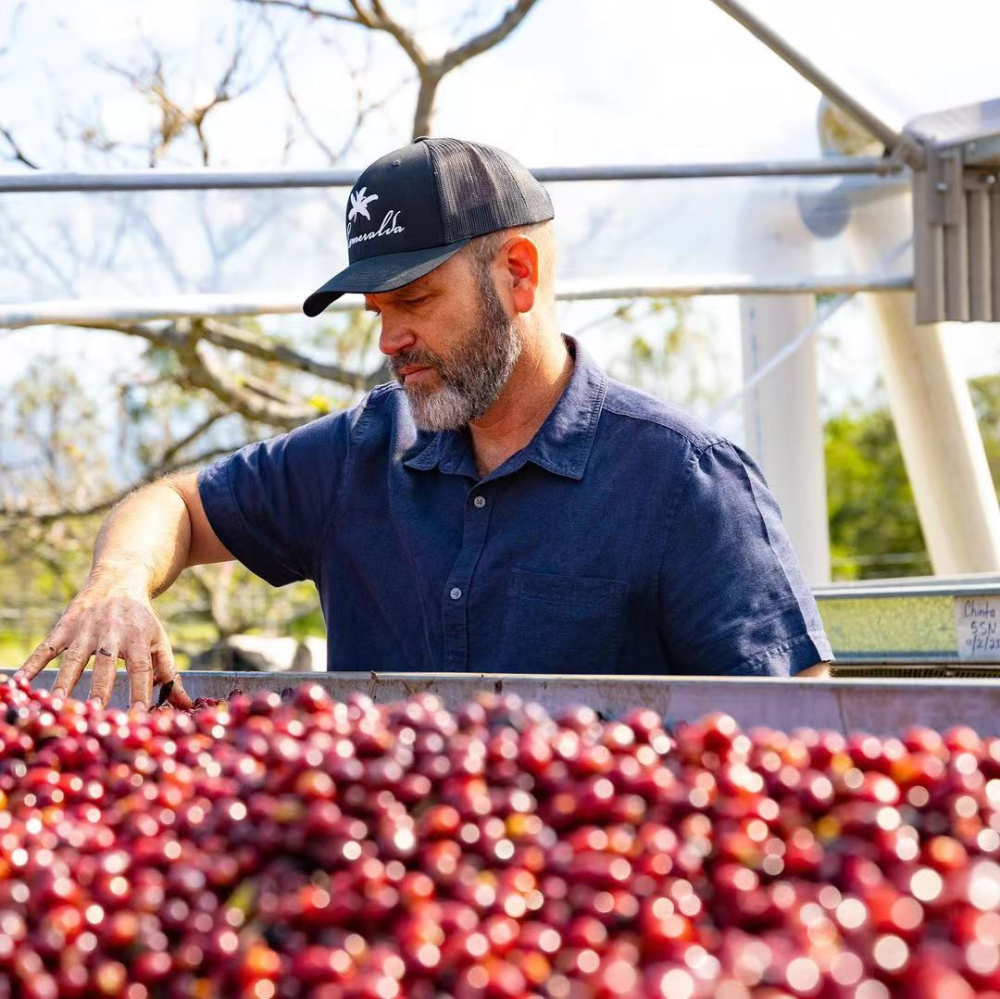
Take “Emerald Estate Red Label Geisha” as an example—it comes from the Mario plot in the Boquete region, at an altitude of about 1600–1700 meters, using the natural (sun-dried) processing method to enhance sweetness and fruity aromas. Its flavor profile often includes citrus, rose tea, honey, along with complex fruits and apricot notes. The cup is rich and layered, making it ideal for coffee lovers who appreciate both fruity and floral notes.
Emerald Estate Green Label Geisha
Green Label Geisha belongs to the “Private Collection Series.” Though it doesn’t participate in independent auctions, it remains a high-standard micro-lot. Sourced from multiple plots—including Jaramillo and Canas Verdes—at elevations between 1600 and 1800 meters, each batch undergoes strict selection. Compared to Red Label, Green Label still retains the classic Geisha traits such as fruitiness, florality, bright citrus acidity, and full body, but overall presents a fresher and more refreshing character, making it a highly cost-effective choice.
The recommended “Emerald Estate Green Label Geisha” also comes from Boquete, at an elevation of 1600–1700 meters, processed using the natural method. The flavor profile includes jasmine, citrus, cantaloupe, and berries. It features a pronounced sweetness on the palate, a long-lasting finish, and lingering floral and fruity aromas, making it highly suitable for everyday drinking or for coffee beginners trying Geisha for the first time.
Pour Over Recommendations and Parameters for Geisha Coffee
To fully experience the delicate flavors of Geisha, freshly roasted beans are essential. It is generally recommended to use beans roasted within five days to achieve optimal flavor expression.
Below are battle-tested pour over reference settings:
• Dripper: Hario V60
• Water temperature: 90°C
• Coffee dose: 15 grams
• Coffee-to-water ratio: 1:15
• Grind size: Medium-fine; it is recommended to use a Chinese standard No. 20 sieve with about 80% passing rate
It is recommended to use a staged extraction technique: First, pour 30 grams of hot water for a 30-second bloom; then pour in small circles to reach 125 grams, then pause; when the water level drops slightly and is about to expose the coffee bed, continue pouring to a total of 225 grams before stopping. Keep the total extraction time around 2 minutes to fully highlight Geisha’s aromatic layers and balanced fruit acidity.
Flavor Summary
Red Label Geisha showcases a rich core of rose and citrus tones, complemented by complex aromas such as black rice, berries, apricots, and honey. The cup is full-bodied, layered, with a prominent sweetness. Green Label highlights elegant floral notes paired with citrus, berries, and green tea undertones, featuring bright acidity and a refreshing finish. Overall, it’s more approachable and easier to enjoy. Whether it’s Red Label, Green Label, or Blue Label, every Geisha holds the essence of Panama’s highland microclimates and is worthy of careful savoring.
The above content is compiled by CoffeeHunters, a coffee news website.


