







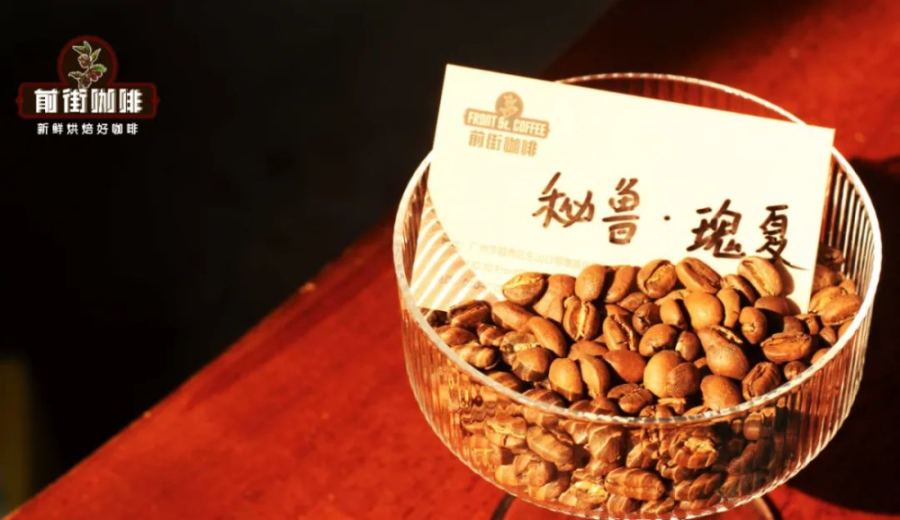
Introduction:Explore Peru, an increasingly notable coffee-growing region, with a special focus on the high-altitude washed Geisha from Cajamarca. This article takes you through Peru’s coffee-growing regions, development history, grading and processing characteristics, and details the flavor profile of a washed Geisha along with recommended pour over brewing methods—giving you a comprehensive understanding from bean to cup.
Among the many coffee-growing regions in South America, although not as well-known as Colombia or Brazil, Peru has gradually carved out a place in the specialty coffee scene thanks to its high altitudes and clean, refreshing flavors. Especially in the Cajamarca region, its washed Geisha is renowned for its delicate floral and fruity acidity layers, making it a hidden gem sought after by many pour over enthusiasts.
 Many people still have a vague impression of Peruvian coffee, thinking it’s not as prominent as other South American regions. In fact, Peruvian coffee is known for its consistent cleanliness and balanced taste, and it is also one of the world’s top producers of organic coffee, highly favored by markets in Europe and the United States. If you’re looking for a fresh, everyday-drinking specialty bean, Peru is a great place to start.
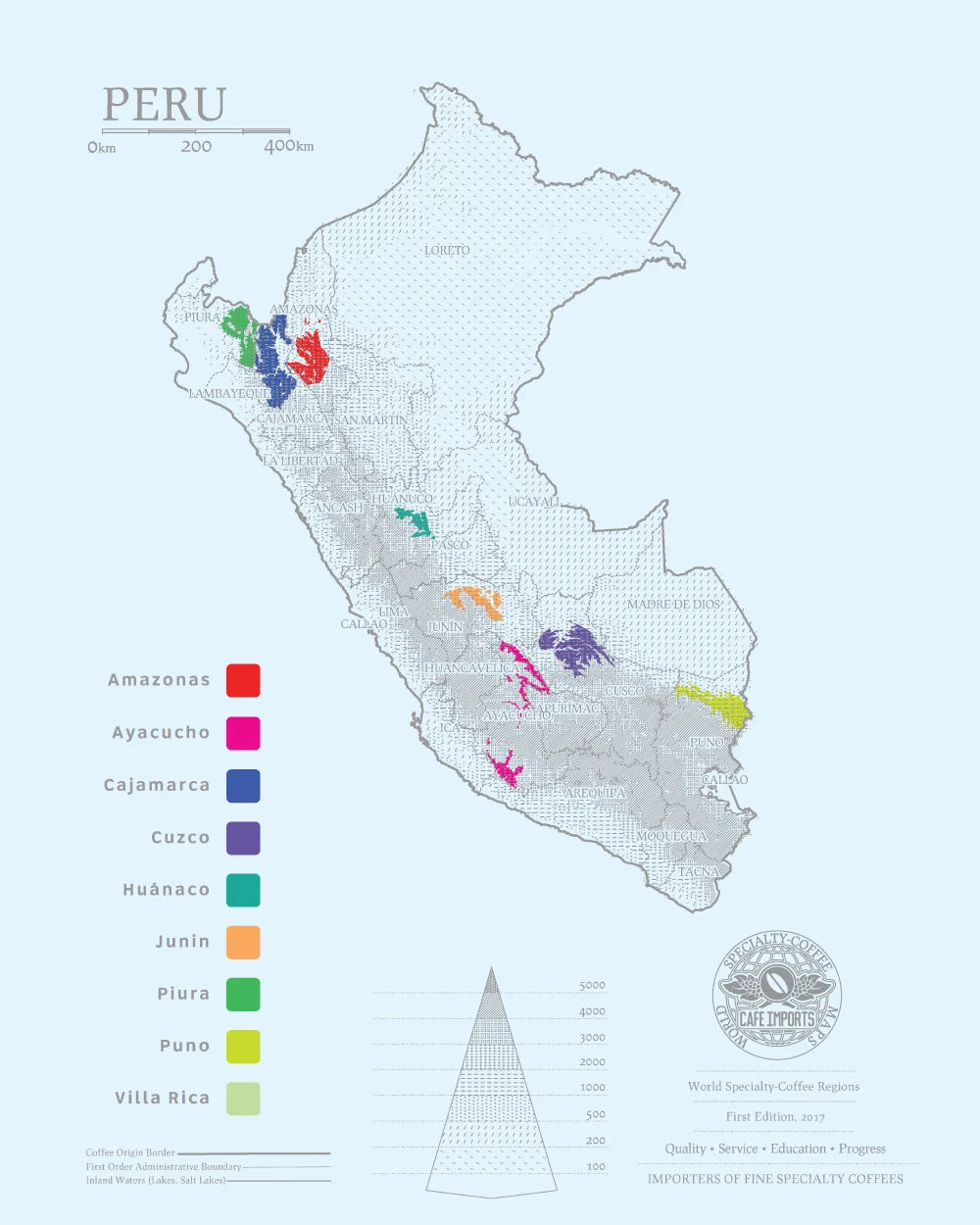
Peru is located in western South America, bordering countries such as Brazil, Colombia, and Ecuador, and faces the Pacific Ocean to the west. The country features diverse terrains, including mountains, plateaus, deserts, and coastlines. Among them, the Andes Mountains run from north to south across the nation and are the main coffee-growing belt in Peru, with an average altitude between 1200 and 2000 meters. The high-altitude environment not only slows down the ripening process of coffee cherries but also helps the beans accumulate richer flavor compounds, resulting in the unique softness and delicacy of Peruvian coffee.
The country’s coffee cultivation can be roughly divided into three major regions: the north accounts for about 43%, at altitudes of 1250–1950 meters; the central region makes up around 34%, at 1200–2000 meters; and the south comprises 23%, ranging from 900 to 2050 meters. The northern and central areas, with their stable climate and fertile soil, are the primary sources of specialty beans.
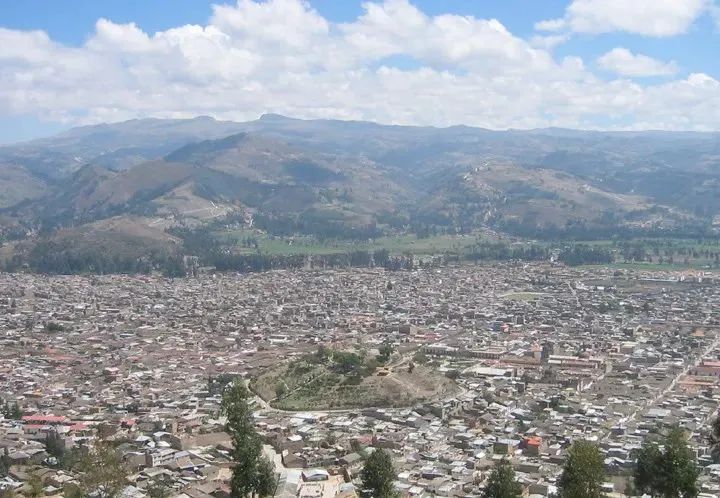 Looking back at the development history of Peruvian coffee, it dates back to the late 18th century when it was introduced by Spanish colonists and was initially grown only as an ornamental garden plant. It wasn’t until after Peru’s independence in 1821, when the government encouraged the planting of cash crops, that commercial production gradually began. By the mid-19th century, influenced by the booming Brazilian coffee industry and the spread of coffee leaf rust, European immigrants started establishing large-scale plantations in the Cajamarca area, bringing in advanced technology and labor, which laid the foundation for Peru’s coffee industry.
However, from the late 19th century to the early 20th century, coffee production in Peru was concentrated in large hacienda systems, making the industry extremely sensitive to international market prices. The Great Depression of 1929 caused coffee prices to plummet by 60%, plunging growers into hardship. It wasn’t until 1968, when the military government implemented land reforms and redistributed land to numerous smallholders, that the previous centralized production model was reversed. But smallholder farming also brought new challenges such as difficulties in technology transfer and low efficiency.
Starting in the 1980s, with the help of German churches and fair trade organizations, coffee cooperatives were established in the northern regions. Through collective purchasing and shared technology, production quality and market competitiveness were improved. Subsequently, organic and Rainforest Alliance certifications gradually became important labels for Peruvian coffee, not only enhancing international visibility but also helping consumers better recognize its sustainable and healthy values.
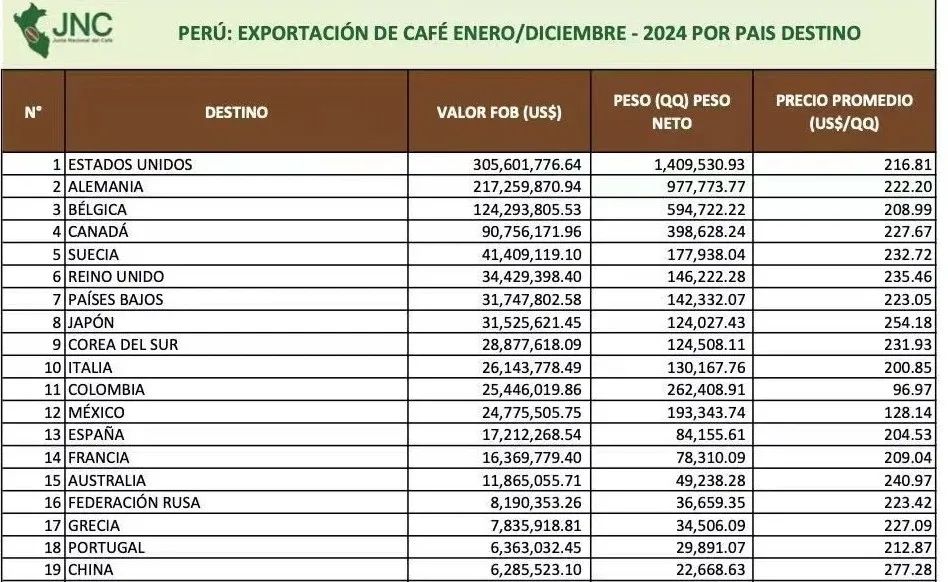
To date, Peru is the world’s ninth-largest coffee producer, with exports reaching 220,000 tons in 2024. Its organic coffee production has also remained the world’s largest for consecutive years, valued at approximately $1.103 billion, primarily exported to the United States, Germany, and Nordic markets. Behind this success lies not only its unique geographical environment but also long-term efforts in promoting sustainable agriculture and fair trade policies.
 In terms of varieties and grading systems, Peru is similar to most South American countries in that it mainly grows Arabica, but its grading standards are unique, primarily using the altitude/hardness grading method. Simply put, the higher the altitude, the greater the density and hardness of the coffee beans, usually indicating richer flavor potential. The washed Geisha from Cajamarca introduced here belongs to the SHB (Strictly High Grown) grade, grown at altitudes of 1800–1950 meters.
In terms of processing methods, due to Peru’s abundant water resources, most coffee is processed using the washed method. This involves removing the pulp, fermenting to remove the mucilage, washing to clean, then either sun-drying or mechanically drying, and finally hulling. This method effectively reduces defect rates and retains a clean, clear taste. Washed beans typically exhibit bright acidity, delicate fruit notes, and a full body, making them very suitable for pour over enthusiasts who prefer a refreshing flavor.
The focus of this feature is the Cajamarca region, located in northern Peru and bordering Ecuador. It is one of the few areas in the Andes that boasts both fertile volcanic soil and diverse microclimates. The high altitude and significant day-night temperature variations have made this region a preferred planting ground for early European immigrants. Today, local smallholders possess rich experience, growing not only traditional Typica but also introducing specialty varieties like Geisha, making it a rising star in the specialty coffee world.
To deeply experience the charm of the Cajamarca washed Geisha, it is roasted to a medium-light level to preserve its inherent floral and fruity tones, as well as its tea-like mouthfeel. Below are the detailed parameters of this coffee:
Country of origin:Peru
Region:Cajamarca
Altitude:1800–1950 metres
Variety:Geisha
Processing method:Washed
Grade:SHB
Flavor profile:White floral, prune, citrus, juicy, black tea
During cupping, the dry fragrance carries strong floral notes, accompanied by fresh berry and citrus aromas. When hot water is poured, it releases sweet scents of peach and caramel. On the palate, the first impression is soft white floral notes, followed by bright citrus and prune acidity with lively vibrancy. When aspirated, a juice-like texture is distinctly perceptible, and the finish leaves a mellow aftertaste of black tea and caramel, offering an overall refreshing and layered taste. As the temperature drops, the acidity becomes even brighter, and the sweetness presents itself in a round, apricot-like manner, with a long and comfortable aftertaste.
 If you plan to brew this Cajamarca washed Geisha at home, it is recommended to use medium-light roast parameters: a coffee-to-water ratio of 1:15, a water temperature of about 90–92°C, a grind size between medium-fine (such as BG 6K or equivalent pour over fineness), using a three-pour or center pour technique, with total extraction time controlled between 2 minutes 30 seconds and 3 minutes. Be careful not to over-extend extraction to avoid amplifying astringency and affecting overall balance.
In summary, although Peruvian coffee may not be as prominent on the international stage as other regions, its high-altitude washed beans exhibit cleanliness, delicate acidity, and fruity-tea undertones that have quietly won over the hearts of many coffee aficionados. The Geisha from the Cajamarca region is truly outstanding, making it a perfect choice for coffee lovers eager to explore new regions and experience refined flavors.
The above content is compiled by CoffeeHunters, a coffee news website.


