







Introduction:Panama Geisha from Hacienda Esmeralda has long been a standout in the specialty coffee world, but the differences between its Red Label, Blue Label, and Green Label often leave people puzzled. This article delves into the grading logic of Hacienda Esmeralda’s Geisha, analyzing everything from altitude, processing methods, cupping scores to flavor profiles. We’ll break down the key differences between the Red and Blue Labels, offer expert pour over recommendations and practical parameters to help you choose the right grade of Geisha and brew flavors close to competition level at home.
In the world of specialty coffee, Panama Hacienda Esmeralda’s Geisha is undoubtedly a star variety. However, with various grades such as Red Label, Blue Label, Green Label, and auction lots, many coffee enthusiasts often find themselves confused. What exactly do these labels represent in terms of quality and origin? And what criteria does the Peterson family use to distinguish them? Below, we’ll take a detailed look at Hacienda Esmeralda’s Geisha grading system, guiding you from altitude and processing methods to cupping scores, so you can fully understand the real differences between the Red and Blue Labels.
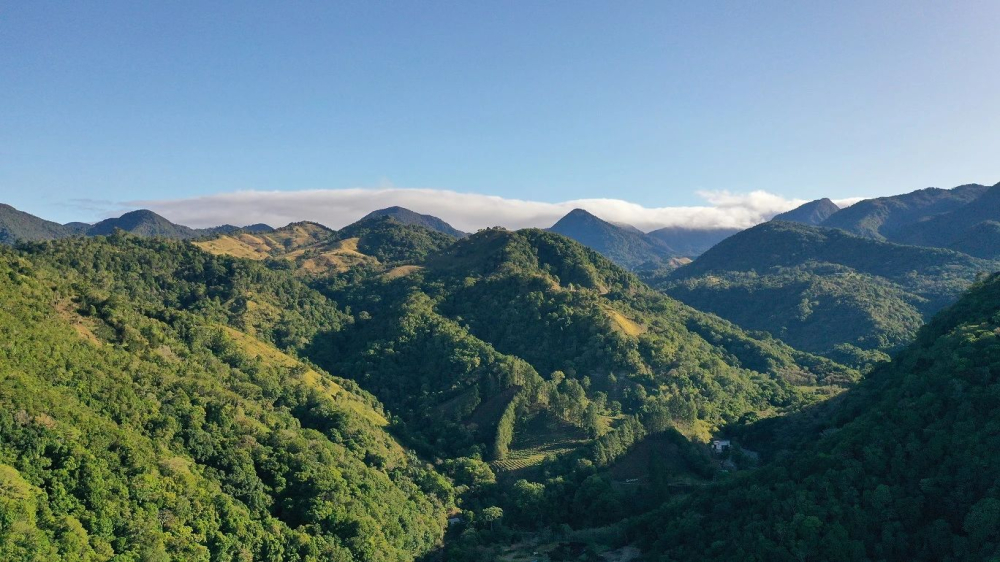
Located in the Boquete region of Panama, Hacienda Esmeralda boasts an exceptionally favorable geographical environment, making it a cradle for top-tier Geisha. The estate lies on the eastern side of the Barú Volcano, benefiting from significant day-night temperature variations, fertile volcanic soil, and an average annual rainfall of up to 3,500 mm — all of which contribute to the delicate and complex flavor profile of its Geisha coffee. As early as 2004, Hacienda Esmeralda won first place in the Best of Panama (BOP) green bean competition with its Geisha variety, thereby establishing its international reputation.
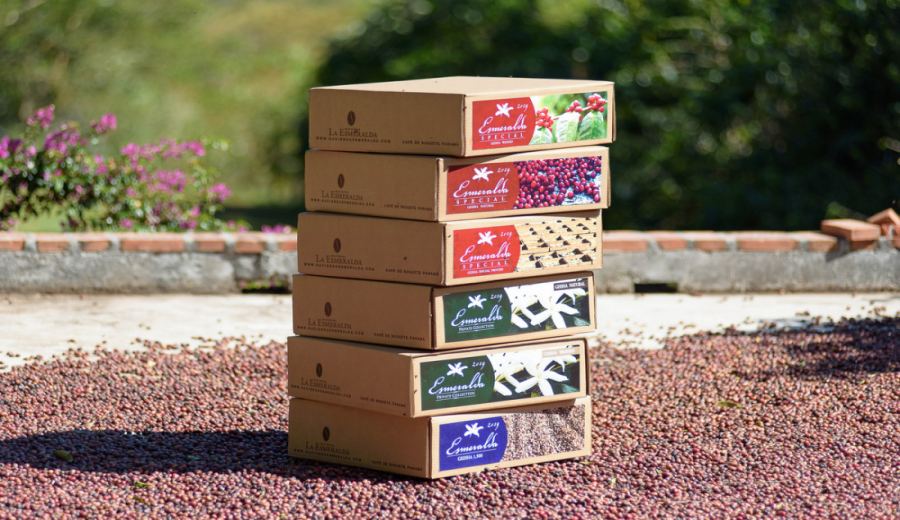
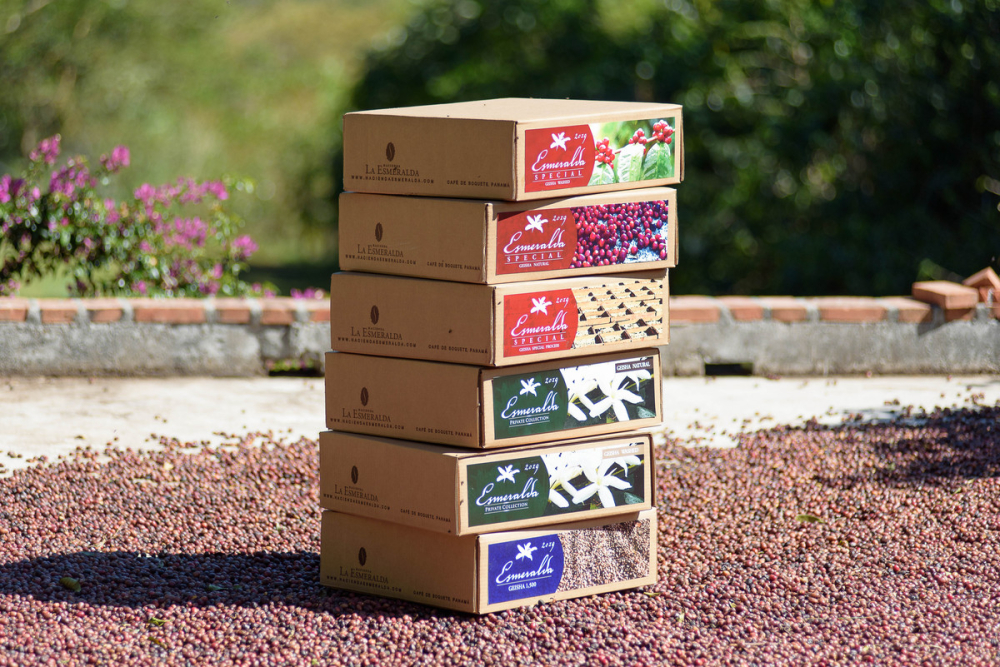
Hacienda Esmeralda maintains a very strict grading system for its Geisha, primarily divided into four categories: auction lots, Red Label, Green Label, and Blue Label. Among them, the Red Label (Esmeralda Special) represents the highest quality, requiring a planting altitude ofabove 1600 meters, and a cupping score of91 points or above. Each batch comes with detailed information about its origin and processing, making it the universally acknowledged premium-grade Geisha on the market. The Blue Label (Geisha 1500), on the other hand, was previously designated for Geisha grown at altitudes between 1400 and 1500 meters, mainly using washed processing and blending beans from different sub-farms.It was discontinued after 2019 to 2022, and nowadays the market mainly offers only the Red, Green, and auction grades.
Interestingly, the names of these grades mostly come from the color design of their packaging labels. The Red Label is known for its label featuring a red coffee blossom pattern; the Green Label (Private Collection) has a green base; while the Auction (Esmeralda Auction) primarily uses a gray theme and is only available through auctions. For consumers, color is the most intuitive way to identify the grades, but when it comes to the English names, many find it hard to distinguish the hierarchy. Therefore, understanding the actual standards and origin details of each grade is the key to selecting quality beans.
Behind the Red Label Geisha is not just a score guarantee, but also complete traceability information, including planting plots, altitude, tree age, harvest date, processing method, and cupping flavor notes. Taking a recently circulated Red Label batch as an example, it comes from Hacienda Esmeralda’s sub-farm — Canas Verdes. This planting area, located on the eastern slope of the Barú Volcano, spans 11 small plots with altitudes ranging from 1500 to 2050 meters. The Geisha produced from the “Sugarcane Plot” was harvested on February 13 this year, then underwent25 days of slow sun-drying, imparting the coffee with intense floral and fruity aromas. Its flavor profile includes multiple notes such as jasmine, cranberry, passion fruit, citrus, and cinnamon.
To fully experience the delicate flavors of Red Label Geisha, pour over technique and parameters are particularly crucial. Considering the rich fruit acidity and slight fermentation character brought by the natural processing, it is recommended to use a slightly higher water temperature and a larger coffee-to-water ratio, enhancing body and sweetness through pulsed pouring. Below are the recommended pour over parameters for Red Label Geisha based on practical testing:
Coffee dose: 15 grams
Coffee-to-water ratio: 1:16
Grind size: EK43s setting 10 (medium-coarse to medium-fine)
Filter: V60
Water temperature: 93°C
Water is poured in four stages:
1. The first pour of30 grams of hot waterfor a 30-second bloom to ensure even pre-wetting of the coffee grounds;
2. The second pour usesa 4ml/s fine streamcircled from the center, pouring70 grams, taking about 45 seconds to reach 100 grams total;
3. The third pour also uses4ml/sa slow pourof 70 grams, reaching about 170 grams at around 1 minute and 10 seconds;
4. The final fourth pour of70 gramsis completed at around 1 minute and 35 seconds for a total of240 gramsof water.
This brewing strategy fully highlights the aroma and layered flavors of Red Label Geisha. Upon tasting, you can perceive distinct notes of jasmine, citrus, and tropical fruit acidity. As the coffee cools, sweetness and a tea-like aftertaste gradually emerge, resulting in a full-bodied and balanced mouthfeel.
In summary, Hacienda Esmeralda’s Geisha grading reflects not just price differences, but also varying levels of altitude, processing techniques, and flavor potential. The Red Label, with its stringent standards and full traceability, is the top choice for coffee lovers seeking ultimate flavor. Although the Blue Label has been discontinued, it once offered a great balance of value and quality. Understanding the reasoning behind these grades will give you more confidence in selecting and brewing any Geisha coffee, no matter the label.


The above content is compiled by CoffeeHunters, a coffee news website.


