







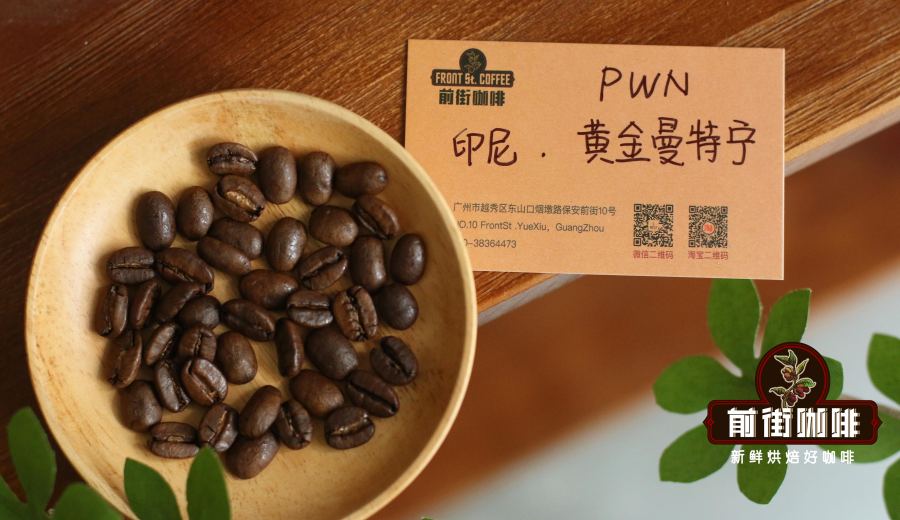
Introduction:As a classic specialty bean from Sumatra, Indonesia, Golden Mandheling’s unique flavor profile is closely tied to why it suits medium-to-dark roasting. This article delves into its regional background, the impact of the wet-hulling process, and explains why many prefer dark roasts to bring out its rich body and spicy notes. Practical pour over parameters are also provided to help you brew its captivating caramel and herbal aromas at home.
Golden Mandheling is a standout specialty coffee representative from Sumatra, Indonesia, and its flavor characteristics pair exceptionally well with medium-to-dark roasting. This roasting style not only highlights its full-bodied texture and caramel sweetness but also effectively reduces its naturally prominent acidity, revealing layers of woodiness, medicinal notes, and spices. What makes this specialty bean from PWN so exceptional? And how can you extract its most captivating expression through pour over or other brewing methods? This article will break it all down.
Many coffee enthusiasts often mistakenly assume that “Golden Mandheling” refers to a grade of coffee, but in fact, it is not a grade—it is a trademark registered by Indonesia’s PWN Coffee Company (short for PWN). Established in 1957, PWN was one of the first to introduce Mandheling coffee to the international market, particularly establishing its reputation in Japan and Taiwan. The brand has long focused on exporting high-quality Sumatran Arabica Mandheling and Robusta beans, known for its stable and high-standard quality control.
The Golden Mandheling sold at this coffee shop is authentic beans from PWN. These beans not only meet Indonesia’s highest Grade 1 (G1) standard but have also undergone at least three rounds of manual sorting and one machine grading, ensuring each green bean is above 18 mesh size, with an extremely low defect rate—no more than 3 defective beans in a 300g sample. The beans are uniformly deep green in color and intact in shape. Such rigorous screening makes these beans top-tier even within the G1 grade.
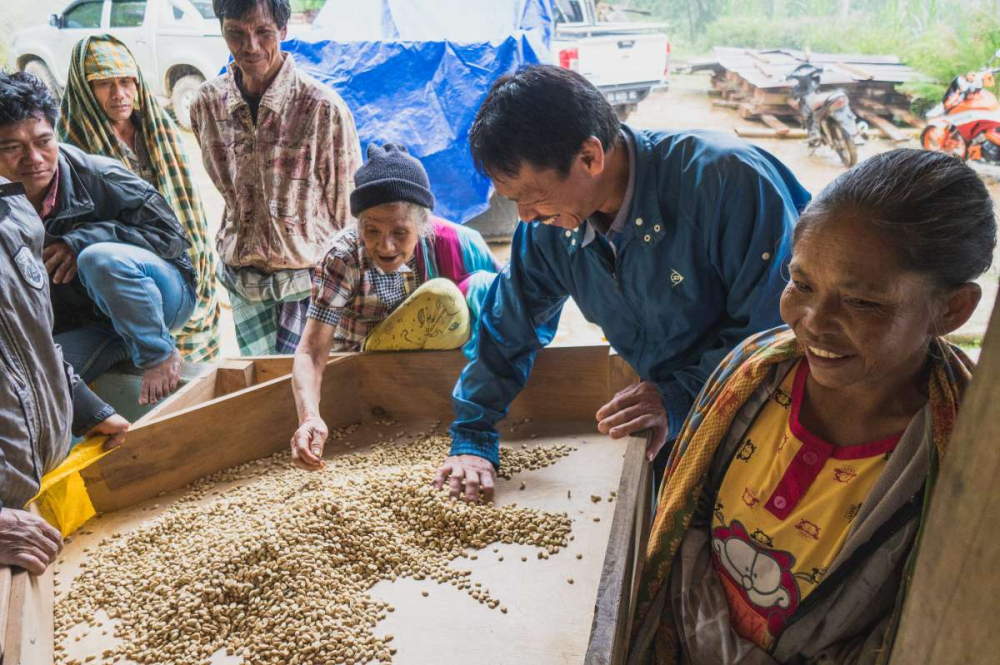
The Toboali and Aceh regions of Sumatra are the main sources of Golden Mandheling. These areas sit at altitudes between 900 and 1600 meters, with a tropical rainforest climate where temperatures remain stable between 25–28°C year-round, humid and without distinct dry seasons—providing an ideal environment for coffee tree growth. However, due to the frequent rain and high humidity in the region, traditional sun-drying methods are less feasible, so wet-hulling is commonly used to process the coffee beans there.
The so-called wet-hulling method involves removing the outer parchment layer while the beans are still in a semi-wet state after water fermentation, followed by subsequent drying. This approach allows the coffee beans to enter the drying stage while still containing relatively high moisture content, which in turn develops unique herbal, woody, and medicinal flavor notes during storage. This is one of the key sources of the distinctive aroma for which Golden Mandheling is renowned.
As for why Mandheling generally suits dark roasting, this is closely related to historical drinking habits and local traditions. In the era when acidic coffees were not yet popular, dark roasting was the mainstream, enhancing the coffee’s intense aroma, full body, and rich mouthfeel, delivering a more “bold” experience to drinkers. It is against this backdrop that Mandheling gradually developed the deeply loved flavor profile associated with dark roasting.
To fully showcase the potential of Golden Mandheling, many roasters opt for medium-to-dark or dark roasting to emphasize its caramel, pine, and spice notes, while effectively suppressing overly sharp acidity. This roasting strategy allows this coffee to exhibit distinctly charming yet varied flavor profiles whether brewed via pour over, SOE espresso, or moka pot.
If you’d like to try pour over brewing Golden Mandheling at home, here are some practical suggestions: use a medium-fine grind (about as fine as granulated sugar), set the water temperature between 90–93°C, and maintain a coffee-to-water ratio of 1:15 to 1:16. For brewing technique, a three-pour method is recommended, with total brew time controlled between 2 minutes 30 seconds to 3 minutes. These parameters help balance its body and aroma, making the herbal and caramel notes more pronounced.
Additionally, roasted Golden Mandheling beans typically appear deep black, exuding distinct notes of clove, sandalwood, and herbs. Upon tasting, the acidity is low and stable, with a rich and mellow mouthfeel. Beyond the dominant flavors of robust nuts and caramel, there is also a soft chocolatey aftertaste, with a long and layered finish. Whether you prefer single-origin pour over, espresso, or moka pot, this bean delivers a versatile yet harmonious flavor profile.
The above content is compiled by CoffeeHunters, a coffee news website.


