







Introduction:The Cerrado region of Brazil is renowned for its stable and layered coffee flavors, particularly from the Bourbon variety. This article delves into the geographical and climatic advantages of Cerrado, the technical details of the pulped natural processing method, and the unique flavor differences between Red Bourbon and Yellow Bourbon. It also explores how medium-dark roasting, paired with suitable pour over parameters, can bring out classic chocolate and sugarcane flavors, providing practical brewing suggestions to help you better appreciate the charm of Brazilian specialty coffee.
Among the many specialty coffee regions, Brazilian Cerrado stands out as a key pillar in the specialty market due to its stable output and consistent flavor profile. The Bourbon variety beans from this region typically exhibit pronounced nutty and sweet aromas, gentle acidity, and a well-balanced body, making them widely loved by consumers globally. This article will take you through the region’s environment, processing methods, and the distinct characteristics of different Bourbon varieties to comprehensively analyze the essence of Cerrado coffee, along with practical pour over parameter recommendations.
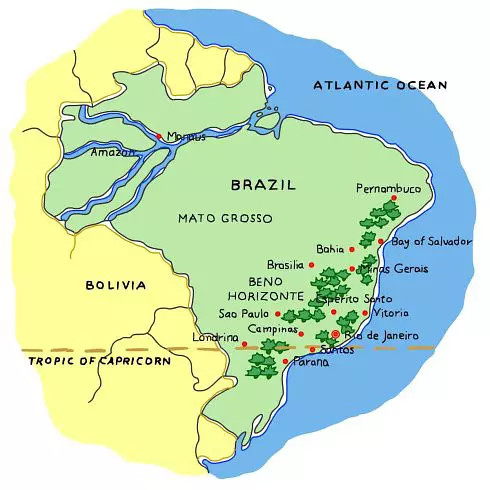
Located in the northwest of Minas Gerais, Brazil, Cerrado is one of the country’s seven major coffee-growing regions. With an annual coffee production of approximately 5 million bags, it accounts for a quarter of Minas Gerais’ total output and contributes about 12.7% of the national yield. Notably, Cerrado is the first Brazilian specialty coffee region to receive Geographical Indication (GI) protection, and its outstanding quality has earned it numerous accolades in the Brazilian Cup of Excellence (COE) competition, solidifying its status as a representative of specialty coffee.
Compared to other Brazilian regions focused on high volume, Cerrado benefits from exceptional natural conditions. The area has an average annual temperature of around 21°C, a stable climate with distinct wet and dry seasons, and coffee cherries primarily ripen between May and September. Additionally, the region’s fertile, mineral-rich soil provides ideal nutrients for coffee plant growth. These conditions collectively contribute to Cerrado coffee’s characteristic chocolate and nut base, low acidity, and medium body—making it highly suitable for everyday drinking or espresso blends.
Brazil’s coffee grading system also reflects its pursuit of quality. Locally, coffee beans are categorized into five grades based on taste profiles: 'Strictly Soft,' 'Soft,' 'Softish,' 'Hardish,' and 'Rioy.' High-quality Brazilian beans should showcase a nutty sweetness, low acidity, and a good balance of body and smooth mouthfeel. Cerrado coffee, with its such flavor profile, has become a bestseller in the market.
The clear and balanced flavors of Cerrado coffee owe much to the pulped natural processing method. Originating in the 1990s, this technique strikes a balance between traditional sun-drying and washed processing, developed by Brazilian farmers. Brazil’s dry climate and distinct dry season make sun-drying ideal for coffee cherries, but traditional sun-drying can lead to contamination or earthy flavors due to contact with the ground—hence the evolution of this more refined method.
The specific pulped natural process involves: first removing debris like leaves and stones collected during harvest, then using water flotation to discard unripe cherries. Next, a machine removes the skin and part of the pulp, followed by brief washing (about one hour), though the short fermentation time prevents complete removal of the mucilage layer. Finally, the parchment beans still coated with some mucilage are dried on patios. This method saves water, significantly reduces labor costs, and shortens drying time compared to traditional sun-drying, making it highly popular among Brazilian coffee farmers.
In practice, a brand’s 'Brazil Cerrado Daily Drinker Beans' employs this pulped natural method, with multiple screenings to ensure cleanliness and consistency. Another product, 'Queen Estate Coffee Beans,' takes it further with small-batch sun-drying on African raised beds, effectively avoiding over-fermentation and earthy notes, resulting in a more pronounced sweetness and richer flavor layers.
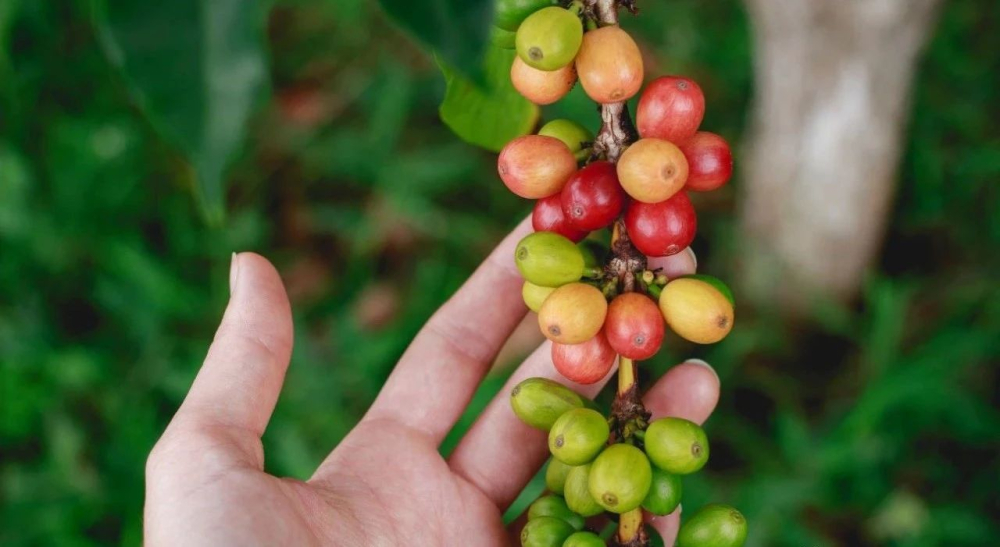
As one of Brazil’s flagship varieties, the history of Bourbon dates back to its introduction in 1927 and subsequent spread across Central and South America. A mutation of the ancient Typica variety, Bourbon beans are relatively rounder in shape. Although slightly lower in yield, they offer stronger disease resistance and, especially when grown at high altitudes, display more complex aromas and sweetness. Red Bourbon, the most common type, turns from green to red upon ripening and features caramel, nutty, and soft acidity profiles. Yellow Bourbon, a Brazilian São Paulo–exclusive variant, ripens to an orange-yellow hue, contains higher sugar content, and often exhibits pronounced sweetness and fruity notes—it has even won multiple awards at Brazil’s Cup of Excellence.
In terms of flavor, high-altitude-grown Bourbon, due to slower growth and denser beans with ample sugar accumulation, often showcases richer aromas and complexity. A brand’s Brazilian Red Bourbon coffee, after medium-dark roasting, delivers intense chocolate and caramel notes, with a full body and sweet lingering finish. Meanwhile, a certain estate’s Yellow Bourbon builds on a base of dark chocolate, cream, and nuts, offering a bright, sugarcane-like sweetness with clear and sustained flavor.
To fully highlight these traits, a brand opts for medium-dark roasting to balance Brazilian coffee’s robust foundation with Bourbon’s delicate sweetness. For home brewers looking to enjoy these flavors via pour over, the following practical parameters are recommended: use water at 87–88°C, with medium-coarse grind (about 70% passing through a Chinese standard No. 20 sieve), a 1:15 powder-to-water ratio, and approximately 15 grams of coffee. The brew can follow a three-pour method: start with a small amount of hot water (about double the coffee weight) for a 30-second bloom, then circle inward-outward to reach 125 grams for the first pour, wait for the bed to drop, then pour to 225 grams. Total extraction time is about 2 minutes, finishing with a gentle stir before enjoyment.
This brewing approach helps control extraction rates, avoiding bitterness from over-extraction, while designs like the KONO filter can further enhance body and smoothness. The stable performance of Cerrado coffee makes it an excellent entry point into specialty coffee, offering something for everyone—whether you prefer chocolate tones or seek sweet fruitiness.
The above content is compiled by CoffeeHunters, a coffee news website.


