








Introduction:Costa Rica is renowned for its high altitude and volcanic soil, nurturing specialty Arabica coffee with bright acidity and high cleanliness. This article delves into the strengths of Costa Rican coffee—from its cultivation history and the characteristics of its eight major producing regions, to the traits of its mainstream varieties and the altitude-based grading system. It also combines practical cupping experience to provide flavor profiles and pour-over brewing suggestions for regions such as Tarrazú and the Western Valley, helping readers comprehensively master everything from bean selection to brewing.
Costa Rica is a well-known specialty coffee-producing country in Central America. Thanks to its high-altitude environment, active volcanic soil, and diverse microclimates, its Arabica coffee is famed for its clear acidity, clean taste, and pronounced sweetness. This article will guide you through the development trajectory of Costa Rican coffee from its introduction to the present, offering an in-depth look at its eight major producing regions, commonly cultivated varieties, and the rigorous altitude-based grading system. It also provides practical pour-over parameters and flavor references to help coffee enthusiasts systematically appreciate the charm of this country’s coffee.
Coffee cultivation in Costa Rica began in 1729 when the first coffee tree was introduced from Cuba. Within just over a century, coffee became an important cash crop for the country. After gaining independence from Spain in 1821, the government introduced various incentive policies, such as tax exemptions in 1825 and the 1832 “Coffee Cultivation Grants Land” decree, which allowed farmers to gain land ownership after cultivating coffee on unused land. This encouraged coffee production to concentrate on private estates, laying the foundation for high quality in the years to come.

To ensure coffee quality, Costa Rica established an official body in 1948 (now managed by ICAFE, or the Costa Rican Coffee Institute), dedicated to overseeing the entire process from planting, post-harvest processing to sales. The country also legislated in the early 20th century that only Arabica varieties could be grown within its borders, and in 1989 it further completely banned low-quality beans to maintain stable export standards and a good reputation. This decision was driven jointly by the government and two major research institutions, CATIE and ICAFE, both of which have made significant contributions to improving coffee quality across Central and South America.
Coffee cultivation in Costa Rica is mainly concentrated in eight regions: West Valley, Central Valley, Tarrazú, Tres Ríos, Orosi, Brunca, Turrialba, and Guanacaste. Among them, West Valley, Central Valley, and Tarrazú are considered core regions for specialty coffee due to their altitudes typically ranging between 1,200 and 2,000 meters. With cool and stable climates and fertile volcanic soil, these areas produce coffee beans with rich flavor layers.
A common feature of these regions is the significant day-night temperature variation brought by high altitudes, as well as the natural mineral nutrients provided by active volcanoes, resulting in coffee that boasts high purity, bright acidity, and pronounced sweetness.Coffee from the Tarrazú region often exhibits outstanding cleanliness and bright acidity with notes of citrus and berries.In contrast, coffee from the West Valley is known for its relatively softer acidity, balanced mouthfeel, and nutty, caramel-like aftertaste; coffee from the Central Valley also showcases a balanced acidity and sweetness along with a layered taste structure.
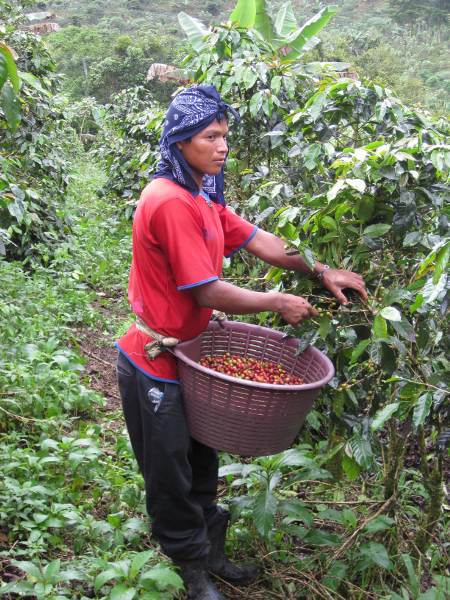
In terms of varieties, Costa Rica primarily cultivates Caturra, Catuai, Geisha, Bourbon, and Villa Sarchi. Caturra is a mutation of Bourbon, discovered in Brazil in 1937. It offers higher yield potential and disease resistance, suitable for planting at altitudes between 700 and 1,700 meters. The higher the altitude, the better the flavor, though yields may decrease. Catuai is a hybrid developed in 1949 from Yellow Caturra and the Mundo Novo variety. It has a shorter plant height, making it convenient for dense planting and harvesting, and it has strong resistance to natural disasters like wind and rain, but care must be taken regarding the risk of leaf rust.
The Geisha variety originated in Ethiopia and was introduced to Costa Rica in 1953. It is known for its delicate floral aroma, fruity acidity, and complex flavor layers, particularly excelling in high-altitude environments. The Bourbon variety originates from Réunion (formerly known as Bourbon Island) and features elegant fragrance and bright acidity. When planted at high altitudes, it often exhibits wine-like richness. Villa Sarchi is a naturally dwarfed mutation of Bourbon. Though not widely planted in Costa Rica, it later thrived in Honduras, offering intense aroma and complex fruit tones.
Coffee bean grading in Costa Rica is primarily based on cultivation altitude. The higher the altitude, the greater the bean density and hardness. Common grades include SHB (Strictly High Grown), representing altitudes above 1,200 meters—a grade commonly found in specialty shops. The compact bean structure brought by high altitude helps showcase richer flavors during roasting and extraction.
Regarding pour-over recommendations, take SHB-grade Costa Rican coffee beans as an example. It is advised to use 15 grams of coffee grounds with a medium-fine grind size (about 78–80% passing through a Chinese No. 20 standard sieve), and a brew ratio set at 1:15. During brewing, the water temperature is recommended to be controlled at 90–91°C to help highlight aroma and sweetness. Using a V60 filter can enhance the layering of flavors. Suggested technique: the first pour is 30 grams of water for a 30-second bloom; the second pour brings the total to 125 grams, then continue pouring to a total of 225 grams once the water level drops halfway. Total brew time is about 2 minutes and 10 seconds. These parameters help balance acidity and sweetness while ensuring flavor clarity, suitable for coffee enthusiasts who pursue detail.
The above content is compiled by CoffeeHunters, a coffee news website.


