







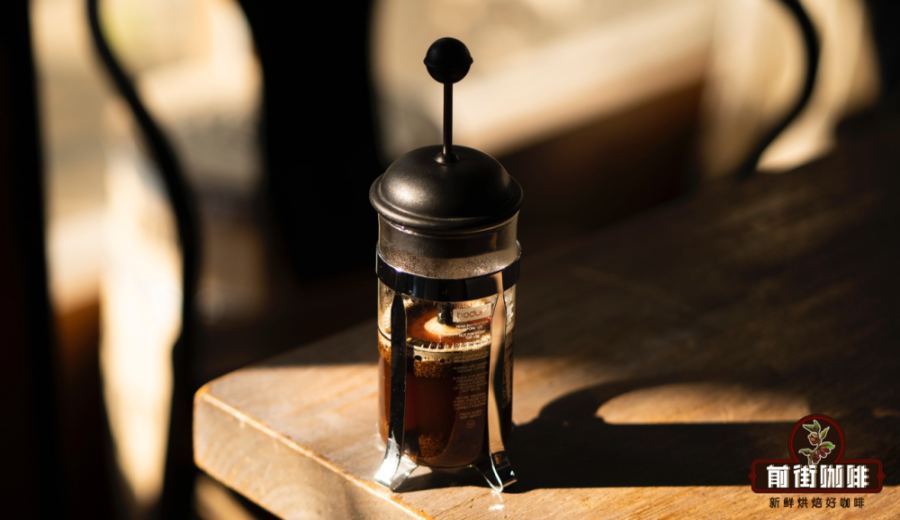
Introduction:Many coffee enthusiasts yearn to brew a rich latte or Americano at home but are deterred by the high cost of espresso machines. In fact, using a French press can also produce a higher-concentration coffee base. Although it can't fully replicate the crema and pressure-extraction characteristics of espresso, by adjusting grind size and coffee-to-water ratio, you can still approach a similar flavor profile. This article will guide you through how a French press can extract coffee with an intense concentration, analyze the key differences from true espresso, and offer practical brewing tips and flavor insights.
Many beginner coffee lovers have had similar experiences: wanting to enjoy a latte or Americano at home anytime, but often giving up due to the expensive price of espresso machines. However, if your goal is simply to get a concentrated coffee base, the French press is actually an economical and practical alternative. This article will delve into how to use a French press to brew coffee close to the concentration of espresso, while also analyzing the fundamental differences from traditional espresso—including the formation principle of crema, suitable grind fineness, and adjustments in coffee-to-water ratio.
First, we need to clarify a common misconception: Can espresso only be made with a high-pressure espresso machine? The answer is no. By definition, espresso refers to a coffee liquid with high concentration and high extraction yield. Although traditionally extracted under 9 bar pressure, if we’re aiming for the result of “high concentration,” using methods like the French press, moka pot, or pour over–regardless of the equipment–can achieve a similar concentration level by reducing the coffee-to-water ratio.
However, such methods still differ from true espresso. One of the most iconic characteristics of espresso is the golden, fine crema on the surface. This crema forms when coffee grounds release a large amount of carbon dioxide under high pressure and high temperature, combining with the coffee oils and being encapsulated as the extraction flows out. Since the French press uses immersion brewing without applying high pressure, it cannot produce true crema. However, the natural oils in the coffee are still preserved, resulting in a smoother mouthfeel—though possibly with slightly less clarity.
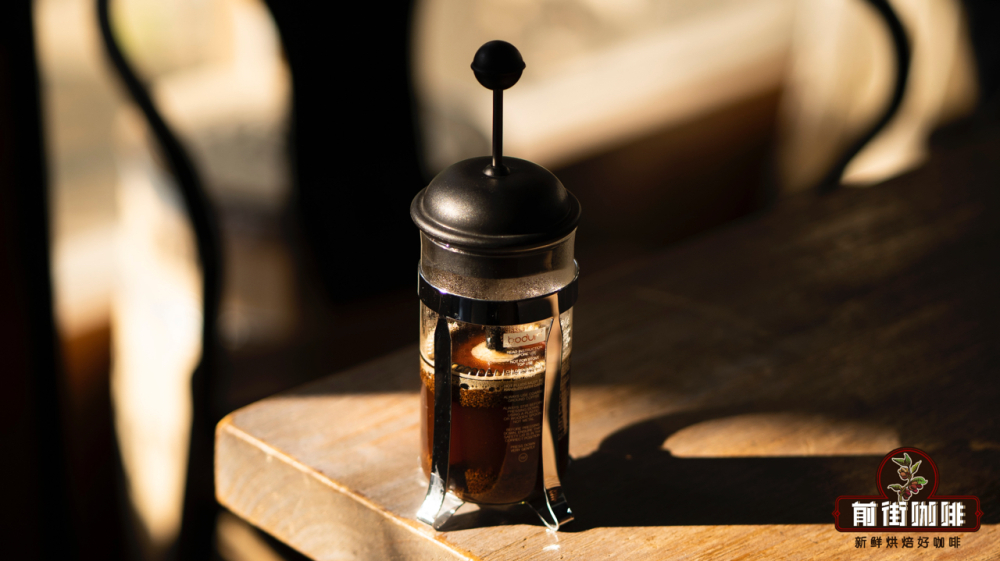
So, how should you adjust the French press to achieve an espresso-like intensity? Generally, when brewing regular black coffee with a French press, the recommended coffee-to-water ratio is 1:15, using medium-coarse coffee grounds (approximately 75% through a #20 sieve, similar in size to coarse sugar), and steeping for about 4 minutes. But if you’re aiming for a higher-concentration coffee, you can adjust to an extremely low ratio of 1:4—such as using 20 grams of coffee to extract just 75–80 grams of coffee liquid—bringing the intensity closer to the flavor density of espresso.
At the same time, the grind size should also be adjusted finer, recommended to around 80% through a #20 sieve—roughly the fineness of fine sugar—to increase the contact area between coffee and water. For water temperature, aim to keep it around 92°C, and reduce the steeping time to 3 minutes to avoid over-extraction and bitterness. Although these adjustments can’t replicate the high-pressure environment of espresso, they can enhance the coffee’s body and flavor concentration to a certain extent.
Besides espresso-style coffee, the French press is also commonly used to make everyday black coffee, with flavor notes similar to pour over. Take Ethiopian Natural Red Cherry as an example: using a 1:15 coffee-to-water ratio (e.g., 15 grams of coffee to 225 ml of water), a #20 sieve 75% pass rate (similar in size to coarse sugar), water temperature set at 94°C, and a 4-minute steeping time, you can highlight rich berry notes, prominent sweetness, and a tea-like finish. The overall mouthfeel is full and robust, though not as clear as paper-filtered coffee.
When brewing, it’s recommended to place the ground coffee into the French press, slowly pour in hot water, gently stir, then press the filter down slightly to keep the floating grounds down. Let it steep for 4 minutes, then slowly press the plunger down to about one-quarter of the way from the bottom to minimize the chance of fine grounds rising. Finally, it’s best to pour out all the coffee at once to avoid over-extraction and off-flavors caused by the grounds continuing to steep.
In summary, although the French press can’t fully replicate the extraction characteristics or crema of espresso, by precisely adjusting the coffee-to-water ratio, grind size, and water temperature, you can still produce a rich and layered coffee. It’s especially suitable for home brewers on a budget who want to elevate their coffee flavor experience. With the right parameters, you too can enjoy a near-professional-grade coffee concentration at home.
The above content is compiled by CoffeeHunters, a coffee news website.


