








Introduction:Gesha Village Estate is one of the few large-scale coffee farms in Ethiopia that focuses exclusively on cultivating the Gesha variety. Its grading system is modeled after that of the Hacienda La Esmeralda estate, divided into five categories: Auction, Gold Label, Red Label, Green Label, and Chaka. This article delves into the definitions, production ratios, cupping profiles, and flavor characteristics of each grade, along with practical brewing recommendations to help you choose the most suitable Gesha coffee beans based on your preferences.
In the world of specialty coffee, the Gesha variety from Ethiopia is nothing short of legendary. Aside from Panama’s Hacienda La Esmeralda, the most iconic representation is undoubtedly Gesha Village Estate located in the Bensa district of Ethiopia. This estate is one of the few large-scale farms globally that primarily cultivates the Gesha variety. Drawing inspiration from the grading system of Hacienda La Esmeralda, it offers five grades—Auction, Gold Label, Red Label, Green Label, and Chaka—to help consumers make choices based on their budget and taste preferences.
Established in 2009, Gesha Village Estate was founded by documentary filmmaker Adam Overton and his wife Rachel Samuel. While searching for coffee landrace varieties, they discovered wild Gesha trees in the Gori Gesha Forest, which led to the creation of this estate dedicated solely to the Gesha variety. Covering an area of 475 hectares, the estate has its own wet mill and laboratory, and is committed to planting only the Gesha variety without mixing in other Ethiopian landraces, ensuring the purity of its flavor profile.
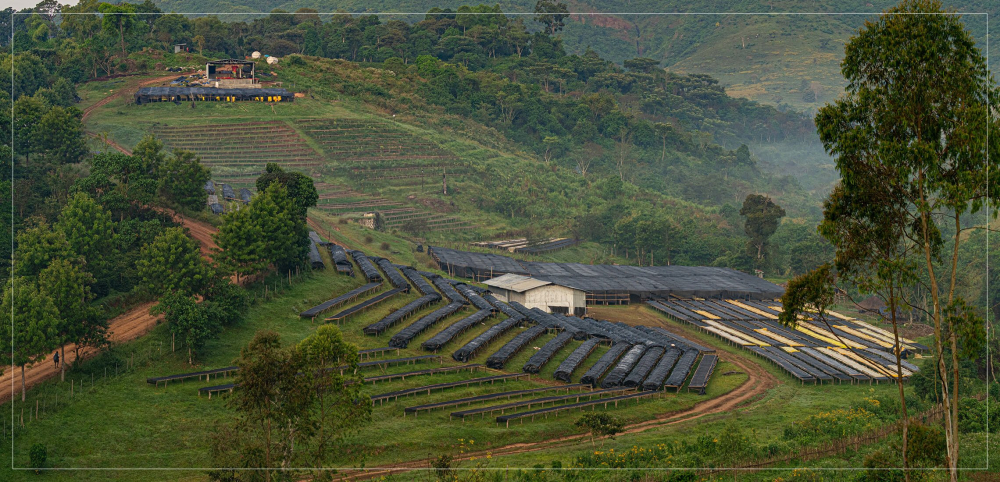
Currently, Gesha Village Estate mainly cultivates three varieties: Gesha1931, Gori Gesha, and Illubabor, which is provided by the Ethiopian Coffee Research Center. Among them, Gesha1931 is the variety closest to the original mother plant of Panamanian Gesha, while Gori Gesha originates from a wild Gesha forest about 20 kilometers from the estate, offering unique regional characteristics.
Understanding Gesha Village Estate’s grading system is the first step in selecting the right coffee beans. Below is a detailed explanation of the definition, production volume, cupping characteristics, and flavor profile of each grade.
Auction Lot (only 3.7% of production, available through global auction)
The Auction Lot represents the pinnacle of excellence at Gesha Village Estate, accounting for just 3.7% of annual production. These coffee beans undergo rigorous selection and are released only through global auction events, making them the dream beans for many specialty coffee shops and competition baristas. Although this article won’t go into the details of the auction process, these beans typically exhibit exceptional complexity and unique terroir expression, representing the ultimate showcase of the Gesha variety.
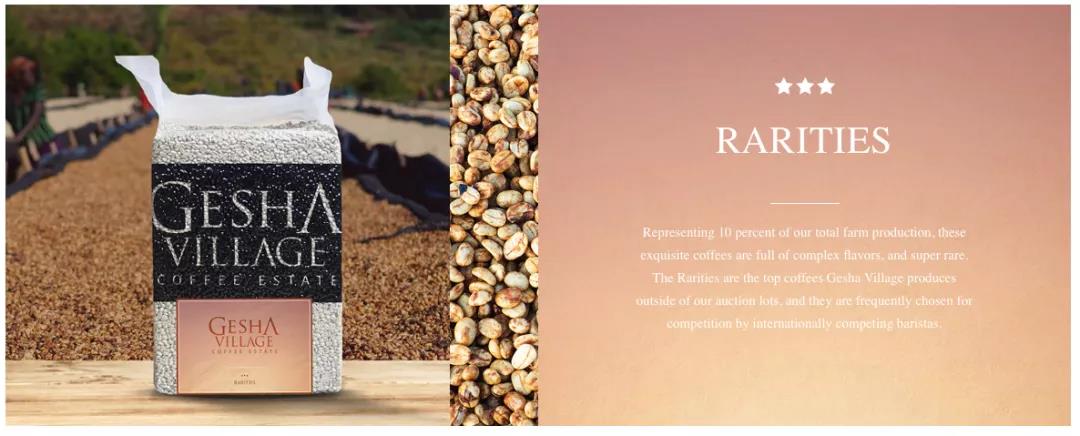
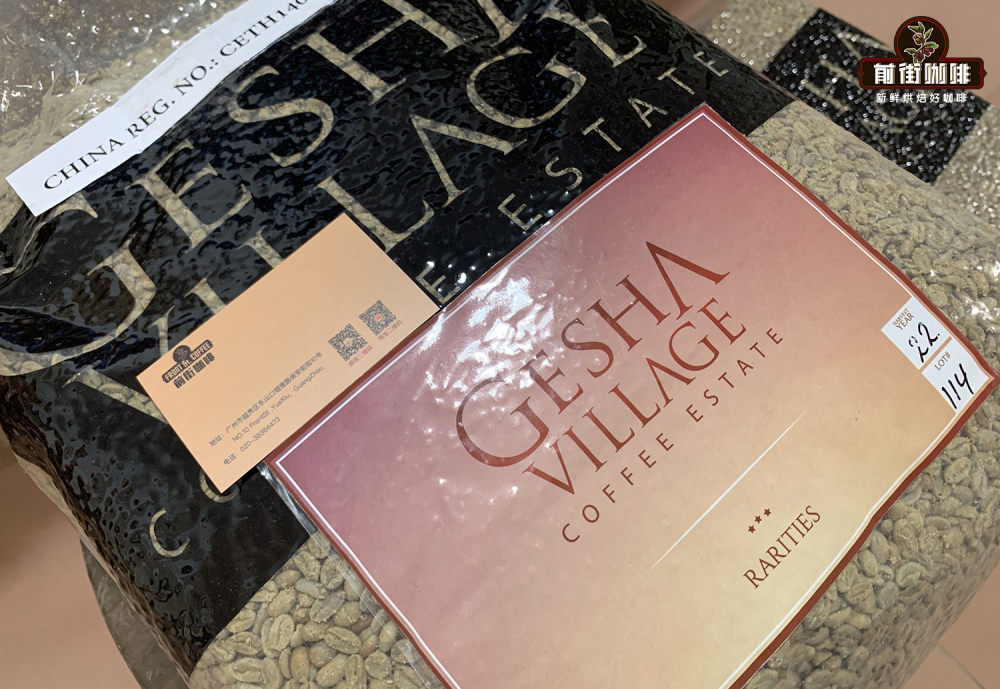
Gold Label RARITIES (approximately 10% of production, high complexity and rarity)
The Gold Label lot is the next highest tier after the Auction Lot, making up about 10% of production. These coffees usually come from specific high-quality plots, demonstrating outstanding cupping scores (often exceeding 90 points), with rich flavor layers and high recognizability. Many professional baristas choose Gold Label beans for competitions, and they are also the preferred choice of premium roasters for specialty coffee.
Take the Oma plot as an example, where the Gesha1931 variety is grown and processed using a lengthy 32-day natural method, resulting in intense aromas of tropical fruits, berries, and honey. The acidity is gentle, the sweetness lingers, and the finish carries fermented wine-like notes with a creamy texture.

Red Label RESERVE (approximately 15% of production, a choice for value)
The Red Label Gesha accounts for about 15% of annual production, with cupping scores typically above 88 points (according to SCA standards). In terms of flavor, it showcases Gesha Village’s classic bright acidity, floral and fruity notes, and sweetness. Though slightly less complex than the Gold Label, it remains a representation of high quality, making it ideal for everyday enjoyment or as an entry-level specialty coffee option.
For instance, the natural-processed Gori Gesha from the Shewa-Jibabu plot features bright acidity with notes of bergamot, lemon, and tropical fruits, with a sweet finish of toffee and almond that becomes more layered as the cup cools.

Green Label SINGLE-TERROIR (single plot, an entry point for single-origin)
The Green Label lot consists of single-plot, single-variety products. Each batch comes with complete traceability information, including origin, variety, and processing date, though it doesn’t have the strict cupping score threshold of the Gold or Red Labels. The Green Label is an accessible entry point for exploring the flavor profiles of different plots at Gesha Village and offers great value, catering to consumers who want to experience the diversity of the Gesha variety.
The Green Label natural-processed Gori Gesha from the Bangi plot exhibits pronounced aromas of berries, cherries, and honey. It has a full-bodied mouthfeel and a slightly fermented finish, making it a Gesha bean with approachable flavors yet distinct character.
Chaka (blended lots, offering a diverse flavor experience)
The Chaka lot is a blend of beans from various plots and all varieties at Gesha Village (including Gesha1931, Gori Gesha, and Illubabor), encompassing both natural and washed processing methods. This grade is suitable for consumers who want to experience a variety of flavors in one cup. Its flavor profile is relatively balanced and approachable, making it ideal for everyday brewing.
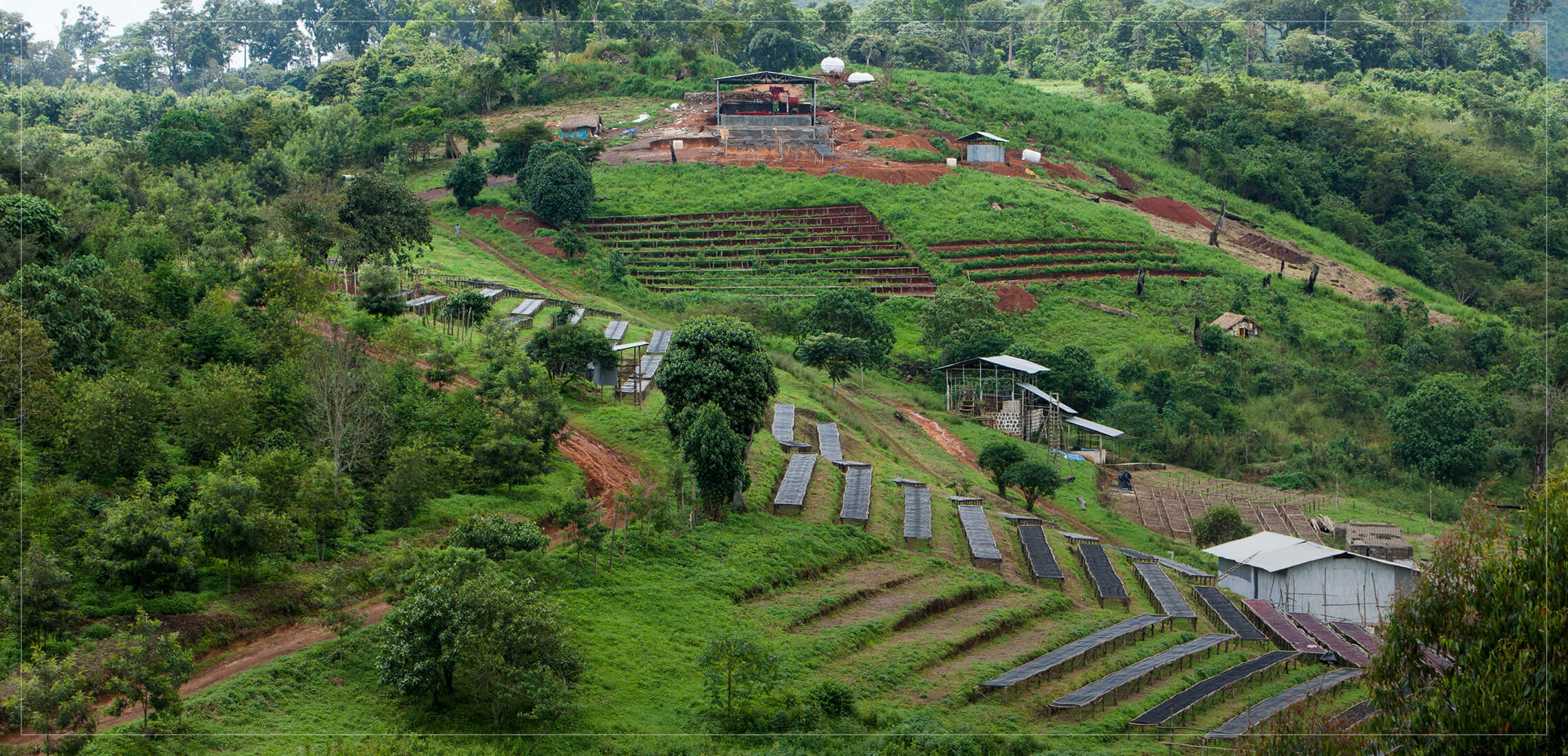
Gesha Village maintains strict standards for natural processing. After harvest, the coffee cherries are first floated to remove defects, then spread in thin layers on African raised beds for sun drying. They are frequently turned and hand-sorted during the process, with a total drying time of about 18 to 30 days. This method imparts the coffee with rich fruitiness, sweetness, and complex tonalities, making it the preferred processing method for most batches at Gesha Village.
In terms of roasting and brewing, a medium-light roast can highlight the bright acidity and fruity characteristics of the Gesha variety. Pour over brewing is recommended, using water at 90°C, a fine grind (approximately 78% passing through a #20 sieve), and a brew ratio of 1:15. Employing a pulse pouring technique can bring out the delicate floral notes, berry aromas, and honey-like sweetness of Gesha coffee.
Overall, Gesha Village Estate’s grading system not only allows consumers to choose specialty coffee at different levels based on their needs, but also showcases the diverse potential of the Ethiopian Gesha variety. From the ultimate rarity of the Auction Lot to the accessible diversity of the Chaka Lot, each grade has its own unique charm and flavor story.
The above content is compiled by CoffeeHunters, a coffee news website.


