







Introduction:Brazilian coffee is often seen as representative of commercial beans, but it also offers premium single-origin beans worth savoring. This article delves into the Yellow Bourbon natural-processed beans from Queen Estate in the Mogiana region, exploring everything from the variety’s origins and regional environment to the details of the natural processing method. We’ll guide you through this uniquely flavored Brazilian bean and provide practical medium-dark roasting suggestions along with a three-stage pour-over parameter guide—including recommended filter type, water temperature, and coffee-to-water ratio—to help you brew a round, full-bodied Yellow Bourbon cup at home.
When it comes to Brazilian coffee, many people’s first impression might be of a rich, low-acid profile with strong nutty and chocolatey notes, often used as a base in espresso blends. However, Brazil also produces many specialty-grade single-origin coffees, and the Yellow Bourbon natural from Queen Estate is one such example. Grown in the Mogiana region at elevations between 1,400 and 1,950 meters, these beans are carefully processed using the natural method, showcasing captivating layers of black chocolate, cream, peanuts, sugarcane, and nuts.
Most Brazilian coffee is grown in low-altitude flat areas, processed using traditional sun-drying methods, and harvested mechanically on a large scale—resulting in a generally low-acid, rich flavor with nutty and chocolatey notes. This makes it widely used in espresso blends. However, this stereotype is incomplete; Brazil is also capable of producing high-quality specialty coffee. For instance, the Yellow Bourbon variety from Queen Estate is a specialty single-origin that embodies both regional characteristics and varietal flavors, making it an excellent choice for coffee enthusiasts eager to explore new tastes.
Queen Estate is located in the Mogiana region of São Paulo State, Brazil. This area borders the southern part of Minas and is ranked alongside Cerrado and Sul de Minas as one of Brazil’s three premier specialty coffee regions. Compared to other parts of Brazil, Mogiana generally sits at elevations between 1,100 and 1,250 meters. Its undulating terrain and high-altitude environment create greater diurnal temperature variations, which are beneficial for sugar accumulation and flavor development in coffee cherries. Most of the coffee here is hand-picked, especially premium varieties of the Bourbon family—among which Yellow Bourbon has consistently earned high praise in various coffee competitions due to its delicate flavor profile.
Yellow Bourbon is a mutation of the Bourbon variety, and its most distinctive feature is the orange-yellow color of the ripe cherries, unlike the deep red of typical Red Bourbon. Traditional Red Bourbon changes color from green to yellow, then to red, and finally to deep red as it ripens; the yellow hue of Yellow Bourbon, however, stems from genetic differences. According to research by the Campinas Agronomic Institute (IAC), the fruit color of the Bourbon variety is primarily determined by genotype: the dominant XcXc gene combination produces red berries, the recessive xcxc produces yellow berries, and in rare cases, the combination of Xc and xc may yield orange berries. Thus, the unique color of Yellow Bourbon is actually the result of genetic selection.
This yellow-fruited Bourbon variety, when grown at high altitudes, can accumulate more fructose, resulting in a sweeter and juicier flavor profile. Yellow Bourbon has ranked in the top three for two consecutive years in Brazil’s Cup of Excellence competition, demonstrating its high esteem in the specialty coffee world. Queen Estate has cultivated and meticulously processed this variety to create a specialty coffee with a distinct personality.
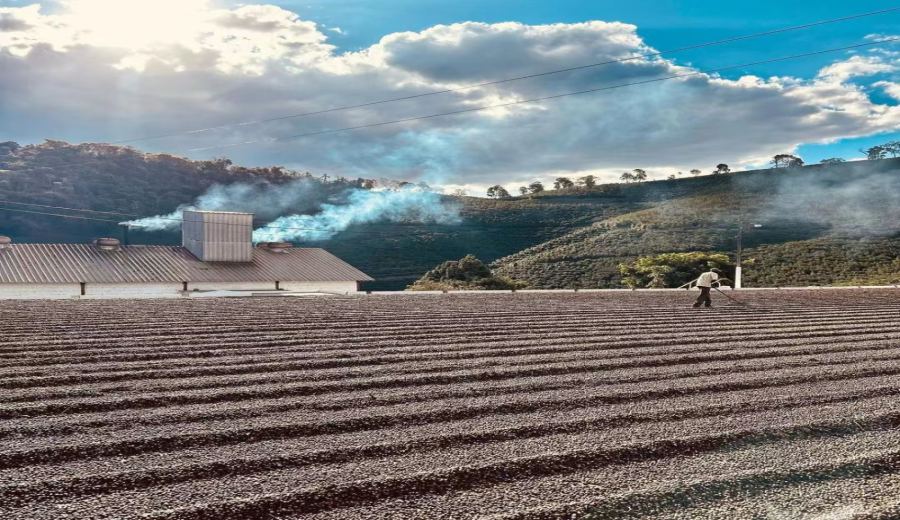
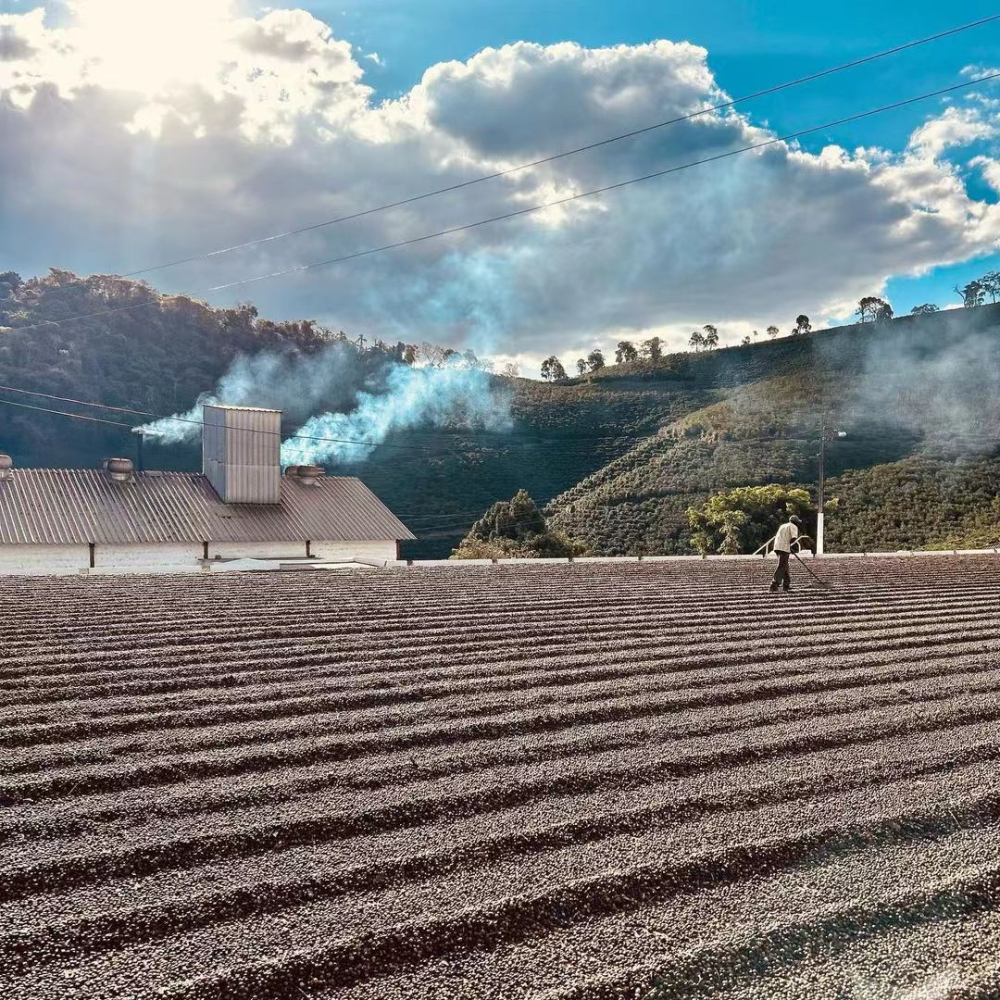
For processing Yellow Bourbon, Queen Estate employs the natural (dry) method, which allows the coffee cherries to fully retain the sugars in the fruit pulp during drying, thereby enhancing the coffee’s sweetness and flavor complexity. Notably, Brazil’s proximity to the equator means its harvest season coincides with the dry season, featuring stable, arid weather—ideal for natural processing. However, traditional natural processing often involves spreading coffee cherries directly on the ground to dry, which can easily absorb dirt and impurities and may produce off-flavors due to uneven heating. Queen Estate has optimized this process: they first use floatation to remove unripe cherries, then place the coffee cherries on African raised beds for small-batch natural drying, turning them at appropriate intervals to ensure even drying. This effectively prevents unwanted flavors while boosting sweetness and cleanliness.
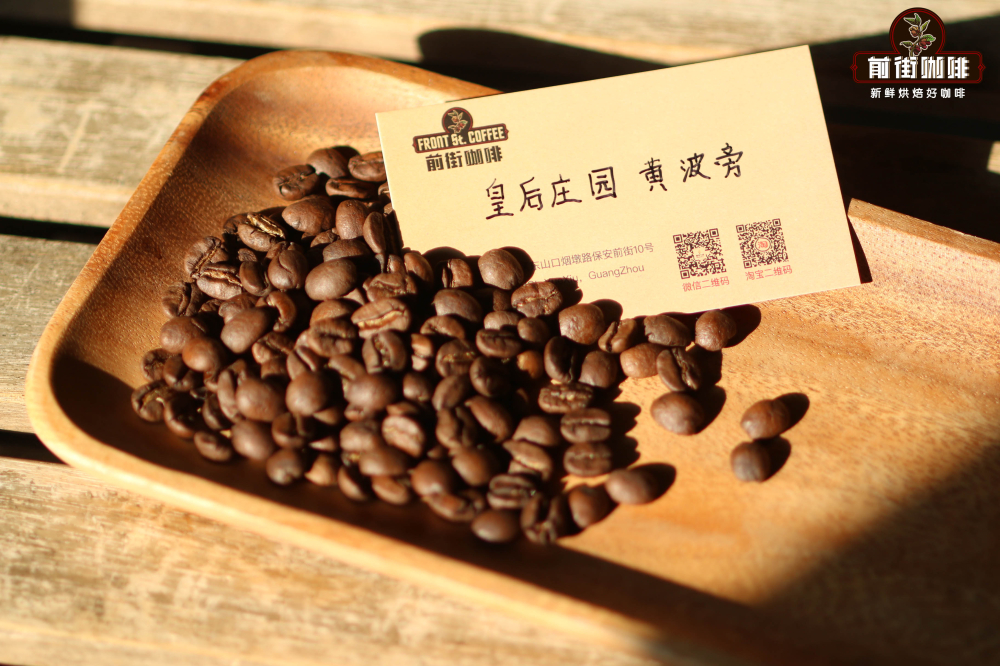
In terms of roasting strategy, to fully highlight the low-acid, rich character typical of Brazilian coffee, Queen Estate opts for a medium-dark roast. This level of roasting preserves the original flavor framework of Yellow Bourbon while bringing out deeper caramel and chocolate aromas. Cupping results show that this coffee excels in sweetness, so the recommended pour-over method uses a three-stage pouring technique to fully bring out the layers and nuances of the flavors.
To brew this Yellow Bourbon with its roundness and richness, it’s recommended to use a KONO filter, which has a slower flow rate. Its design features a smooth upper curve and drainage ribs covering about one-third of the bottom length, allowing the filter paper to adhere tightly to the cup and effectively reducing the space for air to rise. This directs hot water to flow downward, creating an extraction effect similar to a siphon, which helps fully release aromatic compounds. The recommended water temperature range is87 to 88°C,with 15 grams of coffee, using a1:15 coffee-to-water ratio(yielding approximately 200 ml of coffee, suitable for 1 to 2 people). The grind size is recommended to be medium (about 70% extraction through a Chinese standard No. 20 sieve), which ensures extraction efficiency while avoiding over-extraction and bitterness.
The specific pour-over steps are as follows: First, perform a 30-second bloom with about twice the coffee’s weight in water (approximately 30 grams) to help the grounds fully expand and release aroma. Then, pour water in small streams in a circular motion from the inside out. When the total water volume reaches125 grams, perform the first pour. Once the coffee bed drops to the middle of the filter, continue pouring with the same fine stream until the total reaches225 grams. Finally, let the coffee drip through completely. The entire process takes about 2 minutes. This effectively controls extraction time and concentration, showcasing the best flavor balance.
The brewed Queen Estate Yellow Bourbon pour-over coffee exhibits distinct aromas of lemon, nuts, and peanuts. On the palate, you’ll experience a rich nuttiness, the sweetness of black chocolate and caramel, and a natural sugary finish. The overall mouthfeel is as smooth as cream, with a round and layered flavor profile—making it a premium single-origin coffee perfect for slow, mindful enjoyment.
The above content is compiled by CoffeeHunters, a coffee news website.


