







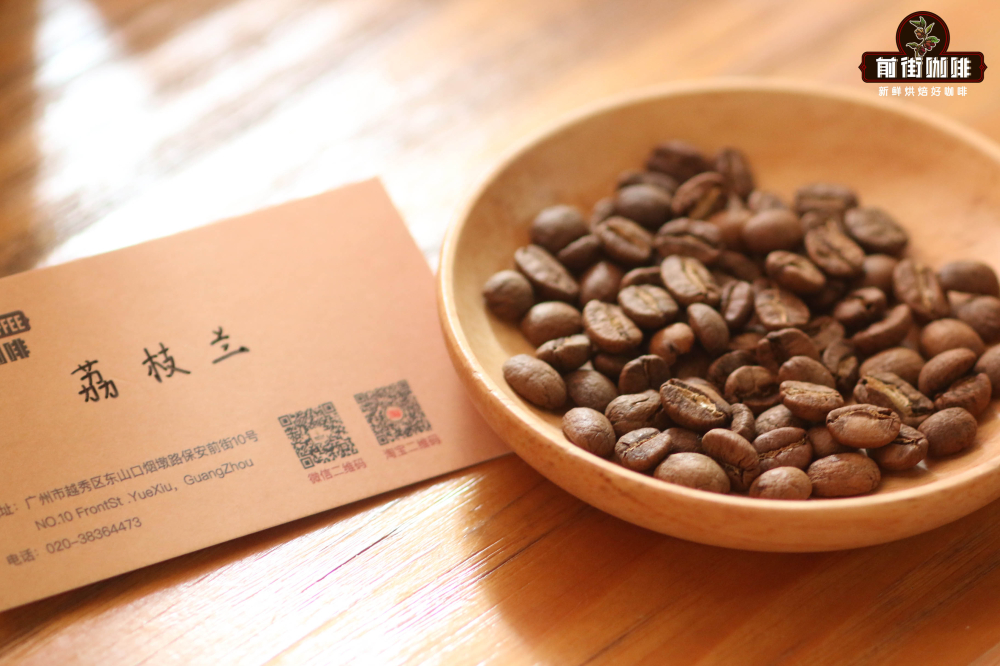
Introduction:Aside from the rich, whiskey-like beans processed in sherry cask, Honduras also offers the Lychee Orchid coffee bean, renowned for its low-temperature fermentation in brandy oak barrels. This specialty bean from the Masaguara Mocha Estate combines the Caturra and Catuai varieties, undergoing 30-40 days of barrel aging to impart a unique lychee sweetness and layered wine aroma. This article delves into the growing environment, processing methods, variety characteristics, and provides professional roasting profiles, V60 pour over parameters, and cupping flavor evaluations to help you master the brewing essentials of this distinctive bean.
As a key coffee-producing country in Central America, Honduras nurtures a variety of distinctly flavored beans with its high-altitude mountainous regions and stable climate. Among them, the Lychee Orchid coffee bean produced by the Mocha Estate in Masagua Town stands out in the international specialty coffee market thanks to its brandy barrel fermentation process and delicate fruity flavor profile. This bean not only continues the bold foundation typical of Honduran coffee but also delivers a richly layered tasting experience through its unique post-harvest processing.
The Mocha Estate is located in the autonomous municipality of Masaguara, Intibucá Department, Honduras, situated in the high-altitude southern edge of the Jesús de Otoro Valley. Although the overall elevation of Masaguara is around 853 meters, the estate itself lies at an altitude of 1500–1700 meters. Such height provides ideal ripening conditions for coffee cherries, aiding in the accumulation of flavor compounds. The region has a tropical climate, with an average annual temperature maintained between 16–20°C and abundant rainfall, creating an optimal environment for coffee cultivation.
The processing method for this Lychee Orchid coffee bean combines traditional washed processing with innovative barrel fermentation technology. After harvest, the coffee cherries first undergo meticulous washed processing to remove the mucilage layer and perform initial cleaning. The parchment beans are then placed inside brandy oak barrels and fermented at a low temperature of 15–20°C for 30 to 40 days. This process allows the green beans to fully absorb the brandy aroma and oak notes from the barrels, while also developing a soft lychee and honey sweetness. After fermentation, the beans are shade-dried to ensure stable moisture content and preserve the complex flavors brought by fermentation.
In terms of variety composition, the Lychee Orchid coffee bean uses a hybrid of Caturra and Catuai. Caturra is a natural mutation of the Bourbon variety, originating in Brazil in 1937. Its plants are shorter than Bourbon, and although it inherits the fine flavor genes of Bourbon, it is less resistant to disease. It is, however, widely planted in Central and South American countries such as Colombia, Costa Rica, and Nicaragua. Catuai is an artificial cross between Caturra and Mondu Novo, featuring stronger resistance to wind and rain. Its fruit is firm but more labor-intensive to harvest, with both red and yellow fruit types. Among them, red fruit typically exhibits better cleanliness and balance in cupping.
For this wine-aroma distinctive coffee bean, a cinnamon roast level is recommended to balance the flavor layers. Specific roasting parameters can be set as follows: charge temperature at 220°C, yellowing point reached at about 5 minutes 50 seconds at 152.6°C, first crack starting at 9 minutes 15 seconds and 183°C, followed by 2 minutes 10 seconds of development after first crack, and finally dropping the beans at 195°C. This roasting curve helps bring out the harmony between the lychee sweetness and brandy aroma while preserving the coffee’s inherent rich texture.
According to cupping results, this Lychee Orchid coffee bean exhibits pronounced aromas of lychee, brandy, and cream. Upon tasting, the wine aroma and dark chocolate notes gradually emerge, with an overall full-bodied mouthfeel and a long-lasting honey sweetness in the aftertaste. As the temperature changes, the flavor layers transition from fresh fruitiness to deeper wine tones, delivering a rich taste experience.
If choosing the pour over method for extraction, it is recommended to use a V60 dripper, with a dose of 15 grams, water temperature at 90–91°C, and a 1:15 coffee-to-water ratio. Grind size is similar to that of fine sugar, and it is suggested to sieve the coffee using a #20 sieve to achieve 80% passing rate. The specific brewing steps are as follows: the first pour is 30 grams of water for a 30-second bloom, followed by pouring 95 grams of water (scale shows approximately 125 grams), completed within about 1 minute; when the water level drops to two-thirds of the coffee bed, pour the remaining 100 grams of water (scale shows approximately 225 grams), finishing in about 1 minute 35 seconds. The total extraction time is about 2 minutes 04 seconds, and you may enjoy the coffee after removing the dripper.
By understanding the growing background, processing techniques, and variety characteristics of this Honduran Lychee Orchid coffee bean, and mastering the professional roasting and pour over parameters, enthusiasts can more deeply appreciate its unique fusion of wine and fruit flavors, further enriching their coffee tasting perspective and experience.
The above content is compiled by CoffeeHunters, a coffee news website.


