








Introduction:Dive deep into Ethiopia’s two renowned specialty coffee regions—Yirgacheffe and Sidamo—as we explore their origins, processing methods, and flavor profiles to fully uncover their unique charm. This article also provides practical pour over parameters to help coffee enthusiasts master the brewing essentials of these classic beans.
Ethiopia is hailed as the birthplace of coffee, home to numerous varieties with distinctive and complex flavor profiles. Whether it's a bright citrus note or a rich tropical fruit aroma, Ethiopian coffee always captivates coffee lovers with its versatile expression. This article focuses on two representative regions—Yirgacheffe and Sidamo—analyzing their differences in geography, farming traditions, and processing methods, while taking you on a journey to experience the unique flavors and aromatic profiles these coffees offer.

Ethiopia not only boasts a long history of coffee consumption, but its coffee-growing culture is also deeply rooted in daily life. Most coffee here is grown by smallholders, with an average farming area of about four hectares per household, often intercropped with other plants such as banana trees. Due to limited yields, many farmers send their harvested coffee cherries to nearby processing stations or cooperatives for further processing, then sell them collectively under a shared name to ensure quality and market connectivity.
Take Yirgacheffe and Sidamo as examples—though geographically adjacent, these two regions each have their own distinct coffee flavors and processing methods. Yirgacheffe is famed for its bright acidity and abundant floral notes, while Sidamo exhibits a richer, fruit-forward character with a deeper body, all closely tied to their unique geographical environments and processing traditions.

Originally part of the Sidamo region, Yirgacheffe relied primarily on traditional natural (sun-dried) processing methods until the mid-20th century. However, after the 1970s, with the establishment of the first washed processing station and the introduction of technology from Central and South America, Yirgacheffe’s coffee processing entered a new era. Washed processing not only elevated the overall quality of green beans but also perfectly highlighted its bright citrus and lemon acidity along with jasmine floral notes, giving rise to the now widely acclaimed “Yirgacheffe flavor profile”—bright, clean, layered, and featuring a unique balance of acidity and sweetness.
It’s worth noting that according to the Ethiopian Commodity Exchange (ECX) classification, Yirgacheffe includes not only coffee produced in the town itself but also beans from nearby towns such as Wenago, Gedeb, and Kochere, which can also be categorized under this flavor style. This approach not only helps unify quality and market positioning but also makes it easier for consumers to identify coffee products with similar characteristics.
As for Sidamo, its name is closely tied to the region’s predominant ethnic group, the Sidama. Due to transliteration issues during the colonial period, the region was once referred to as Sidamo, and though it has since been officially renamed Sidama, the market still commonly uses the name Sidamo. Sidamo coffee is known for its rich body, intense aroma, soft acidity, and long-lasting aftertaste, all of which are inseparably linked to its prevalent use of natural (sun-dried) processing.
The natural (sun-dried) processing method is the most traditional coffee processing technique in Ethiopia and is still widely used, especially in the Sidamo region. This method allows the coffee cherries to undergo a longer fermentation period during drying, leading to complex reactions between the sugars in the pulp and microorganisms, which in turn produce abundant esters and furan compounds. These compounds transform into captivating floral and tropical fruit aromas during roasting, giving the coffee a broader flavor spectrum and more pronounced sweetness.
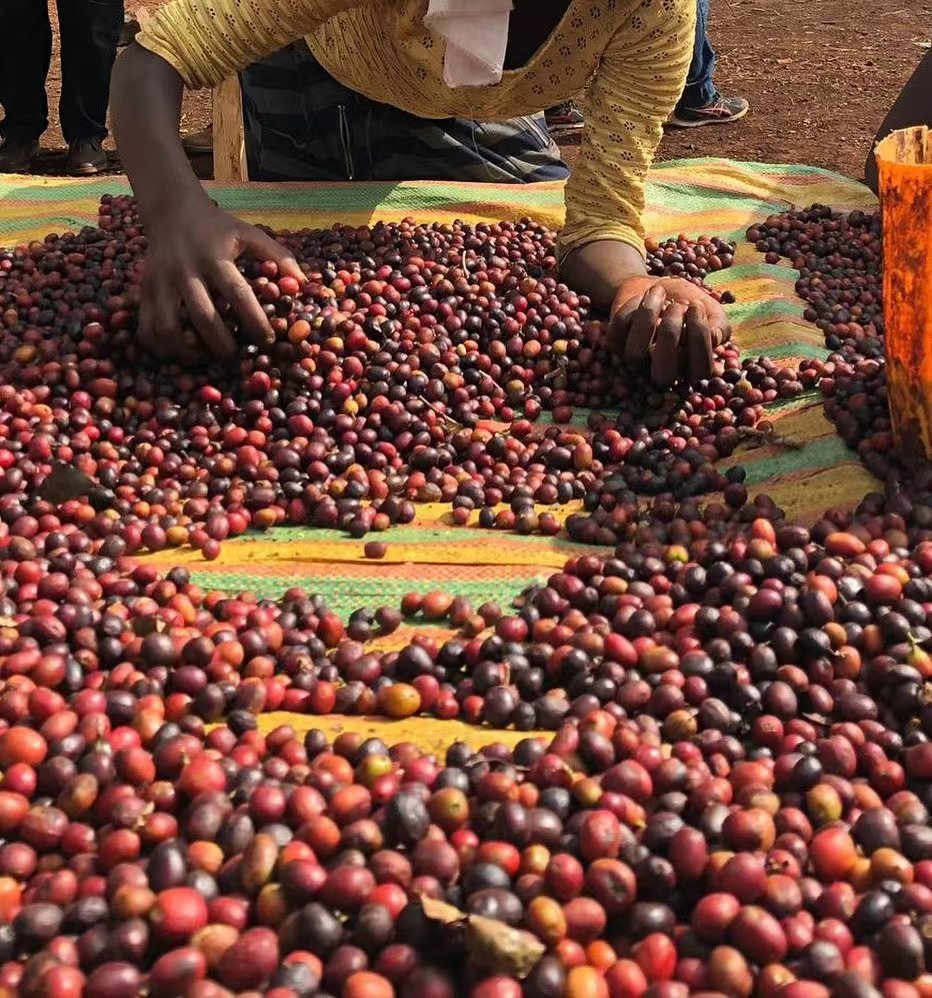
For example, a well-known coffee from the Sidamo region, such as Huika, is made from native varieties grown at high altitudes and processed using the natural method, resulting in intense fruit aromas and a sweet aftertaste. Such coffees typically feature complex aromatic layers, soft acidity, and a long finish, making them a favorite among many pour over enthusiasts.
If you’d like to try brewing a sun-dried Ethiopian coffee like Huika at home, here’s a recommended V60 pour over setup: Use 15 grams of coffee grounds with 225 grams of water, at a 1:15 brew ratio. Grind size can be set to that of fine sugar (or EK43s grind setting 10, with approximately 78% retention after sifting through a #20 mesh sieve). Begin with a 30-second bloom using 30 grams of water, then pour 95 grams of water around the 1-minute mark (total weight ~125 grams), and finally add 100 grams of water when the water level drops to 2/3 of the coffee bed (total weight ~225 grams). Aim for a total brew time of 2 minutes 10 seconds to 2 minutes 30 seconds, with a brew temperature of 92–93°C to fully highlight the coffee’s aroma and sweetness.
Whether you prefer the bright and vibrant profile of Yirgacheffe or the rich and sweet character of Sidamo, understanding the historical background and processing characteristics of these two regions will allow you to more deeply appreciate the boundless charm of Ethiopian coffee when tasting or brewing.
The above content is compiled by CoffeeHunters, a coffee news website.


