







Introduction:Are you confused between Blue Mountain coffee and Green Mountain coffee? Despite their similar names, the two are completely different in terms of origin, brand positioning, and quality standards. This article delves into the stories behind them—from Blue Mountain’s rigorous grading system and Jamaica’s unique growing environment, to how Green Mountain rose to prominence with its eco-friendly and single-serve systems—and includes professional pour over recommendations for Blue Mountain No. 1 to help you truly appreciate top-tier coffee.
Blue Mountain coffee is world-renowned for its delicate and rich aroma, a dream brew for many coffee enthusiasts. But did you know there’s also a brand called Green Mountain Coffee, which shares the word “mountain” in its name yet takes a completely different path? Founded in 1981 in Vermont, USA, Green Mountain Coffee is a brand that emphasizes affordability, sustainability, and accessibility of Arabica beans, and it took the market by storm with its K-Cup single-serve system. In contrast, Blue Mountain coffee comes from the Blue Mountains of Jamaica, a premium coffee subject to strict quality control, altitude, and variety restrictions. This article will take you deep into the brand backgrounds, regional characteristics, and flavor profiles of both, and provide practical brewing guidance for Blue Mountain No. 1.
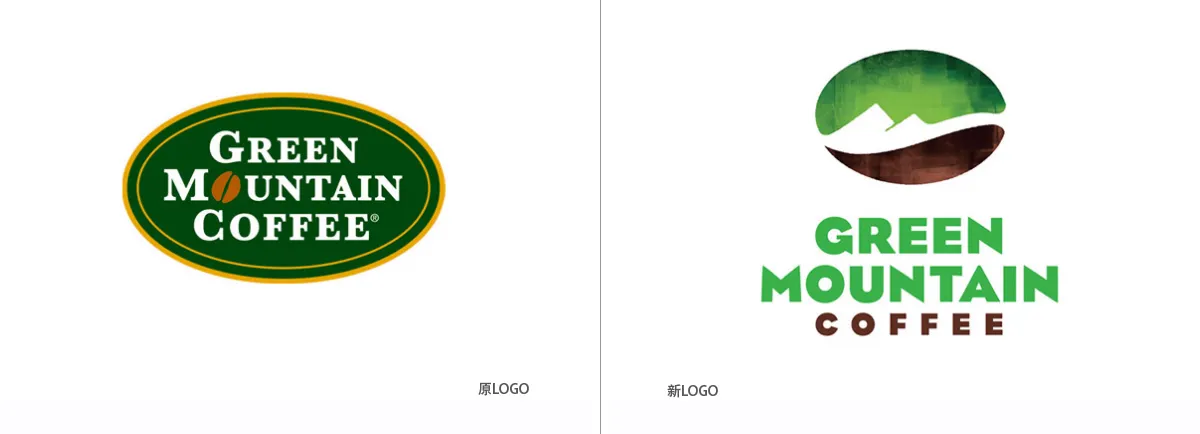
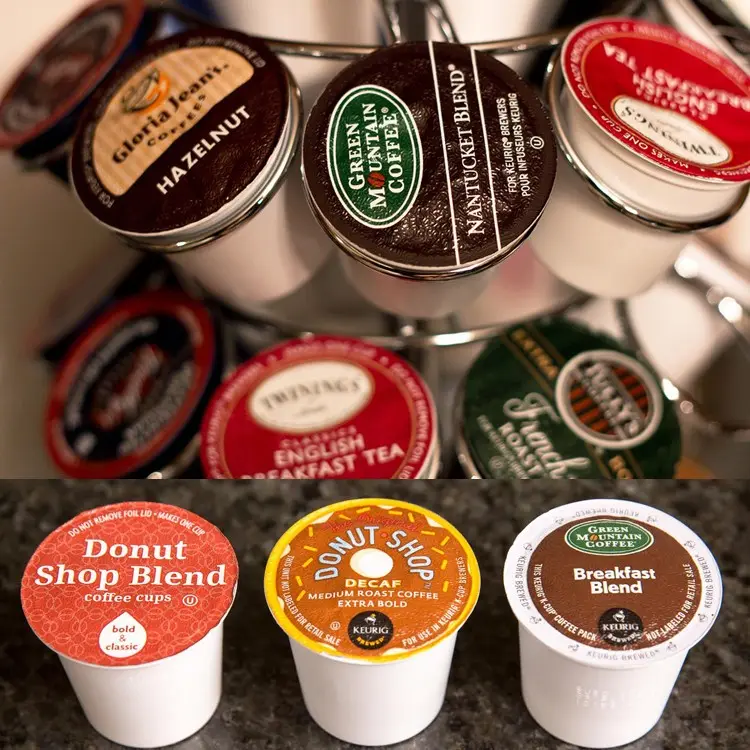
First, let’s clear up a common misconception: Green Mountain Coffee is not a coffee-growing region, but a coffee brand based in Vermont, USA, founded in 1981 and going public in 1993. Unlike Starbucks, which targets the high-end market, Green Mountain Coffee entered the market with affordable prices and high-quality Arabica beans, while maintaining a long-term focus on sustainability and fair trade. Since 2002, it has sold certified organic and fair trade coffee (which must meet the standard of paying farmers more than $1.26 per pound of coffee beans and providing technical support). Over the years, Green Mountain Coffee has stuck to an environmentally friendly and practical approach, and its launch of the K-Cup single-serve system was a major innovation.
The concept of the K-Cup originated from Keurig (KEURIG), proposed by founders Peter Dragone and John Sylvan: “Brew a single cup, without boiling a whole pot.” This led to the development of compatible single-serve packaging and dedicated coffee machines. Users simply insert the K-Cup into the machine, press a button, and in about a minute enjoy a rich cup of coffee—no need for grinding beans, measuring, or cleaning, and no leftover grounds. Each K-Cup costs about 50 cents, just one-tenth the price of a Starbucks drink, making it highly competitive. Leveraging this system, Green Mountain Coffee rapidly expanded its market share and applied for multiple K-Cup patents, requiring other manufacturers to pay licensing fees to use this packaging. It’s clear that Green Mountain Coffee and Blue Mountain Coffee are on entirely different tracks in terms of brand positioning and product models.
Now, let’s look at Jamaican Blue Mountain coffee, whose history dates back to the 18th-century British colonial period. At that time, Governor Nicholas Lawes introduced coffee trees from Martinique and planted them in the St. Andrew area, later expanding to the Blue Mountains. The Blue Mountains are located in eastern Jamaica, a landmark known for its blue-hued peaks, named for the blue halo reflected from the sunlight on the sea and mountains. The main peak of the Blue Mountains reaches 2,256 meters, but only areas below 1,700 meters in altitude are suitable for coffee cultivation, with higher elevations designated as nature reserves.
The region boasts fertile volcanic soil, abundant rainfall, and stable temperatures (averaging around 27°C annually), along with an almost pollution-free environment, creating the irreplaceable flavor conditions for Blue Mountain coffee. For this reason, Jamaican Blue Mountain coffee is subject to extremely strict standards from planting, harvesting to processing.
As early as 1932, Jamaica began focusing on improving coffee quality, and in 1953, the Jamaica Coffee Industry Board established formal Blue Mountain standards. According to the regulations, only Arabica beans of the Typica variety grown between 910 and 1,700 meters in altitude in the St. Andrew, St. Mary, St. Thomas, and Portland regions qualify as “Jamaica Blue Mountain coffee.” Coffee grown between 460 and 910 meters is classified as “Jamaica High Mountain coffee,” and below 460 meters as “Jamaica Prime coffee.”
Blue Mountain coffee is further graded based on altitude, defect rate, and bean size. For example, the commonly seen “Blue Mountain No. 1” refers to top-grade beans selected from altitudes of 910 to 1,700 meters, with a defect rate below 2% and bean size of 17 mesh or larger. This is also the grade of the Clifton Farm Blue Mountain coffee beans imported annually by a well-known retailer. Common products labeled “Blue Mountain flavor,” “Blue Mountain blend,” or low-priced items are mostly not actually from the Blue Mountains and should not be confused.
In the early days, the Blue Mountain coffee market was almost entirely dominated by Japan. In 1969, after Jamaica suffered a natural disaster, the Japanese UCC Group provided aid and invested in the local coffee industry. In 1972, the two parties signed an agreement reserving 90% of Blue Mountain coffee quotas for Japan, with the remaining 10% split evenly between Europe and the Americas. As a result, it was extremely difficult to obtain genuine Blue Mountain coffee in places like Taiwan and Hong Kong, and even when available, the price was very high. It wasn’t until the agreement expired that Jamaica gradually opened up the quotas, and our country first imported Blue Mountain green beans in 2010.
Authentic Blue Mountain coffee is transported in wooden barrels—a rare practice worldwide—designed to preserve the original aroma and flavor of the beans. The barrels are labeled with the words “Jamaica Blue Mountain Coffee” and feature the official “BLUEMOUNTAINCOFFEE®” trademark certified by the Jamaica Coffee Industry Board, as well as the green frog Rainforest Alliance certification mark symbolizing sustainable cultivation. The Blue Mountain No. 1 sold by a well-known retailer comes from the original barrel of Clifton Farm beans.
Blue Mountain No. 1 is produced at the Clifton Estate in the Jamaican Blue Mountains, grown at an altitude of about 1,310 meters, using the washed processing method and the Typica variety. Its flavor profile is clear, often featuring notes of chocolate, nuts, cream, and cocoa, with balanced acidity and sweetness, a rich body, and a long aftertaste.
To fully experience the layers of Blue Mountain coffee, it is recommended to use freshly roasted beans for pour over. Coffee beans require a 4 to 7-day resting period after roasting. The beans shipped by a well-known retailer are usually sent within 5 days of roasting, ensuring consumers receive them at their peak flavor. If you don’t have a grinder, while you can opt for a grinding service, it’s recommended to grind your own beans to retain more aroma.
For brewing, it is recommended to use medium-dark roasting to highlight the nutty and cocoa aromas, paired with a KONO filter to enhance the rich mouthfeel. The specific steps are as follows: first wet the filter to make the paper adhere, place 15 grams of coffee grounds, pour 30 grams of water for a 30-second bloom; then pour water in small streams from the center outward in circles. When the total water volume reaches 125 grams, perform the first pour. Once the coffee bed drops to the middle of the filter, pour the second batch until the total reaches 225 grams, then wait for the dripping to finish. Blue Mountain coffee beans have a relatively loose structure, and you may hear a crisp cracking sound during manual grinding—an indicator of high freshness. During brewing, caramel sweetness will waft through the air, and the cup offers a rich feel of nuts and chocolate, with balanced acidity and sweetness, a clean overall mouthfeel, and a long-lasting aftertaste.
The above content is compiled by CoffeeHunters, a coffee news website.


