








Introduction:As the birthplace of coffee, Africa has nurtured numerous specialty coffee beans with distinctive flavors. This article delves into the bean varieties, altitude distributions, and processing methods of five major producing regions—Ethiopia, Kenya, Tanzania, Rwanda, and Burundi—and pairs them with actual flavor profiles and brewing recommendations to help coffee enthusiasts master the key identification points of African beans and set optimal pour over parameters.
Africa’s proximity to the equator provides it with uniquely favorable climate and terrain conditions, making the continent an important global producer of specialty coffee. Among these, Ethiopia, Kenya, Tanzania, Rwanda, and Burundi not only boast long histories of coffee cultivation but also, thanks to their unique microclimates and processing techniques, produce beans with vastly different flavor profiles. Understanding the bean characteristics and flavor profiles of these regions forms an essential foundation for selecting African coffee beans and planning pour over recipes.
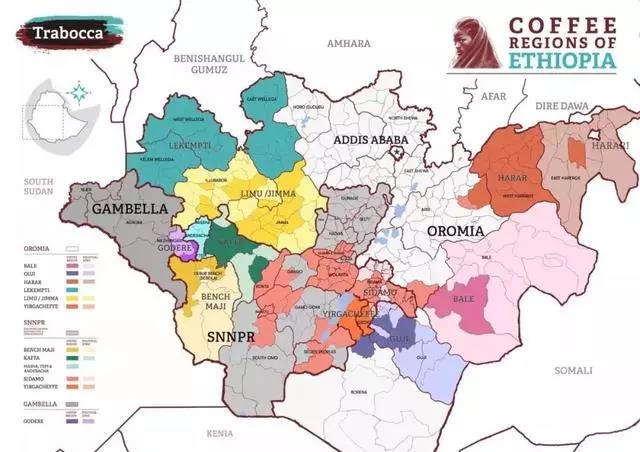
Ethiopia is regarded as the birthplace of coffee, with a rich diversity of native coffee varieties mostly cultivated by small farms using traditional methods. These are categorized into three main types: forest coffee, garden coffee, and plantation coffee, with exports managed uniformly by the government. The country has nine major producing regions, including Yirgacheffe, Sidamo, Limu, and Harrar, among which Yirgacheffe is world-renowned for its distinctive floral and citrus notes.
Take the Yirgacheffe Red Cherry Natural as an example—this coffee bean, grown at an altitude of about 2,300 meters, uses local native varieties and the natural processing method. After meticulous sorting, it is classified as Grade G1. When brewed, it exhibits bright lemon acidity, accompanied by berry flavors and subtle fermented wine notes, with a lingering finish that maintains a refreshing citrus tone and distinct aftertaste. It’s highly recommended for pour over enthusiasts who enjoy fruity acidity.
Kenya, located in East Africa and straddling the equator, features diverse terrain and a climate highly suitable for coffee cultivation. The country’s coffee is primarily grown at elevations of 1,500 to 2,100 meters above sea level and harvested twice a year, offering a wide range of flavors due to varying microclimates. Kenya has seven well-known producing regions, including Thika, Kirinyaga, the western side of Mount Kenya, Nyeri, Kiambu, Ruiru, and Muranga, with the Thika region often hailed as producing the “connoisseur’s cup.”
The Kenyan Little Tomato coffee bean comes from the Thika region, produced by the Asali Honey Processing Factory using the SL28 and SL34 varieties. It undergoes Kenya’s unique 72-hour washed process, which enhances mucilage retention during processing, resulting in its distinctive sweet-and-sour balance. When brewed, it presents bright flavors of cherry tomato and black plum, with vibrant acidity and layered complexity. The mid-palate highlights a prominent sweetness with juicy and berry-like aromas, while the finish offers notes of brown sugar and green tea. It’s ideal for those who prefer high acidity and bright flavors.
Although neighboring Kenya, Tanzania’s coffee flavors take a distinctly different direction. Tanzanian coffee is mostly grown on the northern slopes of Mount Kilimanjaro and in the southern Ruvuma River basin, generally featuring softer acidity, prominent sweetness, and often intense, layered aromas reminiscent of red wine. The north is dominated by Moshi and Mbeya, while the south is concentrated in the Songea-Ruvuma area.
The Tanzanian Kilimanjaro coffee comes from the northern highland volcanic region, using the Bourbon variety and washed processing, grown at altitudes between 1,300 and 2,000 meters. This coffee, when brewed, reveals honey-like sweetness, berry aromas, and a soft tea-like body, with gentle and balanced acidity. It’s highly suitable for coffee lovers who prefer low-acidity, full-bodied flavors, and is often recommended as a reliable choice for beginner pour over enthusiasts.

Though a relative newcomer to the coffee scene, Rwanda has gradually made its mark in the global specialty coffee market thanks to its high-altitude mountainous environment and rigorous cultivation management. Over 500,000 smallholder farmers are involved in coffee growing, typically on plots of less than one hectare each, mainly distributed in the mountainous “Land of a Thousand Hills” at altitudes of 1,700 to 2,000 meters. Rwandan coffee avoids chemical fertilizers or pesticides, relying on natural mulch and traditional fertilization for soil fertility, resulting in its unique bright fruit acidity and balanced taste.
The Rwandan Red Bourbon coffee, produced in the Nyamasheke region and refined through washed processing, includes varieties such as Bourbon, Catuai, and Catimor. This coffee showcases bright citrus and berry acidity, along with nutty and honeyed finishes. Its texture is delicate and smooth, making it ideal for brewers seeking clear flavors and a balanced acid-to-sweetness ratio. It’s also a great entry point for many pour over enthusiasts exploring African beans.
Burundi, located in Central-Eastern Africa, is predominantly composed of plateaus and mountains, with an average national elevation exceeding 1,600 meters, earning it the nickname “the Land of Mountains.” The country’s coffee production is mainly carried out by smallholder farmers, with almost no large estates. Its growing environment is similar to Ethiopia’s, but its flavor profile is wilder and more layered. Burundian coffee is mostly washed processed, with the Bourbon variety being dominant, making it a great choice for coffee lovers who enjoy bold flavors and intense aromas.
An example is the African Heart coffee from a well-known brand, produced in the town of Rurema at altitudes of 1,400 to 1,700 meters, using washed processing. This coffee, when brewed, emits honey tangerine and tea aromas. On the palate, it combines the sweet-and-sour interplay of black plum and mandarin, transitioning into a nutty and caramel sweetness in the mid-to-late stages. The overall flavor is rich and wild, perfect for advanced pour over enthusiasts aiming to explore the diversity of African beans.
The above content is compiled by CoffeeHunters, a coffee news website.


