







Introduction:The Gesha coffee from Ethiopia’s Gesha Village Estate is often confused with that from Panama’s Hacienda La Esmeralda, yet it has a unique grading and flavor system. This article delves into the origins of Gesha Village Estate, its management of eight distinct plots, the strict grading logic behind its auction, Gold, Red, Green, and Chaka lots, and offers origin information, roasting, and pour over recommendations for each grade to help you choose the Gesha that suits your taste preferences.
After Gesha coffee gained popularity in the specialty market, many coffee enthusiasts often conflated the offerings from Panama’s Hacienda La Esmeralda with those from Ethiopia’s Gesha Village Estate. In fact, these two regions not only differ in origin, but also in their grading systems and flavor profiles. This article starts with the background of Gesha Village Estate, detailing its management of the eight major plots, and explains the differences among auction, Gold, Red, Green, and Chaka lots, while also providing practical pour over and roasting references to help you grasp the essence of Gesha Village in one go.
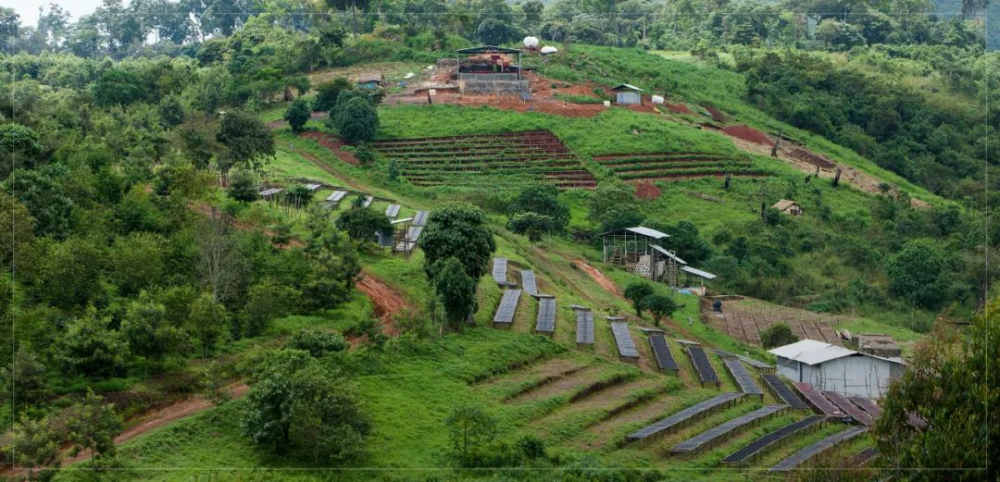
The story began in 2007, when documentary filmmaker Adam Overton and his photographer wife Rachel Samuel were invited by the Ethiopian government to produce a coffee-themed documentary. While visiting the Gera Coffee Forest in the Bench Maji region, they unexpectedly discovered the area’s rich wild coffee resources, which inspired them to create their own coffee estate. In 2009, after exchanging ideas with Willem Boot, owner of the Mule Mountain Estate and a BOP judge, they decided to explore the Bench Maji region near the South Sudan border in southern Ethiopia, at an altitude of about 1700–2100 meters, in search of the origin of Gesha coffee. In this dense jungle, considered a potential cradle of original Gesha, they found wild Gesha trees—this jungle was later confirmed to be the Gori Gesha forest, the birthplace of the Gesha variety. They collected the native plants and planted them in Gesha Village, officially establishing the Gesha Village Coffee Estate, now widely known as Gesha Village Estate.
Gesha Village Estate is no small-scale farm, covering a total area of 471 hectares with vast planting areas and diverse microclimates. Thanks to its exceptional geographical conditions, the coffee produced here generally features bright acidity and a clean finish, with rich flavor layers. To fully leverage the potential of each plot, the estate is subdivided into eight distinct sections, each with unique microclimates and soil characteristics that directly influence the final flavor profile of the coffee.
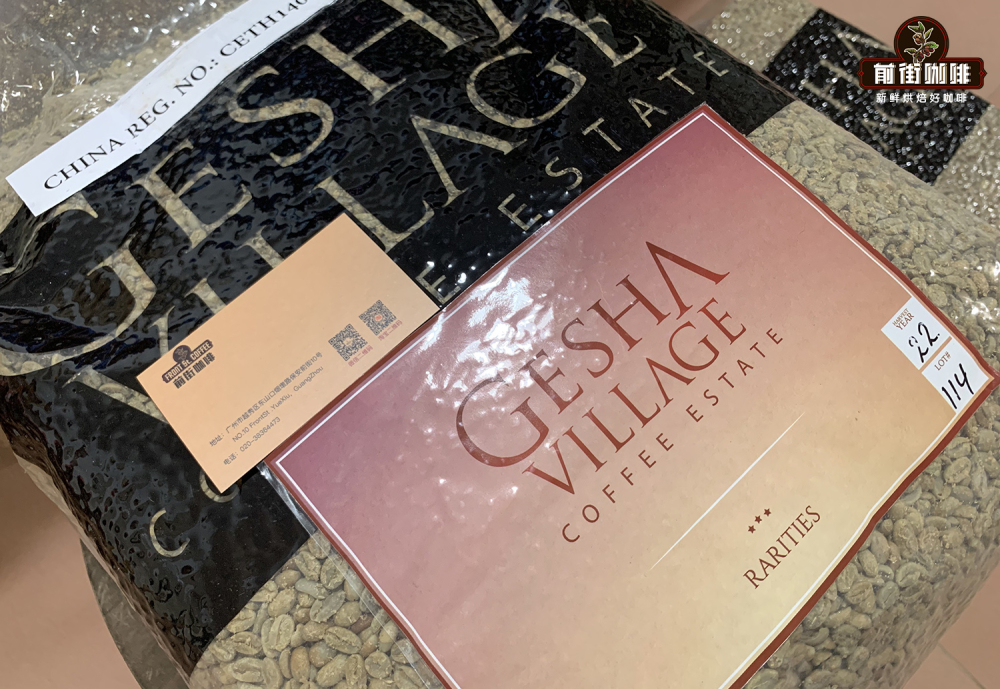
From the early stages of planting, Gesha Village Estate has continuously conducted varietal selection. Through rigorous cupping procedures, it has identified the most suitable varieties for each block and graded them based on flavor performance—these are the well-known auction, Gold, Red, Green, and Chaka lots. This grading system not only ensures the stability of coffee quality but also allows consumers to make choices based on their preferences and budget.
First, let’s look at the auction lots. These represent just 3.7% of Gesha Village’s annual production and must pass extremely stringent selection criteria. They are only available through the Gesha Village Global Auction, which began in 2018. The cupping scores for this lot range from 88.15 to 92.67, further divided into Champion's Reserve and Farm Reserve. For example, Gesha Village 2018 Auction Lot RSV.6 is a top-tier coffee from the auction lots. Such coffees are typically released in limited quantities and are sought after by collectors and competition-level roasters.
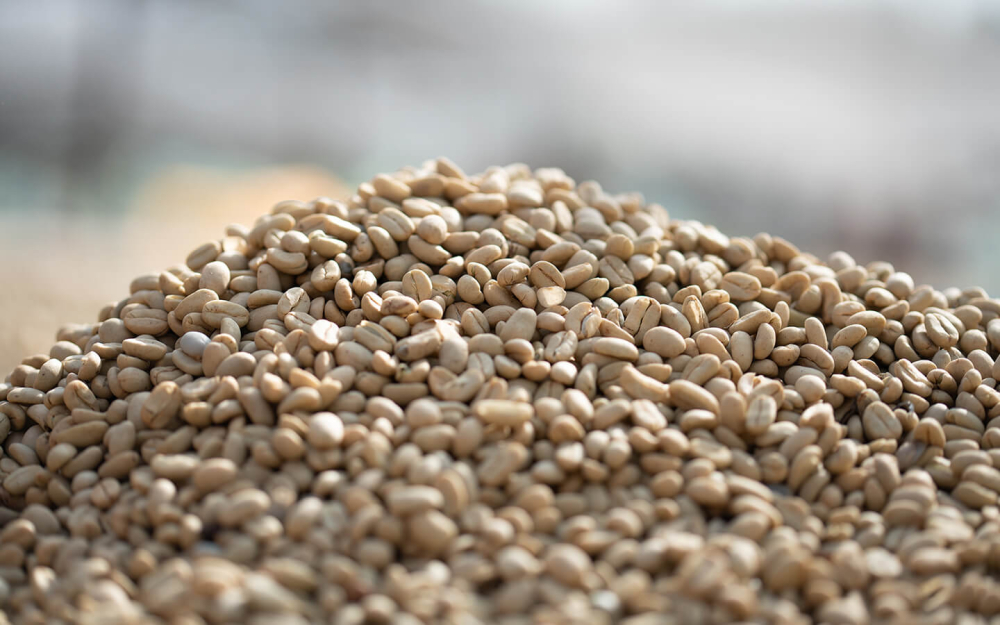
Gold lots account for 5% of annual production and are a common choice for competition brewers and high-end roasters. These coffees have full traceability, with each batch offering outstanding and complex flavor profiles. Though slightly inferior to auction lots, they remain among the best in Gesha Village. Red lots have a relatively higher proportion and are characterized by clear traceability to specific regions and varieties, with typical and balanced flavor profiles. Although their intensity and complexity are slightly lower than Gold lots, they still showcase the core characteristics of Gesha Village coffee and are an excellent value choice.
Green lots come from single plots and single varieties, retaining the classic flavors of Gesha Village but with slightly less intensity and complexity compared to Red lots. They are suitable for consumers who want to experience Gesha characteristics but have a limited budget. Lastly, Chaka lots are carefully blended coffees that combine Gori Gesha, Gesha 1931, and the Ethiopian native disease-resistant variety Illubabor. Through the complementarity of different varieties, they create a soft and layered flavor profile.
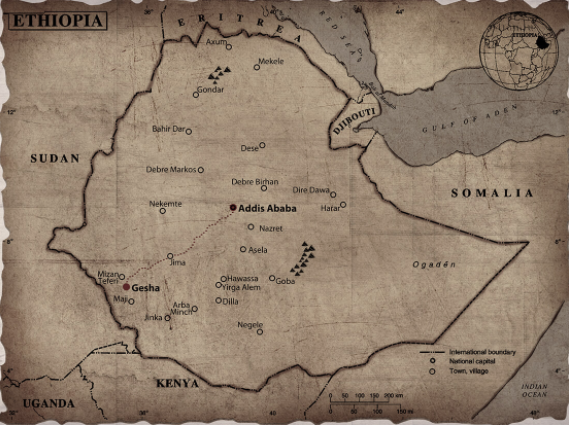
The eight major plots of Gesha Village Estate each have unique characteristics. The estate managers select the most suitable varieties for each plot based on differences in altitude, soil, and shade conditions, ensuring that the coffee from each block can showcase its distinctive terroir. For example, the OMA, SURMA, and SHEWA-JIBABU plots located on the western side of the estate, due to their higher elevation and slightly elevated terrain, have microclimatic conditions that differ greatly from those on the southern and northern sides, thereby influencing the direction of the coffee’s flavor. This strict management of microclimates and varieties is also key to Gesha Village’s ability to maintain high quality and consistency.
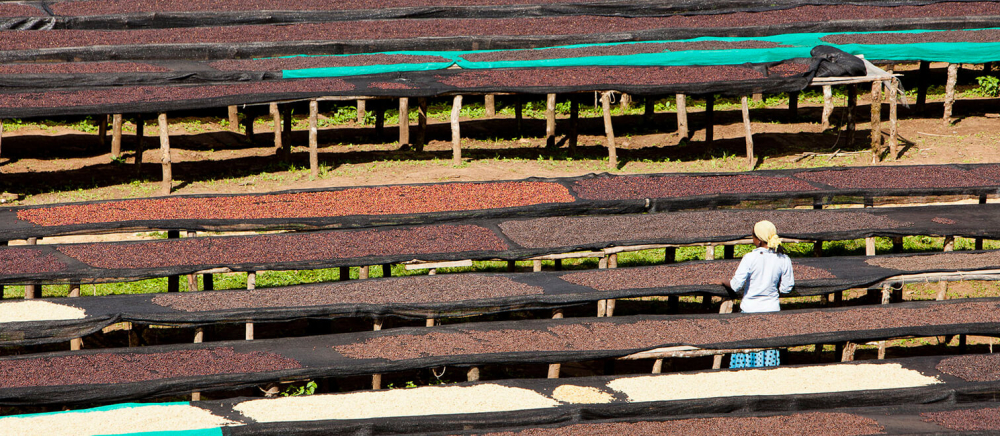
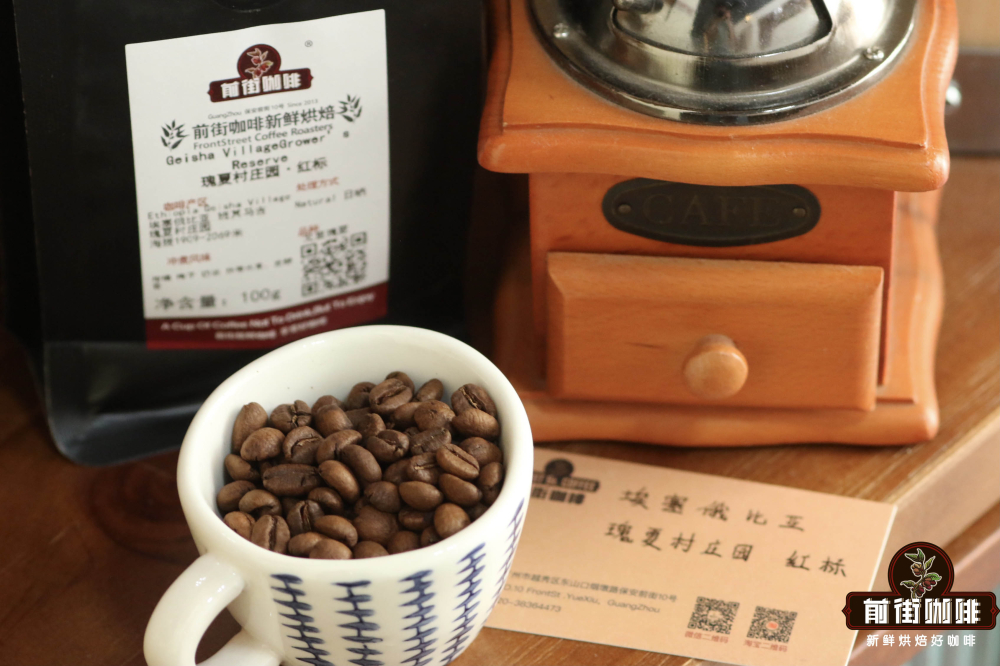
Below is the actual origin information and processing methods for the main grades of coffee beans from Gesha Village: Red lot beans come from the Bench Maji region, at altitudes between 1909–2069 meters, with the Gori Gesha variety, processed using the natural (sun-dried) method; Green lots also come from Bench Maji, at altitudes of 1911–2001 meters, with the same variety and processed using the natural method; Chaka lots combine the Gori Gesha, Gesha 1931, and Illubabor varieties, at altitudes ranging from 1900–2100 meters, also using the natural method, showcasing a diverse combination of flavors.

In terms of roasting, taking the Green lot as an example, since new-season coffee beans have a higher moisture content, it is recommended to extend the drying phase, and finally use a medium-light roast to highlight fruity notes. Specific roasting parameters can be referenced as follows: using a Yangjia 800N roaster, charge 500g of beans, start at 175°C drum temperature, with a flame power of 130 and air damper at 3; turn-around at 1 minute 36 seconds, when the drum temperature drops to 92.8°C, after 3 minutes adjust the air damper to 4 and increase flame power to 140; at 152.6°C drum temperature, when the bean surface turns yellow and grassy notes disappear, enter the drying phase, then reduce fan and flame; at 8 minutes 20 seconds, when the bean surface shows ugly wrinkles and black spots and transitions to coffee aroma, just before first crack; first crack begins at 9 minutes 55 seconds, adjust air damper to 5, develop for 1 minute 30 seconds after first crack, and drop at 193.5°C.
For cupping and pour over recommendations: Red lots exhibit rich fermented wine-like aromas, paired with citrus and berry acidity and sweetness, delivering a full-bodied flavor; Green lots focus on coconut, licorice, cream, and chocolate, with notes of toffee and almond, offering a smooth and balanced mouthfeel overall; Chaka lots have a softer profile, with citrus and grapefruit acidity paired with cream and caramel, suitable for drinkers who prefer a milder taste. For pour over, it is recommended to use a 1:15 coffee-to-water ratio, medium-coarse grind (80% through a #20 sieve), water temperature at 91°C, brewed with a Hario V60—bloom with 30g water for 35 seconds, then pour in stages to 125g and 225ml, with a total extraction time of about 2 minutes 10 seconds, which can fully highlight the delicate flavors of each grade.
The above content is compiled by CoffeeHunters, a coffee news website.


