








Introduction:In April 2023, the Specialty Coffee Association (SCA) released a beta version of its cupping form, marking the first time that sweetness was listed as an independent scoring criterion and sensory judgment logic was restructured. This new version establishes a more precise coffee quality evaluation framework through five key dimensions: green bean grade, descriptive analysis, emotional feedback, physical attributes, and potential value. This article provides an in-depth interpretation of the structural adjustments and practical applications of the new cupping form, accompanied by official beta version visuals in both Chinese and English, to help coffee professionals and enthusiasts grasp the latest evaluation standards.
As the most authoritative quality assessment tool in the global coffee industry, the SCA cupping form has long been a key reference for green bean procurement, competition judging, and roast optimization. However, this scoring system, which has been in use for over twenty years, underwent its first major revision in 2023. The most significant change in this updated beta version is the formal inclusion of "Sweetness" as a mandatory evaluation item, along with a structural adjustment to resolve the issue of overlapping criteria for discriminative, descriptive, and emotional judgments found in previous versions.
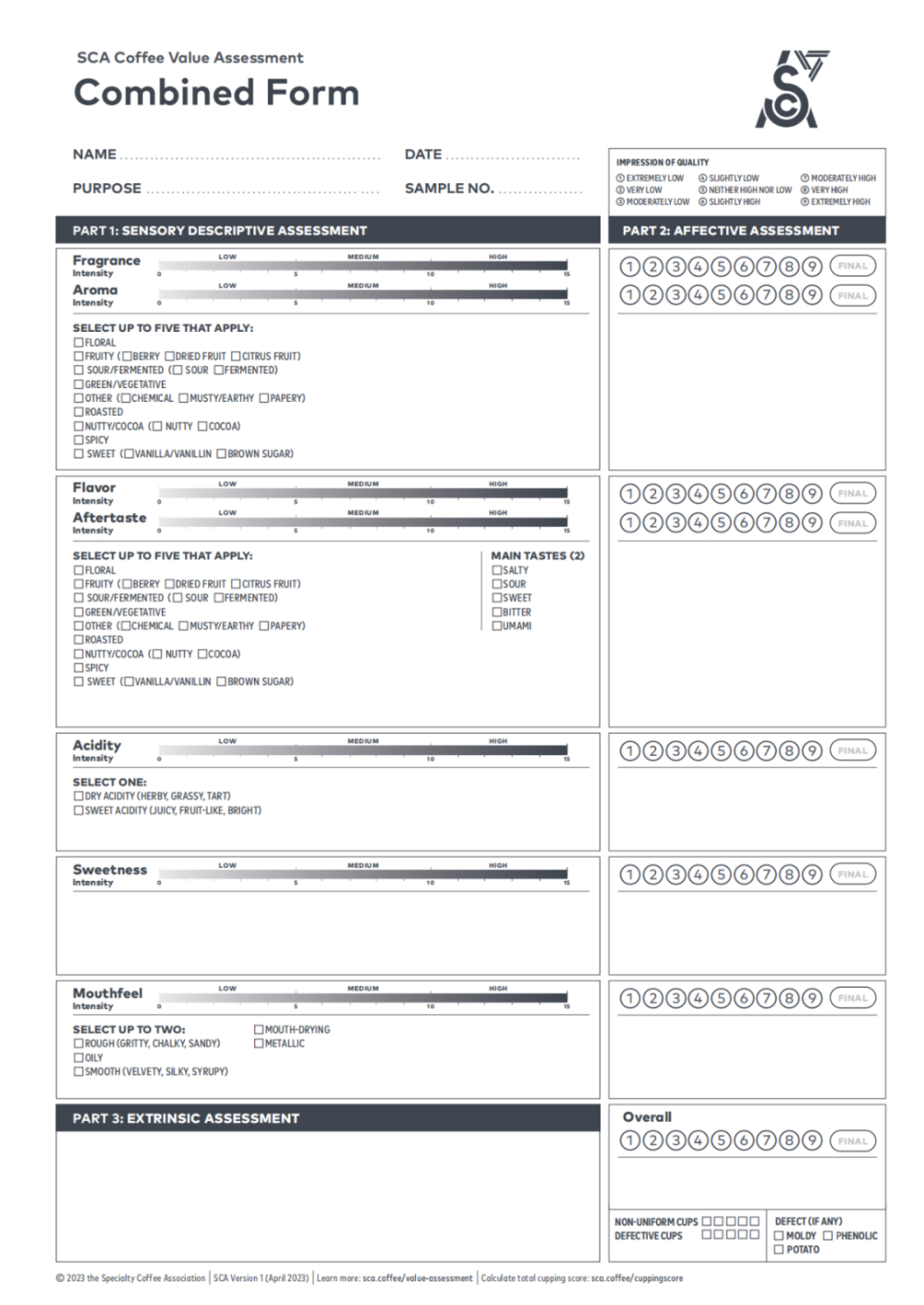
According to the beta version document released by the SCA, the new cupping form introduces a completely new five-dimensional evaluation system:Green Bean Grade(reflecting agricultural baseline quality),Descriptive Analysis(focusing on flavor characteristics and sensory performance),Emotional Judgment(assessing personal preference level),Physical Attributes(including dry/wet aroma and physical defects), andDiscovery Value(exploring the potential application possibilities of the coffee). This structure clearly distinguishes between different types of sensory judgments, helping evaluators reach more objective conclusions.

Mario, a representative of the SCA Technical Committee, explained the philosophy behind the revision, pointing out that common scoring biases in traditional cupping often stem from conflating three fundamentally different judgment standards. For example, in the old version, "Body" (body or mouthfeel) and "Balance" were subjective preferences (emotional judgments) but shared the same scoring logic with "Uniformity" (discriminative judgment) and "Intensity" (descriptive judgment). This confusion could distort evaluation results, especially in critical scenarios such as international competitions or commercial procurement.
To address this issue, the 2023 beta version of the cupping form introduces a layered evaluation mechanism: first, establishing an objective foundation through clear descriptive terms (such as acidity brightness, sweetness layers, and aftertaste duration); then guiding evaluators to distinguish personal emotional responses (for example, "Do you like the body of this coffee?"); and finally, considering external factors such as the origin of the green beans and processing method characteristics. Mario emphasized that the newly added scoring interval design can effectively reduce subjective bias, making each scoring dimension more meaningful.
From a practical application perspective, the new cupping form places higher demands on coffee professionals. Evaluators must first master the scoring criteria for each dimension—for instance, distinguishing in the descriptive analysis between the clean sweetness from natural glycoside hydrolysis, the caramel-like sweetness from caramelization, or the unpleasant sweetness from over-fermentation; emotional judgment requires honestly recording personal subjective feelings about concentration, body, and overall balance based on individual taste preferences. This structured process is particularly suitable for coffee buyers screening batches, roasters adjusting roast profiles, or competition judges making detailed comparisons.
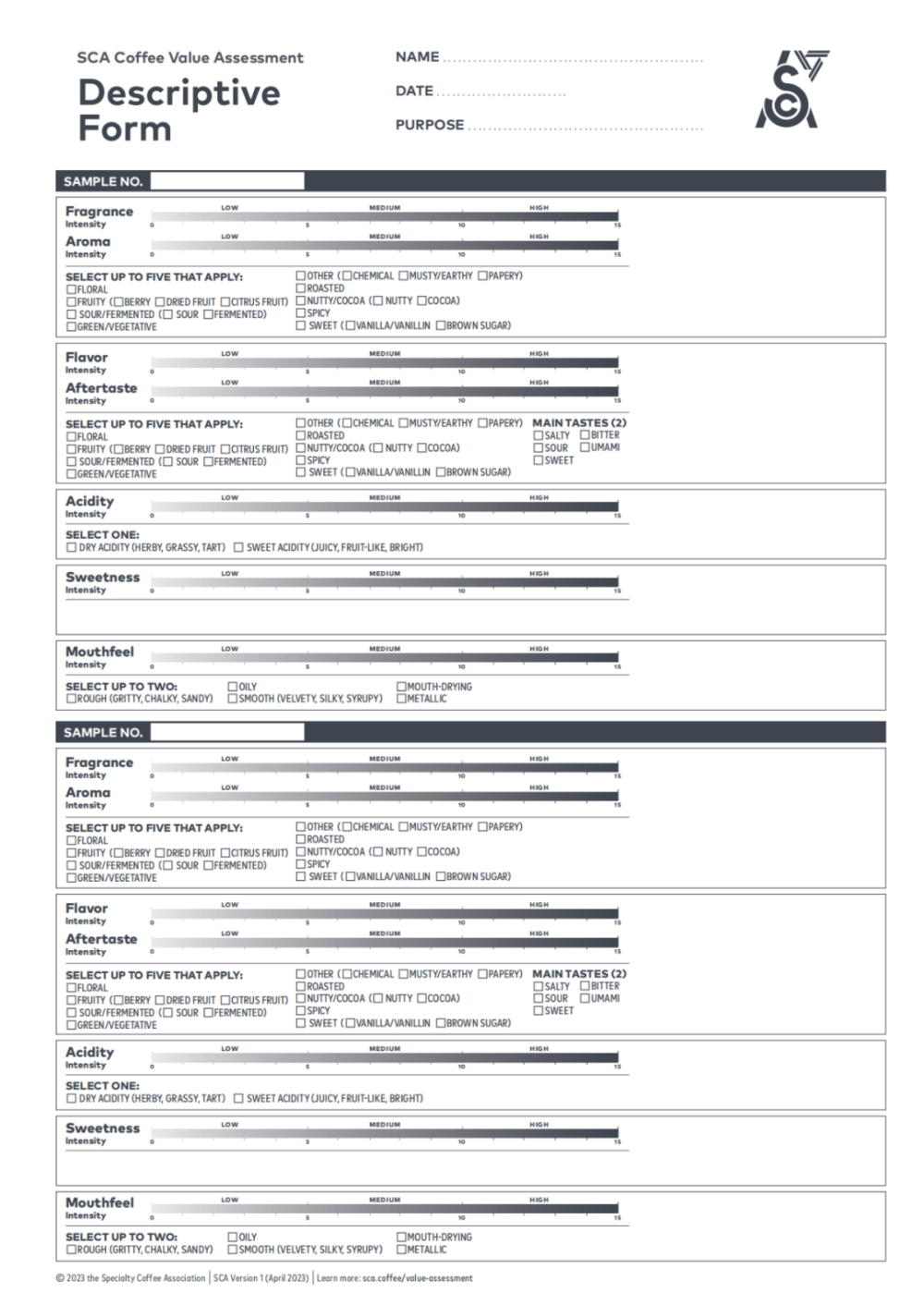
Observing the beta version visuals reveals that the new form adds sub-items to scoring fields—for example, breaking down the previously broad "Overall Impression" into three subcategories: "Flavor Complexity," "Aftertaste Quality," and "Drinkability." These adjustments not only improve scoring accuracy but also facilitate subsequent data analysis. For enthusiasts aiming to deeply understand coffee flavors, it is recommended to practice distinguishing the sources of different sensory signals using the official scoring guide—such as the blueberry acidity and citrus notes commonly found in high-altitude Arabica beans, or the wine-like aroma and tropical fruit aftertaste unique to natural processing methods.
Notably, the new cupping form retains the traditional 100-point scale framework but adjusts the weight distribution of each item. Among these, "Sweetness," as a newly elevated key indicator, is ranked alongside "Clean Cup" and "Sweetness" (note: likely a repetition or typo for another attribute like "Sweetness" or "Overall Sweetness") as foundational threshold criteria. Any significant defects (such as over-fermentation, grassy notes, or improper drying) will directly impact the final score. This change reflects the modern coffee market's emphasis on balanced flavors and aligns with the global roasting trend where "bright sweetness" is replacing "plain bitterness."
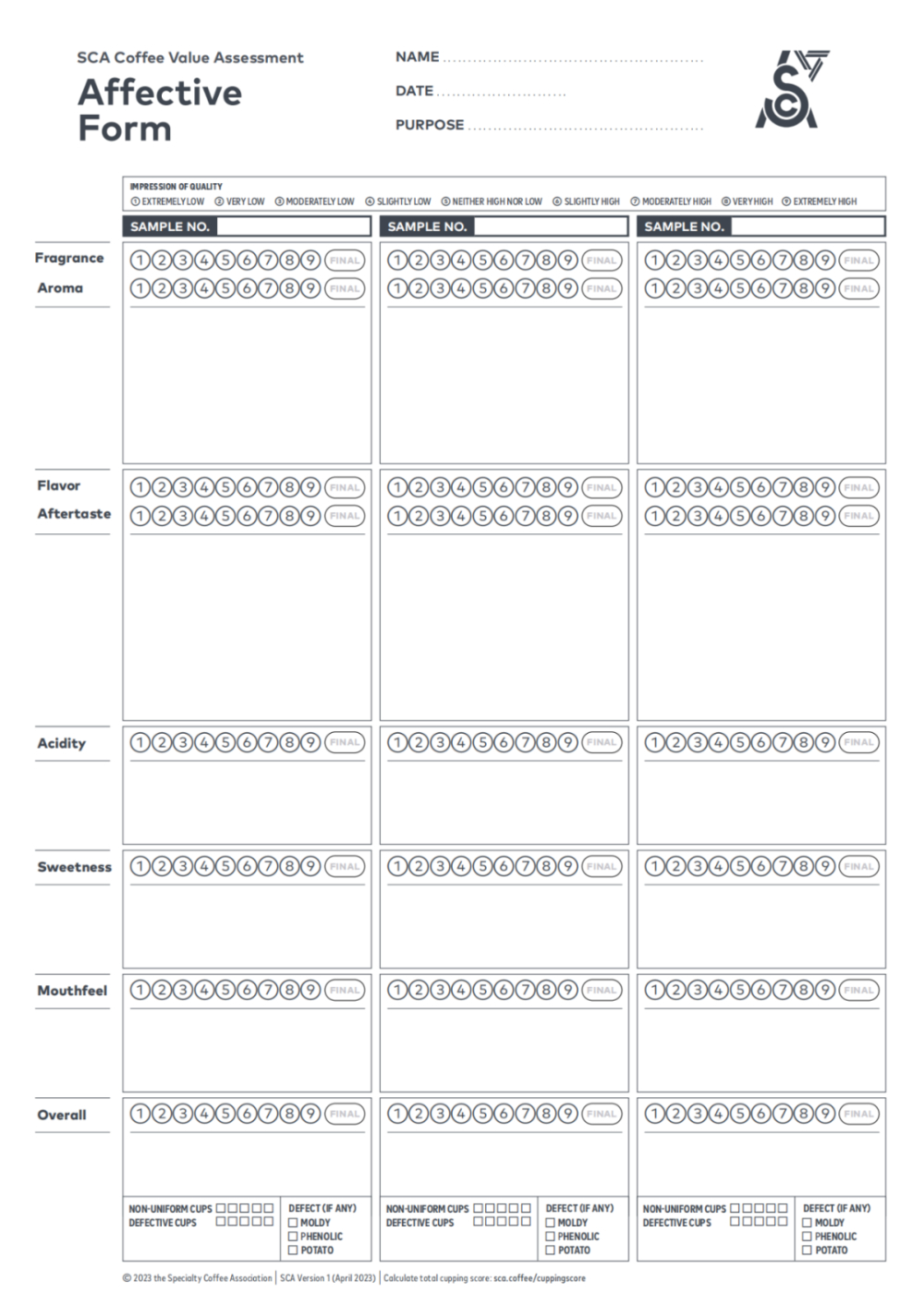
For coffee professionals, familiarizing themselves with the scoring logic of the new cupping form can significantly enhance the efficiency of procurement and roasting decisions. First-time users are advised to start by understanding the item definitions in the official beta version documentation, then practice with common origins (such as Ethiopia Yirgacheffe, Colombia Huila, or Brazil Cerrado). Ensure the evaluation environment controls lighting, noise, and cup consistency, and maintain the coffee liquid temperature within the optimal range of 82–85°C to obtain the most accurate sensory feedback.
This comprehensive upgrade to the SCA cupping form marks the specialty coffee industry’s further pursuit of scientific quality evaluation. By clearly distinguishing sensory judgment types and strengthening key indicators such as sweetness, the new version not only improves the reliability of evaluation results but also provides more precise optimization directions for every stage of coffee, from green bean to cup. With the collection of beta feedback complete, the official version is expected to be released within the next year, potentially becoming the new standard for global coffee trade and competition judging.
The above content is compiled by CoffeeHunters, a coffee news website.


