







Introduction:Colombian coffee is renowned for its mild acidity, nutty profile, and sweet aftertaste, making it a top choice for beginners in the world of pour over brewing. This article delves into Colombia’s green bean grading system—from Supreme, EP to U.G.Q mesh size standards—clarifies common misconceptions about Excelso, and highlights the unique flavor profile of washed beans from the Huila region. Paired with tested V60 three-stage extraction parameters, it guides you to explore the refined qualities of high-altitude coffee within a reasonable budget.
With its delicate berry-like acidity, rich roasted nut undertones, and caramel-like sweet finish, Colombian coffee has become a go-to for many pour over beginners entering the specialty coffee scene. This South American country, home to the Andes Mountains and numerous active volcanoes, is not only the world’s second-largest Arabica producer but also cultivates beans with layered complexity and balance, thanks to its unique volcanic soils and microclimates.
The classification of Colombian coffee grades hinges primarily on the bean size during green bean selection—measured using professional sieves and denoted in “mesh” units. Currently, there are three main grades: the highest-grade Supreme requires95% of beans to pass through a 17-mesh sieve; the European standard EP (European Preparation) is15 mesh; while U.G.Q requires14 meshpass rates. There are also sub-grades, such as those with95% passing through an 18-mesh sieve, known as Supreme Premium, and those with95% passing through a 16-mesh sieve, classified as Extra.
A common misconception lies in the “Excelso” grade. In fact, Excelso is not a quality grade for Colombian green beans but rather a general term for export standards—regardless of whether the beans are Supreme, EP, or U.G.Q, as long as they meet export specifications, they are categorized as Excelso. Since 2016, the Colombian Coffee Growers Federation (FNC) has stipulated that only green beans meeting Excelso standards may bear the “EXCELSO - Café de Colombia” label on their packaging, accompanied by an official quality certificate.
Colombian coffee farmers commonly use the washed processing method: harvested coffee cherries are placed in water tanks to ferment, where microbial action breaks down the mucilage layer. This process not only removes impurities but also enhances the inherent acidity of the beans. After moderate drying, washed Colombian beans typically exhibit a clean and refreshing flavor profile, with minimal defects and a bright mouthfeel—making them ideal for beginners practicing pour over techniques.
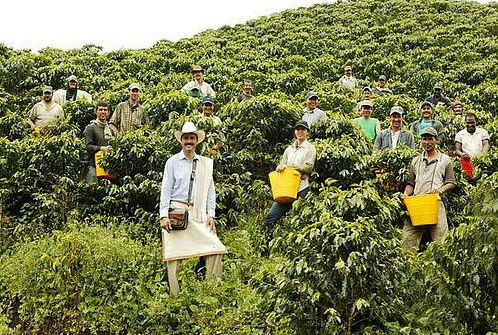
For those looking to experience the diverse flavors of Colombian coffee at a reasonable price, washed beans from the Huila region are an unmissable choice. Located in southern Colombia, this area sits at elevations between 1,500 and 2,000 meters, with significant day-night temperature variations that impart distinct berry notes, a nutty base, and caramel sweetness to the beans, with a chocolatey richness in the aftertaste. The flavor profile is layered, balanced, and complex.
For pour over brewing of Huila washed beans, it is recommended to use a V60 size 01 filter to enhance the layered characteristics. Tested parameters are as follows: use15 grams of medium-fine ground beans (granulated sugar size, approximately 75% passing rate through a 20-mesh sieve), with90°C hot waterat a1:15 coffee-to-water ratio, following a three-stage pouring method—first pour30 grams of water for a 30-second bloom, then pour in small circles to reach125 grams for the first pour, wait for the water level to drop slightly before continuing to225 grams to finish, and finally remove the filter just before the liquid surface exposes the coffee bed, keeping the total extraction time around1 minute and 59 seconds. These parameters effectively highlight the bean’s gentle acidity and caramel sweetness, making it ideal for coffee enthusiasts seeking balanced flavors.
The above content is compiled by CoffeeHunters, a coffee news website.


