







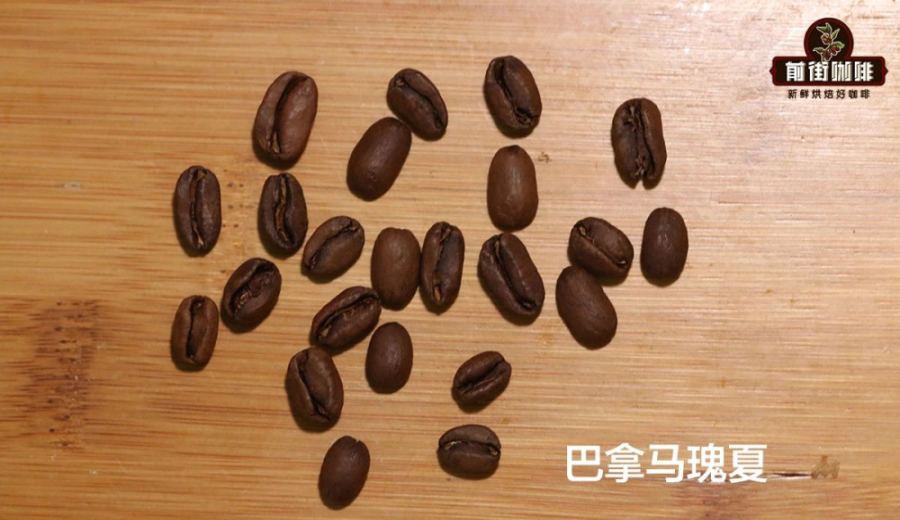
Introduction:Did you know that the seeds of Panamanian Geisha originate from Ethiopia? This in-depth article introduces the Geisha Village Coffee Estate located in southwestern Ethiopia, taking you through how this 500-hectare farm — the world’s only plantation exclusively dedicated to the Geisha variety — emerged from wild coffee forests. It analyzes the natural sun-dried processing characteristics of Red Label Geisha and the differences among its three main varieties, while also providing practical pour over parameters and techniques to help you fully unlock the unique floral, fruity aromas, and sweetness of Geisha.
When it comes to Geisha, many people immediately think of the legendary coffee from Panama’s Hacienda Esmeralda that once fetched an auction record price. However, the roots of this variety actually lie deep in the pristine jungles of southwestern Ethiopia. The Geisha Village Coffee Estate, located in the Bench-Maji region, is the world’s only large-scale farm solely planted with the Geisha variety, covering an area of 475 hectares. It was established in 2011 by documentary filmmaker Adam Overton and his photographer wife Rachel Samuel. They discovered the seeds in wild Geisha forests and gradually built what is now a specialty coffee haven.
The most well-known product of this estate is its “Red Label Geisha,” which uses the natural sun-dried processing method to highlight the ultimate expression of sweetness and floral-fruity aromas. To help coffee enthusiasts better understand this highly sought-after coffee, we will provide a comprehensive analysis — from the history of Geisha Village, the microclimate and variety distribution of the growing region, the processing methods, to the actual roasting and pour over approaches used by the farm — helping you master every key step from bean selection to brewing.
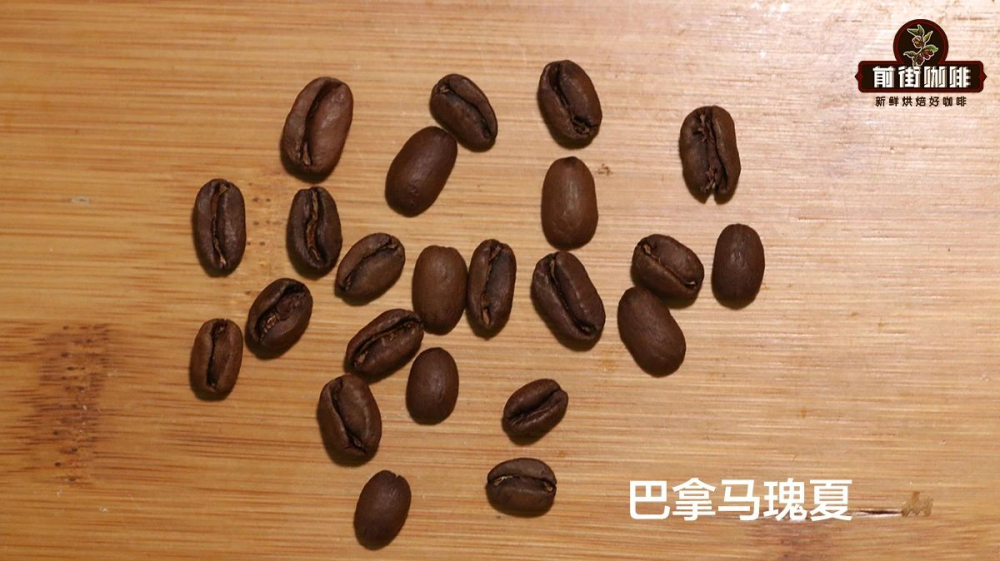
The story begins in 2007, when Adam and Rachel were filming a coffee-themed documentary for the Ethiopian government. During this time, they visited the Gera Coffee Forest in the Bench-Maji region. This journey not only changed their perception of coffee but also planted the seed for creating their own coffee estate. In 2009, after interacting with Willem Boot — a renowned Best of Panama judge and owner of the Mzuzu Estate — they decided to return to Ethiopia to seek the origins of the Geisha variety.
In 2011, they arrived in Bench-Maji — a region close to South Sudan with varying altitudes and rich biodiversity. After multiple explorations, they finally discovered wild Geisha trees in an area surrounded by jungle, resembling a magical forest. This place is the Gori Geisha forest, where the Geisha variety was first discovered. They collected seeds from these native trees and established the current Geisha Village Coffee Estate about 12 miles away from the original forest, officially embarking on the unique path of cultivating only Geisha.
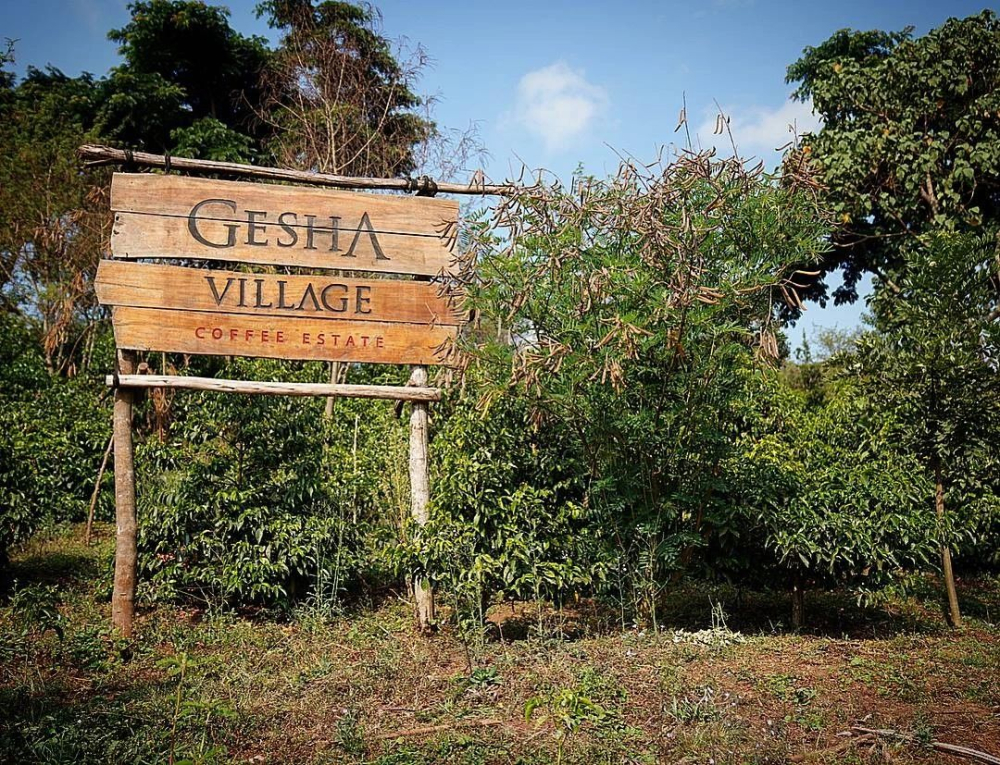
The Geisha Village Coffee Estate is distinctly different from most Ethiopian coffee farms, which consist of smallholder farmers. It is a modern large-scale farm equipped with its own wet processing mill and laboratory, spanning 475 hectares, and is focused on the cultivation and research of the Geisha variety. The estate is meticulously divided into eight plots based on microclimatic conditions. Each plot, according to variations in altitude, soil, and sunlight, grows different Geisha varieties — including Gesha1931, Gori Gesha, and Illubabor. The seeds all come from surrounding forests, ensuring genetic diversity and regional character.
In 2015, Geisha Village had its first harvest, and in 2017, with the help of Willem Boot, they held their first international auction, offering 21 micro-lots of Geisha. Among them, 19 lots were packed in 120-kilogram bags. The auction was highly competitive, and the top lot was sold at $85 per pound, setting a new historical high for African coffee bean auction prices.
In terms of processing methods, Geisha Village chooses natural sun-drying as its primary approach, which is particularly suited to Ethiopia’s hot and dry climate. During the sun-drying process, coffee cherries are spread in thin layers on African-style raised beds and covered with plastic sheets to avoid overexposure to the sun. They are regularly turned and sorted to remove underripe, insect-damaged, or discolored beans. The entire drying process lasts between 18 to 30 days to ensure full sugar development, giving the coffee intense sweetness and complex fruit flavors.
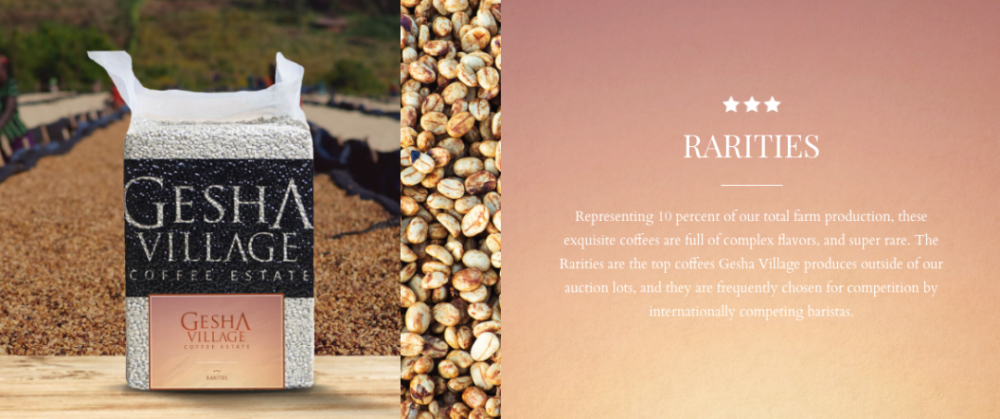
The three main varieties grown in Geisha Village each have their own unique characteristics: Gesha1931 is considered the variety closest to the Panamanian Geisha parent based on plant morphology, bean size, and cupping performance; Gori Gesha is a heritage variety personally collected by the farm owners from the wild Gori Geisha forest 20 kilometers away, which has not been found elsewhere to date; Illubabor is a variety provided by the Ethiopian Coffee Research Center, adding diversity to Geisha Village’s flavor profile. It’s worth noting that although Panamanian Geisha and Ethiopian Geisha share the same origin, their flavor profiles differ significantly due to variations in climate and soil.
Regarding roasting, the Yama 800N roaster is used with a coffee batch size of around 300 grams. The initial charge temperature is set to 160°C, with the damper at 3 and heat at 130. When the turning point appears at 1 minute 40 seconds and the drum temperature reaches 140°C, the damper is adjusted to 4 and the heat increased to 150. As the beans turn yellow and the grassy aroma disappears, the dehydration stage begins, with the temperature at around 148.1°C. The heat is then gradually reduced, and at 166°C and 176°C, it is adjusted to 120 and 90 respectively to stabilize flavor development. First crack begins at 8 minutes 25 seconds, and the damper is set to 5. Roasting continues for 1 minute 45 seconds after first crack, and the batch is dropped at 197.5°C, preserving rich sweetness and layered aromatics.
To fully experience the delicate floral-fruity notes and honey-like sweetness of Red Label Geisha, the pour over method is crucial. It is recommended to use 15 grams of coffee grounds with a Hario V60 small-size filter. The grind size should be adjusted to approximately 78% passing through a #20 sieve — slightly coarser than usual — to prevent channeling due to the relatively hard bean density of Geisha. The coffee-to-water ratio is set to 1:16, and the water temperature is controlled at 91°C, which helps balance acidity and sweetness, extracting the optimal flavor profile. During brewing, it is advised to pour in two stages with a steady flow rate to avoid over-extraction or under-extraction that could affect the taste.
The above content is compiled by CoffeeHunters, a coffee news website.


