








Introduction:As one of the world’s top three coffee-producing countries, Brazil is renowned for its coffee flavors that are rich, balanced, and characterized by nutty and chocolatey notes. This article delves into Brazil’s mainstream coffee varieties such as Bourbon, Catuai, and Mundo Novo, introduces the characteristics of its four core producing regions, and explains in detail how Brazil’s unique pulped natural processing method enhances quality. It also explores how flat terrain influences flavor, and the rise of specialty coffees like those from Fazenda Rainha, helping readers fully understand the uniqueness and potential of Brazilian coffee.
Brazil has long ranked among the world’s top three coffee-exporting nations, and its coffee is most distinguished by its balanced and layered flavors, often featuring warm nutty and deep chocolatey tones. Compared to the herbal notes of Indonesian Mandheling or the pronounced citrus acidity of Ethiopian Yirgacheffe, Brazilian coffee is more like a classic foundational variety—stable and understated, making it a true representative of the “standard coffee.”
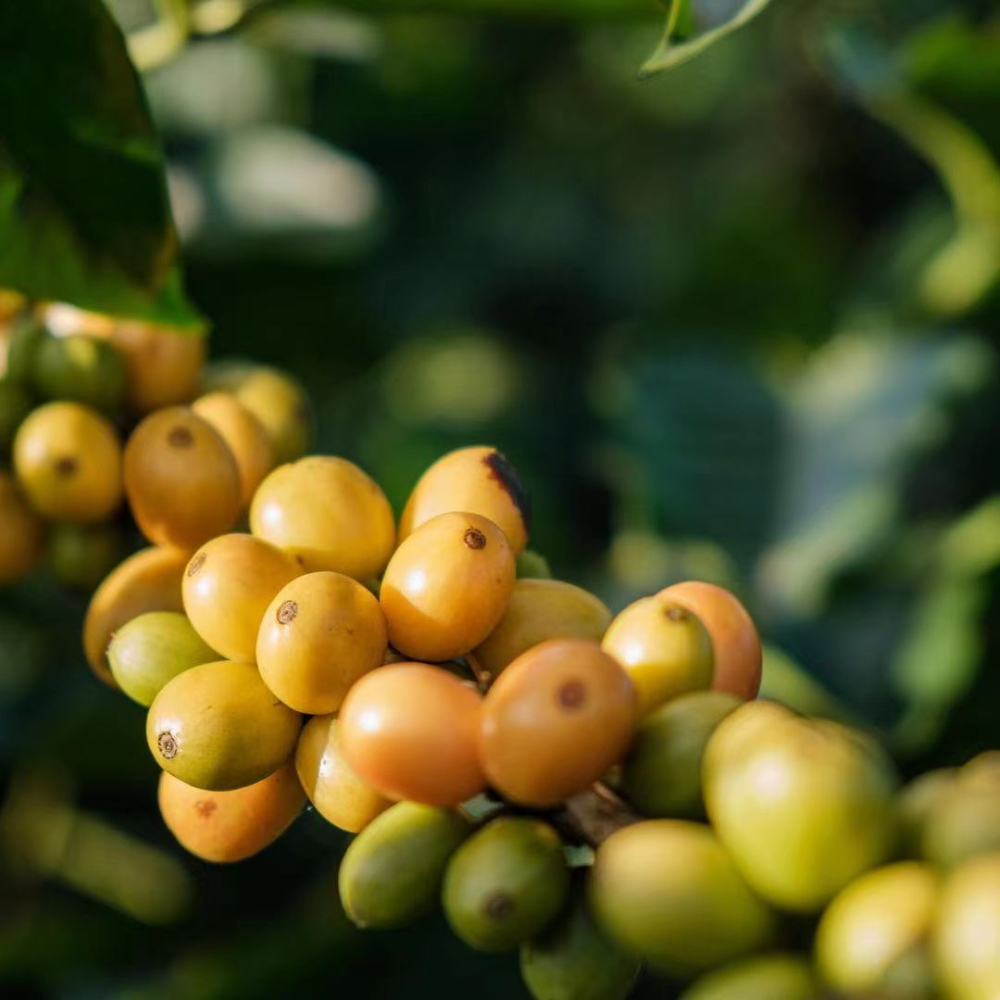
In terms of varieties, Brazil mainly cultivates three types: Bourbon, Mundo Novo, and Catuai. Among them,Yellow Bourbonis a uniquely cultivated Brazilian variety. For example, Yellow Bourbon beans produced in well-known regions exhibit distinctive berry-like acidity and rich creamy aromas, with a rounder bean shape and a full-bodied mouthfeel. However, the Bourbon family is relatively less resistant to disease and requires more careful management during cultivation. In addition,Mundo NovoandCatuaiare favored by many large farms due to their strong adaptability and stable yields.

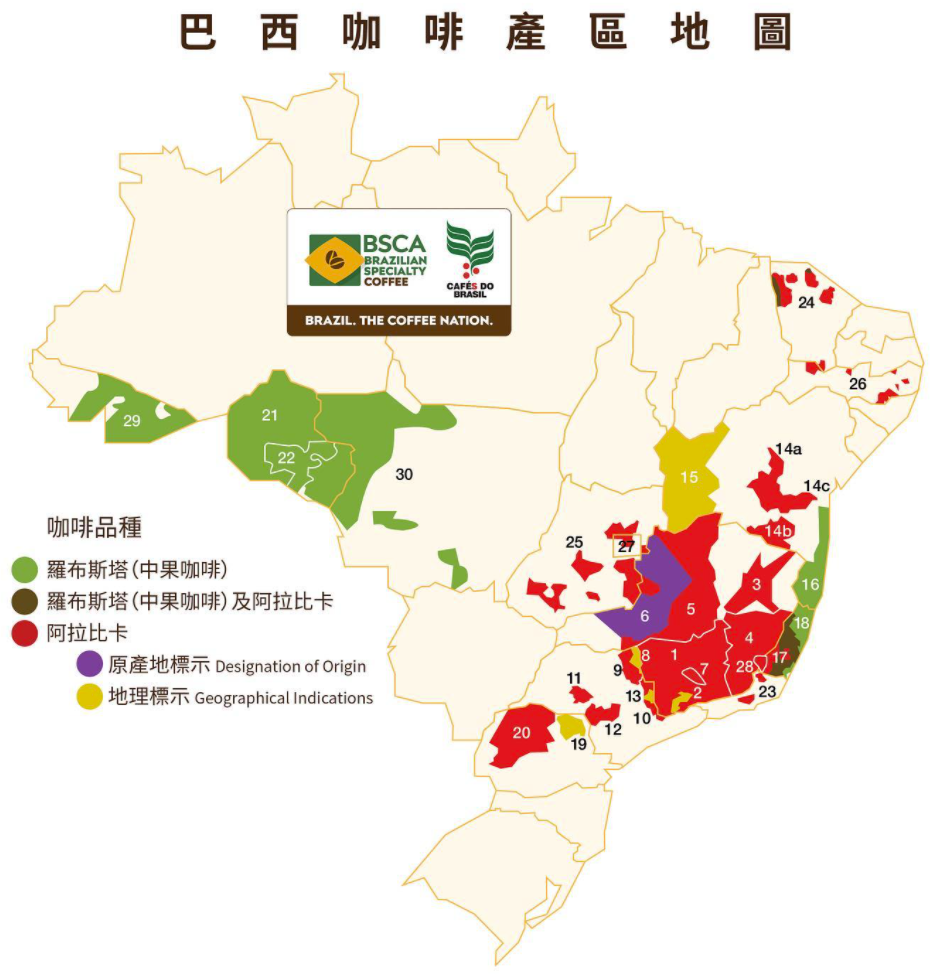
Terrain has a significant impact on the flavor of Brazilian coffee. Most of Brazil consists of plateaus around 500 meters above sea level and some plains below 200 meters, resulting in generally flat topography. As is well known, the higher the altitude, the better the density and hardness of coffee beans, which aids in the accumulation of flavor compounds. In contrast, coffee in Colombia is mostly grown on steep slopes above 1,000 meters, where large diurnal temperature variations promote sugar accumulation, resulting in more prominent nutty and chocolatey flavors. However, some high-altitude regions in Brazil, such as Cerrado and Sul de Minas in Minas Gerais, can still produce unique flavors with peanut and creamy notes—a characteristic that is hard to match in other American coffee-growing areas.
When it comes to Brazilian coffee producing regions, four key areas play a crucial role, including Minas Gerais, São Paulo, Bahia, and Espírito Santo, whose combined output accounts for over 90% of the country’s total exports. Among them,Minas Geraisstate boasts several high-altitude micro-regions such as Cerrado and Sul de Minas, serving as important sources of specialty coffee; whereasnorthern Espírito Santo, due to its low-lying terrain, mainly produces commercial-grade Robusta rather than high-quality Arabica.
In terms of processing methods, due to Brazil’s massive annual coffee production, traditional washed processing cannot meet demand, leading to the development ofthe pulped natural methodlocally. This approach first uses water tanks to remove defective and float beans, then mechanically removes the skin and pulp while retaining the mucilage layer for direct sun drying or drying processing. This method balances efficiency and quality, significantly reducing water usage and labor costs, thereby improving the overall quality of Brazilian coffee. However, if the drying process is not properly controlled, it can easily result in earthy off-flavors, soprecise control of roasting heat and temperature is essential, especially when handling natural or pulped natural beans.
The history of Brazilian coffee dates back to 1720. Over time, certain estates such as Fazenda Rainha have gradually stood out. Owned by the Carvalho Dias family, this estate has long been committed to promoting specialty coffee and has received multiple accolades in Brazilian coffee competitions. The coffee from Fazenda Rainha often features intense nutty aromas and a distinctly chocolatey finish, with a round mouthfeel and well-defined layers, making it an excellent entry point for exploring Brazilian specialty coffee. However, a large portion of Brazilian coffee is still mechanically harvested and processed using a “pick-then-sort” method, resulting in generally more moderate flavors in the Brazilian beans available on the market, suitable for use in espresso blends to provide a stable base flavor.
In practical applications, many baristas blend Brazilian beans with those from other regions—for example, combining Brazilian and Colombian beans in a 7:3 ratio to create a blend that is rich in crema and smooth on the palate, widely loved by consumers. Such blends not only balance bitterness and acidity but also highlight the distinctive fullness and nuttiness of Brazilian coffee, making them ideal for milk-based coffee drinks.
Although some views suggest that Brazilian coffee lacks distinct character, in reality, by selecting the right region and processing method, Brazilian coffee can also showcase surprising depth of flavor. From the rise of specialty estates like Fazenda Rainha to the innovation of the pulped natural process, Brazilian coffee is gradually shaking off past stereotypes and showcasing its diverse potential to the world.
The above content is compiled by CoffeeHunters, a coffee news website.


