







Introduction:Green Mountain Coffee and Blue Mountain Coffee may differ by just one character, but they are worlds apart. The former is an affordable single-serve brand from the United States, while the latter is a premium Arabica variety grown at high altitudes in Jamaica, globally recognized as a symbol of high quality. This article will delve into the fundamental differences between the two in terms of origin, flavor profile, and pricing structure, while also providing practical information on the rarity and cultivation challenges of Blue Mountain Coffee. It will help you understand why Blue Mountain commands such high prices, and offers brewing recommendations for professionally washed beans to assist coffee enthusiasts in making more informed choices.
In the world of coffee, although "Green Mountain Coffee" and "Blue Mountain Coffee" differ by only one character, they are fundamentally different in terms of origin, quality, and consumer positioning. Green Mountain Coffee originated in Vermont, USA, and is a brand oriented toward affordability and convenience, best known for its popular single-serve K-Cup system, targeting the mass market. In contrast, Blue Mountain Coffee comes from the Blue Mountains of Jamaica, a premium Arabica variety renowned worldwide for its delicate and balanced flavors, placing it among the finest specialty coffees.
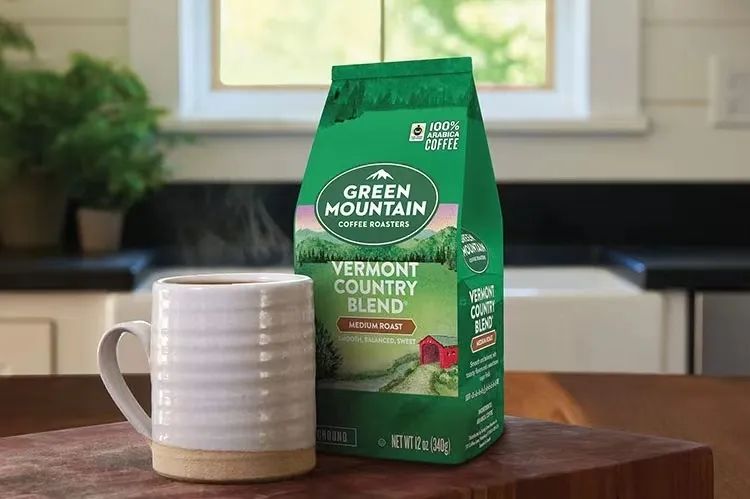
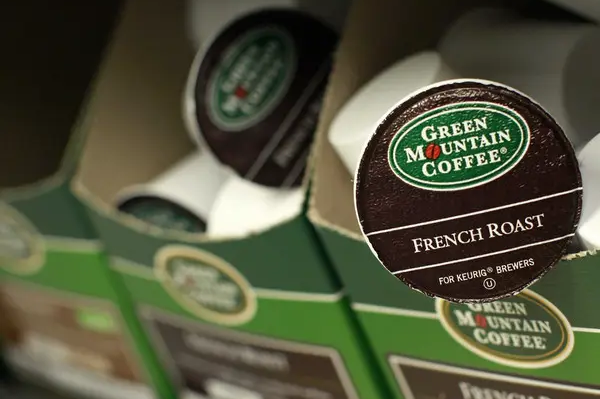
The origins of the Green Mountain Coffee brand can be traced back to 1981, with its headquarters located in the northeastern United States. It went public in 1993. Initially, the brand focused on offering high-value, premium Arabica coffee, taking a different approach from Starbucks’ high-end retail model by emphasizing convenience for home and office settings. Its most iconic product is the K-Cup system, a single-serve capsule system developed by Keurig that works with a dedicated coffee maker to quickly brew a hot cup of coffee—no grinding, measuring, or brewing residue involved, making it highly suitable for the fast-paced modern lifestyle. It is reported that each K-Cup costs about $0.50, just one-tenth the price of a Starbucks drink, and its affordability has been a key factor in its rapid global expansion.
Beyond its pricing advantage, Green Mountain Coffee also actively promotes sustainability and fair trade, having sold certified Fair Trade and organic coffee since 2002 to ensure coffee farmers receive fair compensation and to encourage environmentally friendly farming practices. With a diverse product range and a practical positioning, it holds a place in the global market, though it still falls short of meeting the definition of specialty coffee.
In contrast, Blue Mountain Coffee is the pinnacle representative of the coffee world. It is grown in the Blue Mountains of Jamaica, an island nation in the Caribbean, where the unique geography and climate produce coffee beans with exceptionally refined flavors. The main peak of the Blue Mountains stands at approximately 2,256 meters, but the suitable coffee-growing areas are limited to elevations between 910 and 1,700 meters, particularly on slopes below 1,700 meters where clouds often shroud the region. The combination of fertile volcanic soil, stable rainfall, and moderate temperatures (around 27°C) creates the foundational flavors of Blue Mountain Coffee. The steep terrain makes harvesting difficult, resulting in extremely limited production.
The Jamaica Coffee Industry Board (CIB) has very strict criteria for what qualifies as "Blue Mountain Coffee." Only Arabica coffee grown in designated high-altitude regions can bear the name "Jamaica Blue Mountain Coffee." These regions account for only one-third of the entire Blue Mountain foothills, with the rest producing other grades of coffee, such as High Mountain or Prime Coffee. Additionally, the rugged terrain makes manual harvesting costly, further limiting production. Currently, less than 15% of the coffee produced annually can be exported under the Blue Mountain label.
Interestingly, Blue Mountain Coffee was once monopolized by the Japanese market for historical reasons. In 1969, Jamaica suffered a devastating natural disaster that severely damaged its coffee-growing regions. The Japanese UCC Group provided financial and technical support, and in 1972, the two parties signed a long-term agreement granting Japan priority purchasing rights for 90% of Blue Mountain Coffee, with the remaining 10% allocated to Europe, America, and other regions. This explains why Blue Mountain Coffee was once so expensive and rarely seen in the Asian market. It wasn’t until after 2010, with adjustments to the agreement, that more Blue Mountain beans became available in the global market, allowing places like Taiwan and China to gradually enjoy authentic Blue Mountain Coffee.
Among them, "Blue Mountain No. 1" is considered the finest grade of Blue Mountain Coffee. This grade selects beans with a size of 17 mesh or larger, a defect rate below 3%, and moisture content controlled between 10% and 12.5%. It is typically produced in renowned regions such as the Wallenford Estate, usually grown at around 1,310 meters altitude, and processed using the washed method with the Typica variety. Its flavor profile is exceptionally balanced, often featuring layers of chocolate, nuts, cream, cocoa, and toffee, with a well-rounded acidity, sweetness, bitterness, and aroma. It is hailed as the "Rolls-Royce" of coffee.
If you wish to brew Blue Mountain No. 1 at home to bring out its optimal flavors, it is recommended to use freshly roasted coffee beans and ensure they have a resting period of 4 to 7 days. A certain brand’s Blue Mountain No. 1 is usually shipped within 5 days of roasting, harvested at the peak of its optimal flavor window. If you don’t have a grinder, while you can opt for a grinding service, it is recommended to have your own grinding equipment to preserve more aroma.
For brewing recommendations, a medium-dark roast can highlight the nutty and cocoa notes of Blue Mountain No. 1. Using a KONO filter can enhance the body. The suggested process is as follows: first, wet the filter paper to ensure it adheres tightly to the filter, then add 15 grams of coffee grounds, pour 30 grams of hot water for a 30-second bloom, followed by pouring water in small streams in a circular motion from the center outward, accumulating to 125 grams for the first pour. Once the coffee bed drops to the middle of the filter, pour up to 225 grams for the second pour, then wait for the dripping to finish before enjoying.
Once brewed, Blue Mountain No. 1 delivers a rich caramel sweetness upon the first sip, with a clear and layered flavor profile, prominently featuring nutty and chocolatey notes. The acidity is gentle, the sweetness pronounced, and the aftertaste clean and lingering. It is a classic that showcases the terroir characteristics of Blue Mountain.
The above content is compiled by CoffeeHunters, a coffee news website.


