








Introduction:The Mozart from the Musician Series of Costa Rica’s Canet Estate highlights a raisin honey process that delivers intense sweetness and a diverse range of fruity notes. This Catuaí and Caturra blend from the high-altitude Tarrazú region employs a water-efficient honey process to lock in the essence of fruit mucilage. After expert roasting and precise pour over brewing, it reveals a rich flavor profile of raisins, osmanthus, berries, and citrus. This article delves into the estate’s environment, processing details, green bean characteristics, roasting parameters, and offers practical pour over recommendations and flavor evaluations to help you fully appreciate the charm of this music-themed specialty bean.
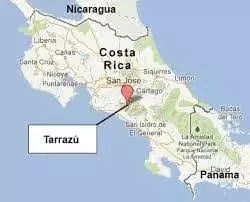
The Mozart coffee from Costa Rica’s Canet Estate is a premium specialty bean that showcases intense sweetness and layered fruitiness through its raisin honey process. Sourced from the country’s renowned high-altitude Tarrazú region, this coffee is made from a blend of the Caturra and Catuaí varieties. Using a near-zero-water honey process that fully preserves the pulp, and following meticulous roasting and extraction, it presents enticing aromas and flavors of raisins, osmanthus, sweet orange, and berries.
Situated in the Central American isthmus, Costa Rica benefits from a unique geographical setting where sea breezes from the Pacific and Atlantic oceans intermingle, along with numerous volcanoes exceeding 2,000 meters in elevation, enriching the soil with minerals. In the cool high-altitude environment, coffee cherries grow slowly, allowing complex and abundant flavor compounds to develop. The country’s coffee harvest season is mainly divided into the dry season (December to April of the following year, also the main harvesting period) and the rainy season (May to November). In recent years, emerging micro-processing facilities have reduced water usage to just 5% of traditional washed plants, eliminating the need for large fermentation tanks and drying patios. This significantly lowers investment barriers and has helped promote honey processing—a method known for its soft acidity, prominent sweetness, and complex layers—as a growing trend.

With a coffee-growing history spanning over two hundred years, Costa Rica’s coffee cultivation originally began on the slopes of the Poás and Barva volcanoes, now part of the Central Valley. Today, the country is divided into eight major producing regions: Western Valley, Central Valley, Tarrazú, Tres Ríos, Orosi, Brunca, Turrialba, and Guanacaste. Among them, Tarrazú is not only a historic hub for coffee production but its beans have also earned the favor of the British royal family and even been mentioned in public speeches by the Pope, earning international acclaim.
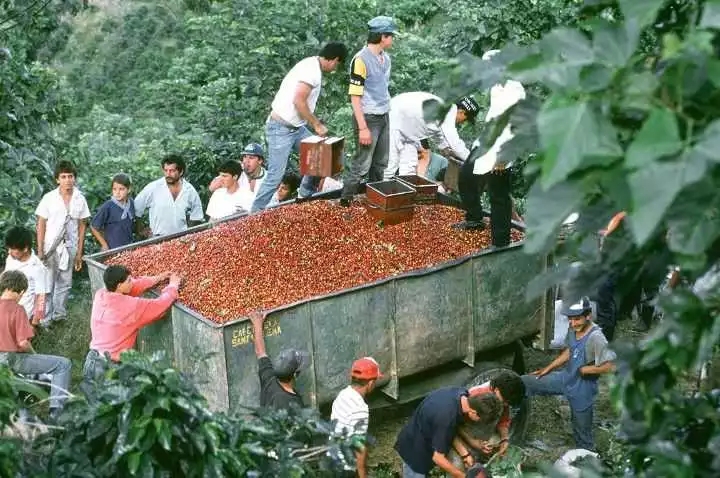
Located in the highest-altitude area of Tarrazú, the Canet Estate is also surrounded by one of the densest fruit-growing zones in Costa Rica. Although the coffee cultivation area is limited, with only small-scale planting in specific sections, every coffee cherry is strictly managed. All coffee cherries are handpicked, selecting only fully ripe red fruits, which are then subjected to a secondary screening to remove underripe or overripe beans, ensuring the high quality of the raw materials.
This Mozart coffee uses the raisin honey process, whose most distinctive feature ispreserving 100% of the fruit mucilageandusing almost no water, which greatly increases the difficulty and technical threshold of the process. On the day of harvest, the coffee cherries first undergo floatation, where a water tank is used to separate ripe from unripe fruits—only the plump, sunken fruits that sink to the bottom proceed to the next step. Next, the selected cherries are placed on raised beds to dry for at least three days until the skins dry out and are removed, butthe complete mucilage layer is preserved, and the prolonged drying process continues. Climatic conditions during this stage are crucial; drying too quickly or too slowly will affect the final flavor. Additionally, the coffee must be constantly turned during drying to ensure even heat distribution, but the frequency of turning must be carefully controlled to maintain sufficient fermentation time without allowing the mucilage to over-ferment.

In terms of variety, the Canet Estate selected two classic American species: Caturra and Catuai. Caturra is a natural mutation of Bourbon, originating in Brazil in 1937. It is known for its high yield and strong disease resistance. The tree is short in stature, making it easy to harvest, highly adaptable, and capable of thriving in sunny environments without shade trees—earning it the nickname “sun coffee.” This variety is best suited for planting at altitudes between 700 and 1,700 meters; generally, the higher the altitude, the richer the flavor, though the yield is relatively lower, consistent with the common traits of specialty coffee.
As for Catuai, it is an Arabica hybrid variety resulting from a cross between Mundo Novo (New World) and Caturra. Compared to its parent varieties, Catuai demonstrates stronger resilience to disasters, especially wind and rain damage. It inherits the compact tree size of Caturra, overcoming the shortcomings of Mundo Novo, while also bearing firm fruit that is less prone to dropping even in strong winds, effectively solving the issue of easily detached Arabica cherries.

The green beans exhibit the typical honey-process yellow-green hue, giving off a fresh orange acidity and subtle fermented fruit aroma. During roasting, we used a Yangjia 800N semi-direct-fire roaster (300g capacity), preheated to 200°C before loading. Initial firepower was set to 160, with the air vent open to 3. The turnaround point occurred around 1 minute and 36 seconds, maintaining the same firepower; when the temperature reached 140°C, the firepower was slightly adjusted to 160, and the air vent was opened to 4. At approximately 5 minutes and 20 seconds, the coffee entered the dehydration phase, the beans turned yellow, and the grassy aroma faded. At this point, the temperature was 166°C, the firepower was reduced to 130, and the air vent remained at 4. At 176°C, the firepower was further decreased to 100, with the air vent unchanged.
Around 8 minutes and 5 seconds, dehydration was completed. At this stage, the bean surface began to show wrinkles and black speckles, and the aroma shifted from baked bread to a distinct coffee fragrance, signaling the approach of the first crack—requiring close attention to auditory changes. By 8 minutes and 55 seconds, the first crack officially began, at which point the air vent was fully opened to 5, with the firepower remaining unchanged. The development time after the first crack lasted about 1 minute and 30 seconds, with the roast finishing at 193.2°C.
During cupping, this Mozart coffee displayed a rich array of aromas and flavors including raisins, osmanthus, sweet orange, berries, pineapple, caramel, and toffee, with clear layers and a prominent sweetness.
It is recommended to brew using the pour over method, with suggested parameters as follows: V60 dripper, coffee-to-water ratio 1:15, water temperature 90°C, grind size EK43s scale 10 (approximately equivalent to 80% passing rate through a Chinese standard No. 20 sieve), with total brew time controlled to around 2 minutes. Specifically, start with a 30-second bloom using 30 grams of water, then slowly pour water in a centered pattern up to 120 grams and pause. When the water level drops and is about to expose the coffee bed, switch to a slightly stronger stream until the total water volume reaches 225 grams to finish brewing.
The brewed coffee delivers a complex flavor profile on the palate, blending floral notes with fermented richness, highlighted by a strong sweetness of raisins and dried fruits, bright acidity reminiscent of starfruit and berries, and a sugarcane-like lingering sweetness. The overall balance is excellent with notable layers.
The above content is compiled by CoffeeHunters, a coffee news website.


