







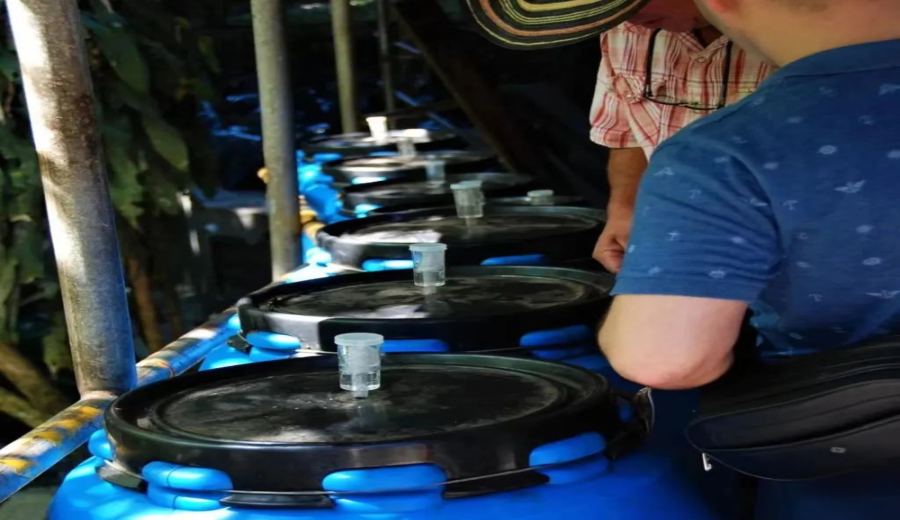
Introduction:In recent years, specialty coffee processing methods have continued to evolve, among which the enzymatic washed process has gradually gained market attention due to its unique fermentation control and flavor-shaping capabilities. This article delves into the anaerobic double enzymatic washed process used at Colombia’s Granja La Esmeralda’s “Rose Valley” farm, covering fermentation principles, varietal characteristics, pour over parameters, and flavor profiles to help you fully grasp the essence and practical application of this technique.
In the world of specialty coffee, the processing method plays a pivotal role in shaping the final flavor. Among these, the enzymatic washed process achieves a flavor profile distinctly different from traditional washed methods by introducing specific enzymes and fermenting them under anaerobic conditions. Such techniques have been widely trialed in producing regions like Colombia in recent years, with Granja La Esmeralda’s “Rose Valley” standing out as a representative, showcasing highly distinctive fruit and floral notes.
The core of this processing method lies in using anaerobic conditions to suppress the activity of undesirable microorganisms, while externally added enzymes accelerate the conversion of specific sugars and organic acids, thereby enhancing the coffee’s sweetness and complexity. Unlike conventional washed methods that rely solely on natural yeast fermentation, the enzymatic washed process allows for more precise control over the fermentation direction, making the fruit tones more cohesive, the acidity brighter and more balanced.
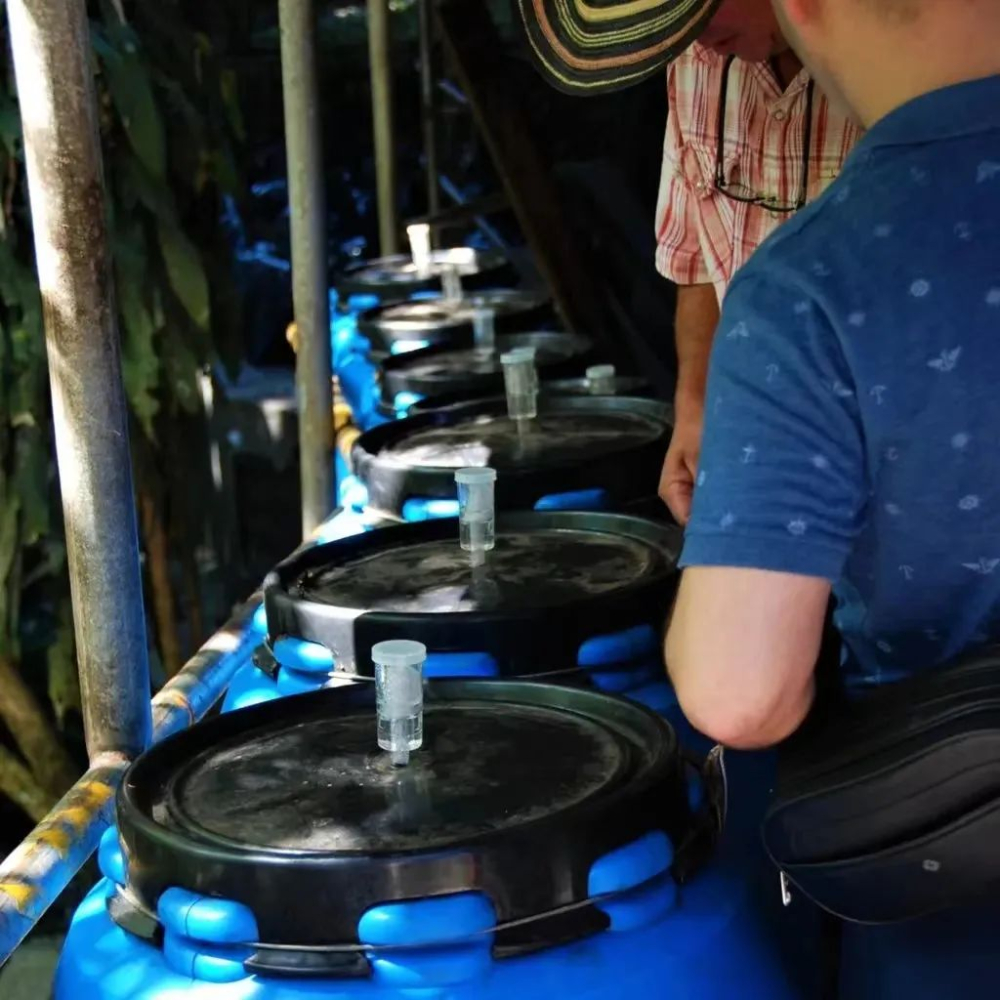
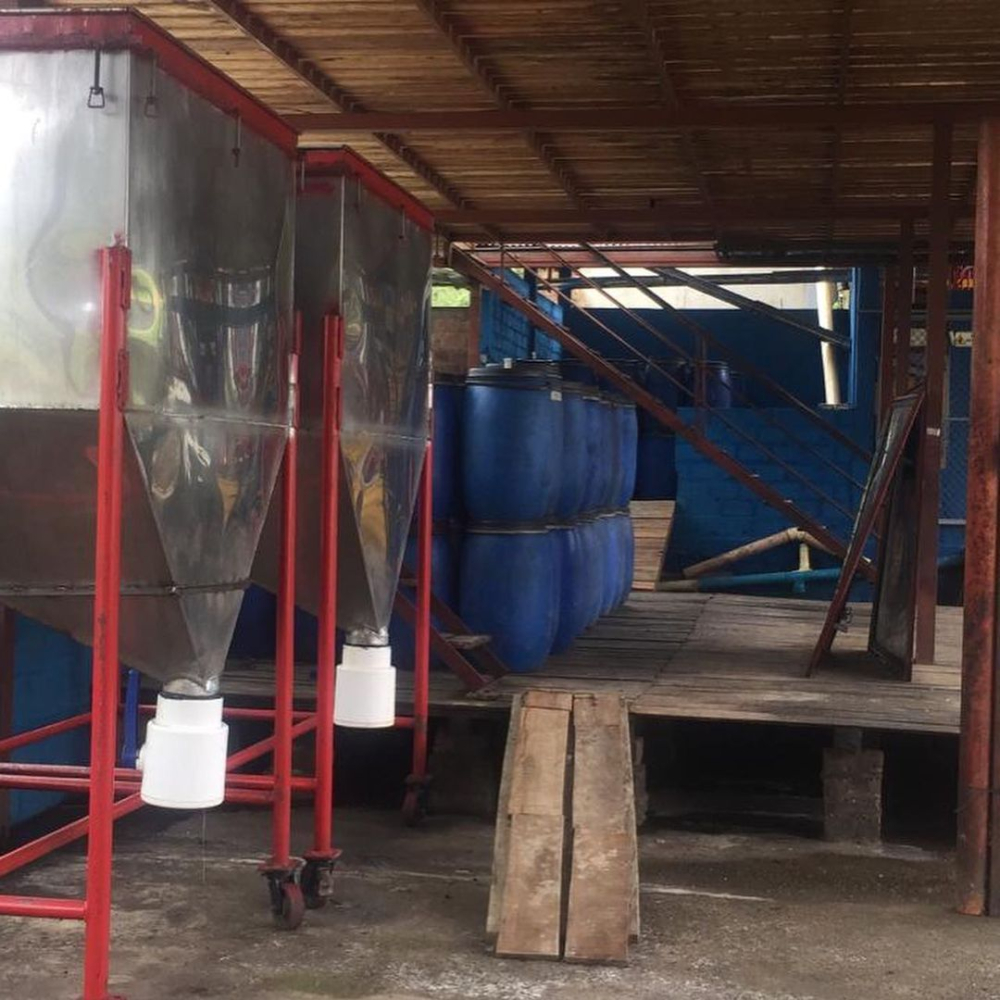
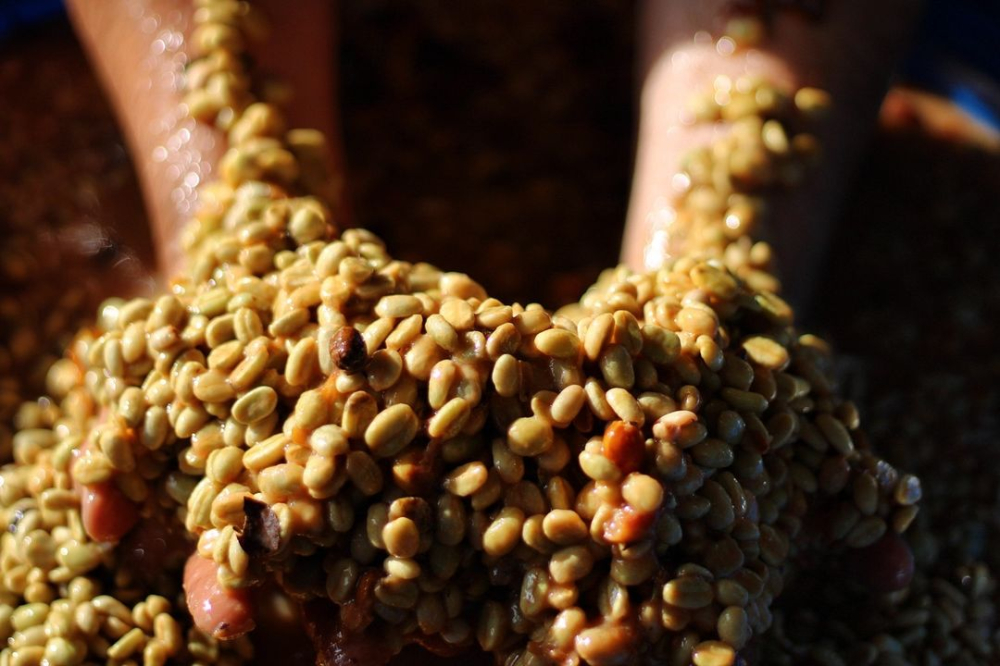
Taking the practical operations at Colombia’s Granja La Esmeralda as an example, they carefully select fully ripe bright red coffee cherries, which first undergo floatation to remove unripe or defective beans. These beans then go through two rounds of anaerobic fermentation, during which a specially selected group of enzymes is introduced. The beans are kept in sealed containers isolated from oxygen, with carbon dioxide injected to maintain an anaerobic state. This environment effectively slows down the rate of sugar breakdown, leading to a more stable drop in pH and extending the ideal fermentation time, resulting in a richer sweetness and complexity.
The farm owner at Granja La Esmeralda, Mr. Vargas, who has over 20 years of coffee growing experience, emphasizes that temperature and time control are crucial during the anaerobic fermentation process. Excessively high temperatures may damage enzyme activity, leading to flavor imbalance, while improper fermentation duration can easily result in off-flavors from over-fermentation. Therefore, they adopt a low-temperature slow-drying approach to ensure that the green beans retain the refined characteristics developed during fermentation even during the drying stage.
The Rose Valley lot from Granja La Esmeralda uses the Caturra variety, which is a natural mutation of the Bourbon variety that occurred in the early 20th century in Minas Gerais, Brazil. Compared to standard Bourbon plants, Caturra is noticeably shorter, allowing for higher-density planting. This not only increases yield per unit area but also makes harvesting easier due to the lower canopy. Its flavor profile tends toward bright acidity and rich aromatic expression, holding a significant position in Colombia’s coffee-growing regions, accounting for about half of the country’s total production.
In terms of roasting, since Rose Valley employs a double anaerobic washed process, the green beans already possess clear fruity tones. Therefore, roasters often opt for a medium roast to preserve its bright acidity and layered fruitiness, while ensuring a clean mouthfeel and balanced sweet and sour profile. Taking the Yang 800N as an example, it is recommended to set the charge temperature at 180°C, initial heat at 130, and air damper at 3. The turning point occurs around 1 minute and 36 seconds, and when the roaster temperature reaches 140°C, the air damper is adjusted to 4. At 151.6°C, entering the yellowing stage, the bean surface gradually turns yellow and loses its grassy taste. By 8 minutes and 17 seconds, the bean surface shows wrinkles and black speckles, at which point the coffee aroma replaces the bread-like smell, signaling that first crack is imminent. First crack usually begins at 9 minutes and 48 seconds, at which point the air damper can be fully opened and the heat gradually reduced. It is recommended to lower the heat to 50 at 192°C, and after about 2 minutes and 10 seconds of first crack development, the coffee is dropped at 197°C to lock in the optimal flavor expression.
For brewing, it is recommended to use a Hario V60 #01 filter, with a water temperature of 91°C, a 1:15 coffee-to-water ratio, and a medium-fine grind (approximately 80% passing through a #20 sieve). Specifically, start by pouring 30g of water for blooming to form a “hamburger” bed of grounds and maintain it for 30 seconds—this step helps to activate the foundational aromas of the coffee. Then, at the 50-second mark, pour up to 125g of water, and when the water level drops to about two-thirds of the bed, pour the remaining water up to 225g at 1 minute and 40 seconds. The entire extraction process takes about 1 minute and 50 seconds. It is recommended to give the cup a gentle swirl before tasting to achieve a more uniform flavor profile.
Regarding flavor, the Rose Valley coffee processed with double anaerobic enzymatic washed method exhibits distinct fruity notes, often carrying sweet-tart hints of grapes and strawberries, intertwined with delicate rose floral aromas. The overall flavor is fresh and layered. In contrast, similar coffees from comparable regions processed with different methods—such as common natural or traditional washed processes—may present a rounder body and lower acidity, but lack the intense fruit and floral expression found here.
In summary, the enzymatic washed process, through precise fermentation control, brings unique sweetness and complex flavors to the coffee, particularly appealing to coffee lovers who pursue fruity profiles and bright acidity. From cultivation and processing to roasting and brewing, each stage influences the final cup’s expression. Understanding these details will help you better appreciate the diverse charms of specialty coffee.
The above content is compiled by CoffeeHunters, a coffee news website.


