








Introduction:As a simple and stable pour over device, the clever dripper leverages its immersion brewing mechanism to lower the entry barrier, making it a practical choice for both home and café use. This article delves into the working principles of the clever dripper, provides detailed brewing steps and parameter recommendations, and suggests suitable types of coffee beans based on different flavor preferences—helping you easily master the usage tips of this popular brewing tool.
Among the many pour over devices, the clever dripper has won the favor of many coffee enthusiasts due to its unique immersion brewing design. It is not only widely used in international markets but has also become a standard piece of equipment in many specialty coffee shops. Its greatest advantage lies in its intuitive operation and ease of use—even beginners new to pour over can easily brew coffee with a decent standard. In addition, its ease of cleaning after brewing makes it an ideal coffee tool for many households.
The inspiration for the clever dripper comes from the HandyBrew tea brewing device launched by EK INTL. Its core feature is extracting coffee flavor through immersion. This dripper typically consists of a two-layer structure: the outer layer serves as a support stand, while the inner layer is a cup body equipped with a press-type valve. When placed on a table, the valve remains closed, allowing the coffee grounds and hot water to fully immerse; once the brewing time is complete, simply press the center of the base, and the piston valve will open, letting the coffee liquid flow smoothly into the container below.
Compared to drippers like the V60 that use direct drip filtration, the clever dripper adds an immersion stage, which makes the extraction process less affected by pouring technique. This gives it excellent performance in terms of stable extraction and basic flavor reproducibility. The quality of extraction mainly depends on water temperature, coffee-to-water ratio, grind size, and immersion time—all of which directly affect the final flavor profile and intensity of the coffee.
It can be said that the clever dripper combines the dual characteristics of a French press and a pour over dripper. It not only provides a full immersion environment similar to a French press but also retains the function of filtering out impurities and fine particles like a dripper. For users who seek simple operation without sacrificing extraction quality, it is a very user-friendly option.
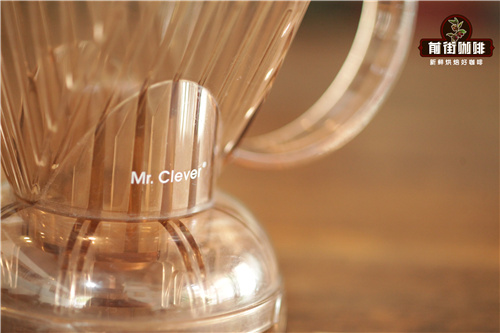
The steps for brewing with a clever dripper are actually quite straightforward: place a filter paper, add an appropriate amount of coffee grounds, pour in hot water, let it sit for a few minutes, then move the dripper above a cup or server and open the valve to let the coffee liquid flow out naturally. Here is a complete demonstration of the brewing process:
① First, fold the filter paper in half and place it in the clever dripper. Then set the entire dripper on top of the receiving vessel, pour hot water to wet the filter paper. This action also preheats the equipment, helping maintain temperature stability during brewing.
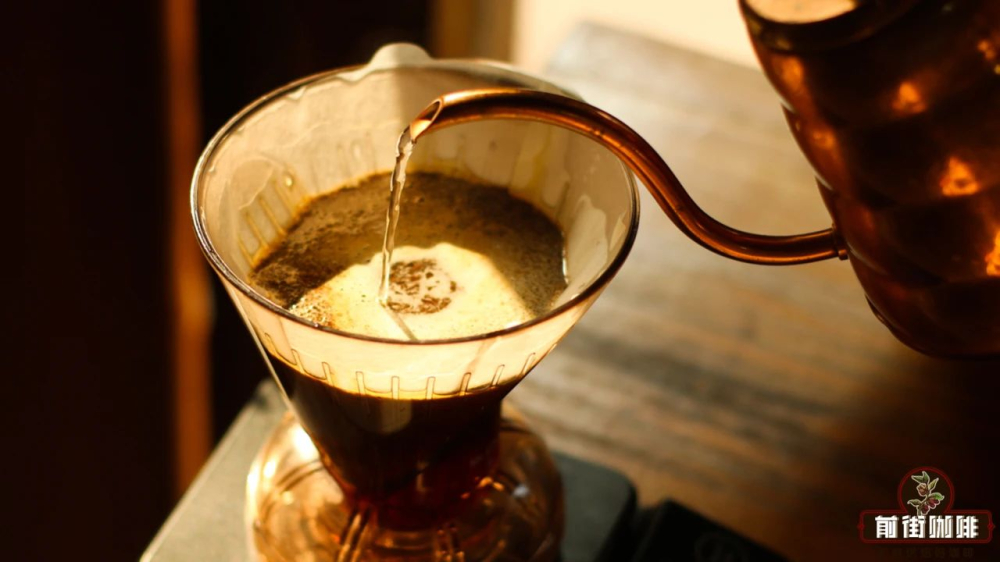
② Next, move the clever dripper onto an electronic scale (at this point the bottom valve will automatically close), and place the ground coffee at the center of the dripper—about 15 grams is recommended. For parameter settings, it’s suggested to use a coffee-to-water ratio of 1:15, with a medium-fine grind size. Tested with a Chinese Standard No. 20 sieve, the passing rate should be around 75%, which is slightly coarser than a typical pour over grind. Pour about 225 grams of hot water, with the water temperature controlled around 94°C, then cover with the lid and let it steep for 4 minutes to allow the coffee grounds and water to fully immerse.
③ Once the steeping time is up, move the clever dripper above the vessel you wish to serve the coffee in, gently press the bottom valve, and the coffee liquid will flow out smoothly, completing the extraction.
As for the types of coffee beans suitable for use with the clever dripper, the selection logic is generally similar to that of other pour over devices. However, it’s recommended to adjust the grind size slightly coarser to help reduce the risk of over-extraction. If you prefer bright acidity and fresh floral-fruity notes—such as washed beans from Ethiopia's Yirgacheffe or Guji regions, or Panama Geisha—they are great choices. If you enjoy sweet fruity flavors and a rich mouthfeel, consider honey-processed coffees from Costa Rica. For those who love intense nutty and chocolatey flavors, coffee beans from Brazil and Papua New Guinea usually deliver satisfying results.
In summary, the clever dripper is not only easy to use but also highlights the fundamental flavor characteristics of coffee through stable immersion brewing. Whether you’re a beginner just starting out or a coffee enthusiast looking to simplify your brewing process, it’s a highly worthwhile tool to try. As long as you master the three key elements—water temperature, ratio, and time—you can easily brew a cup of coffee with balanced flavor and layered complexity.
The above content is compiled by CoffeeHunters, a coffee news website.


