







Introduction:Want to dive deep into the flavor secrets of Ethiopia’s specialty coffee? This article explains the natural processing method and regional background of Sidamo Hua Kui, and compares it with the washed process characteristics of Yirgacheffe—from the principles behind each method, flavor profiles, to pour over parameters—to fully break down the differences between these two classic styles. Whether you’re a beginner or an advanced enthusiast, you’ll gain essential knowledge to enhance your tasting experience.
Ethiopia is hailed as the birthplace of specialty coffee, but in fact, many people have misconceptions about the processing methods used there. Many assume Yirgacheffe is always washed, but this region originally employed the natural (sun-dried) process. However, early sun-drying techniques were not sophisticated—coffee beans were often spread directly on the ground to dry, easily absorbing off-flavors, and due to poor sorting, quality varied greatly. It wasn’t until 1972, when Ethiopia introduced washed processing technology from South America, that the citrus and jasmine aromas of Yirgacheffe became clean and bright, solidifying its status as a specialty coffee. If washed Yirgacheffe showcases a fresh and bright profile, then the natural-processed Sidamo Hua Kui stands out with its intense fruitiness and rich body.
The poetic name “Hua Kui” originates from the TOH (the Taste Of Harvest) competition hosted by the African Fine Coffees Association in 2017. That year, a natural batch from Ethiopia’s DW coffee bean company won the championship, and this top-grade green coffee subsequently entered the market under the name “Hua Kui.” The Chinese company Hongshun introduced it, giving this natural coffee from the Buku Abel estate a new lease on life. It’s important to note—not all coffee from the Guji-Hambella region is called Hua Kui; only the natural beans produced by the Buku Abel processing factory hold this distinction, and the estate is even affectionately nicknamed the “Hua Kui Estate” by enthusiasts.
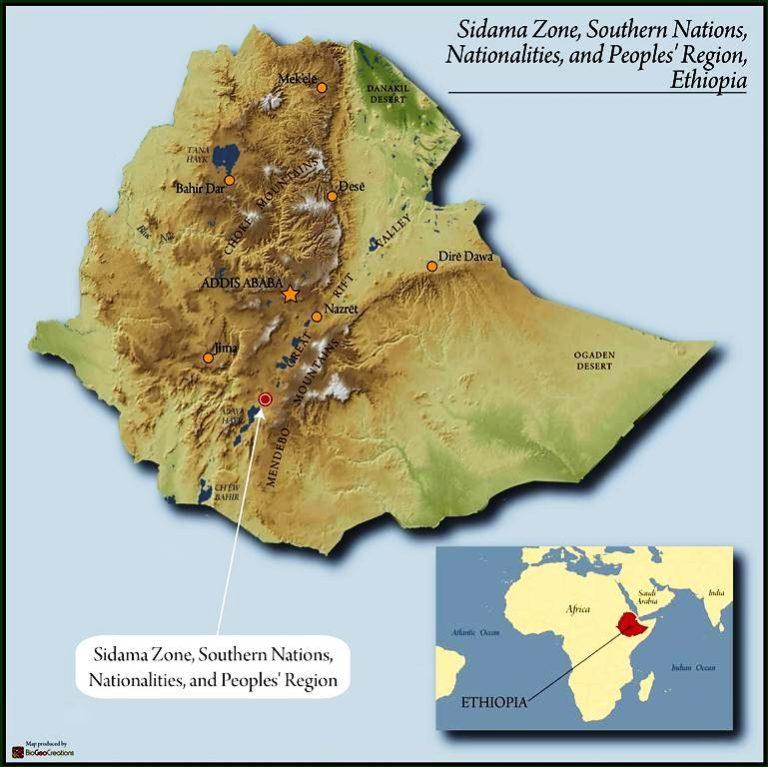
The Sidamo Guji region is located in southern Ethiopia, featuring complex and varied terrain and microclimates. The altitude here ranges between 1,400 and 2,000 meters, nurturing coffees with distinct flavor profiles. Guji was once part of Sidamo but officially became a separate region in 2010. Its soil is primarily fertile black clay (Vertisol), with layers up to two meters deep and an average altitude exceeding 1,800 meters. The significant day-night temperature variation, combined with diverse native coffee varieties, creates unique flavor potential. Hambella, as a sub-region of Guji, lies southeast of Yirgacheffe, adjacent to highlands reaching 3,200 meters, making it one of Ethiopia’s highest-altitude coffee-growing areas—second only to the main Harrar region.
Hongshun classifies the natural beans from Buku Abel processing factory into versions such as Hua Kui 2.0, 3.0, 3.1, 4.0, and 5.0 based on harvest season and batch, continuously refining them each year. Although it’s unclear whether Hua Kui 6.0 will be released in 2022, this top-tier natural coffee from Hambella remains a focal point for coffee enthusiasts.
The berry, citrus, lemon, and tea-like flavors of this coffee are inseparable from its unique natural processing method. The brand employs an extremely meticulous natural process: only fully ripe red cherries are selected, rigorously hand-sorted to remove defects, then spread on raised drying beds to avoid ground moisture and impurity contamination. During drying, the cherries are continuously turned to ensure even drying, and moldy beans are removed every three to five days. Once the skins harden completely, a depulper separates the pulp, followed by a final sorting. This process contrasts sharply with the washed method—washed processing first removes the pulp for fermentation, then dries the beans to 12% moisture content; whereas natural processing allows the coffee beans to slowly dry while still encased in their pulp, enabling sugars and aromas to penetrate deeper into the bean core.
The fundamental difference between natural and washed lies in the degree of pulp involvement in fermentation. The washed method yields clean, bright acidity and citrus notes, while natural processing imparts a richer sweetness, wine-like aromas, and greater complexity. This difference is directly reflected in the flavor profile: natural Sidamo Hua Kui presents light fermented wine notes, intense caramel sweetness, honey, and cocoa undertones, paired with a full body and lingering aftertaste; washed Yirgacheffe, on the other hand, excels with jasmine floral notes, lemon acidity, black tea-like mouthfeel, and a cocoa finish.
To fully highlight Hua Kui’s layered profile, it’s recommended to use high water temperature and a fine grind size for pour over. Suggested equipment: V60 filter cone (60° conical design with spiral ribs), water temperature 90°C, brew ratio 1:15, coffee dose 15 grams (medium-fine grind with 80% extraction rate through a Chinese No. 20 sieve). Step-by-step extraction: First pour 30 grams of water for a 30-second bloom; at 1 minute, pour to 125 grams, then continue pouring when the water level drops to two-thirds of the coffee bed; at 1 minute 40 seconds, pour to 225 grams, with a total brew time of about 2 minutes. These parameters balance flavor extraction and over-extraction risks, ideal for coffee lovers who pursue detail.
Coffee freshness greatly impacts flavor—opt for beans roasted within 5 days, and allow a resting period of about 4–7 days for optimal taste. If purchasing pre-ground coffee, brew promptly to avoid oxidation, though its shelf life for flavor preservation is shorter. Regardless of the form, understanding the differences in processing methods and brewing essentials will help you more deeply appreciate the unique charm of Ethiopian coffee.
The above content is compiled by CoffeeHunters, a coffee news website.


