








Introduction:Kenyan coffee is renowned for its high acidity and bright, fruity flavors, but do you know the grading logic behind ‘AA’ and ‘AB’? This article takes you through Kenya’s official eight-tier grading system, explores the unique flavor profile of the K72 washed beans from the Thika region, and provides professional-grade iced pour-over parameters and a three-stage brewing technique—offering comprehensive insight from theory to practice for mastering this popular specialty bean.
With its clean, bright mouthfeel and vibrant acidity, Kenyan coffee holds a solid position in the global specialty coffee market. When you see labels like ‘AA’, ‘AB’, or even ‘AA TOP’ on the packaging, have you ever wondered what these grade differences signify? This article will delve into Kenya’s official coffee bean grading system, covering everything from bean size and density to the impact of processing methods, while focusing on the representative AA-grade K72 washed beans from the Thika region. Paired with practical iced pour-over tips, it helps you make more accurate judgments from bean selection to brewing.

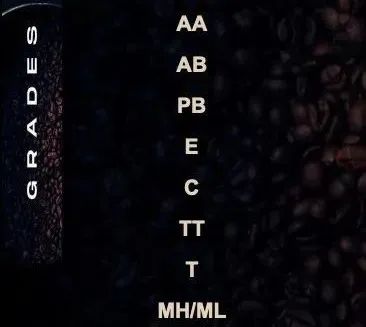
As a key origin of specialty coffee in East Africa, Kenya’s grading system is primarily based on the physical characteristics of the coffee beans, including size, shape, color, and density. The country is currently divided into eight grades, among which the most common and market-favored are Grade AA and Grade AB. Grade AA beans have a screen size (i.e., bean diameter) between 17 and 18, representing high-density, large-sized top-quality beans that typically offer more complex flavor layers and clearer acidity. In comparison, Grade AB beans fall between 16 and 17 in screen size. Though slightly smaller in individual size, they account for about 40% of total production, are more affordable, and still deliver satisfying flavor, making them a popular choice for many coffee enthusiasts.
Beyond AA and AB, there are several other notable grades in Kenya worth highlighting. For example, PB (Peaberry, or peaberry), refers to the rare occurrence where only one round seed develops inside a coffee cherry—accounting for only about 5% of total production. Due to their higher density and concentration, they are often considered to have more intense flavors, though they are scarce in the market. Grade E (Elephant bean) consists of unusually large beans formed when two seeds grow fused together within the fruit, with screen sizes exceeding 21—also a special form but extremely rare. Grade C beans have a screen size between 12 and 14, classified as small-sized. TT grade consists of lightweight beans separated from higher grades via air classification. Grade T includes defective beans from Grade C, while MH/ML grades, which include underripe and overripe beans, are of lower quality and are usually supplied only to the domestic market, not for export.
It’s worth noting that while bean size is an important grading criterion, it is not the sole determinant of flavor. Some exporters perform secondary grading based on cupping results, with common unofficial classifications such as ‘TOP’, ‘Plus (+)’, and ‘FAQ’. These labels are often used to distinguish premium beans within commercial batches, but they lack unified standards. It is recommended that consumers ultimately rely on actual cupping performance as the final reference.
The varietal characteristics of Kenyan coffee also form the foundation of its flavor. The main cultivars—SL28, SL34, Batian, K7, and Ruiru11—are generally larger in bean size and possess strong potential for vibrant acidity. Among them, SL28 and SL34 are classic choices in the Thika region. These two varieties, developed by the Kenya Coffee Research Institute, are well adapted to high-altitude environments and can express complex fruit acids along with deep sweetness, making them a standard in many specialty coffee farms.
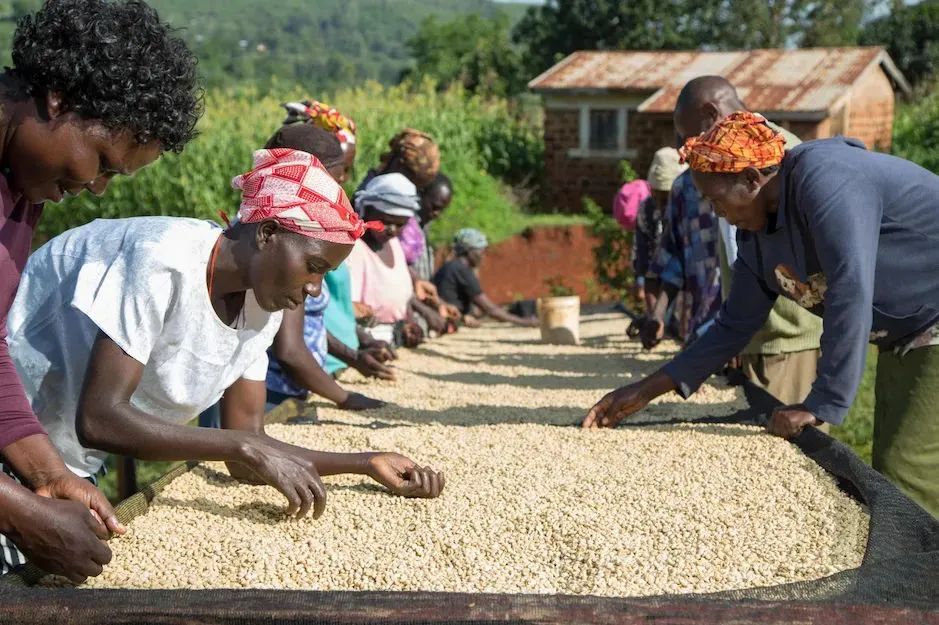
The Thika region is located near Kenya’s capital, Nairobi. Although it is primarily an industrial town, it is surrounded by rich farmland and natural waterfalls, with around 2,000 coffee growers cultivating the area. The region’s coffee-growing history dates back to the late 19th century when seeds were initially introduced from neighboring Ethiopia. After years of localized improvement, SL34 and SL28 now dominate, accounting for approximately 90% of production, with the remainder including small amounts of traditional varieties such as Bourbon, Kent, and Typica. The region’s altitude ranges between 1,550 and 1,750 meters, and the high elevation slows down the ripening process of the coffee cherries, allowing for greater accumulation of sugars and flavor compounds.
A coffee brand’s offering dubbed ‘Kenya Little Tomato’ is made from AA-grade K72 washed beans from the Assaria Factory in the Thika region. It uses the SL28 and SL34 varieties and employs a refined washed processing method that preserves the bright acidity and berry notes brought by pulp fermentation. To fully highlight its vibrant acidity, this bean is typically lightly roasted, yielding fresh fruit flavors reminiscent of cherry tomatoes and black plums after brewing. Its acidity is as lively as freshly squeezed juice, with a honey-like soft sweetness lingering in the finish.
To replicate professional-grade Kenyan pour-over flavors at home, here is a set of high-concentration, high-extraction iced pour-over parameters and a three-stage brewing technique: Use 15 grams of coffee, with 10 times the amount of hot water (150 grams at 92°C) and 5 times the ice (75 grams). Grind size is set to 83% passing through a 20-mesh sieve (approximately equivalent to EK43s setting 9 or C40 setting 22), using a Hario V60 dripper. First, place 75 grams of ice in the server, then put the coffee grounds into the filter and gently tamp them. The first stage involves pouring 30 grams of hot water at a flow rate of 3–4 ml/s in a slow spiral from the center outward, followed by a 30-second bloom. The second stage follows the same technique to pour 60 grams of water, taking care to control the brew bed height to avoid uneven extraction. Finally, when the coffee liquid is almost fully drained, steadily pour the remaining 60 grams of hot water at 3 ml/s. Total extraction time should be controlled between 1 minute 50 seconds and 2 minutes.
The resulting iced Kenya Little Tomato brewed with this method greets the palate first with bright acidity from cherry tomatoes and black plums, accompanied by the refreshing aroma of pears. The mid-palate reveals a rich, juicy berry character, while the finish leaves a subtle caramel sweetness and a long-lasting clean aftertaste. The cooling effect of the ice enhances the overall refreshment, making it highly suitable for summer drinking or for coffee lovers who enjoy high-acidity, bright profiles.
The above content is compiled by CoffeeHunters, a coffee news website.


