







Introduction:Jamaica Blue Mountain No.1 coffee is renowned as one of the world’s finest coffees. Its unique terroir, strict grading system, and refined flavor profile make it the dream bean for coffee enthusiasts. This article will delve into the history, authentic growing regions, CIB grading categories, Typica variety characteristics, and provide tips on identifying genuine beans, differences in processing methods, as well as recommended pour over parameters and practical brewing steps to help you better understand and successfully brew this classic coffee.
When it comes to legends in specialty coffee, Jamaica Blue Mountain No.1 (Jamaica Blue Mountain No.1) is undoubtedly one of the crown jewels. Even as of 2020, it remains steadfast in the market with consistently high prices, yet continues to be sought after by coffee aficionados worldwide. This article will comprehensively unravel the mysteries of this premium coffee bean—from its history, origin, variety, processing method, grading system, to pour over parameters and hands-on brewing practices.
The story of Jamaican Blue Mountain coffee dates back to the early 18th century. In 1717, King Louis XV of France encouraged the development of coffee cultivation in Jamaica. By the mid-1720s, then-Governor Sir Nicholas Lawes introduced Arabica seeds from Martinique and was the first to plant them in the St. Andrew area. Over time, coffee trees gradually found their most suitable growing environment in the Blue Mountains, eventually leading to the creation of the world-renowned Blue Mountain coffee. Depending on altitude and quality, Jamaican coffee is categorized into three grades: Blue Mountain, High Mountain, and Common Jamaican Coffee, with Blue Mountain being the most valuable due to its superior altitude and terroir conditions.
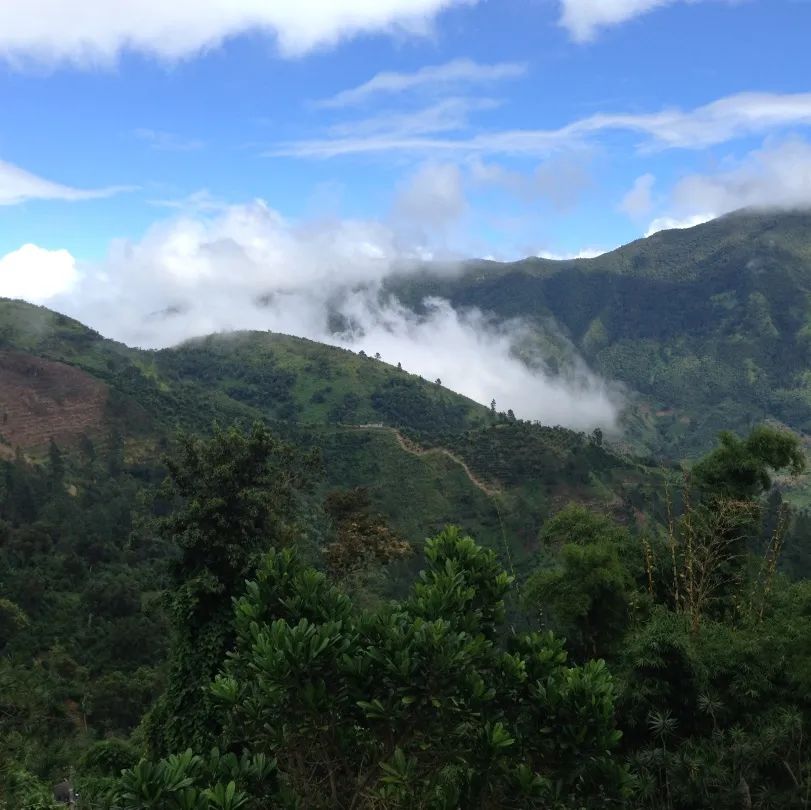
Officially Certified Authentic Blue Mountain Growing Regionis strictly limited to areas within the Blue Mountains ranging from 1,000 to 1,700 meters above sea level. This mountain range is located in the eastern part of Jamaica, surrounded by the Caribbean Sea. The sunlight refracts through the sea surface, casting a blue hue over the mountaintops, hence the name "Blue Mountain." The region features a humid, foggy climate with an average annual rainfall of up to 1,980 mm and stable temperatures around 27°C, coupled with fertile volcanic soil, all of which contribute to the delicate, balanced, and layered flavor complexity unique to Blue Mountain coffee. According to Jamaican government regulations, only coffee grown within the four administrative regions of St. Andrew, St. Thomas, St. Mary, and Portland can be certified as authentic Blue Mountain coffee. It’s worth noting that both washed and natural Blue Mountain beans sold in the area come from the Clifton Estate, a Rainforest Alliance-certified plantation within the region. It is the only farm in the Blue Mountain area to have obtained Rainforest Alliance certification, emphasizing sustainable and eco-friendly farming practices.
The highest peak of the Blue Mountains reaches 2,256 meters, making it the tallest point in the Caribbean. However, beans that can truly be called "Blue Mountain coffee" must be grown between 1,000 and 1,700 meters above sea level. Within this altitude range, the exceptional combination of climate and soil conditions gives rise to its one-of-a-kind flavor characteristics, which is also one of the reasons for its consistently high market value.
Due to historical reasons, Japan once held priority purchasing rights for Blue Mountain coffee. In 1950, Jamaica established the Coffee Industry Board to set quality standards and oversee production, mandating that all exported green and roasted beans bear an official seal. At that time, Japan provided loans to assist Jamaica in improving the quality of its coffee industry, thereby establishing the premium positioning of Blue Mountain coffee in the Japanese market. Japan’s priority purchasing rights were not revoked until 2009, while mainland China welcomed its first official shipment of authentic Jamaica Blue Mountain No.1 coffee in April 2011.
The official body responsible for quality control of Blue Mountain coffee isthe Jamaica Coffee Industry Board (CIB), which falls under the Ministry of Agriculture and Fisheries of Jamaica. The CIB not only establishes cultivation and processing standards but also oversees quality inspections and brand protection, with its board members primarily being large estate owners. Currently, newly applying Blue Mountain estates are required to have an area of at least 50 hectares. The CIB clearly stipulates that only coffee beans grown at altitudes above 2,200 feet (approximately 670 meters) can be called Jamaican Blue Mountain, and they are graded by bean size into NO.1, NO.2, NO.3, and Peaberry (PB). Among these, NO.1 grade Blue Mountain green beans must meet strict criteria including a screen size of 17 or above, a defect rate below 3%, a moisture content of approximately 13%, and each export batch must be accompanied by a certification issued by the CIB.
According to the CIB grading system, the grades of Jamaican Blue Mountain coffee, from highest to lowest, are: NO.1, NO.2, NO.3, and PB (Peaberry). Among them, NO.1 is the highest grade, characterized by larger beans, fewer defects, and the most balanced flavor. The standards for each grade are as follows:
- No.1: 17/18 mesh, defect rate below 2%
- No.2: 16/17 mesh, defect rate below 2%
- No.3: 15/16 mesh, defect rate below 2%
- Peaberry (PB): 10 mesh, defect rate below 2%
The Blue Mountain coffee variety used here is Typica, an historic variety first introduced to Jamaica from Martinique in the 1720s. After more than two hundred years of evolution, Blue Mountain Typica has developed good disease resistance, particularly strong resistance to berry disease. However, this variety is extremely particular about its environment and its original flavor traits are difficult to replicate outside of Jamaica. Typica trees are tall with bronze-tipped leaves and beans that are slightly elliptical or elongated in shape. Although yields are low, the flavor is delicate and elegant.
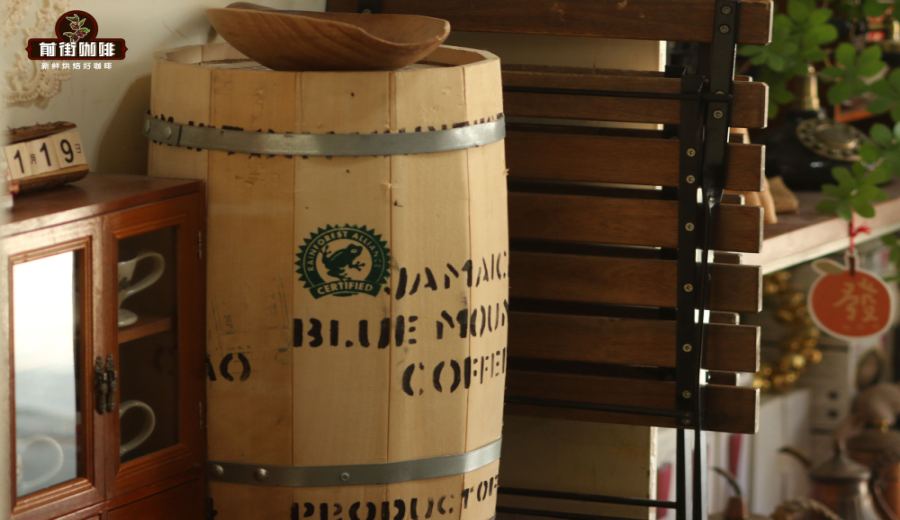
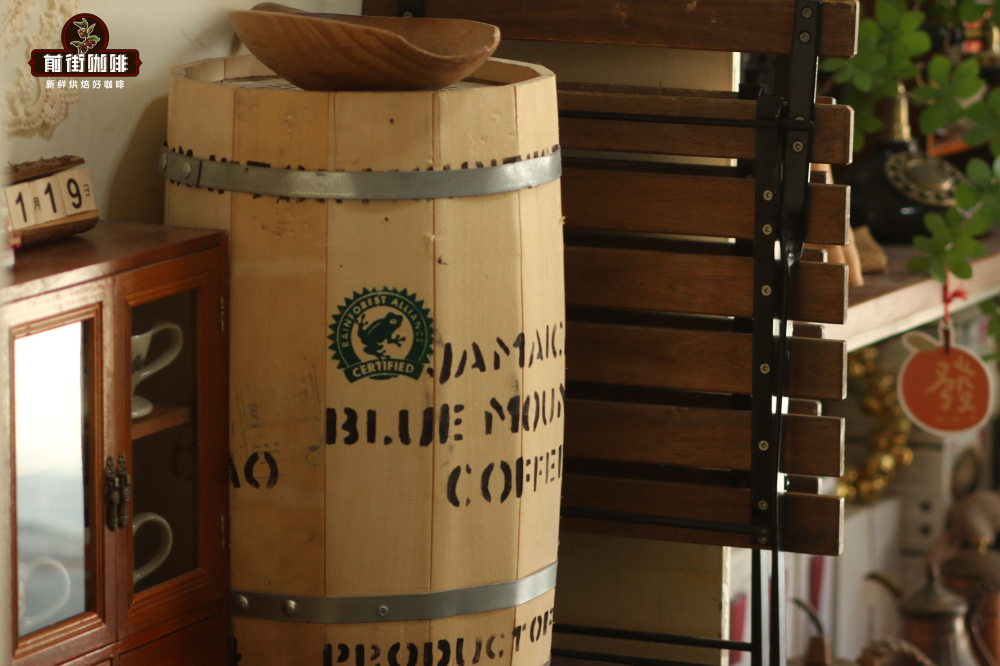
When identifying genuine Jamaican Blue Mountain coffee, consumers should pay attention to two key points: first, authentic Blue Mountain can only be exported by nationally designated export companies; second, Blue Mountain coffee isthe only producing region in the world that ships green beans in wooden barrels. Additionally, common misconceptions include: some merchants roast beans from other regions darker to imitate the flavor of Blue Mountain and label them as “Blue Mountain-style coffee,” which may contain no actual Blue Mountain beans at all; another misconception is that “you can’t buy genuine Blue Mountain No.1 in the Chinese market,” but in fact, with the right channels and certifications, authentic beans are still attainable.
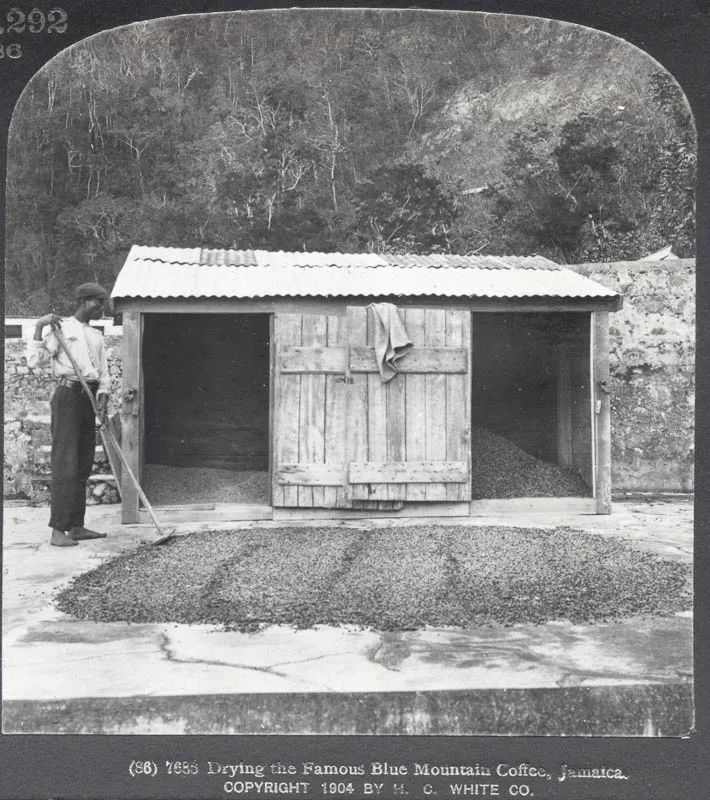
Blue Mountain coffee processing has traditionally been dominated by the washed method. Prior to 2019, all Blue Mountain beans from the Clifton Estate were processed using the washed method: after removing the pulp, the beans undergo 12 to 18 hours of fermentation, followed by washing with water and friction to clean the surface, then drying at 50% moisture content until it drops to 12% to 14%. In the 2020 new harvest season, the estate introduced sun-dried processed Blue Mountain coffee for the first time. Although Jamaica’s rainy climate makes sun-drying a challenge, the drying process requires frequent turning to ensure evenness and prevent mold—making it more labor-intensive but also opening up new flavor possibilities for Blue Mountain.
The Blue Mountain green beans supplied from the region, whether washed or sun-dried, are plump, uniformly sized, and have an oval, slightly flattened shape, typical of the Typica variety. Washed beans appear bluish-green with less silver skin; sun-dried beans are yellow-green with more silver skin, as much of the silver skin is removed during the washing process.
In terms of roasting and pour over recommendations, taking washed Blue Mountain as an example, it is advised to start roasting at 170°C in the drum, set the air vent to 3, adjust the heat and air vent after one minute to control the first crack timing and temperature, and finally drop the beans at around 201.3°C. For sun-dried Blue Mountain, it is recommended to start at 165°C in the drum with air vent 3, adjusting based on development time and first crack point, with a final drop temperature of around 198.5°C.
For pour over, it is recommended to use a Kono filter, with 15 grams of coffee, a 1:15 coffee-to-water ratio, and a medium-coarse grind (75% passing through a #20 sieve). The process involves a 30-second bloom with 30 grams of water, followed by pouring 100 grams with a slow stream, then adding 65 grams with a faster stream, totaling 195 grams of water and approximately 1 minute and 50 seconds total brew time. These parameters help fully highlight the delicate flavors of Blue Mountain coffee.
Finally, in terms of cupping profiles, washed Blue Mountain is dominated by notes of roasted nuts, chocolate, and honey, with balanced acidity and sweetness; sun-dried Blue Mountain showcases layered flavors of berries, nuts, and dark cocoa, with a creamy and nutty aftertaste. Both offer distinctive experiences and are classic coffees worthy of careful appreciation.
The above content is compiled by CoffeeHunters, a coffee news website.


