








Introduction:When ordering at specialty coffee shops, common milk-based coffees such as flat white, latte, and Dirty may all combine espresso and milk, yet they differ significantly in taste, milk volume, and preparation methods. This article will deeply analyze the ingredient ratios, milk foam characteristics, and flavor profiles of these three drinks, explaining everything from ingredient selection to brewing techniques to help you find the milk coffee that best suits your personal taste preferences.
Walking into a specialty coffee shop, the menu options of flat white, latte, and Dirty often leave coffee enthusiasts hesitating. All three are espresso-based and paired with varying proportions of milk, but they differ greatly in terms of milk foam thickness, espresso dosage, and drinking method. Understanding their differences not only improves ordering accuracy but also allows for a deeper appreciation of the subtle variations in coffee flavors.

Among the common offerings on modern café menus, the Flat White, Caffè Latte, and Dirty are all popular milk coffee choices. Some shops even offer variations like cappuccino and piccolo, overwhelming customers with options. Especially when choosing between a Flat White and a Latte, or experiencing the unique hot-and-cold contrast of a Dirty, the decision can be tough. This article will comprehensively break down their characteristics—from definitions and ingredient ratios to brewing details.
The word “Latte” in Italian means “milk,” so essentially, a latte is a drink that emphasizes the fusion of milk and coffee. Generally, lattes have a higher proportion of milk, which softens the originally intense flavor of the coffee, resulting in a smoother and creamier mouthfeel. In terms of milk foam, lattes use a relatively thick layer of foam, about 1 to 1.5 centimeters, adding a velvety texture and allowing baristas to showcase delicate latte art.
Hot lattes, with their moderately thick milk foam, offer not only a smooth tactile feel but also a dual visual and taste enjoyment. However, due to the higher milk content, the inherent coffee flavor in a latte is usually more subdued, making it suitable for those who prefer a milder taste.
The origin of the Flat White (Flat White) is disputed, with some claiming it was invented in Australia and others suggesting New Zealand. Regardless of its origin, it has gradually formed a consistent flavor consensus in the international coffee market: the coffee flavor is more pronounced, the milk ratio is lower than that of a latte, and the milk foam layer is thinner, typically only about 0.5 centimeters—almost in a “micro-foam” state.
Compared to a latte, the Flat White is characterized by preserving more of the espresso’s crema and layered complexity. In Australia, most shops use a single shot of espresso, while New Zealand favors a double ristretto to enhance the coffee’s intensity and aroma. Additionally, Flat Whites are typically only served hot, as adding ice dilutes the overall concentration and diminishes its refined balanced flavor profile.
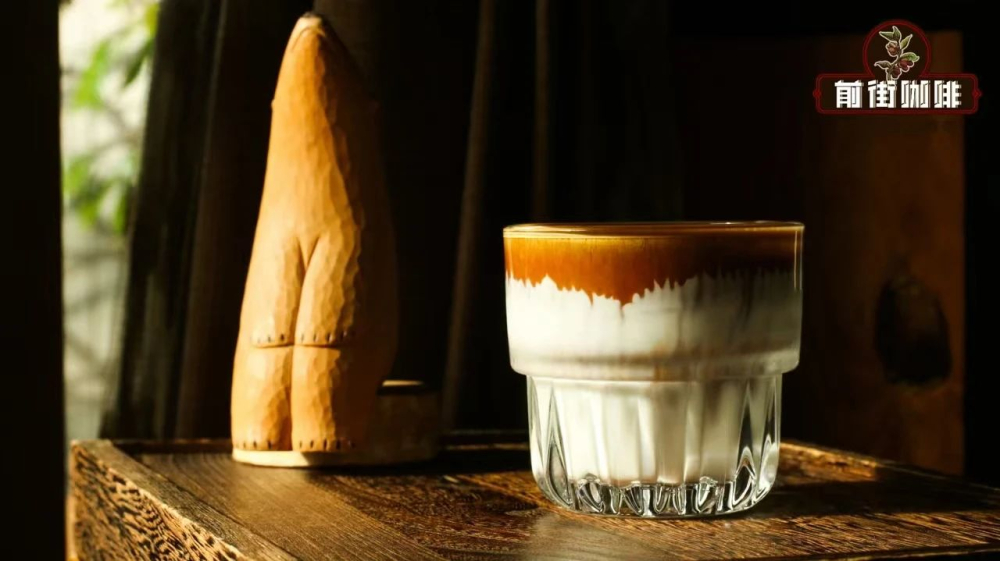
The Dirty coffee is an ice coffee with a striking visual and textural contrast. It is usually served in a clear glass without ice cubes, allowing freshly extracted hot espresso to be poured directly into chilled milk. Due to the temperature difference and density variation, the espresso slowly sinks and blends with the milk, creating distinct layers of light and dark, giving it a slightly “messy” appearance—hence the name Dirty.
The biggest allure of the Dirty lies in the “hot-and-cold fusion” experience: the top layer delivers the rich chocolate or caramel notes from the hot espresso, while the bottom is the cool, refreshing milk. A single sip offers a strong contrast of temperature and flavor. The Dirty is only meant to be served cold, which is key to its unique flavor.
Comparing all three coffees comprehensively, if ranked by milk content, the order is generally: Latte > Flat White > Dirty; in terms of coffee concentration and overall flavor intensity, it is: Dirty > Flat White > Latte. This ranking helps consumers quickly decide based on their preference for coffee strength and milk aroma.
When making a latte, the first step is to extract an espresso with a stable flow rate and balanced flavor—most shops opt for a double shot, though single shots are also used. Next comes steaming the milk; the milk foam for a latte should be of medium thickness, about 1 to 1.5 centimeters, with the focus on a smooth surface free of large bubbles and a fine, uniform texture. During the pouring (or “merging”) stage, care must be taken to evenly mix the foam and coffee to ensure a smooth mouthfeel without off-flavors, while also setting the stage for good latte art.
Making a Flat White emphasizes showcasing the inherent coffee flavors. Unlike a latte, the Flat White typically employs a pouring technique where milk is poured gently from the center to avoid disrupting the coffee’s surface crema, thereby preserving richer aromas and layers. The amount of espresso used is usually greater than in a latte—such as a double shot—and the total milk volume is slightly less, with an even thinner milk foam layer that almost sits atop the coffee, allowing drinkers to experience the fusion of milk foam and coffee crema right from the first sip.
The key to making a Dirty lies in the choice of milk and temperature control. It is recommended to use fresh whole milk to ensure full flavor and stable support for the hot espresso. The milk must remain ice-cold, with no ice cubes added, to maintain the unique “hot-and-cold” mouthfeel. When preparing, pour about 150 grams of chilled milk into a pre-chilled glass, then slowly pour 40 grams of freshly extracted espresso from a height of about 1 centimeter, allowing the hot espresso to float on the milk’s surface before gradually seeping in to create a clear visual layering effect.
For the Dirty, it is recommended to drink it straight in one go without stirring, in order to experience the layered transition from hot espresso to cold milk—this is precisely where its charm lies.

The above content is compiled by CoffeeHunters, a coffee news website.


