







Introduction:Since its debut in 2017, the Huakui series of coffee beans has rapidly risen to fame, being regarded as one of the representatives of fine Ethiopian coffee and even possessing the potential to rival Geisha. This article delves into the production background, variety characteristics, version evolution, and unique natural processing and cupping flavors of Huakui 6.0, and finally provides practical pour over parameters and techniques to help coffee enthusiasts gain a more comprehensive understanding of this highly anticipated single-origin espresso (SOE) coffee bean.
In recent years, Huakui coffee beans have garnered widespread attention in the specialty coffee scene and are even hailed as an Ethiopian star bean capable of competing with top-tier Geisha. The origin of all this can be traced back to 2017, when Li Jianfei won second place in the China regional round of the World Brewers Cup using a natural Huakui coffee from Sidamo, instantly propelling this bean to stardom. But do you know which variety Huakui actually belongs to? Is its true origin Sidamo or Guji? Why are there versions such as 2.0, 3.0, and even 6.0? Let’s explore the history, processing features, and the outstanding performance of the latest version, Huakui 6.0.
 For a long time, Geisha has reigned at the pinnacle of specialty coffee with its distinctive citrus and floral notes. However, in Ethiopia’s Sidamo and Guji regions, another coffee with international competitiveness has emerged—Huakui. This coffee shot to fame through world competitions in 2017 and gradually built a solid reputation in the global market. Especially in the Chinese market, it has climbed to the forefront of popular specialty coffee beans, with its natural processing flavor and layered complexity being truly exceptional.
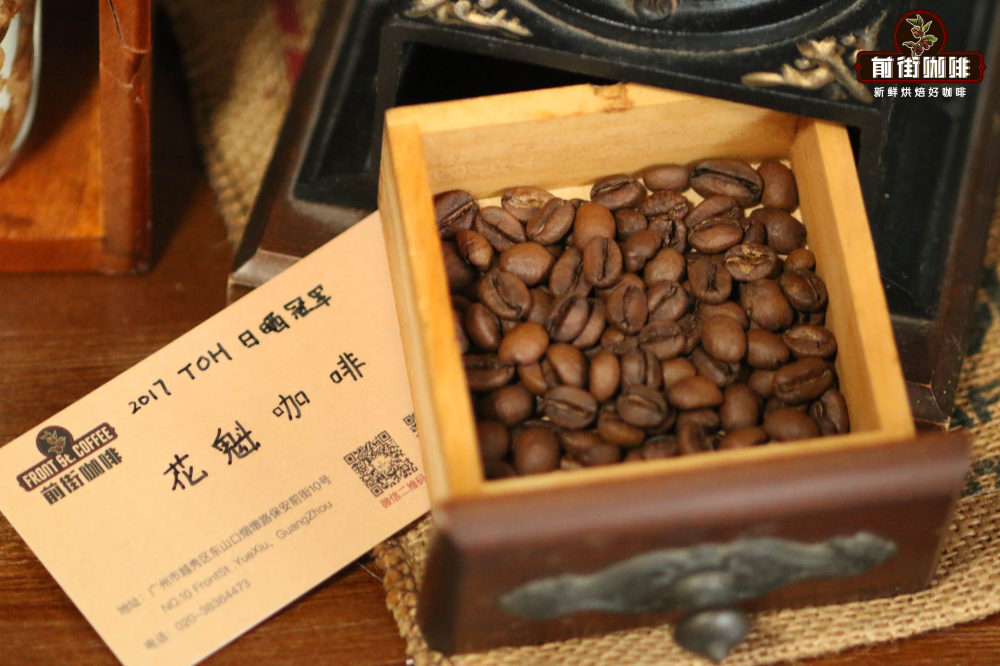
Many may not know that the name “Huakui” actually originates from China. In ancient times, Huakui referred to the most talented and beautiful courtesan, symbolizing excellence and elegance. This coffee bean from Ethiopia’s Guji-Hambella region, having won first place in the natural category of TOH (Taste of Harvest) in 2017, was introduced to China by a green bean importer and thus bestowed with this name rich in Eastern charm. In fact, its English name is often “Hambella,” the transliteration of Hambella, but the Chinese naming gives it a more culturally distinctive flair.
 It’s worth noting that not all natural processed beans from the Guji region can be called “Huakui.” The ones truly worthy of the name “Huakui” are primarily the natural processed coffee beans produced and processed by the Buku Abel estate. For this reason, the Buku Abel estate is also regarded as the “Huakui estate.” The area surrounding it is planted with large amounts of sugarcane and bananas, combined with the cool climate of high altitude, resulting in Huakui coffee beans’ uniquely smooth mouthfeel, bright passion fruit acidity, and the distinct fermented aromas brought by natural processing.
The coffee from the Guji region has a flavor profile that is distinctly different from the familiar Yirgacheffe. Compared to the commonly found lemon and citrus notes in Yirgacheffe, Guji coffees often exhibit richer floral aromas and are predominantly natural processed, which contributes to the more abundant aroma and sweetness in Huakui. In fact, due to the clear differences in flavor expression between the two regions, Ethiopia’s commodity exchange has long classified them as separate production area categories.
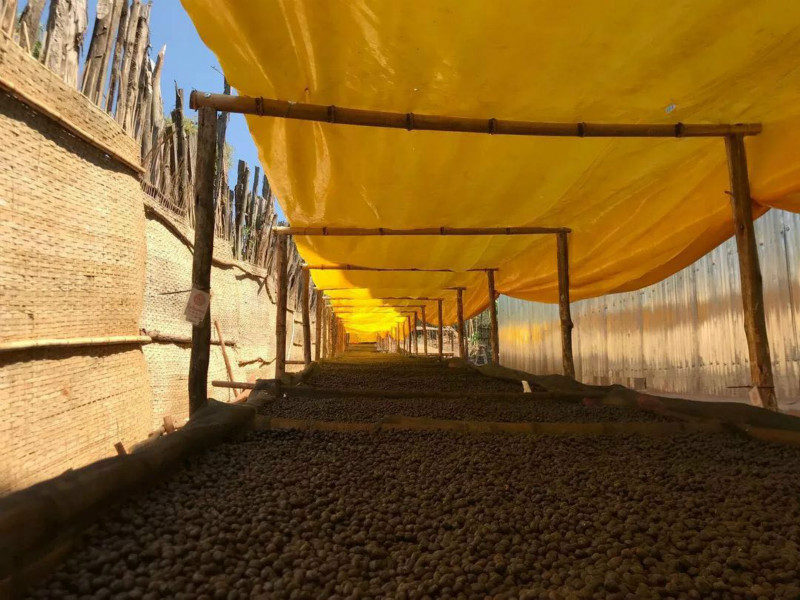
 The natural processing method of Huakui is key to its flavor. It is understood that local coffee farmers harvest ripe red coffee cherries with a sugar content of over 30% between December and January before proceeding with subsequent natural drying. During the first two days of natural drying, appropriate humidity must be maintained to facilitate fructose fermentation, with shading applied during midday high temperatures to prevent over-drying, while sudden nighttime rainfall is guarded against using thick plastic sheeting for protection. The entire fermentation and dehydration process must be carried out at relatively low temperatures, taking approximately 18 days of natural drying before the moisture content of the green beans is reduced to 13%, followed by another approximately 50 days of resting to stabilize the moisture content at around 11% before hulling. Such a rigorous processing procedure is the foundation of Huakui’s unique flavor.
You may have noticed that Huakui coffees on the market often come with names like “Huakui 2.0,” “Huakui 3.0,” and “Huakui 6.0,” reflecting the evolution of the series. Originally, only natural processed beans produced by the Buku Abel processing plant in the Guji region could be called the authentic “Huakui,” while those from other processing plants are distinguished by version numbers. DW operates five independent drying stations in the Hambella area, including Buku Abel, Tirtiro Goye, Seke Bokosa, Haro Soresa, and Buku Saysay. Since the initial launch of Huakui in 2017, a new version has been released each year, such as Huakui 2.0 in 2018, Huakui 5.0 in 2021, and the new harvest of 2022 as Huakui 6.0. Due to the impact of the pandemic, the 2022 Huakui 6.0 was delayed and only arrived in June.
These Huakui series mostly use Ethiopian native varieties. As Ethiopia is the birthplace of coffee, it possesses an extremely rich coffee gene pool, but due to the lack of large-scale variety certification and government protection policies, these varieties are mostly collectively referred to as “Ethiopian native varieties.” Although the names may not be as prominent, actual cupping results show that Huakui 3.1 has a flavor similar to Panamanian Geisha, while Huakui 4.0 is closer to the original Huakui flavor but with slightly less body and aftertaste. As for Huakui 5.0, it showcases a stronger Guji style, with vibrant berry acidity, lasting floral notes, and a pronounced juiciness.
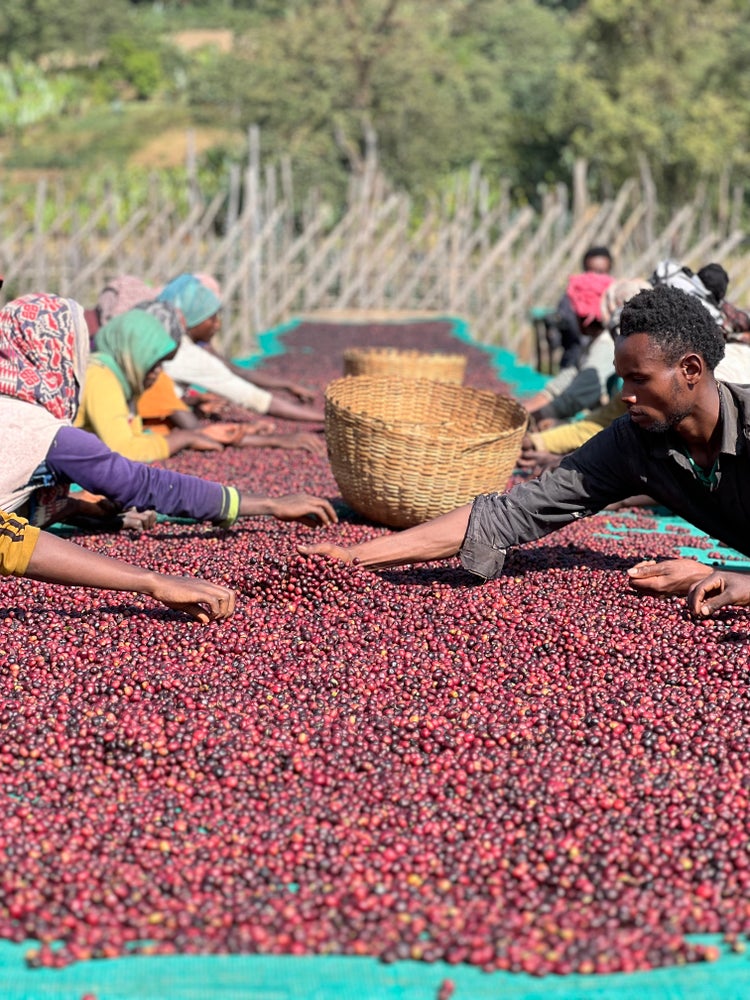 It’s worth mentioning that the flavor of Huakui can vary each year, which is closely related to the nature of coffee as an agricultural product. Natural factors such as climate, rainfall, and soil nutrients can all affect the coffee's performance in a given year, so flavor variations are normal. This year’s batch of Huakui 6.0 green beans included quite a few flat beans, broken beans, and shell beans, with the overall appearance noticeably inferior to previous years. Even after roasters hand-sorted them, a certain proportion of irregular beans remained, so extra care is needed during processing.
After cupping, this Huakui 6.0 exhibits aromas of berries, honey, and passion fruit, with prominent sweetness. However, due to a higher proportion of defective beans, there is another batch of Huakui beans from the same harvest season at the Hambella Buku processing plant, with plumper beans and an appearance closer to traditional Huakui. Its cupping profile features orange blossom, citrus, honey, and grapefruit, with strong juiciness and rich layered flavors.
Huakui 6.0 Pour Over Recommendations
If you plan to brew Huakui 6.0 at home, it is recommended to use a HARIO V60 dripper, with a coffee dose of 15 grams and a brew ratio set at 1:15, meaning a total of 225 grams of water. Water temperature should be controlled at 90°C, and the grind size is advised to be medium-coarse, with about 80% passing through a Chinese standard No. 20 sieve. It is recommended to use freshly roasted coffee beans within 5 days of roasting to fully experience its vibrant aroma and flavors. The coffee beans have an optimal resting period of about 4 to 7 days, during which the flavors will reach their peak.
For specific brewing steps, start by pouring 30 grams of water for a 30-second bloom, then continue pouring at a rate of 4 grams of water per second, circling outward from the center and back inward every 4 seconds, until you reach 125 grams and then pause pouring. Once the coffee bed has settled halfway, repeat the same pouring technique to reach 225 grams in total. Finally, wait for all the coffee to fully drip through the dripper before removing it. The total brew time is approximately 2 minutes and 10 seconds. Mastering these parameters will help fully highlight the layered and sweet flavors of Huakui 6.0.
The above content is compiled by CoffeeHunters, a coffee news website.


