







Introduction:Huang Kui coffee, with its intense fruity aroma and rich body, has become a daily favorite among many coffee enthusiasts. But do you know the story behind this bean and the reason for its continuously evolving version numbers? This article will take you deep into the origins of Huang Kui, analyze its unique flavors, and provide five practical brewing methods—V60, clever dripper, French press, AeroPress, and cold brew—with detailed parameters and techniques to help you easily recreate its juicy and full-bodied flavor.
A single-origin Huang Kui coffee launched by a certain brand has long been a classic choice for fruit aroma lovers, and it is now entering its eighth harvest season. However, not all sun-dried coffees can be called "Huang Kui." What kind of coffee beans qualify as Huang Kui? Why is a new version released every year? How should it be brewed to fully bring out its berry aroma and creamy, silky mouthfeel? Next, we’ll start with the origin of Huang Kui, step by step explore its characteristics, and share detailed brewing operations for five common pour-over methods to help you easily master the brewing secrets of this popular bean.
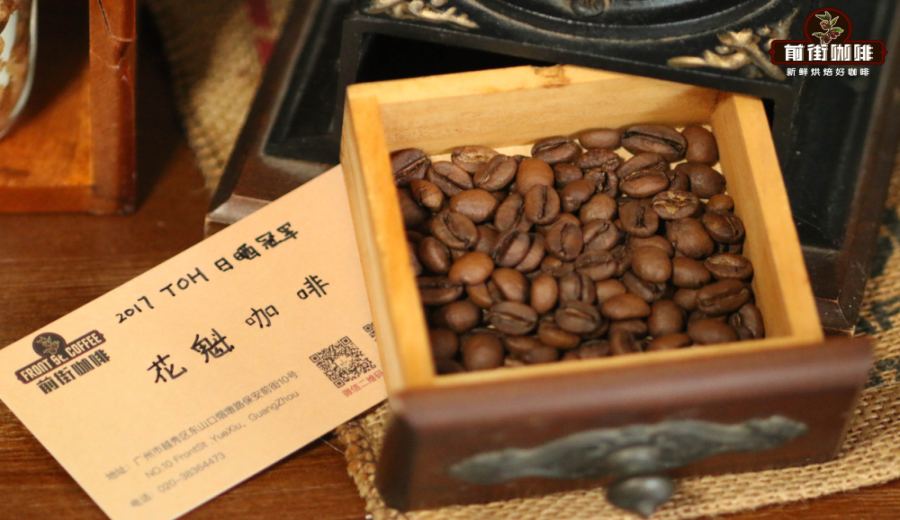
About eight years ago, Ethiopia’s DW Company submitted a sun-dried coffee bean from the Buku Abel washing station in the Hambella region to the TOH (Ethiopia National Taste of Harvest Competition) hosted by the African Fine Coffee Association. With its bold berry aroma and rich, creamy texture, this bean won the sun-dried category championship that year. Later, these champion beans were introduced to China by a Beijing-based green coffee importer and named "Huang Kui," which means "the foremost among flowers, surpassing all others."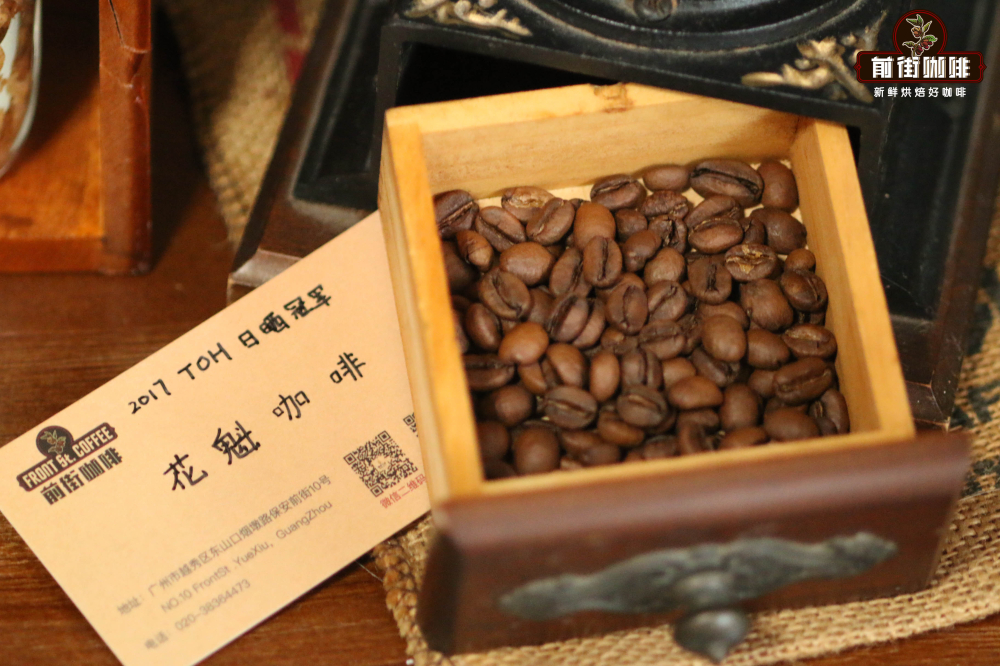 In the same year, a barista competing in the China Coffee Brewing Championship used this bean and stood out among many Geisha competitors, winning second place. Since then, this sun-dried G1 bean from Buku Abel has gained popularity, becoming widely recognized in the market as a high-cost-performance specialty coffee thanks to its reasonable pricing and outstanding performance.
Generally, coffee beans are usually named after their origin, variety, or processing farm—such as Geisha, Blue Mountain, or Guji Gedeb. However, "Huang Kui" is different, much like Apple’s annual iPhone releases, with almost a new version each year. This is inseparable from its backstory and the expansion of its production regions.
Before winning the championship in 2017, this bean only had one English name, "Hambella," essentially being a sun-dried G1 coffee bean from the Hambella region, with "Buku Abel" being the more specific washing station information. As market demand exploded after the win, DW Company added five independently operated drying stations in the Hambella Wamena Wereda area, all located within the core region of Dimtu town—including five small villages: Buku Abel, Buku Saysay, Haro Soresa, Tirtiro Goye, and Seke Bokosa. It is said that at the time, DW Company was producing several thousand tons of "Huang Kui" annually.
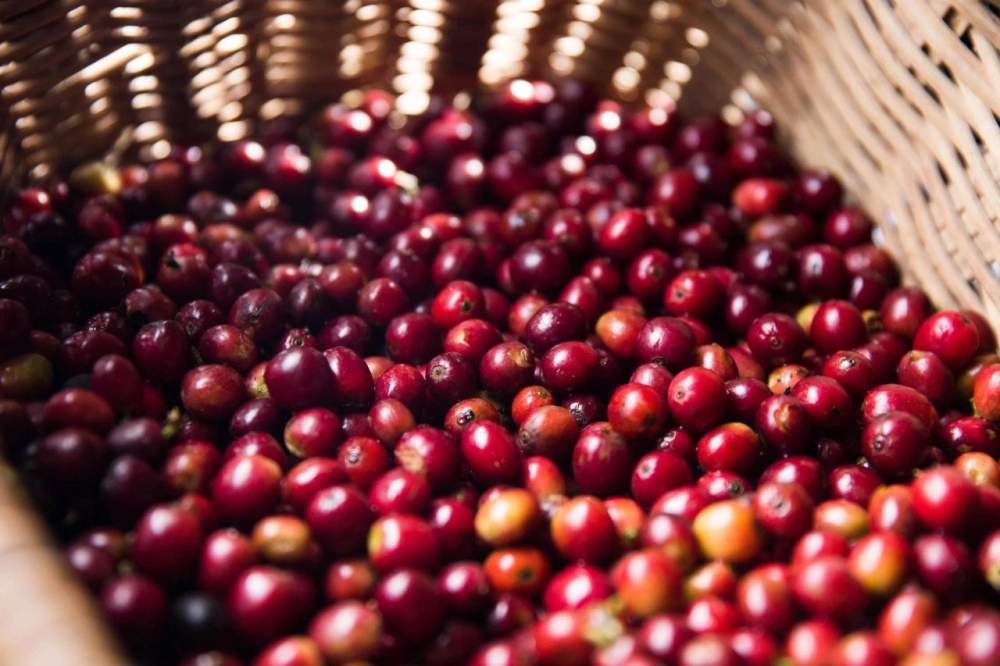
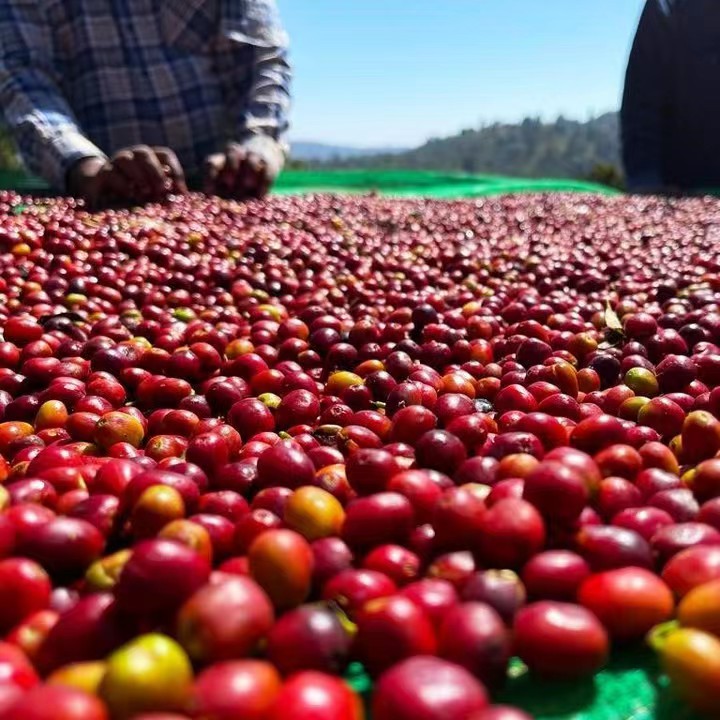
To further increase production, DW not only added new processing sites but also expanded the harvesting range, with coffee cherries from some neighboring villages also being sent to these stations for unified processing, eventually being exported under the name "Hambella G1." In other words, any sun-dried G1 processed at these five villages could be called "Huang Kui." But strictly speaking, only beans produced by the Buku Abel washing station most closely resemble the flavor profile of the championship-winning batch.
As for why there is a "Huang Kui x.0" numbering system? This is actually related to the nature of coffee as a cash crop. Each year’s climate, rainfall, altitude, soil, as well as variables in the processing stage such as temperature, humidity, and sun-drying duration, can significantly affect the coffee’s flavor. Starting in 2018, even the same sun-dried G1 from the Hambella region had vastly different flavors compared to 2017. To differentiate batches from different years, domestic green coffee importers began using 2017 as the base, adding a version number for each subsequent year—for example, 2018 became "Huang Kui 2.0," 2019 became "Huang Kui 3.0 and 3.1," and so on.
The Huang Kui coffee selected by this brand features a fruity tone, with bright floral notes, fresh citrus, and a clean mouthfeel. It’s very suitable for medium to light roasting, highlighting sweetness while preserving rich layers of fruit acidity. Its dry aroma often carries notes of nuts, honey, berries, and slight fermentation scents, while the cup offers a balanced sour-sweetness of passionfruit, cream, and strawberries. The body is full, with a cocoa-like aftertaste.
Next, we’ll introduce five common and home-friendly brewing methods to help you consistently showcase the multi-layered flavors of Huang Kui:
V60 Drip Brewing
Flavor Profile: Mixed berry aroma, creamy strawberry and passionfruit sourness with sweetness, prominent sweetness, full body.
The unique 60-degree conical design of the V60 filter helps guide the water flow centrally, extending contact time between water and coffee grounds. The large bottom hole allows for control over the extraction rhythm by adjusting pouring speed. It is recommended to use a medium-fine grind (80% passing rate through a Chinese No. 20 sieve), water temperature around 91°C, and a three-pour technique with a fine and slow water stream.
Dose: 15g, coffee-to-water ratio 1:15 (i.e., 225g water). Start with a 30g bloom for 30 seconds, then pour in a circular motion from the center outwards and back to the center at 4g/s, 4 seconds per circle, until reaching 125g, then pause; when the coffee bed has descended about halfway, repeat the same method to pour up to 225g. Once dripping finishes, remove the filter. Total brew time is approximately 2 minutes and 10 seconds.
Clever Dripper Immersion Brew
Flavor Profile: Strong berry aroma, juicy strawberry, creamy smoothness, tea-like aftertaste.
The clever dripper is an immersion-style filter with a press valve at the bottom. When no container is placed beneath, the valve remains closed, keeping the coffee grounds immersed. After soaking, place the dripper on a server and open the valve to filter. It is recommended to use a medium grind (75% passing rate through a No. 20 sieve), water temperature 90°C, total brew time around 2 minutes and 5 seconds.
Dose: 15g, coffee-to-water ratio 1:15. Place the coffee grounds in the filter, pour 30g hot water for a 30-second bloom, then pour centrally to reach 225g, let it steep for 1 minute and 50 seconds, then place the filter on a server and open the valve to filter.
French Press Immersion Brew
Flavor Profile: Complex berry aroma, juicy body, noticeable creaminess, overall rich and full.
The French press is a metal-filter immersion brew that preserves coffee oils for a smooth mouthfeel, though it may contain a small amount of fine sediment. It is recommended to use a medium-coarse grind (71% passing rate through a No. 20 sieve), water temperature 92°C, steeping time 4 minutes.
Dose: 15g, coffee-to-water ratio 1:15. Add coffee grounds and hot water to the press, lift the plunger, let it steep for 4 minutes, then slowly press the filter down to about 1/4 of the way up the press to avoid fine particles rising.
AeroPress Pressure Brew
Flavor Profile: Intense berry acidity, noticeable sweetness, creamy smoothness, high clarity, slight tea-like note.
The AeroPress combines immersion, paper filtration, and pressure brewing to deliver a stable and clean cup. It is recommended to use a fine grind (90% passing rate through a No. 20 sieve), water temperature 90°C, total time around 1 minute and 20 seconds.
Dose: 15g. Wet a round filter paper and attach it to the filter cap, then place the cap on the chamber and add coffee grounds. Slowly pour hot water to the “④” mark, stir gently, then quickly attach the plunger. Begin pressing after 1 minute, finishing around 1 minute and 20 seconds.
Cold Brew (Immersion)
Flavor Profile: Complex fruity acidity, full berry character, passionfruit fermentation notes, balanced sweet and sour, rich and smooth.
Cold brew is a low-temperature, long-duration immersion method that reduces acidity and enhances body. It is recommended to use a medium-fine grind (85% passing rate through a No. 20 sieve), coffee-to-water ratio 1:15. You can use room-temperature or iced water, with a total steeping time of 12 to 24 hours. A recommended ratio is 30g coffee grounds to 300g water and 150g ice (or directly 450g room-temperature water). After steeping, filter and enjoy. The best flavor period is 2 to 3 days after filtering, and it is recommended to consume within 7 days.
The above content is compiled by CoffeeHunters, a coffee news website.


