







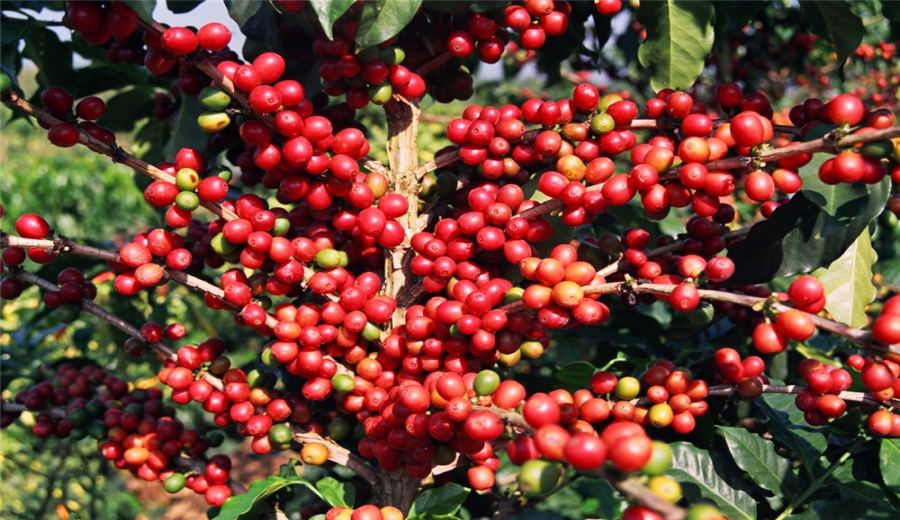
Introduction:As a representative of China's locally grown specialty coffee, Yunnan small-grain coffee has gradually gained attention in both international and domestic markets in recent years. This article delves into the main producing regions, variety characteristics, and common processing methods of Yunnan coffee, and provides practical pour over parameters and a three-stage pouring guide. Alongside flavor profiles of several classic Yunnan beans, it helps coffee enthusiasts easily brew a balanced, layered cup of Yunnan-style pour over at home.
Yunnan coffee has emerged in the specialty coffee scene in recent years, no longer confined to the traditional image of instant coffee raw material. With advances in cultivation techniques and post-harvest processing, the small-grain coffee produced in this highland region—thanks to its unique geographical environment and delicate flavors—has won the favor of many coffee drinkers. This article will explore the regional distribution, variety genetics, and processing craftsmanship, and provide a detailed breakdown of key pour over parameters such as water temperature, grind size, and pouring technique to help readers master the core secrets of brewing delicious Yunnan coffee.
Many still associate Yunnan coffee with its past role as a source for instant coffee, but in reality, coffee has been cultivated in the region for over a hundred years. In the early days, due to relatively extensive planting and processing methods, the flavor profile was relatively one-dimensional. However, with the rise of the specialty coffee trend, more and more growers have committed to producing high-quality beans, allowing Yunnan coffee to gradually carve out a place in the market and even become a staple choice in many cafés.
The Growing Environment of Yunnan CoffeeBlessed with ideal conditions, it is especially suitable for growing specialty coffee. Located south of the Tropic of Cancer, the region features a subtropical mountain climate with well-drained, organic-rich plateau soil, significant diurnal temperature variation, ample sunlight, and moderate rainfall. These factors combine to create the distinctive full-bodied taste and gentle acidity of Yunnan small-grain coffee, with a rich aromatic profile often highlighted by fruity notes and a moderate sweetness.
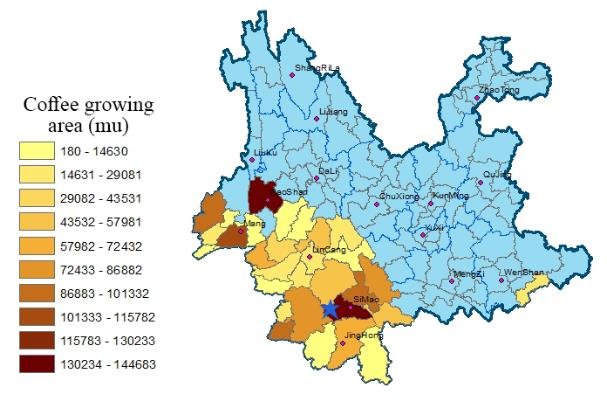
In terms of producing regions,Yunnan coffee is mainly concentrated in the southwestern areas of Pu’er, Baoshan, Lincang, and Dehong.Among them, Baoshan began cultivating small-grain coffee as early as the late 1950s and was honored as the “Best Coffee in China” at the National Coffee Conference in 1980. In 2010, it obtained certification as a China National Geographical Indication Product, making it one of the important birthplaces of Yunnan specialty coffee.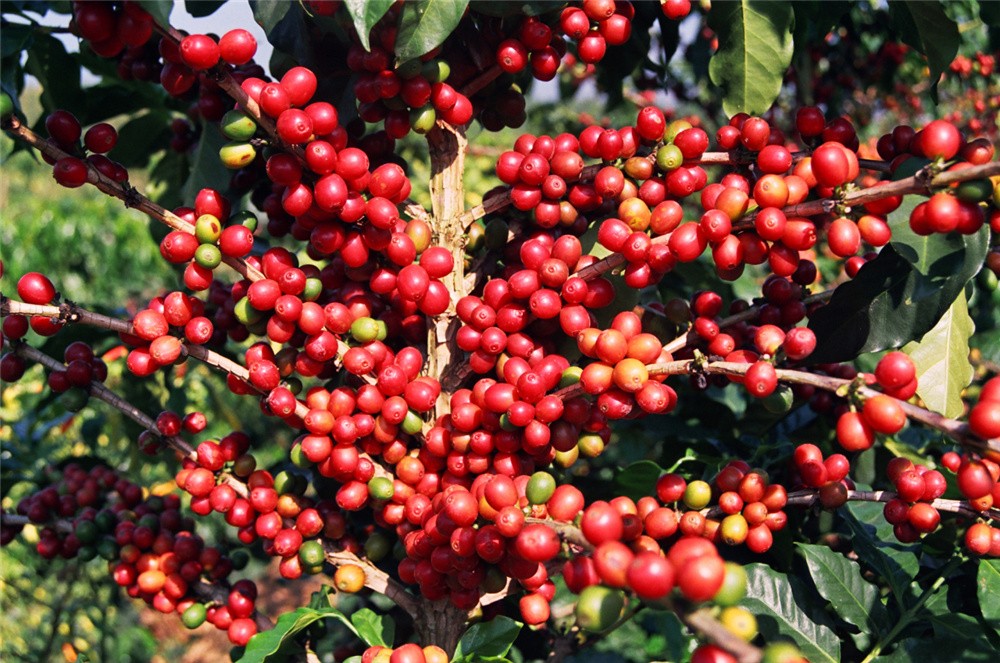
Pu’er is currently the largest and highest-yielding coffee-producing region in China, supplying not only the domestic market but also serving as an important hub for international coffee trade. Lincang, located in the southwest of Yunnan, has a climate with distinct wet and dry seasons and abundant sunshine. The area has established its own estates where the precious Arabica Typica variety is grown, along with a well-received naturally processed Typica coffee.
Regarding varieties, currentlythe primary coffee bean variety grown in Yunnan is Catimor,which is the second-generation hybrid of Brazil’s Caturra and Timor. It offers excellent disease resistance and high yield capacity, but compared to traditional varieties, its flavor profile is relatively neutral. A small number of regions still grow the classic Typica variety, which has lower yields but delivers richer fruit aromas and a more delicate taste.
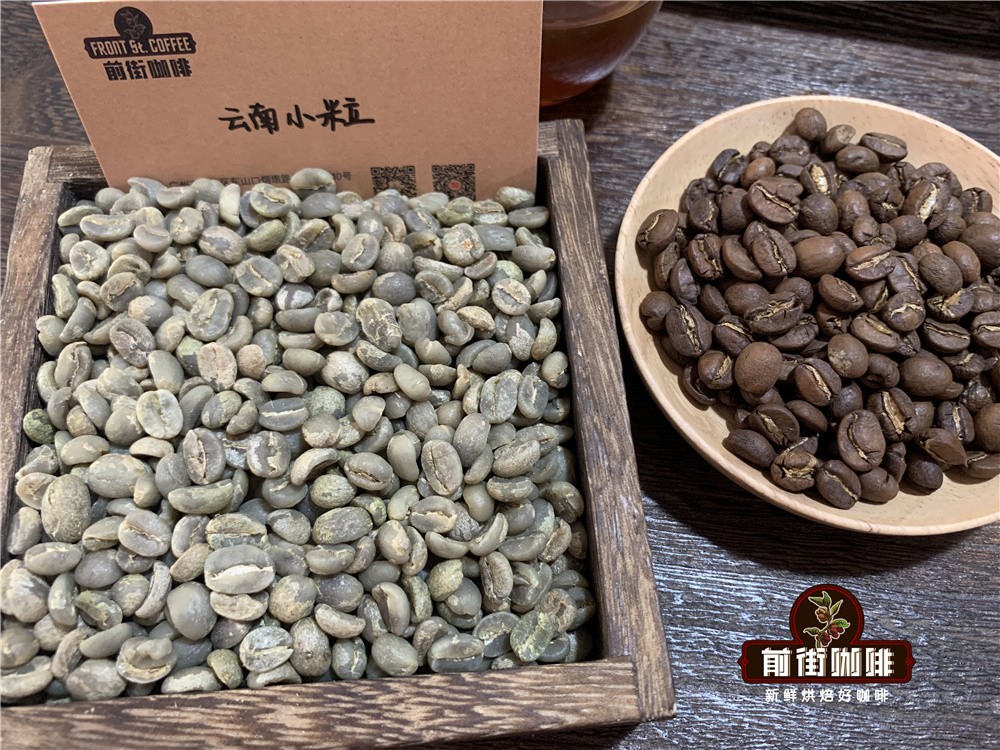
In terms of processing methods, due to Yunnan’s rainy climate and large temperature fluctuations,washed processing is the most common method,though many producers also use natural processing to bring out more intense fruit-forward characteristics. The offered bean list includes both washed and natural versions of Yunnan small-grain coffee, as well as estate-produced natural Typica, each with its own unique flavor expression.
Given the characteristics of Yunnan coffee, it is recommended to use a medium-light to medium roast to highlight its chocolatey base and moderate acidity, while preserving its sugary sweetness and full body. Practical recommendations include using a V60 filter, with water temperature controlled at 88°C, a water-to-coffee ratio of 1:15, around 15 grams of coffee, and a grind size equivalent to 75% extraction through a Chinese No. 20 sieve.This combination can fully showcase the balanced flavor profile of Yunnan beans.
For pour over, it is recommended to use a three-stage pouring method: first, perform a 30-second bloom with 30 grams of water to help the coffee grounds degas and evenly pre-wet; then, in the second stage, pour in a small circular motion from the center up to 125 grams, maintaining a steady flow and avoiding excessive agitation; finally, in the third stage, pour up to 225 grams, starting when the water level in the filter has dropped to half, continuing to pour in circles until the dripping is complete. The total extraction time is recommended to be around 2 minutes.
Yunnan coffee processed by different methods also exhibits diverse flavor profiles:2013 Natural Typicafeatures intense fruitiness, citrus, and berry notes, paired with a black tea-like body and a creamy smooth aftertaste;Washed Yunnan small-grain coffeepresents herbal, nutty, and chocolate aromas, with a caramel-like sweet finish; whileNatural Catimorcombines nutty, spicy, and plum flavors, with an overall warm and layered character.
Finally, it is worth reminding thatthe freshness of the coffee beans is crucial to flavor performance,so it is recommended to choose products shipped within 5 days of roasting and enjoy them within 4 to 7 days of receipt for the optimal tasting window. If you opt for pre-ground coffee, although you can skip the resting period, brew it as soon as possible to avoid oxidation affecting the flavor. Freshly ground and brewed remains the best way to enjoy Yunnan small-grain coffee.
The above content is compiled by CoffeeHunters, a coffee news website.


