







Introduction:In recent years, Yunnan coffee has gradually drawn attention from the international specialty coffee scene, particularly known for its "small-bean coffee." However, in reality, most commercially labeled "Yunnan small-bean" products are actually of the Catimor variety. This article explores the evolution of the variety, its disease resistance, and cupping profiles to clarify the relationship between Catimor, Typica, and traditional small-bean coffee. It also provides a detailed breakdown of the flavor profile of washed Yunnan Catimor and practical pour-over brewing suggestions, helping you gain a deeper understanding of this major Chinese coffee variety.
As Yunnan's status in the global specialty coffee map continues to rise, many coffee enthusiasts often ask curiously when entering a café: “Do you sell Yunnan small-bean coffee?” This product, hailed as one of China’s representative coffees, actually carries a story of varietal succession and regional development. Among them, the Catimor variety is currently the most widely planted in Yunnan, but its connection to the so-called "small-bean coffee" often confuses consumers.
When selecting coffee beans from the Yunnan region, many people can’t help but wonder: does the so-called "Yunnan small-bean coffee" refer to the historically significant Typica, or the currently mainstream Catimor? Some may even further wonder whether Catimor belongs to the well-known Arabica species? In fact, botanically, coffee belongs to the Rubiaceae family and the genus Coffea, which is divided into three main species: Arabica, Robusta, and Liberica. Each of these main categories further branches into numerous cultivated varieties. Typica, one of the oldest varieties within Arabica, has been referred to as "small-bean coffee" since ancient times due to its relatively small bean size.
So why is today's market "Yunnan small-bean coffee" mostly labeled as Catimor? This requires a look back at the cultivation history of Yunnan coffee.Historical records indicate that coffee was first introduced to Yunnan in 1904, but it wasn’t until the 1950s that large-scale planting began. At that time, to repay debts to the Soviet Union, Yunnan actively developed coffee exports, with its products even winning first prize at the London International Coffee Tasting in 1958. However, with the reform and opening-up and influx of foreign investment in the 1980s, international brands such as Nestlé and Starbucks began promoting the cultivation of the Catimor variety in Yunnan to enhance yield and disease resistance.
Compared to traditional Typica, Catimor not only requires less labor in field management, but more importantly, it exhibits high resistance to coffee leaf rust (Coffee Leaf Rust), which was ravaging Central and South America at the time, and offers a yield that is up tothree times higherthan that of Typica. In an era where economic efficiency was paramount, Typica, although elegant in flavor, saw its cultivation gradually replaced due to its lower yield. From then on, Catimor became the dominant variety in Yunnan’s coffee production.
The creation of Catimor actually stems from a history of crossbreeding between varieties. Initially, the Portuguese introduced the Brazilian Bourbon mutation "Caturra" to East Timor. Later, this variety was crossed with the "Timor" variety, which had Robusta lineage, eventually giving birth to Catimor, which combines disease resistance with high-yield characteristics. In terms of plant morphology, Catimor exhibits a compact tree shape, short plant height, dense branching, and short fruit nodes. Overall, it grows vigorously, adapts well, and has outstanding resistance to coffee leaf rust, which is the main reason for its widespread planting in Yunnan. It is understood that currently,over 90% of coffee trees in Yunnan are of the Catimor variety, especially against the backdrop of the global coffee leaf rust epidemic in the 1970s to 1990s. International organizations actively promoted this variety, making Catimor the actual representative of what is now referred to as "Yunnan small-bean coffee."
However, while Catimor offers advantages in yield and disease resistance, it also inherits some Robusta lineage, resulting in certain limitations in flavor. As mentioned in "The Craft and Science of Coffee," Catimor often exhibits a “devilish aftertaste,” characterized by relatively thin aroma, pronounced bitterness, a tendency toward astringency, and occasionally harsh off-flavors. These are differences compared to traditional high-quality Arabica beans. Therefore, if you’ve tried Yunnan small-bean coffee and found the flavor underwhelming, it may very well be due to the characteristics of the Catimor variety.
It’s worth mentioning that although Catimor offers good economic benefits, its rust-resistant genes tend to decline over the years of cultivation, typically requiring a replanting consideration after about 20 to 30 years. Currently, several new varieties including Geisha are being trialed in Yunnan, attempting to improve overall quality through varietal diversification. One coffee brand also introduced ancient small-bean varieties such as Typica and a small amount of Bourbon in Lincang, Yunnan in earlier years, planting them at high altitudes to explore how different varieties perform under unique microclimates. Although Typica can showcase rich fruity acidity and delicate mouthfeel, it suffers from low yield, weak disease resistance, and high management requirements, making it unsuitable for large-scale commercial cultivation.
In terms of regional distribution, Yunnan coffee is mainly concentrated in Baoshan, Pu'er, Dehong, Lincang, and Xishuangbanna. Differences in altitude, climate, and microclimate across these areas give rise to diverse coffee characteristics. Many coffee aficionados often develop strong preferences for specific sub-regions—for example, some love the richness of Baoshan, others prefer the balance of Pu'er, and still others are drawn to the clear layers of Lincang.
In one brand’s coffee lineup, a washed Catimor from the Baoshan region can be considered a microcosm of Chinese regional flavors. The washed processing method involves thoroughly removing the pulp, flesh, and mucilage, leaving only the coffee seed to be sun-dried, resulting in a coffee liquid that presents a cleaner and brighter profile. This Yunnan washed Catimor fully showcases the region’s characteristic soft acidity, nutty base, and subtle tea-like notes, making it an excellent entry point for understanding the terroir of Yunnan coffee.
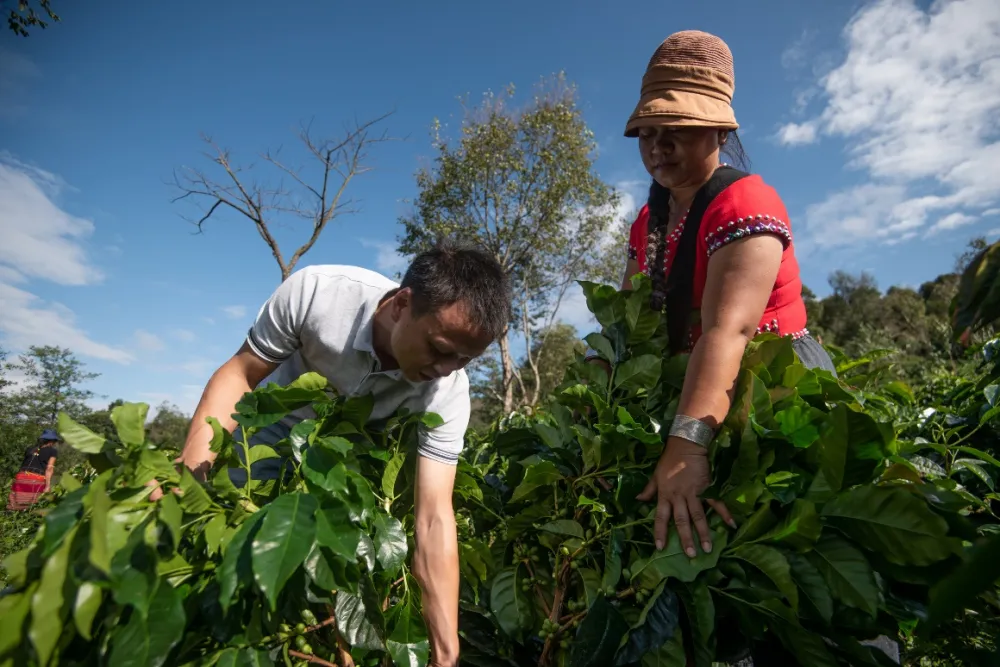
Many consumers, after purchasing and brewing at home, often wonder: “Why can’t I brew the same flavor I experienced in the café?” This is often closely related to roast freshness and brewing technique. Generally speaking, after roasting, coffee beans need to undergoa 4 to 7-day degassing periodto allow internal carbon dioxide to fully release, after which the flavor becomes more rounded. Most commercially available coffee beans are shipped shortly after roasting, arriving just in time for brewing. Even so, it is recommended to performa 30-second bloombefore brewing to help expel residual gases, aiding in flavor expression.
In terms of brewing parameters, using a common Hario V60 filter as an example, it is recommended to use15 grams of coffee groundswith a1:15 coffee-to-water ratio(i.e., 225 grams of water), and to control the water temperature at around87°C(specific temperature not provided, typically ~90–93°C). The grind size is suggested to be adjusted to approximately 75% extraction through a Chinese standard No. 20 sieve, corresponding to a medium-fine grind, which helps extract delicate flavor layers. In practice, you can use the “three-pour method”: start with a 30-gram bloom pour for 30 seconds; then slowly circle from the center outward, pouring up to 125 grams; finally, as the water level in the filter nears the bed of grounds, continue circling to reach 225 grams, with total extraction time of about 2 minutes. This method has a relatively low barrier to entry, is suitable for beginners, and can effectively enhance flavor complexity and taste balance.
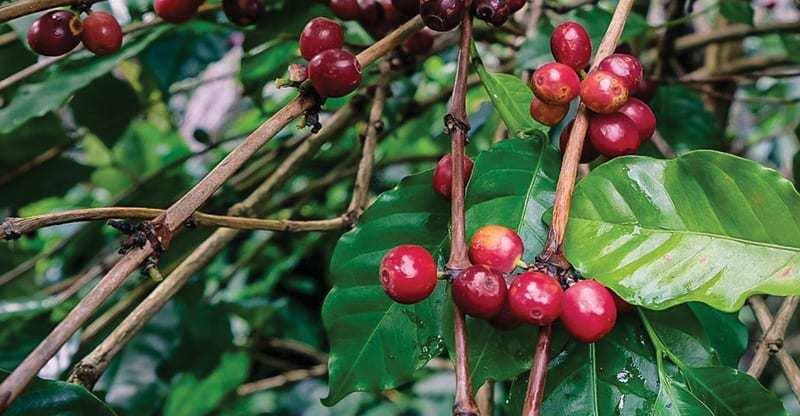
The above content is compiled by CoffeeHunters, a coffee news website.


