








Introduction:Delve into China’s four core coffee-growing regions in Yunnan — from Pu’er to Baoshan — and explore the cultivation status and flavor profiles of mainstream varieties such as Catimor and Typica. This article details how altitude and climate in each area influence coffee flavors, provides a pour over brewing guide for Lincang Typica, and discusses the advantages of washed processing along with harvesting challenges, helping you master the key tasting points and selection tips for Yunnan’s small-bean coffee.
As an important domestic coffee-producing region in China, Yunnan has gradually changed the outside world’s perception of locally grown coffee. With the popularity of the movie “Coffee or Tea?” (《一点就到家》), Pu’er coffee has entered the public eye, and its flavor potential has continued to gain market recognition.
Yunnan’s coffee-growing environment is uniquely favorable. In particular, the Pu’er region lies within the global golden latitude belt, with altitudes generally ranging between 1,000 and 2,000 meters. The mountainous terrain here is pronounced, the soil is fertile, and the large diurnal temperature variation provides ideal growing conditions for small-bean coffee varieties, resulting in well-balanced beans.

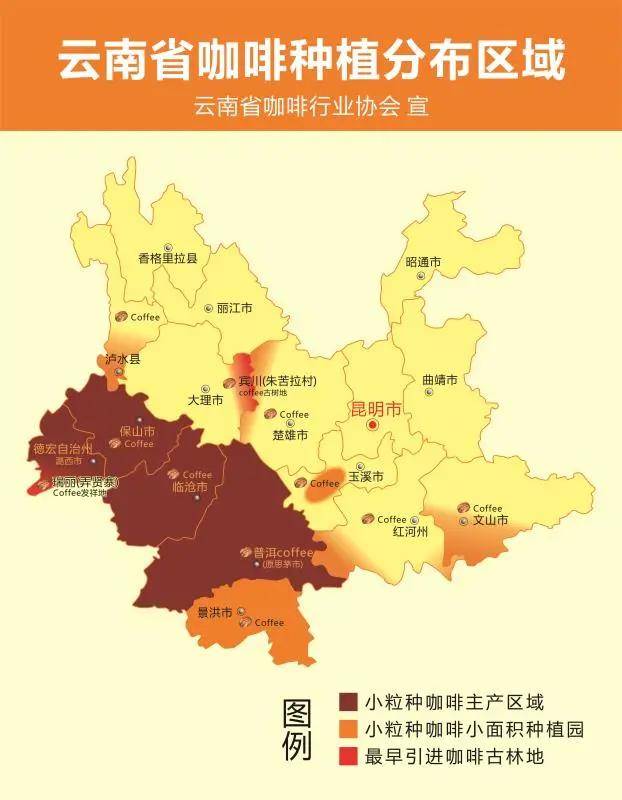
In addition to Pu’er, other areas in Yunnan are also actively developing their coffee industries. Below is an overview of the characteristics of the main producing regions:
Dehong Prefecture, one of the earliest regions to introduce coffee, began cultivating small-bean coffee after importing it from Myanmar in 1914. After a century of development, it has become known as the “Hometown of Chinese Coffee.” The region has registered the “Dehong Coffee” geographical indication, with over 270,000 mu of planted area, of which 140,000 mu are in production, yielding 28,000 tons of coffee beans annually and generating both agricultural and industrial value. Notably, 30,000 mu of coffee farms in the area are located at altitudes above 1,600 meters and employ organic farming methods, producing beans that have received high praise for their quality.
Lincang City, with its unique climate, has become an emerging hotspot for coffee cultivation. The area has established multiple seedling nurseries, with a total of 96 nursery gardens built, cultivating over 67 million coffee seedlings that could expand to a planting scale of 200,000 mu. Currently, the actual planted area reaches 260,000 mu, and some operators have also set up estates there, committing long-term efforts to variety improvement.
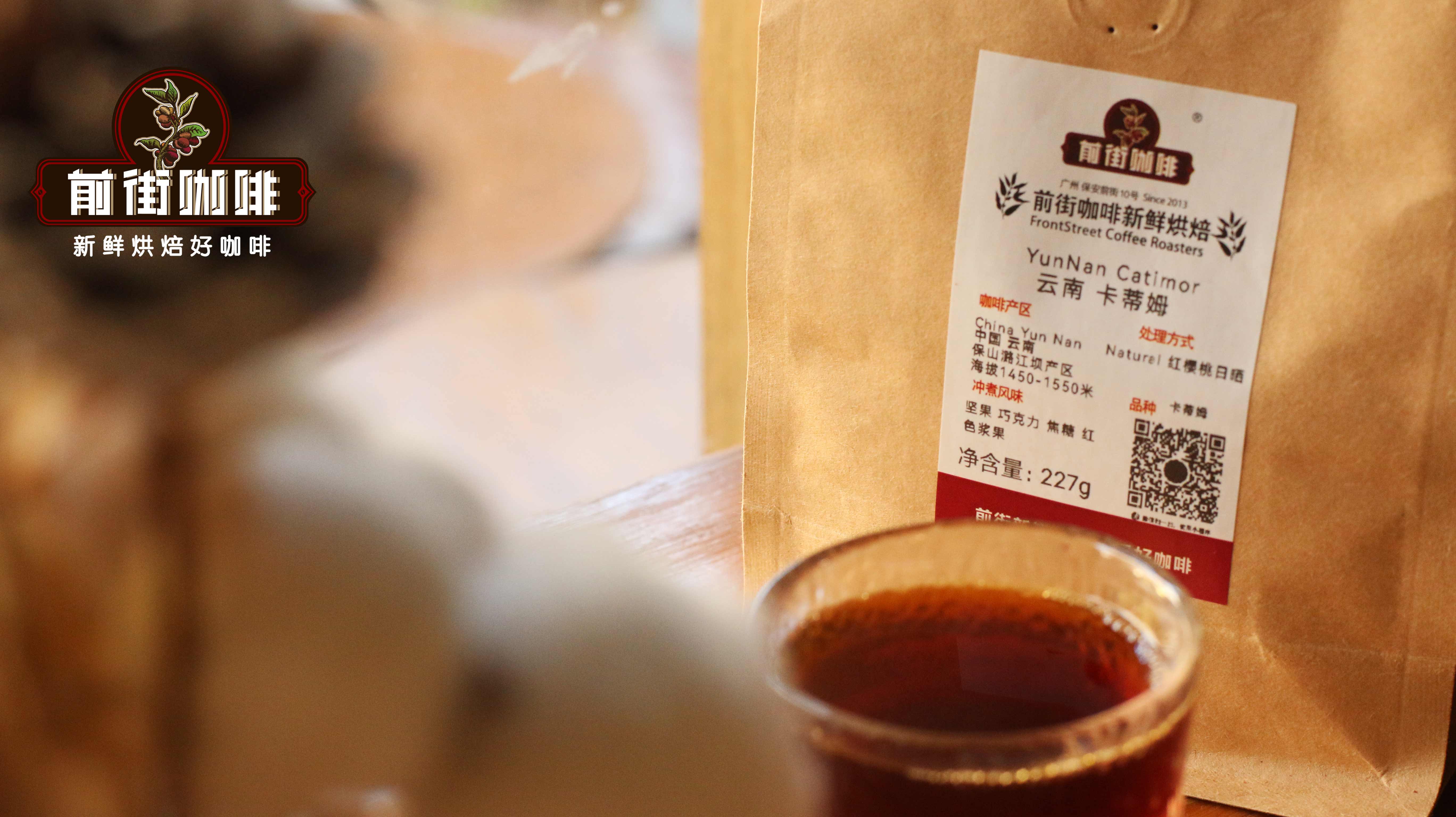
Baoshan is renowned for its long-history Ludian Dam small-bean coffee. Since introducing Southeast Asian varieties in the 1950s, its coffee has repeatedly won awards in the international market. It obtained national geographical indication protection in 2010. The local washed Catimor, with stable processing and clear flavor, has become a classic representation of Yunnan’s foundational flavor profile.
In terms of varieties, Yunnan is dominated by Catimor (accounting for 99% of production), but some regions still retain traditional varieties such as Typica and Bourbon. Typica, as the earliest introduced Arabica variety, though less resistant to disease and with lower yields, can exhibit unique fruity aromas and acidity. Bourbon, on the other hand, is known for its rich sweetness. It is worth noting that Typica, due to its long cultivation cycle (approximately 5 to 6 years before fruiting), was gradually replaced by Catimor in the past due to its relatively low economic returns.
Regarding processing methods, most producing regions in Yunnan adopt washed processing to cope with the unstable rainy season climate. This method removes the pulp through fermentation, preserving a clear layer of fruit acidity and being less prone to off-flavors compared to natural (sun-dried) processing. The typical process includes removing defective beans, mechanically pulping and depulping, 18-hour water fermentation, and finally drying to reach the standard moisture content.
For the pour over practice with Lincang Typica, it is recommended to use a three-stage extraction: start with a 30-second bloom using 30 grams of water, then pour with a slow stream to reach 124 grams for the first extraction phase; after the water level drops, continue pouring to 227 grams to complete the extraction, with a total time of about 2 minutes. These parameters help balance the sweet and sour profiles and highlight flavor notes of plum and nuts.
In terms of flavor layers, Yunnan’s small-bean coffee features bright acidity as its core, often showcasing fruity notes, herbal undertones, and a brown sugar finish. Washed Catimor exhibits straightforward fruit acidity and layered complexity, while Typica may carry more vibrant plum-like acidity and dark chocolate aftertaste. Full red fruit harvesting, due to its high labor demand, is now often improved through pruning management to enhance ripeness consistency and reduce picking difficulty.
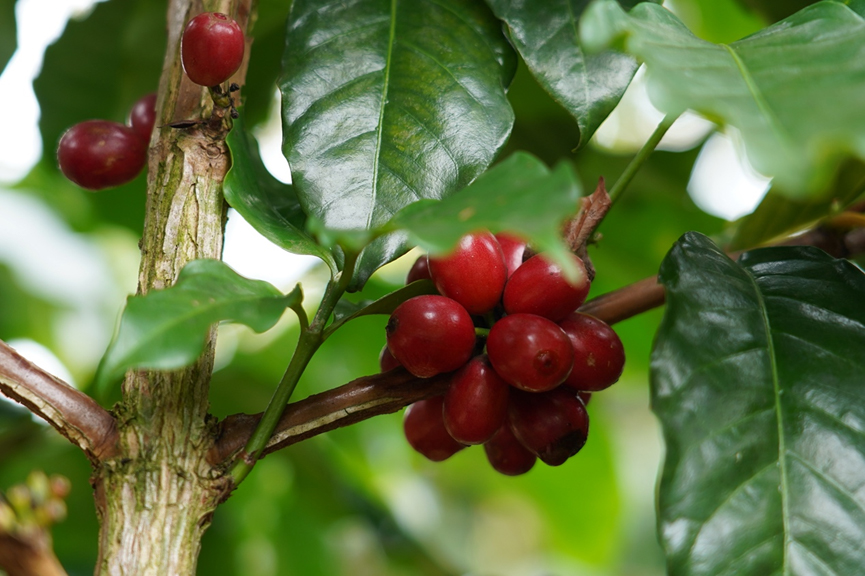
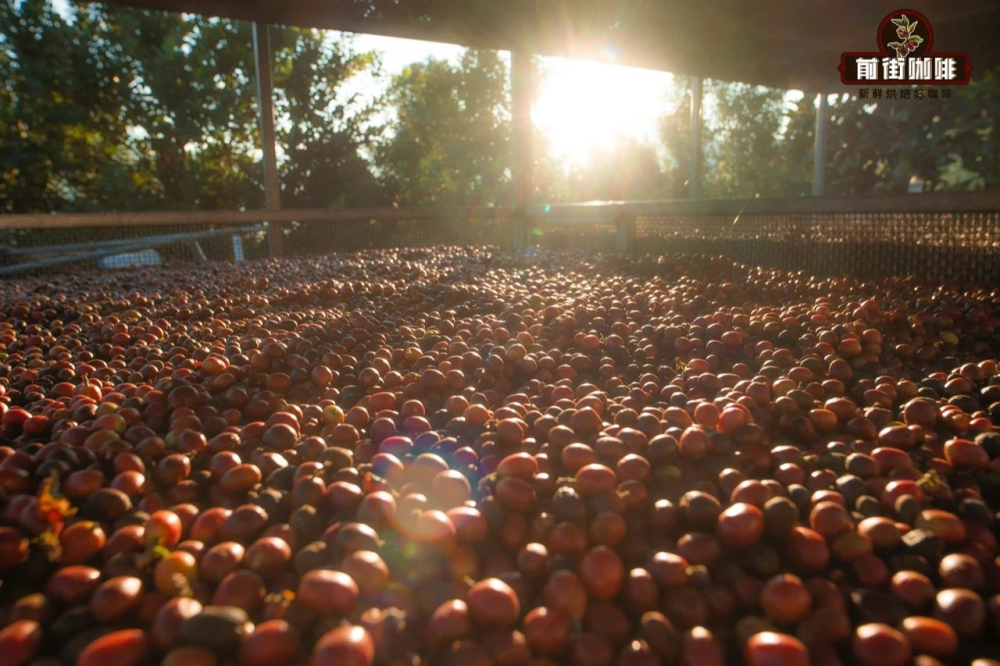
In practice, steep slope cultivation presents harvesting challenges; even with increased compensation, it remains difficult to find enough labor. Some farms improve quality through yield reduction and refined management, allowing coffee farmers to achieve better economic returns. Additionally, natural (sun-dried) processing is less common in Yunnan, primarily because the humid climate can easily lead to uncontrolled fermentation, making washed processing the mainstream choice.
In summary, the regional characteristics, variety differences, and processing techniques of Yunnan coffee collectively shape its unique flavor profile. From the high-altitude balance of Pu’er to the fruity traits of Lincang Typica, consumers can choose suitable regions and processing methods based on personal preference to explore the diverse potential of domestic coffee.
The above content is compiled by CoffeeHunters, a coffee news website.


