







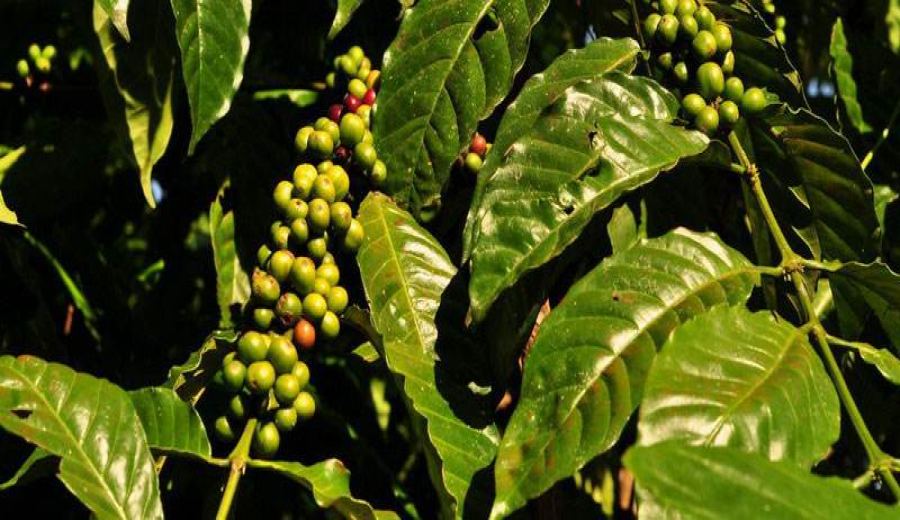
Introduction:As the world’s largest coffee-producing country, Brazil’s grading system and regional characteristics have a profound impact on the specialty coffee market. This article delves into the key elements of Brazilian coffee—from regional environments and variety evolution to processing techniques—and systematically explains the grading standards centered on defect rates, screen sizes, and cupping performance. It also reveals the definition of top-tier specifications combining NY.2 with 17/18 mesh and FC. Additionally, it provides practical pour-over brewing solutions, covering filter choice, water temperature control, and three-stage pouring techniques, guiding you to master the extraction secrets and flavor profile of medium-dark roasted Brazilian beans.
With its massive coffee production and export volume, Brazil has consistently ranked first in the world and is known as the “Coffee Kingdom.” Its coffee is celebrated for its rich aroma and mild taste, not only serving as a common base bean for espresso blends but also a popular starting point for many coffee enthusiasts entering the world of specialty coffee. However, the quality of Brazilian coffee is not static—ranging from commercially harvested beans using mechanical picking in the past to recent efforts in upgrading quality in high-altitude regions in the south. Its developmental trajectory is worth exploring in depth.
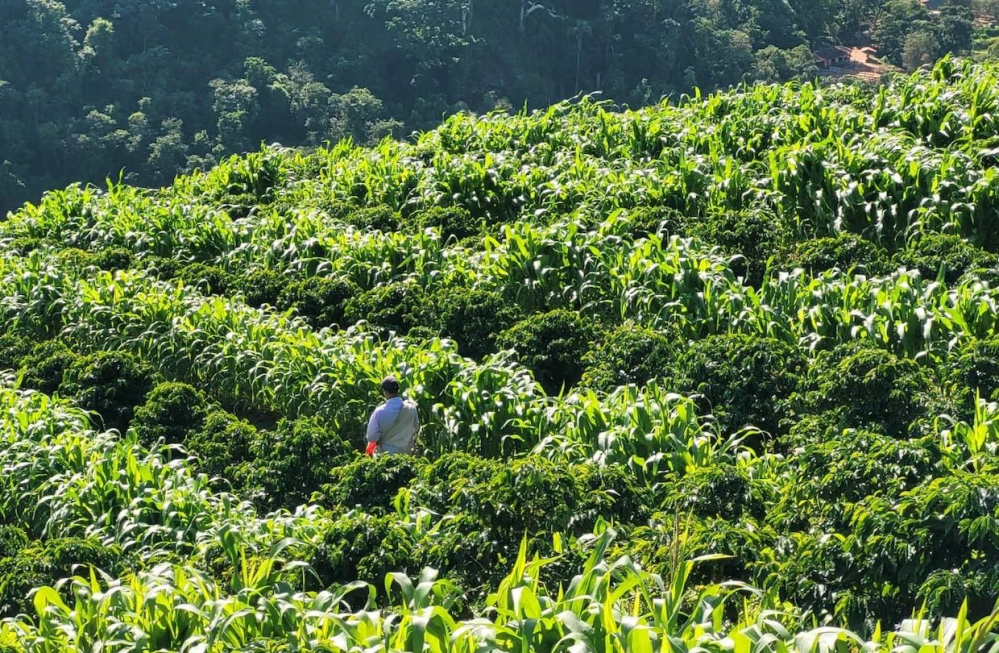
Brazil’s geographical conditions significantly influence coffee cultivation. With mostly flat terrain and a lack of high-altitude volcanic soils, coffee is primarily grown in low-altitude, non-volcanic areas. The scarcity of shade trees leads to fast fruit ripening, resulting in larger beans but a relatively simpler flavor profile. In the past, due to mechanized centralized harvesting, fruits of varying ripeness were often mixed during processing, leading to inconsistent overall quality. However, with the rise of the specialty coffee trend and the impetus of international competitions, high-altitude regions in southern Brazil—such as Cerrado in Minas Gerais—have begun to refine their approaches in variety selection, farming management, and post-harvest processing.
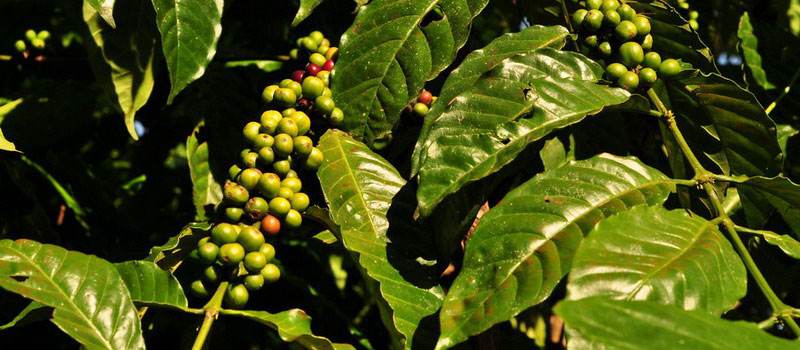
Brazil’s coffee-growing map spans seven states, among which Minas Gerais and São Paulo are the two most notable for quality. As Brazil’s first region to receive origin denomination, Cerrado almost exclusively grows Arabica varieties and is one of the earliest industrialized belts, home to many large estates. Although the region is at a low altitude, it has succeeded in cultivating competitive specialty beans through continuous efforts. A certain merchant’s Brazilian everyday drinking beans come precisely from this well-known region and are a good introductory option for understanding the basic flavors of Brazilian coffee.
In terms of varieties, Brazil initially focused on Typica, but it was gradually phased out due to low yields in favor of the higher-yielding Bourbon variety. Originating from Réunion Island, Bourbon was widely cultivated after being introduced to Brazil in the mid-19th century. Compared to Typica, Bourbon has wider leaves and denser branches, with yields increased by about 30%. The beans are rounder and shorter, often featuring berry acidity and a creamy texture. However, weaker disease resistance is a major drawback. In actual Brazilian cultivation, Red Bourbon and Yellow Bourbon are the most common variants: Red Bourbon produces bright red fruit when ripe, offering vivid flavors; Yellow Bourbon is known for its delicate taste, often exuding a complex aroma of dark chocolate and creamy peanuts, with Queen Estate’s Yellow Bourbon being a representative example.
Brazil’s processing methods also have their unique features. Since the main harvest season falls in the dry season with favorable drying conditions, sun-drying has traditionally been the norm. However, early practices of spreading the fruit directly on the ground often led to earthy flavors and contamination, resulting in unstable quality. After the 1990s, the promotion of semi-washed (pulped natural) technology greatly improved this issue: first, floaters and defective beans are removed using water tanks, followed by mechanical removal of the skin, pulp, and some mucilage, then washing to eliminate residual fruit gum, and finally drying either in the sun or indoors. This method combines water-saving efficiency advantages, resulting in cleaner-tasting Brazilian beans while preserving distinctive regional flavors.
Brazil’s grading system is uniquely characterized by three key indicators: defect rate, screen size, and cupping performance. First, the number of defective beans is the basis for determining grade, evaluated using a “deduction system”—the fewer defects in 300 grams of green coffee, the higher the grade. Among New York grading codes, NY2 indicates extremely few defects, making it a top-tier specification (with deductions under 4), while NY.1, which demands zero defects, is practically difficult to supply, so NY.2 is recognized as the highest-grade in the market. Second, coffee bean size is distinguished by 1/64-inch mesh screens, ranging from 14 to 20 mesh (mesh refers to the width of the bean’s shorter side), with 17/18 mesh considered the most ideal specification, balancing uniformity and extraction efficiency. Lastly, the cupping stage evaluates flavor and taste according to the COE (Cup of Excellence) standards: taste is divided into five grades, including Strictly Soft and Soft, while flavor has classifications such as Fine Cup (FC) and Good Cup (GC), with FC and GC being common high-quality categories.
Combining these criteria, a pack labeled “Brazil NY.2SC – 17/18 FC Cerrado” represents specialty coffee beans originating from the Cerrado region, with a screen size of 17 to 18 mesh, a cupping rating of Strictly Soft (FC), and a defect rate meeting the top-tier NY.2 specification.
For coffee enthusiasts who enjoy pour-over brewing, how can medium-dark roasted Brazilian beans be brewed to bring out the best flavors? The key lies in understanding the beans’ characteristics and adjusting parameters. First, freshness is crucial—opt for beans roasted within five days to fully experience their peak flavor. For equipment, the KONO filter cone, with its arched upper design, allows the filter paper to adhere tightly, making it more immersion-style compared to V60, which helps enhance richness and body. Alternatives like the Kalita wave or a French press are also good options.
Moreover, because medium-dark roasted beans have a looser structure and strong water absorption, over-extraction should be avoided. It is recommended to use a grind size with a 20-mesh standard sieve throughput of 75% (similar to coarse sugar), with water temperature controlled at 88°C, and employing a three-stage pouring method: the first stage involves pouring 30 grams of hot water for a 30-second bloom to activate the release of aromatic compounds; the second stage adds water up to 125 grams with a steady circular pour; when the liquid level drops by about half, continue adding to a total of 225 grams, with the entire extraction process taking approximately two minutes. Under these parameters, the nutty, chocolatey, and caramel aromas of Brazilian beans will be more pronounced, with a sweet and lingering aftertaste.
The above content is compiled by CoffeeHunters, a coffee news website.


