







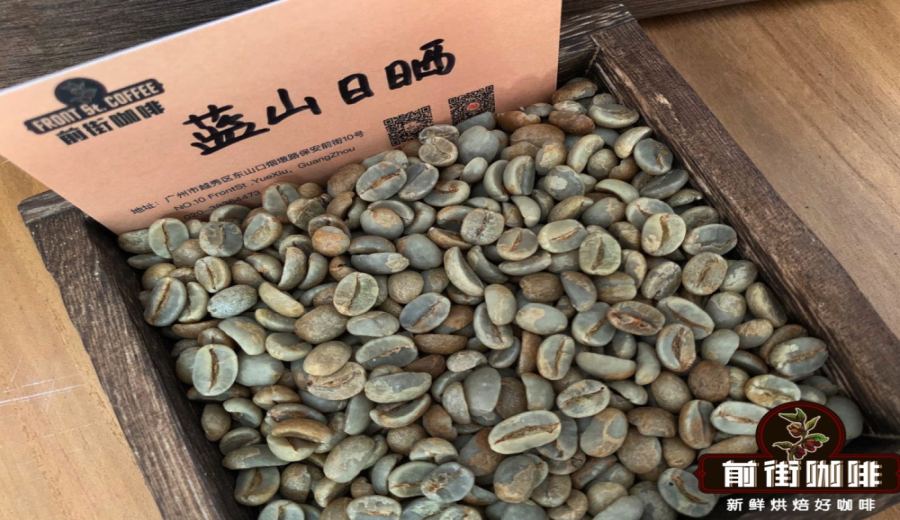
Introduction:What kind of flavor spark is created when Jamaican Blue Mountain meets Ethiopian Geisha? This article delves into the unique geographical conditions of the Blue Mountain region and the rigorous grading system from NO.1 to PB peaberry, taking you through how the Clydesdale Estate cultivates Geisha in high-altitude environments. Through detailed roasting profiles, cupping data, and V60 pour over parameter comparisons, we analyze the differences in aroma, acidity, and body between Blue Mountain Geisha and traditional washed Blue Mountain, providing practical insights for specialty coffee enthusiasts in tasting and selection.
In 2020, the Jamaican Blue Mountain region made headlines with an exciting announcement: the renowned Clydesdale Estate launched a new coffee variety — Blue Mountain Geisha. This coffee, which combines the Blue Mountain region with the Ethiopian Geisha variety, immediately sparked lively discussion among the coffee community: can Geisha grown in Blue Mountain still be considered authentic Blue Mountain coffee? What makes this innovative bean special, and is it worth a try for coffee lovers? This article will start with the regional background and grading system, and compare the multifaceted performance of Blue Mountain Geisha with traditional washed Blue Mountain, to help you deeply understand the charm of this unique coffee.
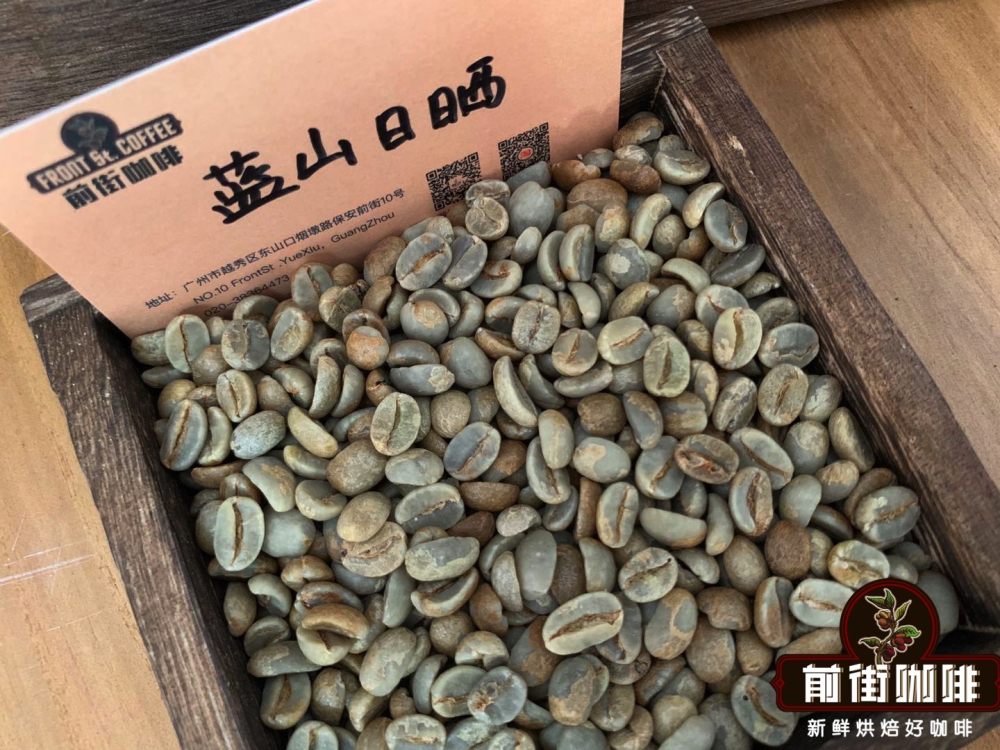
The fame of Blue Mountain coffee is inseparable from its uniquely advantageous geographical environment. The Blue Mountains are located at the eastern end of Jamaica, with main peaks ranging in elevation from 1000 to 1700 meters. Only coffee beans grown within this altitude range qualify to be called “Blue Mountain.” The name originates from the region’s magnificent natural landscape: on sunny days, the blue sea and mountains reflect each other, and from a distance, the peaks appear to be enveloped in a faint blue halo, hence the name “Blue Mountain.” The area enjoys a mild climate with annual rainfall reaching up to 1980 mm, moderate day-night temperature differences, and fertile volcanic soil, all contributing to the delicate and layered unique flavor profile of Blue Mountain coffee. Additionally, the region employs an intercropping model where coffee trees often grow alongside fruit trees such as bananas and avocados in terraces. This not only helps maintain ecological balance but also provides additional shade and nourishment for the coffee cherries. However, due to the rugged terrain, coffee harvesting relies entirely on skilled female workers who pick the cherries by hand, selecting only those that are fully ripe to ensure the purity and consistency of the final flavor.
The star of this article — the Clydesdale Estate — is one of the more well-known farms in the current Blue Mountain coffee region market. Its history dates back to the mid-18th century, around 1750, when it began engaging in coffee cultivation and production, making it one of the longest-running operators in the region. The estate’s planting areas and processing facilities are situated at a high altitude of approximately 1310 meters (4300 feet), enjoying abundant sunlight, and the gentle mountain mists common in the afternoon provide ideal soft shading for the coffee trees. Furthermore, the region’s mineral-rich soil, along with a relatively long fruit maturation period, helps nurture coffee beans with more concentrated and delicate flavors. Notably, the Clydesdale Estate is currently the only farm in the Blue Mountain region to have obtained “Rainforest Alliance Certification.” This certification not only represents its use of environmentally friendly farming practices — such as low-density planting under the shade of native trees — but also ensures the maintenance of biodiversity. A portion of the certification revenue is also used for wildlife conservation and the improvement of local farm workers’ livelihoods, demonstrating a commitment to sustainable management.
When it comes to the grading system of Blue Mountain coffee, it is mainly based on bean size, the rate of external defects, and the level of processing refinement. The common grades, from highest to lowest, are: NO.1, NO.2, NO.3, and the distinctive peaberry (PB). Each grade has strict criteria. For example, Blue Mountain NO.1 requires over 96% of the beans to reach a size of 17/18 mesh (approximately 6.7 to 7.15 mm), with an overall defect rate not exceeding 2%; NO.2 is downgraded to a 16 mesh size (approximately 6.0 to 6.35 mm), and NO.3 to a 15 mesh size (approximately 5.5 to 5.9 mm), with defect rates also controlled within 2%. As for Blue Mountain peaberry (PB), 96% of the beans must be single round-shaped, with a mesh size of 10 (approximately 4.75 to 5.0 mm), also meeting the strict standard of no more than 2% defects. This grading system not only ensures the visual consistency of the beans but also directly influences the final flavor expression and extraction efficiency.
Many coffee enthusiasts are puzzled by the combination of “Blue Mountain Geisha”: since Blue Mountain has always been known for cultivating Typica varieties, can growing the Ethiopian native Geisha variety still be considered authentic Blue Mountain? In fact, Blue Mountain refers to the region, while Geisha is the variety — the two are not in conflict. Blue Mountain Typica was introduced from Martinique in the 1820s and, after more than two hundred years of adaptation, has developed better suitability for the local environment, particularly with greater resistance to coffee berry disease compared to regular Typica, though its flavor profile is relatively more restrained. In contrast, the Geisha variety originated in Ethiopia and traveled through Kenya, Uganda, Tanzania, Costa Rica, and eventually gained fame at Panama’s Hacienda Esmeralda. This variety features long, slender beans and typically requires a high-altitude environment (such as the average elevation of over 1500 meters at Hacienda Esmeralda) to fully express its distinctive delicate floral and citrus notes. Although the Blue Mountain region has a slightly lower elevation (around 1310 meters), the Clydesdale Estate, with its unique microclimate and meticulous management, still allows Blue Mountain Geisha to exhibit a uniquely distinctive flavor profile.
The two samples analyzed in this article — Blue Mountain Geisha and traditional washed Blue Mountain — both use the washed processing method commonly practiced in Jamaica. This process first removes the outer skin and pulp of the coffee cherry, then places the mucilage-covered beans into fermentation tanks for 12 to 8 hours of fermentation to break down the residual pulp. After fermentation, the beans undergo repeated stirring and friction in water tanks, using the interaction between water flow and the beans to remove the mucilage. At this point, the beans are still wrapped in their parchment layer, with a moisture content as high as 50%, and must be quickly dried to reduce the moisture level to 12–14% to prevent mold. The dried beans are then carefully sorted and stored in specialized warehouses for further processing. This washed process effectively enhances the clarity and purity of the coffee’s flavor and is one of the key techniques that enable Blue Mountain coffee to present its delicate taste.
In terms of roasting recommendations, Blue Mountain Geisha and washed Blue Mountain require slightly different roasting strategies due to their distinct flavor characteristics. For Blue Mountain Geisha, it is recommended to load the green beans at a drum temperature of 180°C, with an initial flame setting of 130 and air damper at 3; reaching the turning point at about 1 minute and 32 seconds, with the drum temperature rising to 97°C while maintaining the same flame level; at the 3rd minute, adjust the air damper to 4, and at the 4th minute increase the flame to 140. When the drum temperature reaches 153.5°C, the bean surface turns yellow and the grassy flavor fades, entering the dehydration phase; by 8 minutes and 36 seconds, the bean surface shows noticeable wrinkles and dark speckles, at which point you can listen for the first crack. Typically, about 1 minute and 28 seconds into the development phase after the first crack begins (around 9 minutes and 31 seconds), the beans are dropped at 192°C. In contrast, the roasted curve for washed Blue Mountain is slightly adjusted: green beans are loaded at 165°C, with the same flame and air damper settings as the Geisha; the turning point and dehydration phase are roughly similar, but the first crack begins later, at 10 minutes and 6 seconds, and the roast is completed at 198.5°C. These subtle adjustments aim to highlight the unique flavor characteristics of each variety — Geisha emphasizes floral and fruity acidity, while Blue Mountain focuses on body and balance.
To accurately compare the flavor performance of the two coffees, samples were cupped within 8 to 24 hours after roasting. The cupping process used 200 ml ceramic cupping bowls, with water temperature controlled at 94°C, grind size measured by a 20-number standard sieve (aperture 0.85 mm), with a grind passing rate set between 70%–75%. The coffee-to-water ratio was 1:18.18 (11 grams of coffee to 200 ml of hot water), a parameter that places the coffee concentration in the optimal drinking range of 1.15%–1.35%. The steeping time was fixed at 4 minutes to ensure consistency in evaluation.
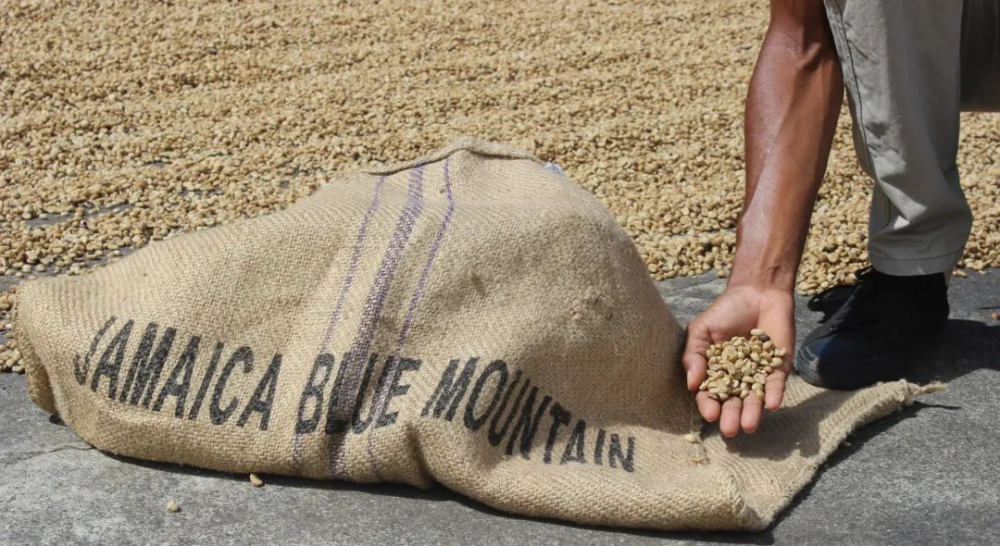
According to the cupping results, Blue Mountain Geisha exhibited the following characteristics: the dry aroma had a pronounced caramel sweetness, while the wet aroma released soft floral notes; in the flavor profile, the bright acidity of citrus, berries, and grapefruit complemented the sweetness of caramel and honey, delivering an overall delicate and layered expression. In contrast, washed Blue Mountain featured a nutty dry aroma, with a wet aroma showing a rich chocolate tone; in terms of flavor, it demonstrated high cleanliness, good body, and a balanced acidity-sweetness-bitterness ratio, showcasing the classic stable profile of Blue Mountain coffee.
Finally, in the pour over practical test, both coffees were brewed using the V60 filter cone to ensure a fair comparison. The brewing parameters were set as follows: 15 grams of coffee, medium-fine grind (approximately 78% passing through a 20-number sieve), coffee-to-water ratio of 1:15, water temperature of 91°C, using a V60#01 filter cone. The pouring technique was as follows: the first pour involved 30 grams of hot water for a 30-second bloom; the second pour slowly circled from the center outward, adding 100 grams of water — this stage required slowing the pace to fully extract the Geisha’s aromas, waiting for the water level to drop halfway after pouring; the third pour added 95 grams of water just before the coffee bed was fully exposed, totaling 225 grams of water, with an overall extraction time of about 1 minute and 50 seconds to 2 minutes and 5 seconds. The actual tasting results showed that Blue Mountain Geisha delivered an initial burst of citrus and grapefruit vibrant acidity, gradually unfolding jasmine floral notes in the mid-palate, and finishing with a sweet aftertaste of honey and caramel; whereas washed Blue Mountain presented a rich aroma of dark chocolate and nuts, with a clean and bright mouthfeel, and an elegantly balanced acidity-sweetness-bitterness profile, showcasing the classic style of Blue Mountain coffee. Through this in-depth analysis and practical comparison, we hope to help coffee enthusiasts gain a more comprehensive understanding of the unique charm of Blue Mountain Geisha, and make wiser decisions in selection and brewing.
The above content is compiled by CoffeeHunters, a coffee news website.


