







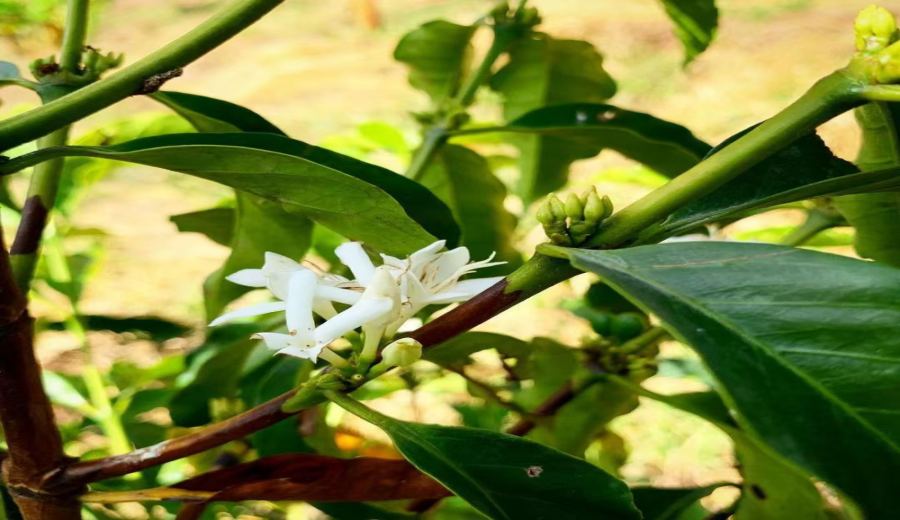
Introduction:The rise of Gesha coffee stems from Panama's Hacienda La Esmeralda winning first place in the 2004 Best of Panama (BOP) competition. This ancient Ethiopian variety thereby ascended to the ranks of top-tier specialty coffee. This article delves into how Gesha made its journey from the African forests to the highlands of Panama, focusing on the three-tier classification system of Hacienda La Esmeralda — Red Label, Green Label, and Blue Label — including criteria such as altitude, cupping scores, processing methods, and primary flavor characteristics. It also introduces the terroir conditions of the three core lots: Jaramillo, Canas Verdes, and El Velo, and how they influence the final flavor profiles of Gesha.
The Gesha variety can be traced back to 1931, when it was discovered in the Gesha forest in southern Ethiopia and subsequently sent to a coffee research institution in Kenya. It then spread to Uganda and Tanzania in 1936, arrived in Costa Rica in 1953, and didn’t reach Panama until the 1970s. However, for decades thereafter, Gesha received little attention due to its extremely low yield, high cultivation threshold, and poor economic returns, and was long considered a marginal variety.
The turning point came at Hacienda La Esmeralda in Panama. In 2003, the farm owner and his son noticed a batch of coffee beans with a distinctly different flavor profile, unlike the common coffees grown locally. After single-tree selection and cultivation, they entered it into the 2004 Panama Best of Panama (BOP) competition — and it won first place, astonishing everyone. From that moment, Gesha shot to fame, becoming a focal point in the global specialty coffee market and establishing Hacienda La Esmeralda as an industry leader.
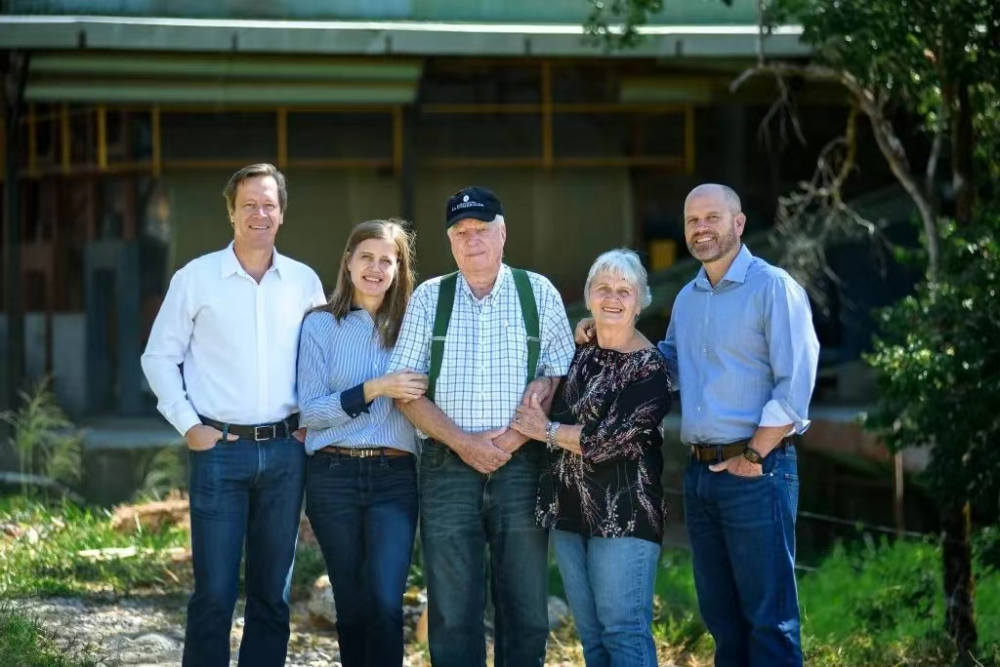
The history of Hacienda La Esmeralda dates back to 1964, when former U.S. banker Rudolph A. Peterson retired and moved to Panama, purchasing the estate in Boquete. Initially, the farm mainly focused on dairy farming. In 1987, his son Price Peterson gave up his medical career and returned home to help manage the farm. That same year, he introduced the two mainstream Arabica varieties Caturra and Catuaí. A washed processing facility was established in 1994, marking the official entry into specialty coffee production. In 1996, Hacienda La Esmeralda expanded further by acquiring the neighboring Jaramillo farm, which was highly valued for its superior geographical conditions and unique coffee flavors, and would later become the birthplace of Gesha.
According to records, the Petersons were drawn to Jaramillo primarily because the coffee there exhibited rare citrus and floral-fruity notes, distinctly different from typical Panamanian coffee. After conducting detailed cuppings of various sections within the farm, they finally pinpointed the source of the distinctive flavors — a few overlooked coffee trees located at the highest part of the farm. Due to their low yield, these trees had previously been used only as windbreaks. These very trees are what we now know as the globally renowned Gesha.
In 2004, this unique batch of Gesha green beans stood out at the BOP competition. Once the variety was confirmed by experts, Hacienda La Esmeralda promptly invested resources to refine the processing workflow and implement batch management, eventually developing the three-tier grading system of Red Label, Green Label, and Blue Label, forming the backbone of the estate’s current Gesha series.
Based on cupping scores, altitude, and origin conditions, Hacienda La Esmeralda rigorously classifies its Gesha offerings into three signature product lines: Red Label corresponds to “Esmeralda Special,” Green Label is “Private Collection,” and Blue Label is “Geisha 1500.” These three tiers differ significantly in flavor profile, origin sourcing, and pricing positioning.
Officially named “Esmeralda Special,” Red Label Gesha represents the estate’s top-tier Gesha beyond auction lots. These beans must be grown at altitudes above 1600 meters, with cupping scores of 91 or higher. Each batch comes with detailed origin information, including lot name, altitude, latitude and longitude, tree age, harvest time, and processing method. For example, some recent Red Label batches were sourced from the Sugar Cane lot, where the cherries were harvested in mid-February and underwent a slow 25-day sun-drying process, resulting in intense floral notes such as jasmine, citrus, berries, and honey, with a layered structure and long-lasting finish.
Typical flavor characteristics of Red Label include bright citrus notes paired with rose floral aromas, followed by a honey-like sweetness and a complex fruity aftertaste, offering a juicy mouthfeel. Beginners are advised to pay special attention to the balance between its delicate floral notes and fruity acidity.
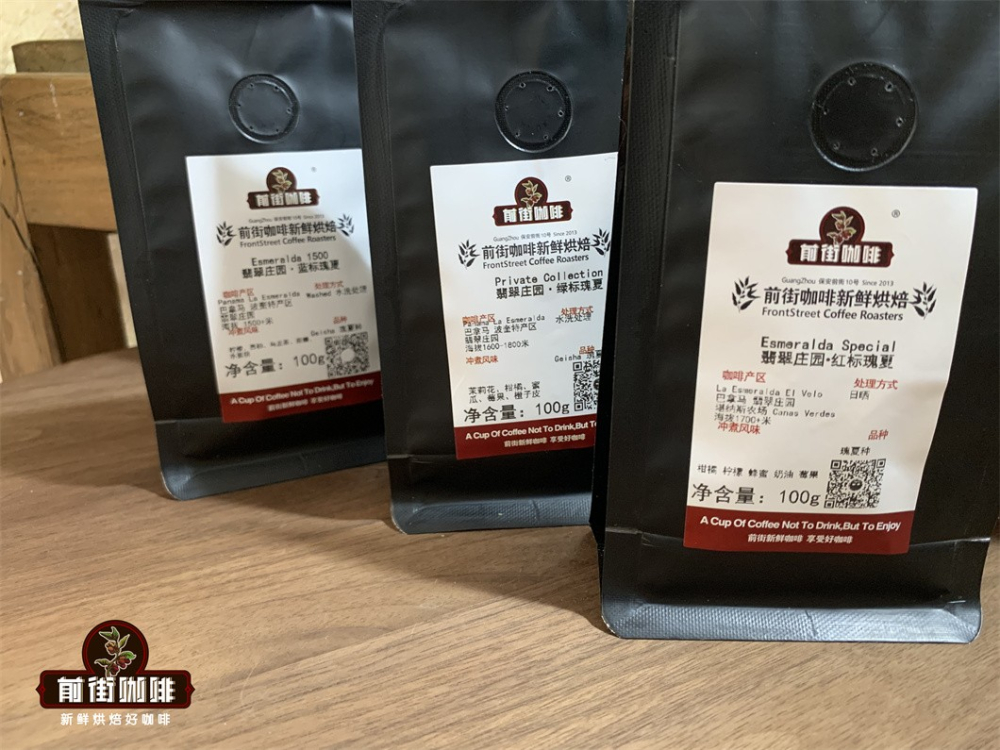
Green Label Gesha, also known as “Private Collection,” was previously mainly non-auction lots but still delivers excellent quality. This grade consists of a blend of Gesha beans sourced from the estate’s two main farms — such as Jaramillo and Canas Verdes — grown at altitudes between 1600–1800 meters, characterized by classic citrus and honey notes. It’s ideal for consumers with budget constraints who still want to experience the flavor of Gesha. Starting in 2022, Green Label began indicating sub-farm origins for greater transparency.
Although a blend, Green Label retains the distinctive floral-fruit aromas and clear acidity typical of Gesha, with well-defined layers of citrus, berries, and honeydew, and a full-bodied mouthfeel. Overall, Green Label offers outstanding value for money, making it suitable for everyday enjoyment or for coffee lovers trying Gesha for the first time.
Officially named Geisha 1500, Blue Label Gesha is grown at altitudes between 1400–1500 meters and is a blend of beans from the three lots: El Velo, Jaramillo, and Canas Verdes. Traditionally, this grade was offered only with washed processing, but in recent years, a natural version has also been added. Starting in 2021, the Blue Label series was renamed “Volcanica Gesha,” maintaining a similar flavor profile but exclusively featuring washed processing. Its flavor is lighter and fresher, highlighted by fruity acidity and subtle floral notes, with slightly lower body.

Typical flavors of Blue Label include lemon, oolong tea, cane sugar, and peach, with soft acidity. It suits drinkers who prefer a clean and refreshing taste. The choice between washed and natural processing methods significantly affects its flavor expression; it’s recommended to choose based on season or personal preference.
Gesha cultivation at Hacienda La Esmeralda is primarily concentrated in three core lots: Jaramillo, Canas Verdes, and El Velo. These three areas vary not only in altitude and microclimate, but also in soil characteristics and cultivation management — all key factors contributing to the differences in Gesha flavors.
Jaramillo is where Gesha was first discovered and one of the first farms acquired by the Peterson family. With an average altitude of around 1700 meters — slightly lower than the other two lots — it features steep slopes, making harvesting challenging. Annual rainfall reaches up to 4000 mm, and there is a significant diurnal temperature variation, with daytime averages of 19–25°C dropping to 11–15°C at night, creating a unique microclimate. Jaramillo is divided into six Red Label sub-lots: Mario, Noria, Reina, Bosque, Buenos Aires, and Caballeriza.
Canas Verdes is located on the eastern slope of the Barú volcano, with altitudes ranging from 1500 to 2050 meters. The terrain is complex and the soil is predominantly volcanic, coupled with notable diurnal temperature variation, which contributes to especially rich flavors in the Gesha grown here. Average annual rainfall is about 3500 mm, with a diurnal temperature range of around 6–10°C. This area is subdivided into 11 small lots, such as Lino, Coronado, Fundador, León, Montaña, Trapiche, Jacinta, Cabaña, Tumaco, Nido, and Colga.
El Velo is the newest acquisition by Hacienda La Esmeralda, obtained in 2012. It boasts the highest altitudes across the estate, with some sections reaching 1900 meters, and the terrain has been artificially leveled for easier management. In addition to Gesha, over 400 coffee varieties from CATIE are planted here — including Laurina, Pacamara, Mocha, and SL28 — primarily for varietal research. Elevations at El Velo range from 1650 to 1900 meters, with annual rainfall of about 4000 mm and diurnal temperature variation similar to Jaramillo. This area is divided into seven sub-lots: Guabo, Portón, Durazno, Mural, Buena Vista, and Guila.
In summary, the reason why Gesha from Hacienda La Esmeralda in Panama stands out lies not only in the unique characteristics of the variety itself, but also in its rigorous grading system, precise lot management, and diverse processing techniques. Whether you’re pursuing the ultimate flavor with Red Label, seeking great value with Green Label, or preferring a fresh and clean cup with Blue Label, there’s a Gesha to suit every level of coffee enthusiast.

The above content is compiled by CoffeeHunters, a coffee news website.


