







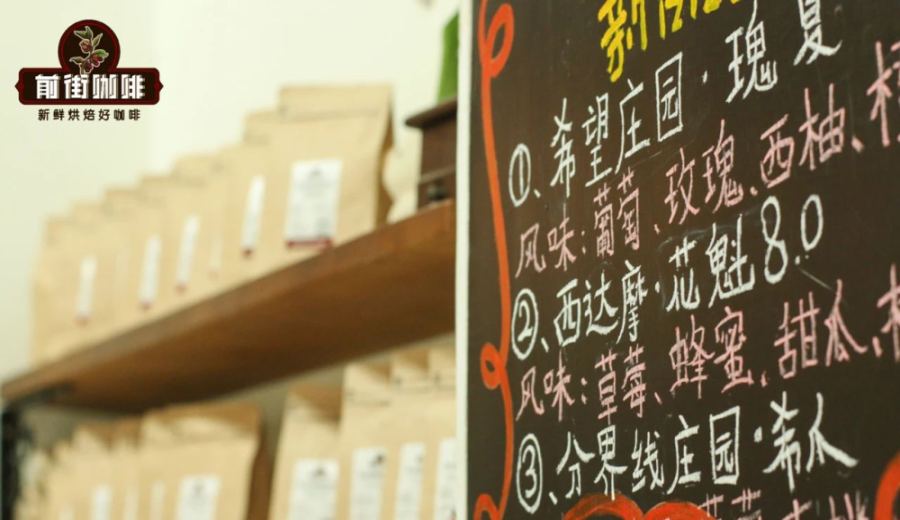
Introduction:This article provides an in-depth analysis of the Ethiopian Yirgacheffe Guji Hambella region’s sun-dried G1 premium coffee bean—Hua Kui (Flower Queen)—introducing its origin background, processing method, and the evolution of its versions. It also details the key adjustments for a professional light roast profile, including charge temperature, drying phase duration, first crack phase, and development time. Practical V60 three-stage pour-over techniques are shared to help you brew Hua Kui at home, capturing its enticing tropical fruit aromas and rich aftertaste.
Hua Kui, now a widely recognized name in the specialty coffee world, is actually the market commodity name for the sun-dried G1 coffee beans produced in Ethiopia’s Guji Hambella region. Each year, depending on the batch, it is distinguished by a version number such as “X.0,” with popular versions including 7.0, 8.0, etc. This coffee is celebrated globally for its bold flavors of tropical fruits and berries, with a sweet profile. This article will take you through the origin story of Hua Kui, the evolution of its processing method, and an in-depth look at the light roast profile recommended by professional roasters, as well as how to perfectly highlight its layered aromas and flavors through V60 pour-over brewing.
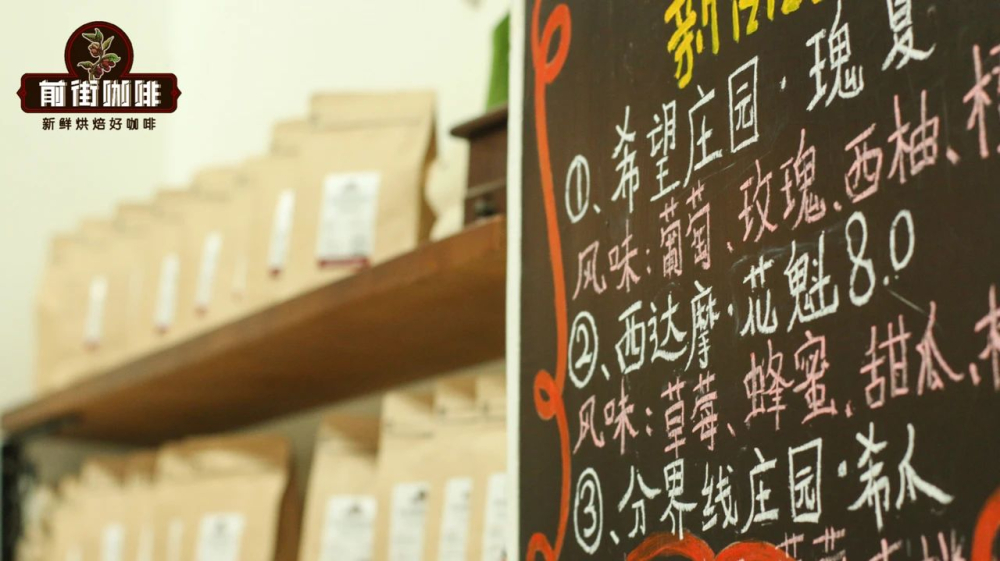
Interestingly, the name “Hua Kui” does not come directly from the coffee variety, region, or processing farm like many others, but rather follows a concept similar to tech products receiving annual version updates. Initially, these coffee beans were simply identified by their region of origin, “Hambella,” and were actually sun-dried G1 grade beans produced by the Buku Abel washing station in the Hambella area. Due to the enthusiastic market response, and to differentiate the flavor profiles of different years and batches, the name “Hua Kui X.0” was later adopted to help consumers easily identify the product.
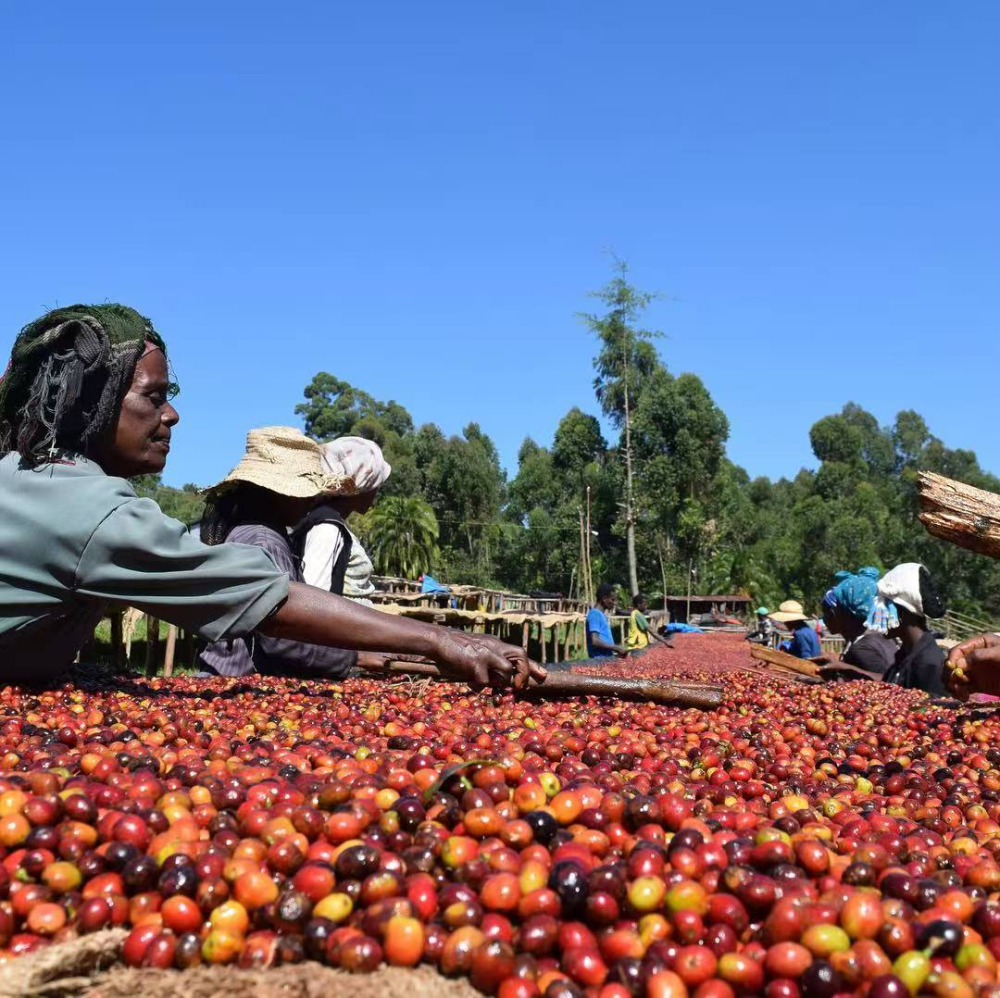
The coffee harvest season in Hambella runs from December to January each year. The Buku Abel washing station carefully selects only fully ripe, red coffee cherries with a sugar content of 30 or above for harvesting. These selected coffee fruits are processed using the African raised bed sun-drying method. The region experiences significant day-night temperature variations. Farmers shade the cherries during the day to prevent over-fermentation, cover them with plastic sheets at night to protect against rain, and continuously turn the cherries to ensure even drying and avoid fermentation off-flavors. After approximately 18 days of careful sun drying, the green beans reach a moisture content of 13%, after which they are hulled—laying the foundation for Hua Kui’s unique dry aroma.
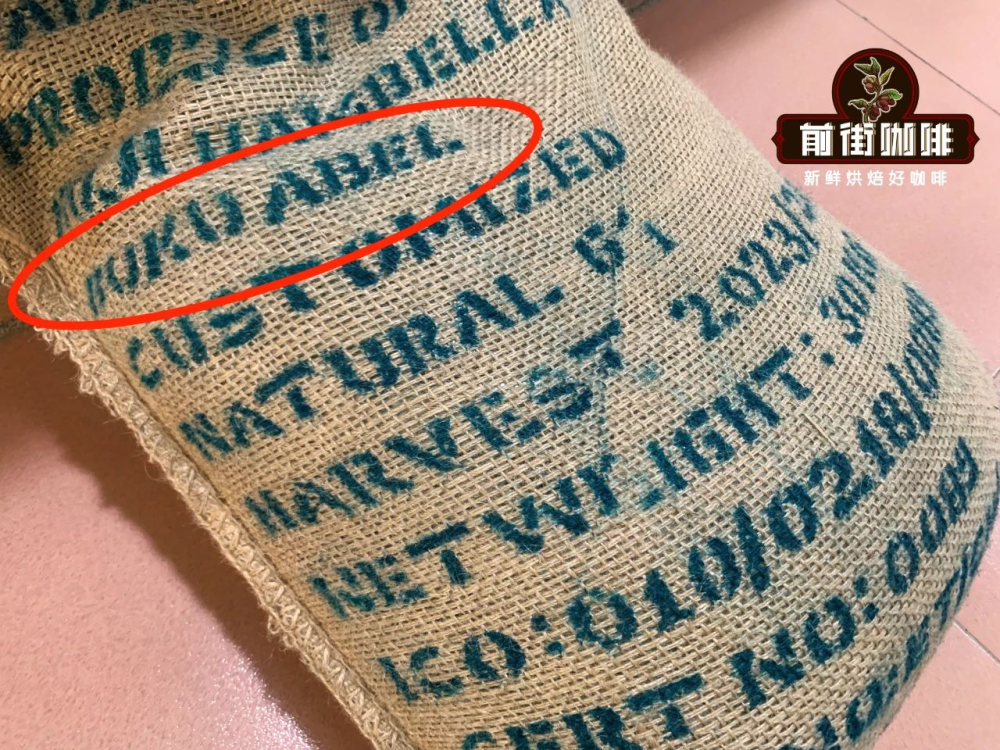
As Hua Kui gained international fame after winning awards in 2017, market demand grew rapidly. To meet the increasing production needs, local processor DW Company established several professional sun-drying stations in the Hambella region, primarily concentrated in the core producing town of Dimtu. These include Buku Abel, as well as other villages such as Buku Saysay, Haro Soresa, Tirtiro Goye, and Seke Bokosa joining the production. At that time, the annual output had reached an astonishing scale of several thousand tons. Since all these stations are located within the core Hambella area, the sun-dried G1 beans produced by these five villages can all be referred to as “Hua Kui,” which is also one of the reasons behind the establishment of the version numbering system.
However, even though they come from the same region and share the same processing method, Hua Kui’s actual flavor profile can vary slightly each year due to differences in climate conditions, minor altitude changes, and processing details. One coffee team observed through cupping that, starting from 2018, the body and aftertaste of subsequent batches were not as prominent as those of the original Hua Kui (2017). To distinguish the flavor characteristics of different years, domestic importers began assigning version numbers to each batch—for example, 2018 became “Hua Kui 2.0,” 2019 became “Hua Kui 3.0/3.1,” up to the latest “Hua Kui 8.0”—allowing consumers to identify which yearly regional flavor their coffee beans belong to based on the version number.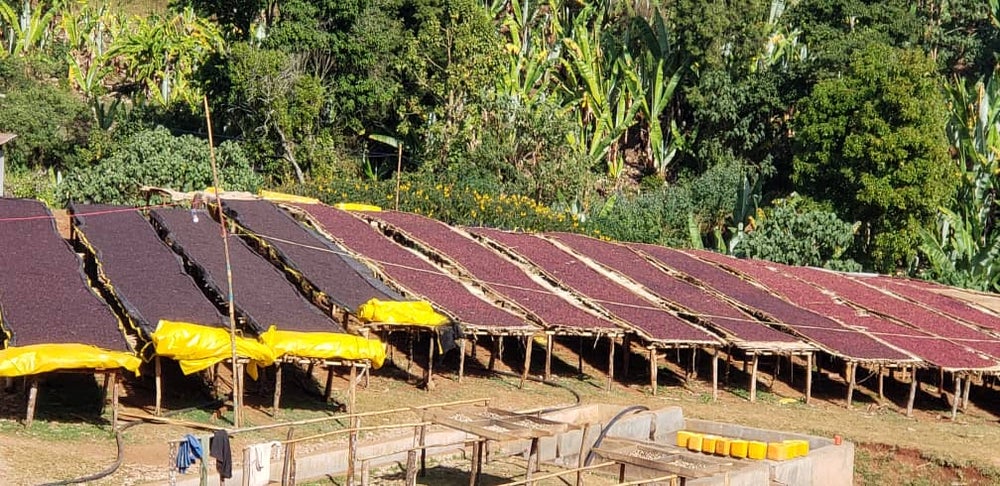
When it comes to the flavor profile of Hua Kui, many people’s first impression may be intense floral notes. However, its berry and tropical fruit aromas are actually more prominent. Common descriptors include strawberry cream, mango, jackfruit, citrus, and blueberry, paired with a distinct juiciness and moderate sweetness, reminiscent of a platter of ripe tropical fruits. These features are also part of what helped it stand out in international TOH green bean competitions. However, due to slight yearly variations in climate, processing, and storage environments, the actual flavor experience is best judged by cupping each specific batch.
In terms of roasting, one coffee brand recommends adjusting the light roast curve to suit Hua Kui’s characteristics, with the goal of fully preserving its delicate floral and fruity aromas and small-molecule aromatic compounds. It is recommended to use a semi-direct-fired roaster (such as the Yangjia 800N),with a charge temperature set at 190°C. In the early phase, complete the drying and yellowing stages within approximately 6 minutes (yellowing point temperature around 150–153°C). Then,around 9 minutes and 50 seconds, enter the first crack phase. The crack during this stage is usually softer and slightly delayed, so close attention to temperature control is needed.The development time after first crack is recommended to be maintained between 1 to 1 minute and 30 seconds, with total roasting time ideally kept under 11 minutes before dropping the beans. When the sampling spoon detects a clear aroma of strawberry jam at around 193°C, it indicates the optimal time to drop the beans.For pour-over brewing, it is recommended to use the V60 filter cone along with a three-stage pouring technique to fully showcase Hua Kui’s layered flavors and aroma. Specific parameters are as follows:Set the water temperature to 92–93°C, with a coffee-to-water ratio of 1:15, and a grind size similar to superfine sugar (approximately 80% passing through a #20 sieve). In practice, start by pouring hot water equal to double the coffee dose (about 30 grams) for a 30-second bloom. Then, use a small stream to pour in a circular motion from the inside out until reaching 125 grams for the first pour. Once the coffee bed descends to the middle of the filter cone, continue pouring with the same fine stream until reaching 225 grams to complete the extraction. The whole process takes about 2 minutes. These parameters strike a balance between Hua Kui’s acidity, sweetness, and body, allowing the tropical fruit aromas and black tea-like finish to fully shine.
In summary, Hua Kui coffee beans, thanks to the unique geographical conditions of the Hambella region and the exquisite sun-dried processing method, offer unparalleled berry and tropical fruit flavors. Whether it’s the light roast curve designed by professional roasters or the precise parameters for V60 pour-over brewing, everything is crafted to perfectly release the aroma and taste of this premium coffee bean. With the right roasting and brewing techniques, you too can enjoy a Hua Kui experience at home that rivals that of competition-level specialty coffee shops.
The above content is compiled by CoffeeHunters, a coffee news website.


