








Introduction:Delve into Indonesia’s unique wet-hulling processing method, analyzing its core differences from traditional washed processing, and uncovering the reasons behind Mandheling coffee’s rich body, caramel aroma, and distinctive bean appearance. Explore this post-harvest technique that profoundly influences flavor—from climate adaptability to processing details.
As a special process distinct from conventional washed processing, the hallmark of Indonesia’s wet-hulling method lies in removing the parchment layer (commonly called "silver skin") before the coffee beans are fully dried. This approach significantly shortens the overall drying period, making it especially suitable for Indonesia’s high-temperature, high-humidity environment with limited sunlight.
With Indonesia’s year-round hot and humid climate, where air humidity consistently ranges between 70% to 90% and sunlight hours are unstable, relying on traditional sun-drying or washed processing not only takes longer but also risks quality issues due to weather conditions. Wet-hulling was born out of this context: it first follows the early steps of washed processing—removing the pulp and fermenting—but then briefly sun-dries the beans with their parchment for one to two days until the moisture content drops to 30% to 50%. At this point, the parchment is removed early, and the beans continue sun-drying until their moisture content stabilizes at around 12%, completing the process.

The wet-hulling process can be broken down into the following key stages: First, freshly harvested coffee cherries undergo flotation to remove low-density, lower-quality floaters. Next, the outer skin and pulp are removed, and the mucilage-covered beans are placed in water tanks to ferment for 12 to 36 hours (duration adjusted as needed), allowing the mucilage layer to fully break down and detach—this stage is identical to the early steps of washed processing.
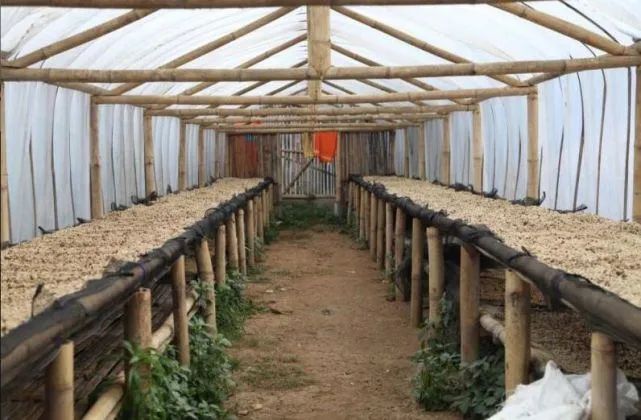
The difference begins in the drying phase after fermentation: In wet-hulling, beans with their parchment are spread out in the sun to dry for one to two days until their moisture content drops to 30% to 50% and they reach a semi-soft, semi-hard state. At this point, the parchment is immediately removed using a hulling machine, followed by about two more days of sun-drying to stabilize the moisture content at around 12%. This method not only shortens processing time but also adapts to Indonesia’s unpredictable weather, ensuring successful post-harvest completion.
This special processing method directly shapes the unique flavor and appearance of Mandheling coffee. Because the parchment is removed when the beans are semi-soft and semi-hard, combined with subsequent intense sun-drying, the beans are prone to cracking, forming distinctive "hoof-like" shapes (known as "hoof beans"). This is a normal phenomenon, not a defect.
Additionally, the wet-hulling method’s characteristic of drastically compressing the drying period results in significantly reduced acidity, enhanced body, and prominent caramel aroma with delicate herbal and fresh aftertastes. These flavor characteristics are key to why Mandheling coffee is beloved by coffee enthusiasts worldwide.
The above content is compiled by CoffeeHunters, a coffee news website.


