







Introduction:Hawaiian Kona coffee is renowned for its unique flavor profile nurtured by volcanic soil, standing alongside Jamaican Blue Mountain as a symbol of premium quality in the hearts of many coffee enthusiasts. This article will delve into the origin, natural conditions, and grading system of Kona coffee, while also providing a detailed comparison of the flavor differences and brewing parameters of five brewing methods—V60, siphon pot, AeroPress, French press, and KONO filter—to help you gain a more comprehensive understanding and find the brewing method that suits you best.
Hawaii is the only state in the U.S. with commercial-scale coffee cultivation, and among its regions, Kona produces the most famous coffee. Thanks to its exceptional volcanic soil, small-scale family farming model, and richly sweet and mellow unique flavor, Kona coffee has long been regarded as a high-end coffee representative on par with Jamaican Blue Mountain. This article not only introduces the historical origins and growing environment of Kona coffee but also deeply analyzes its grading system. Through practical testing, it compares the impact of five common brewing methods on flavor, helping you understand Kona from bean selection to brewing.
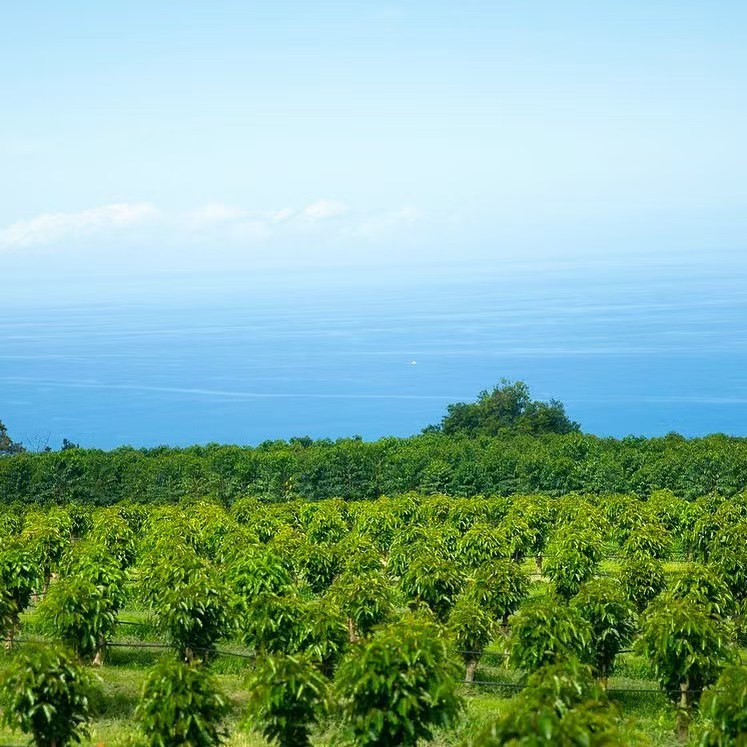
The unique flavor of Kona coffee is inseparable from the volcanic soil on the western coast of Hawaii’s Big Island. This mineral-rich land provides ample nutrients for coffee trees, yielding beans with a rich flavor and a naturally sweet undertone. Statistics show that Hawaii produces over 8 million pounds of coffee beans annually. Although its production is not outstanding on the global market, its quality is highly praised. Many coffee lovers particularly enjoy the smooth mouthfeel of Hawaiian Kona, its aromatic richness with captivating nutty notes, and its balanced acidity that is not overly sharp—making it very suitable for those new to specialty coffee.
Looking back at history, after the U.S. gained independence, its coffee industry was mainly focused on commercial beans, with Europe dominating the market. As the U.S. sought to expand its coffee supply chain, the annexation of Hawaii became a key turning point. The region introduced the Typica variety from Guatemala and gradually established a foundation for coffee cultivation. Interestingly, by that time, Jamaican Blue Mountain had already developed for over sixty years and become a model for island-grown coffee. Therefore, Hawaiian coffee was often compared with Blue Mountain from the start, and the two remain classic representatives in the high-end coffee market to this day.
Hawaii is composed of multiple volcanic islands, but in reality, only the Big Island (Hawaii Island) has the natural conditions suitable for coffee cultivation. Although the Big Island has the highest elevation among the islands, the actual coffee-growing areas are mostly between 300 and 1,100 meters above sea level. By the general standard elevation for specialty coffee (commonly above 1,200 meters), this may seem suboptimal. However, the outstanding performance of Kona coffee has broken this framework, sparking discussions among many industry professionals: Is the definition of specialty coffee really so absolute? One coffee team once pointed out that what truly makes coffee captivating is often those exceptional cases that break conventions yet form their own unique identity.
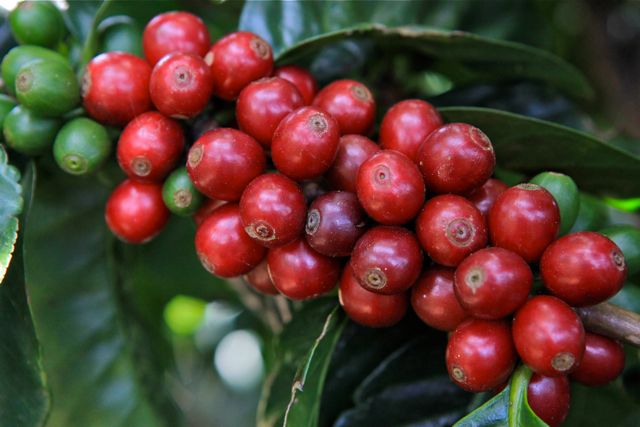
The grading system of Kona coffee is quite meticulous, generally divided into five grades: Extrafancy, Fancy, No.1, Primary, and Peaberry (commonly known as "round bean" or "male bean"). The first four grades are primarily determined based on bean size, weight, and defect rate, while Peaberry, which accounts for only about 5% and has a unique shape, is often separately selected and sold at a higher price. High-quality Kona coffee typically features gentle acidity, subtle wine-like aromas, and rich layers of flavor, with an unforgettable aroma. It is worth noting that every batch of exported Kona green beans is labeled with a certification number and official seal on the burlap sack to ensure traceability of origin and quality—another reason for its high price.
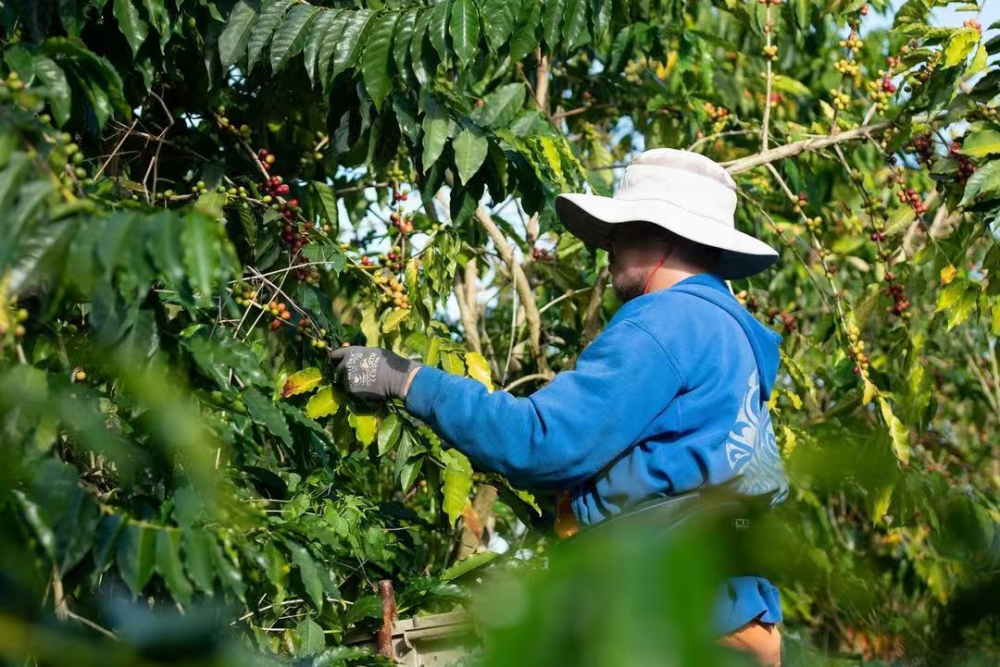
Coffee cultivation in the Kona region is mainly carried out by small-scale family farms. The harvest season runs from late August each year to January of the following year, with farmers picking ripe fruits in batches. In the past, coffee farm work was predominantly done by men, but over time, female labor has gradually joined, forming a farming culture centered around families and valuing hands-on effort. This tradition has not only endured to this day but has also attracted immigrants from the Philippines, Europe, and the U.S. mainland, enriching the culture behind Kona coffee with diversity and vitality.
Queen Farm is one of the well-known farms in the Kona region, having won second place in the Kona Coffee Cupping Competition in both 2009 and 2011. Approximately 70% of the coffee beans produced by this farm belong to the top Extra Fancy grade, and its quality is highly recognized in the industry. In addition to the Kona producing area on the Big Island, coffee farms on Maui, Kauai, and Oahu have also gradually emerged, with common varieties including Typica, Mocca, and Catuai, offering consumers more diverse choices.
In terms of roasting, Kona coffee beans, due to their lower density, are recommended to be roasted lightly to medium to preserve their original flavors. Practitioners note that the drop temperature should not be too high, and it is important to observe when the beans turn light yellow with moderate moisture, followed by sufficient blooming. The ideal roasting curve includes: an inlet temperature of 200°C, reaching 150.1°C and turning yellow at 5’35’’, entering the first crack stage at 9’30’’ (187°C), and finally being dropped at 193.4°C. The entire process emphasizes delicate control to avoid over-roasting, which can lead to flavor loss.
For actual brewing, we tested five different tools: V60, siphon pot, AeroPress, French press, and KONO filter, and recorded their optimal parameters and flavor profiles. V60 and KONO are suitable for users who prefer layered, fruity, and mildly acidic cups. For V60, the recommended water temperature is 90°C, with a brew ratio of 1:15, and a grind size close to 80% through a Chinese No. 20 sieve. The flavor presents osmanthus honey sweetness and mulberry aromas. KONO maintains the same 88°C water temperature and 1:15 brew ratio but uses a BG-6M grind to highlight berry and chocolate notes, with more vibrant acidity.
The siphon pot, using a water temperature of 90°C, a 1:10 brew ratio, and a BG-6M grind, brings out rich aromas of chestnut, caramel, almond, and toffee, with a round mouthfeel and distinct fragrance. The AeroPress, with 88°C water temperature, a 1:15 brew ratio, and a BG-5R grind, extracts sandalwood, herbal, and nutty layers within 1 minute and 41 seconds, featuring gentle fruit acidity. The French press also emphasizes a full-bodied feel, recommending 88°C water temperature, a 1:13 brew ratio, and a BG-5R grind. After steeping and pressing, it delivers a rich sweetness of brown sugar, cream, and dark chocolate, with a lush body and smooth texture.
In summary, if you enjoy a brewing experience with delicate and varied flavors, V60 and KONO filter are excellent choices. If you prefer a coffee with a rich, oily mouthfeel, the siphon pot, AeroPress, and French press can better meet your needs. Regardless of the method chosen, appropriately adjusting water temperature, grind size, and brewing time can allow Kona coffee to showcase its most captivating characteristics.
The above content is compiled by CoffeeHunters, a coffee news website.


