








Introduction:Honey-processed coffee combines the sweetness of natural processing with the cleanliness of washed processing, making it a top choice for many coffee enthusiasts. From the bright fruitiness of white honey to the rich intensity of black honey, different processing methods yield distinctly different flavor profiles. This article details the core differences among various types of honey processing, provides practical pour-over parameters, and explores the unique appeal of raisin honey processing—an innovative technique—to help you find the honey-processed coffee that best suits your taste preferences.
In the specialty coffee scene, honey processing stands out with its intense fruitiness and natural sweetness, becoming a favorite among many coffee lovers. A classic example is the Musician Series from Costa Rica’s Finca Carnet, which, when brewed using pour-over, releases rich flavors of dried fruit and tropical fruit fermentation sweetness—particularly favored by female consumers.
But how exactly is honey processing defined? Why are there classifications such as white honey, yellow honey, red honey, and black honey? And what kind of innovative method is raisin honey processing? This article will delve into the various types of honey processing, their unique flavor characteristics, and offer practical pour-over recommendations along with the actual performance of two raisin honey-processed beans, giving you a comprehensive understanding of this globally popular processing method.
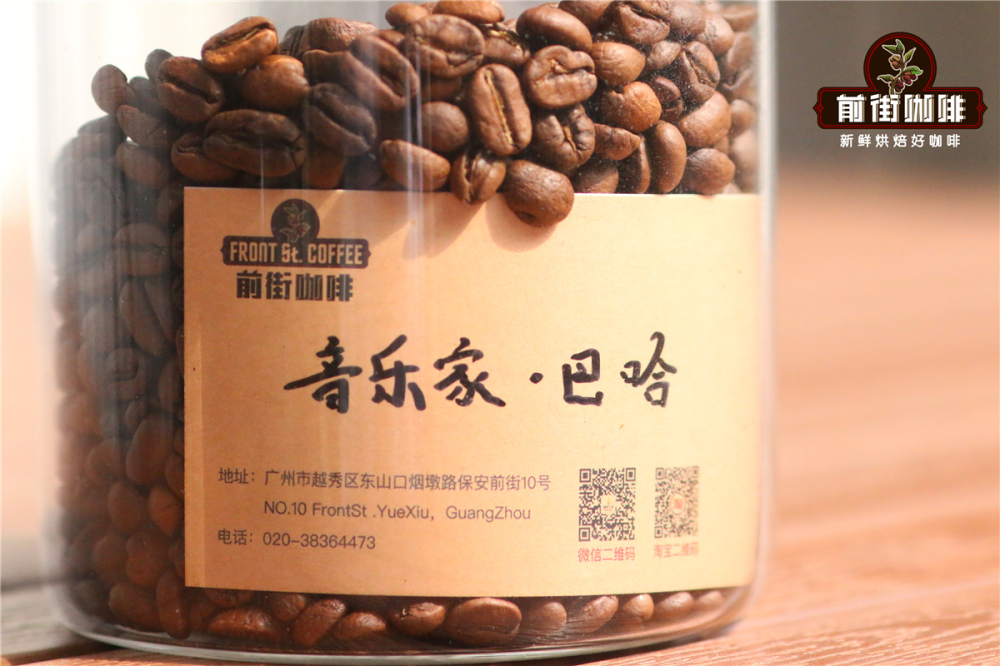
When it comes to coffee with pronounced sweetness, honey-processed beans are often the first choice. For instance, the Musician Series from Costa Rica’s Finca Carnet, through honey processing, often emits fermentation sweetness reminiscent of dried fruit and tropical fruits after pour-over brewing—a flavor profile that many female customers particularly adore.
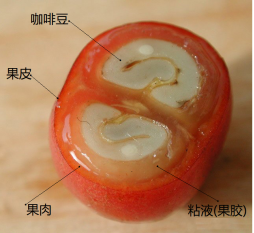
So why is it called “honey processing”? In fact, a coffee cherry is structured from the outside in as follows: skin, pulp, mucilage, parchment, silver skin, and seed—the part we drink is the innermost seed. In traditional processing methods, washed processing first removes the skin and pulp, then rinses thoroughly with large amounts of water before drying; natural processing involves drying the whole cherry, including the skin, until it reaches the appropriate moisture level before hulling. Honey processing falls somewhere in between and is also often referred to as semi-natural or semi-washed, predominantly popular in Central and South America.
The first step in honey processing is to place the freshly picked coffee cherries in a water tank for flotation, removing unripe cherries and impurities, followed by using a pulper to remove the outermost skin. The biggest difference from washed processing is that honey processing does not immediately wash away the mucilage layer with large amounts of water, but instead allows the coffee beans coated with mucilage to go directly into the drying stage. Since mucilage is rich in sugars and has a sticky texture, it evokes associations with honey—hence the name “honey processing.”
Compared to washed processing, honey processing does not require large amounts of fresh water or complex equipment, and it also reduces the risk of defects caused by prolonged sun exposure. In cupping, honey-processed coffee often exhibits rich tropical fruit aromas and pronounced fermentation sweetness, with an overall clean, bright acidity and refreshing mouthfeel.
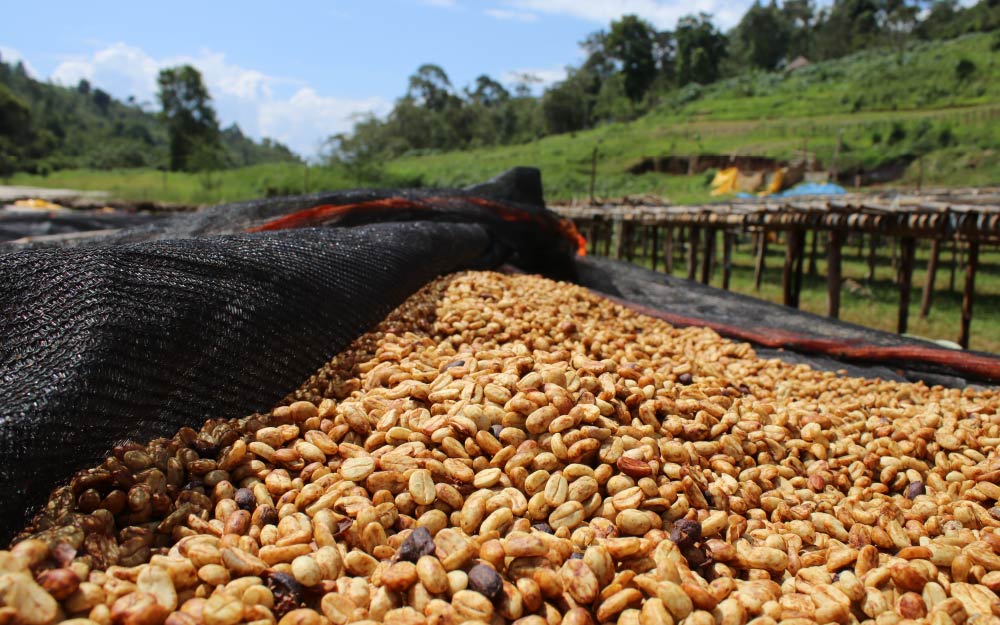
Depending on the degree of fermentation and the amount of mucilage retained, honey processing can be divided into four main types: white honey, yellow honey, red honey, and black honey. The differences in these names mainly stem from the sugar content of the fresh cherries and the state of fermentation, wherethe darker the honey process, the longer the seed ferments in the mucilage and the higher the oxidation level of the mucilage.
White honey processing is the type closest to washed processing, typically retaining40% to 60% of the mucilage, with the shortest fermentation time. It is generally dried in open-air environments and requires frequent stirring to control enzyme and microbial activity, preventing over-fermentation. In the early stages of drying, residual mucilage is washed off in a manner similar to washed processing, before continuing to dry to the appropriate moisture level for export.
Yellow honey processing also retains about60% mucilage, with a slightly longer fermentation time than white honey but still considered short-term fermentation. The overall sun-drying process usually takes about7 to 8 days.
Red honey processing is the most common and balanced type of honey processing, sitting between washed and natural as a transitional style. This method typically requirestwo to three weeks of drying time, during which weather changes directly affect the fermentation rate, makingdiligent and skilled stirring of the coffee beans extremely important. If fermentation conditions are unstable, it can easily lead to sourness, astringency, moldy flavors, or other undesirable notes.
Black honey processing is the most deeply fermented among all honey types, with flavor profiles closest to those of full natural processing. Since the fermentation time usually exceedstwo weeks(depending on weather), it requires stricter monitoring and care, and the cost is relatively higher. But precisely because of this, black honey-processed coffee often showcases extreme fruit sweetness and a rich mouthfeel, occasionally even carrying a hint of wine-like complexity.
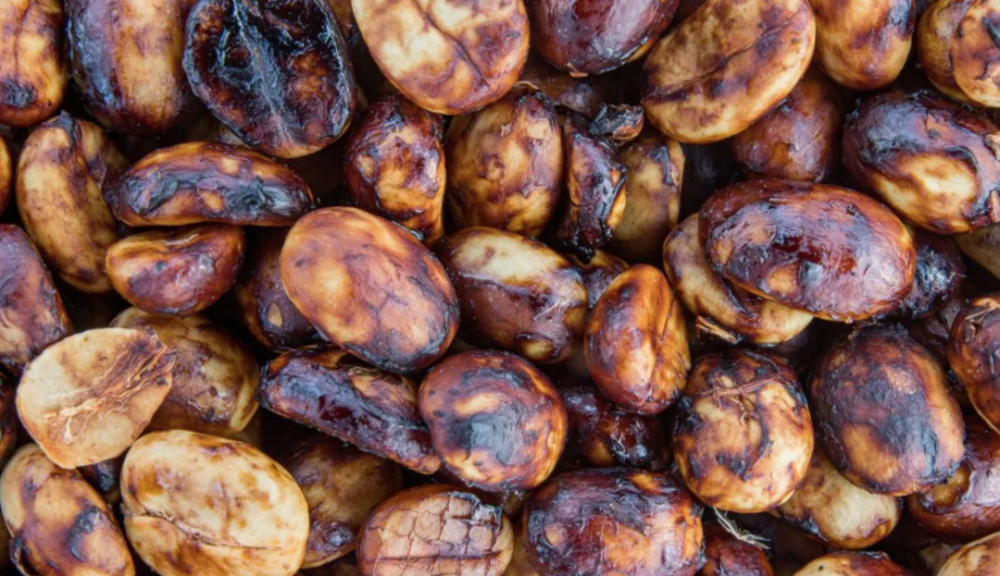
Beyond the traditional honey processing classifications, there is also an innovative technique that breaks the conventional framework—raisin honey processing. This method does not first remove the skin and pulp; instead, the entire coffee cherry is sun-dried on raised beds for at least three days until the fruit dehydrates and shrinks to a “raisin”-like state, after which the skin is removed and subsequent honey processing steps follow.
The two key aspects of raisin honey processing are “retaining 100% mucilage” and “completely skipping water washing,” greatly increasing processing difficulty. It is understood that this technique demands extremely precise timing control and is even considered more challenging than black honey processing. Because the fruit has already dehydrated in the early stages, the aromatic compounds in the flesh can penetrate more deeply into the seed under sunlight exposure, resulting in a final coffee that not only possesses intense floral and fruity sweetness but also clear, bright acidity and layered complexity.
In actual tasting, coffee beans processed via raisin honey often exhibit rich floral and fruity aromas and a distinct sweet-and-sour flavor spectrum, making them highly recognizable.
For honey-processed coffee, the most recommended brewing method is still black pour-over, as it most fully presents its fruity character and natural sweetness—even those who don’t usually drink black coffee tend to enjoy it.
Recommended pour-over parameters are as follows:
Filter: V60
Water temperature: 90°C
Grind size: Approximately 80% passing through a standard #20 sieve (medium-fine grind)
Coffee-to-water ratio: 1:15
Coffee dose: 15 grams
Step-by-step extraction process:
1. First, evenly wet the coffee bed with 30 grams of water and bloom for about 30 seconds;
2. In the second step, pour 95 grams of water in a steady spiral motion from the inside out, waiting until the water level drops to 2/3 of the coffee bed in the filter;
3. In the third step, pour 100 grams of water with a small stream, maintaining a total dripping time of about 2 minutes and 10 seconds, then remove the filter.
In terms of actual tasting performance, the Bach coffee from the Musician Series at Finca Carnet in Costa Rica showcases mature fruit, dark berries, caramel cookies, and black chocolate notes; while the Miramar Strawberry Sugar Geisha blend exhibits bright flavors of dried fruit, red floral notes, strawberries, grapes, and berries.
Besides pour-over, honey-processed coffee is also suitable for brewing via ice drip or cold brew. The low-temperature environment effectively suppresses the release of bitter substances—for example, an ice drip made with the Miramar Strawberry Sugar Geisha blend often carries rich dried fruit sweetness and a wine-like fermentation aroma, winning widespread consumer favor.
The above content is compiled by CoffeeHunters, a coffee news website.


