








Introduction:Explore top-tier natural-process coffee from the Arya village in eastern Yirgacheffe, Ethiopia, and discover the allure of this region that has twice claimed the TOH Natural Category championship. This article delves into Arya’s altitude environment, the characteristics of its native Heirloom variety, its traditional natural processing method, and how to use the V60 three-stage pour-over technique to perfectly highlight its complex fruitiness—blending strawberry, mango, and lemon notes—for pour-over enthusiasts seeking a comprehensive guide from regional insights to practical brewing parameters.
Yirgacheffe is often regarded as the gateway flavor for many beginners exploring specialty coffee. Its fresh citrus and delicate jasmine aromas always deliver an impressive first impression on the palate. Yet, just about eight kilometers east of this region lies the Arya village, which has made its mark on the international stage with its intense tropical fruit profile. With back-to-back TOH Natural Category championships in 2009 and 2019, Arya has become an iconic representation of Ethiopia’s natural-style coffee.
Arya is situated in a high-altitude ecological zone at over 1,850 meters above sea level. The local climate is cool, with significant day-night temperature variations, which help the coffee cherries ripen slowly and accumulate more abundant precursor flavor compounds. Most of the coffee here comes from wild Heirloom varieties growing in pristine forests. Due to the wide diversity of varieties, a single batch may include trees from 2 to 30 different genetic backgrounds, most of which have not yet been scientifically identified. As a result, the Ethiopian government classifies them all under the unified term “Heirloom native variety,” which is also an important measure by local authorities to protect genetic diversity.
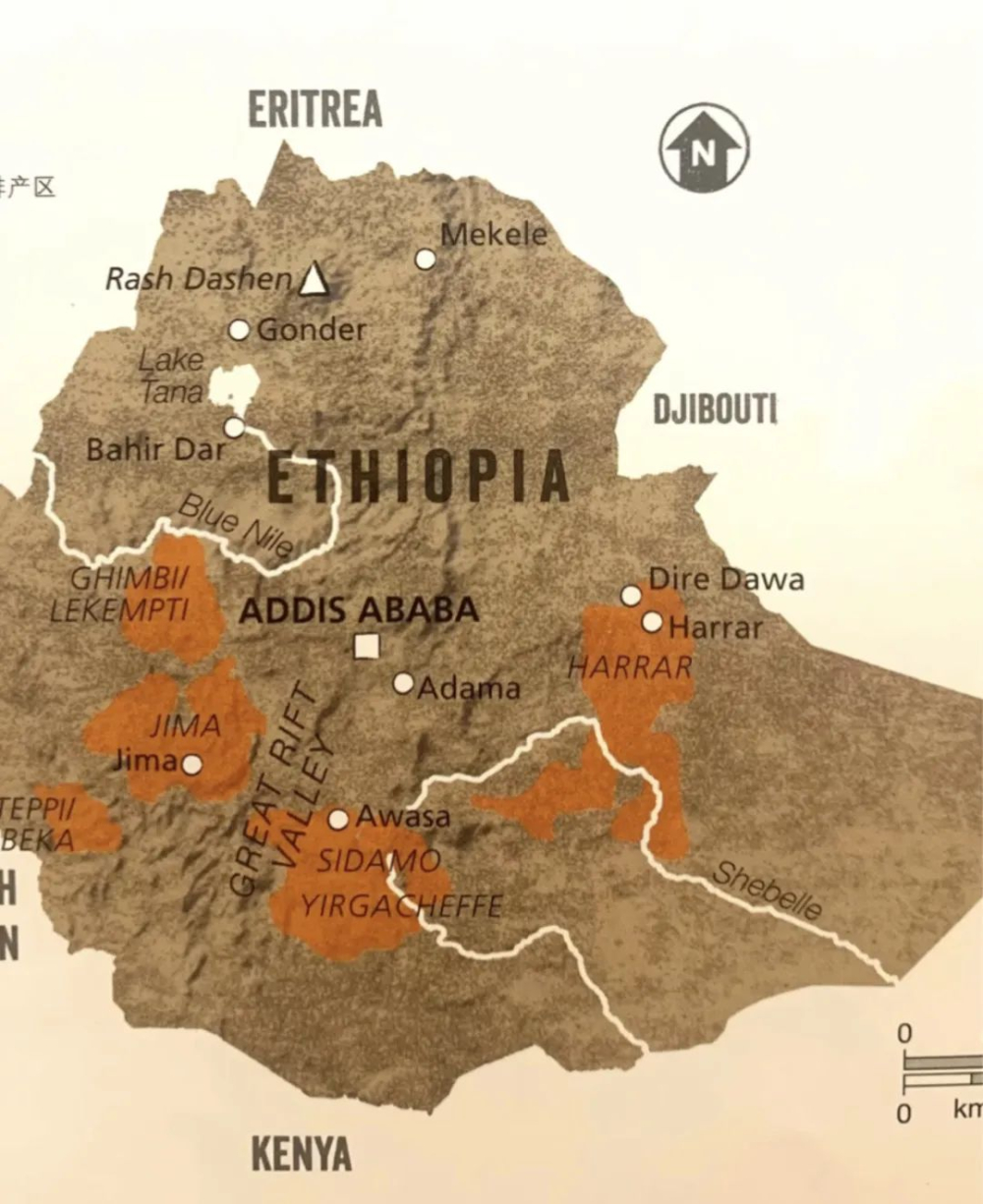
When discussing Arya’s international acclaim, one cannot overlook the TOH (Taste Of Harvest) Harvest Season Cupping Competition. Organized by the African Fine Coffee Association (AFCA), this competition is held annually alongside the Africa Fine Coffee Exhibition and features participants from eight countries including Burundi, Kenya, and Ethiopia. Both domestic and international expert judges rigorously cup the entries according to SCAA standards, aiming to uncover the highest-quality green beans of the season from each region. In 2019, Adorsi Processing Station, affiliated with Testi Coffee, scored an impressive 91 points to win the Natural Category championship, putting the name of Arya village on the map in the global specialty coffee community.
The Arya natural beans produced by Adorsi Processing Station have been described by professional cuppers as a “fruit bomb”—the cup opens with a soft citrus tone, followed by bursts of berry and peach sweetness, mid-palate layers of lemon and grape acidity, and a finish that continues with floral nuances. The overall flavor is multi-dimensional with a long-lasting aftertaste. These vivid fruit characteristics mainly stem from the slow ripening process at high altitude and the unique natural processing method.
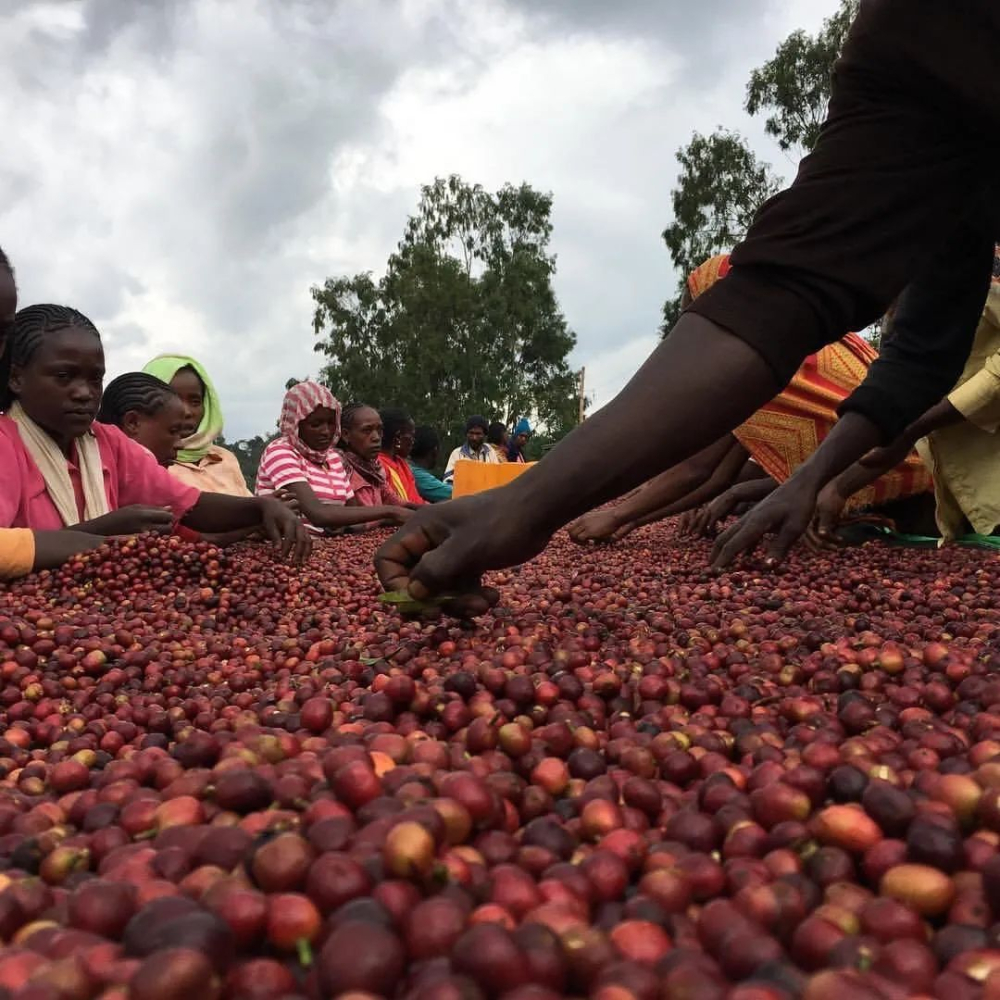
The so-called natural process is the most traditional and still predominant method of green bean processing in Ethiopia, accounting for about 70% of the country’s production. The principle involves drying freshly harvested red coffee cherries directly under the sun. Over an extended period of sunlight exposure, moisture is removed while the pulp’s sugars and flavor compounds penetrate the seed (i.e., the future coffee bean). Typically, the drying process takes 27 to 30 days, during which African-style raised beds or tarps are used to protect against rain. The process is complete when the cherries turn dark purple and the moisture content drops below 11%. This technique enhances the coffee’s sweetness and berry-like character, resulting in a richer and more intense flavor profile.
If you’d like to recreate the flavors of this championship-grade natural coffee at home, it is recommended to use a V60 dripper with a three-stage pour-over method, which can best showcase its layered fruitiness and balanced acidity-sweetness. Below are the practical parameters and step-by-step details:
Basic Parameters: It is recommended to use lightly roasted Arya natural beans (G1 grade, altitude 1,900–2,000 meters), with a coffee dose of 15 grams, a brew ratio of 1:16, water temperature controlled at 91–93°C, and grind size at 80% passing through a standard #20 sieve (approximately the size of fine sugar crystals). Note that grind fineness may vary slightly depending on equipment, so it is advised to use a sieve to confirm uniformity. Fresh beans roasted within five days are preferred to preserve the fullest flavor.
V60 Dripper Selection: A resin-bodied V60 is recommended. Its unique spiral flow ribs and large central hole design accelerate water flow while extending contact time with the coffee grounds. The radial venting slots enhance extraction uniformity, helping to highlight the rich layers of the natural beans.
Three-Stage Pour-Over Steps:
- Bloom Stage: Place 15 grams of coffee grounds into the dripper, then pour 30 grams of hot water (using a gentle stream, circling from the center outward), covering all the grounds and letting it sit for 30 seconds. This step releases carbon dioxide and awakens the flavors.
- First Pour: Around the 55-second mark, pour 120 grams of water (total 150 grams) using a slightly stronger stream, keeping the water column vertical and even. The goal is to lift the coffee bed and ensure even extraction.
- Second Pour: When the liquid level drops to about half, switch to a smaller stream and pour in a small circular motion for 90 grams of water (total 240 grams). Avoid disrupting the coffee bed to prevent under-extraction. The final drip-through time should be around 2 minutes and 10 seconds.
The brewed Arya natural coffee, upon opening the server, greets you with a rich aroma of ripe fruit. The first sip reveals pronounced fermented fruitiness paired with a crisp acidity reminiscent of green grapes. As it cools slightly, the bright acidity of lemon intertwines with a creamy mouthfeel, and the finish leaves a lingering sweetness akin to mature grape juice. The overall flavor is multi-dimensional with a long-lasting aftertaste, perfectly capturing the unique charm of Ethiopian natural coffee.
The above content is compiled by CoffeeHunters, a coffee news website.


