








Introduction:The charm of pour over coffee lies in its ability to clearly showcase the unique flavors of single-origin beans. However, with hundreds of beans on the market differing in origin and processing methods, beginners often don’t know where to start. This article categorizes popular single-origin pour over beans into seven major flavor profiles — fruity, floral, fermentative, sweet, balanced, full-bodied, and nutty-chocolatey — and features classic selections such as Yirgacheffe, Geisha, Costa Rican honey-processed, Blue Mountain, Mandheling, and Brazilian Queen Estate. It provides detailed analysis of their regional backgrounds, cupping flavor characteristics, along with professional roasting curve references to help coffee enthusiasts choose beans precisely based on personal preferences.
As pour over coffee culture becomes increasingly popular, more and more coffee enthusiasts are trying single-origin beans, hoping to experience the unique flavors brought by different regions and processing methods through brewing. So-called single-origin beans refer to coffee beans sourced from a specific region — which could be a single farm, cooperative, or multiple production units within the same geographical area — and compared to blends, their flavor profiles are clearer and more consistent. Based on market feedback and cupping experience, popular pour over single-origin beans are grouped into seven flavor types according to their flavor performance: fruity, floral, prominently fermentative, prominently sweet, well-balanced, high-bodied, and nutty-chocolatey. Each type has representative classic regions and bean varieties. This article will introduce each type one by one, accompanied by detailed regional information, cupping flavor descriptions, and professional roasting suggestions, helping readers find the one that best suits their taste preferences.

In recent years, the number of people joining the pour over coffee scene has continued to grow. But when walking into a café or browsing online stores, faced with shelves full of coffee bean packages, many often struggle to choose. In fact, the beans most commonly used for pour over are single-origin beans. These beans, originating from specific regions, usually have more recognizable quality and flavor. If you want to pick beans that match your taste from the many options available, you can start with the flavor type. Common single-origin beans are divided into seven major categories based on flavor: fruity, floral, prominently fermentative, prominently sweet, well-balanced, high-bodied, and nutty-chocolatey. These classifications basically cover the flavor profiles loved by the public in the world’s major producing regions. Next, let’s introduce the representative bean varieties of each type.
[Recommended Fruity Pour Over Coffee Bean: Yirgacheffe Guddu Dingding]
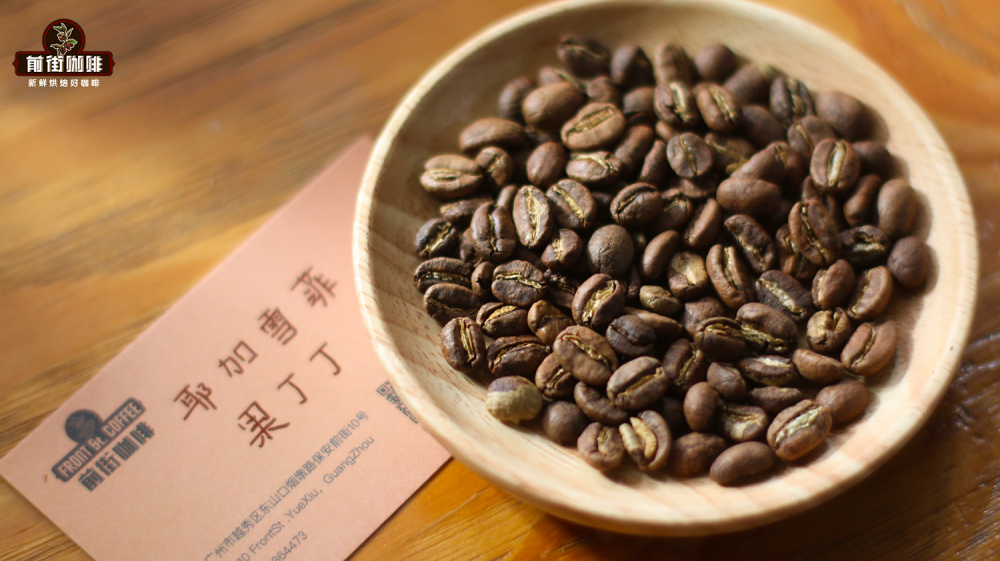
Fruity-flavored pour over beans mostly come from the Ethiopian region, where the well-known sub-region Yirgacheffe has almost become synonymous with Ethiopian coffee. Cupping results show that washed-process Yirgacheffe has a clean and refreshing taste, with bright and lively acidity, primarily citrus-toned, accompanied by fresh jasmine floral notes and a honey-like aftertaste, making it quite approachable for beginners new to pour over or those who prefer fresh flavors. Take the Guddu Dingding Cooperative in Yirgacheffe as an example. Its producing region is located in the Gedeo Zone of Yirgacheffe, at an altitude between 1900–2300 meters. It uses the Heirloom variety and washed processing method, graded G1. In terms of cupping flavor performance, the overall taste is solid, with prominent fermentative aromas and tropical fruit notes. As the temperature drops, berry and cream flavors gradually emerge, and the citrusy sour-sweet finish lingers long.

Roasting recommendations for Guddu Dingding beans are as follows: Preheat the roaster to 175°C before loading the beans, set the air vent to 3, and the heat to 120; the turning point is around 1 minute 32 seconds. When the roaster temperature drops to 140°C, keep the heat unchanged and adjust the air vent to 4. At this point, the bean surface turns yellow, and the grassy aroma completely disappears, entering the drying stage. Adjust the heat to 100 at 166°C and then to 80 at 176°C, keeping the air vent unchanged. Around 8 minutes 28 seconds, when obvious quench marks and black spots appear on the bean surface and the toast smell transitions to coffee aroma, this signals the prelude to first crack — listen carefully to the first crack sounds. At 9 minutes 38 seconds when first crack begins, it is recommended to develop for 1 minute 30 seconds, and finally drop the beans at 193.5°C.
[Recommended Floral Pour Over Coffee Bean: Emerald Green Label Geisha]
When it comes to floral-toned coffee beans, the Geisha variety is definitely the top choice. The Geisha planted at Panama’s Emerald Estate grows within windbreak forests, where strong winds and low temperatures make it difficult for ordinary coffee trees to survive, yet Geisha thrives, bearing plump fruit that is less prone to dropping. Although the yield is only 25% to 30% of Catuai, it possesses an ultimate floral and citrus aroma. It is worth noting that if planted at altitudes below 1400 meters, the floral and citrus notes significantly weaken, replaced by more pronounced bitterness. Having cupped multiple Geisha offerings from Panama’s Emerald Estate (including Red Label, Green Label, Blue Label, washed and natural processed), one can all sense its captivating floral characteristics. Take the Green Label washed Geisha as an example. It is produced in the Boquete region of Panama, at an altitude of 1600–1800 meters, the variety is Geisha, and the processing method is washed. The cupping flavor performance includes intense jasmine floral aroma, high sweetness, and layers of citrus, berries, juiciness, cream, green tea, orange peel, and cantaloupe, with floral and citrus notes lingering in the aftertaste.
Roasting recommendation for Green Label Geisha: Load the beans at 190°C roaster temperature, with 150 heat and air vent 3. The turning point is at 1 minute 36 seconds. At 140°C, adjust the air vent to 4 and reduce the heat to 130. When the bean surface turns yellow (around 150.8°C) and the grassy aroma disappears, entering the drying stage, reduce the heat to 110 and keep the air vent unchanged. At 7 minutes 55 seconds, at 176°C, reduce the heat to 90. When quench marks and black spots appear on the bean surface and the toast aroma transitions to coffee aroma, this is the prelude to first crack — pay attention to the first crack sounds. At 8 minutes 30 seconds when first crack begins, adjust the air vent to 5, reduce the heat to 60 at 187°C. Develop for 1 minute 30 seconds after first crack, and finally drop the beans at 193.5°C.
[Recommended Prominently Fermentative Pour Over Coffee Bean: Costa Rica Baha]
If you prefer coffee beans with a prominent fermentative character, Costa Rica’s honey processing method is not to be missed. The region’s unique honey processing technique allows sun-drying while retaining the mucilage, making the acidity and sweetness more balanced, while amplifying the bean’s inherent aroma and enhancing body. In recent years, the raisin honey process has also been developed. Though more challenging to produce, the resulting fermentative character and aroma are even richer, and it can also deliver a white wine-like mouthfeel with balanced acidity. Take the Costa Rica Canet Music Series Baha coffee beans as an example. They are produced in the Tarrazú region, at an altitude of 1950 meters, using the raisin honey process, the variety is Catuai, and the grade is SHB (Strictly Hard Bean). The cupping flavor performance includes a sake-like fermentative aroma. The entry offers a sweet-sour taste of ripe tropical fruits and berries, accompanied by nut, cream, and flavors. The finish carries caramel, and the aftertaste has a faint floral note.

Roasting recommendations for Baha beans: Preheat the roaster to 180°C before loading, adjust the heat to 130, and open the air vent to 3. The turning point is at 1 minute 43 seconds, keep the heat unchanged. At 140°C, keep the heat unchanged and open the air vent to 4. At 6 minutes 15 seconds, when the bean surface turns yellow and the grassy aroma disappears, entering the drying stage, lower the heat to 100 at 151°C, keeping the air vent at 4. At 176°C, adjust the heat to 70, keeping the air vent unchanged. At 8 minutes 15 seconds, drying is complete. Quench marks and black spots appear on the bean surface, and the toast aroma transitions to coffee aroma — this is the prelude to first crack. Pay attention to the first crack sounds. At 9 minutes 40 seconds when first crack begins, open the air vent fully to 5, keep the heat unchanged. Develop for 1 minute 45 seconds after first crack, and finally drop the beans at 196°C.
[Recommended Prominently Sweet Pour Over Coffee Bean: Natural Red Cherry]
When it comes to coffee beans with a prominent sweet character, Yirgacheffe Natural Red Cherry is a classic representative. The term “Red Cherry” does not refer to the fruit itself, but because farmers only pick fully ripe coffee cherries, which in appearance and color resemble red cherries, hence the name. Fully ripe coffee cherries contain abundant sugars. After sun-drying, the sugar concentrates, and the beans continuously absorb these essences during the drying process. As a result, they naturally present a sweet flavor when brewed. Take Yirgacheffe Red Cherry as an example. It is produced in the Yirgacheffe region, grown at an altitude of 2000–2200 meters, processed using the natural method, the variety is local Heirloom, and the grade is G1. The cupping flavor performance includes lemon, licorice, citrus, berries, and sweet orange. The overall sweetness is high, the finish offers caramel and cream notes, and the aftertaste emits black tea aroma.
Roasting recommendation for Red Cherry beans: Load the beans at 200°C roaster temperature, open the air vent to 3.5. After 1 minute, adjust the heat to 160°C, keeping the air vent unchanged. At 148°C, adjust the heat to 130°C. Roast until 5 minutes 03 seconds, when the bean surface turns yellow, the grassy aroma disappears, and drying is complete. Adjust the heat to 105°C and open the air vent to 4. At the 8th minute, when quench marks and black spots appear on the bean surface and the toast aroma transitions to coffee aroma — this is the prelude to first crack — pay attention to the first crack sounds. At 9 minutes 07 seconds when first crack begins, reduce the heat to 70°C and open the air vent fully (note: do not reduce the heat too much). Finally drop the beans at 194°C.
[Recommended Well-Balanced Pour Over Coffee Bean: Jamaican Blue Mountain]
When discussing flavor balance, Jamaican Blue Mountain coffee is undoubtedly the benchmark. Blue Mountain is known for its perfect balance of acidity, sweetness, and bitterness. Most “Blue Mountain flavor” beans on the market are imitations. True Blue Mountain coffee must be exported by a national coffee authority-designated company using wooden barrels for green beans and must have Rainforest Alliance certification. The washed Blue Mountain beans obtained here come from the Clydesdale Estate, which is also the only Blue Mountain coffee-growing area in Jamaica with Rainforest Alliance certification. The cupping flavor performance includes black chocolate and nutty notes, high cleanliness, good body, and a well-coordinated ratio of acidity, sweetness, and bitterness.
Roasting recommendation for Blue Mountain beans: Load the beans at 170°C roaster temperature, open the air vent to 3. After 1 minute, adjust the heat to 140°C, keeping the air vent unchanged. Roast until 5 minutes 10 seconds, when the bean surface turns yellow, the grassy aroma disappears, and drying is complete. Adjust the heat to 115°C and change the air vent to 4. At the 8th minute, when quench marks and black spots appear on the bean surface and the toast aroma transitions to coffee aroma — this is the prelude to first crack — pay attention to the first crack sounds. At 8 minutes 12 seconds when first crack begins, reduce the heat to 90°C, open the air vent fully (note: do not reduce the heat too much). Finally drop the beans at 201.3°C.
[Recommended High-Bodied Pour Over Coffee Bean: PWN Golden Mandheling]
High body refers to low or nearly no acidity, a thick and heavy mouthfeel upon entry, noticeable tongue-coating sensation, and a long-lasting aftertaste. PWN Golden Mandheling is a representative of this type. This bean is acquired by the PWN company from surrounding Mandheling coffee farms, then undergoes three rounds of manual sorting to ensure uniform bean size. Therefore, while retaining the signature herbal-spicy notes of Mandheling, its sweetness is particularly prominent. Produced in the Gayo Mountains of Aceh, Sumatra, at an altitude of 1100–1600 meters, the variety is Ateng, graded G1, 3-time hand-picked, processed via wet-hulled method. The cupping flavor performance includes herbal and spicy notes, thick and clean with high balance, rich nutty and caramel aromas, as well as chocolate notes, with a long-lasting finish.
Roasting recommendation for Golden Mandheling: Load the beans at 200°C roaster temperature, open the air vent to 3. After 1 minute, adjust the heat to 160°C, keeping the air vent unchanged. Roast until 5 minutes 40 seconds, when the bean surface turns yellow, the grassy aroma disappears, and drying is complete. Adjust the heat to 140°C and change the air vent to 4. At 9 minutes 40 seconds, when quench marks and black spots appear on the bean surface and the toast aroma transitions to coffee aroma — this is the prelude to first crack — pay attention to the first crack sounds. At 9 minutes 54 seconds when first crack begins, reduce the heat to 60°C, open the air vent fully (note: do not reduce the heat too much). Finally drop the beans at 204.5°C.
[Recommended Nutty-Chocolatey Pour Over Coffee Bean: Brazilian Queen Estate]
Brazil’s flat terrain, low altitude, lack of microclimates, and the common practice of sun exposure cultivation contribute to its distinctive soft bean flavor profile. Brazilian coffee generally has low acidity, clear nuttiness, and sweet chocolate notes, with a thick mouthfeel. After cupping multiple Brazilian beans, it was found that the Yellow Bourbon from Queen Estate performs outstandingly. It is produced in the Mogiana region, at an altitude of 1400–1950 meters, the variety is Yellow Bourbon, and the processing method is natural. The cupping flavor performance includes sweet bean character and cleanliness. The semi-natural process allows slight brightness in acidity that harmonizes with the sweetness, and some batches even carry tropical fruit notes.
Roasting recommendation for Queen Estate beans: Preheat the roaster to 200°C before loading, adjust the heat to 150, open the air vent to 3. The turning point is at 1 minute 30 seconds, keep the heat unchanged. At 5 minutes 10 seconds, when the bean surface turns yellow and the grassy aroma disappears, enter the drying stage. Lower the heat to 125 and open the air vent to 3.5. At 8 minutes 20 seconds, drying is complete. Quench marks and black spots appear on the bean surface, and the toast aroma transitions to coffee aroma — this is the prelude to first crack. At 178°C, lower the heat to 80, and pay attention to the first crack sounds. At 9 minutes 14 seconds when first crack begins, open the air vent fully to 5. Develop for 3 minutes after first crack, and finally drop the beans at 201°C.

The above content is compiled by CoffeeHunters, a coffee news website.


