








Introduction:To brew a well-balanced espresso at home, selecting the right coffee beans and mastering the correct extraction process are essential. This article delves into the characteristics of coffee beans suitable for espresso, the advantages of blends, and provides a detailed step-by-step guide covering everything from dose and yield to time control. It also offers practical advice on everyday parameter adjustments to help you consistently extract an espresso that is rich in aroma and smooth in taste.
Espresso serves as the foundation for many classic coffee beverages, whether it’s Americano, latte, or cappuccino—none of them can do without this rich shot of coffee. If you want to brew an espresso with balanced flavor at home, in addition to your equipment, the choice of coffee beans and extraction details are key. This article will guide you through the characteristics of beans ideal for espresso, the benefits of blends, and walk you step by step through the various parameters in the extraction process, helping you easily master the secrets of making professional-grade espresso at home.
Espresso is typically brewed using fine grind, high water temperature, and high pressure, which can fully release the complex flavors within the coffee. However, due to the intense extraction, using a light-roasted single-origin bean can easily result in overly sharp acidity that masks the coffee's aromatic layers. Therefore, in most cases, a blend is the more stable choice. By combining beans from different regions and processing methods, blends can compensate for each other’s flavor deficiencies, making each shot of espresso more consistent and balanced.
Key parameters for espresso extraction include dose, yield, and time. For a standard double basket, it is recommended to use 18 to 20 grams of coffee, aiming for a yield of 40 grams, which corresponds to a 1:2 coffee-to-water ratio. The extraction time should be controlled between 20 and 35 seconds, with the ideal range being 28 to 30 seconds—a sweet spot that balances flavor intensity and smoothness. If the extraction time is too short, it may lead to under-extraction, resulting in weak flavor; if it exceeds 35 seconds, over-extraction is likely, producing a noticeable burnt or bitter taste.
Before starting the extraction, it is recommended to thoroughly dry the portafilter basket to avoid residual moisture affecting puck stability. After grinding the appropriate amount of coffee with your grinder, measure it precisely to 20 grams using an electronic scale. Then, use a distribution tool to evenly spread the coffee grounds, followed by tamping vertically with a tamper to ensure a compact and level puck—this helps stabilize water flow and improve extraction consistency.
Before beginning extraction, it is advised to run water for 1 to 2 seconds to wet the group head. This step removes any leftover coffee grounds and preheats the brewing system. Reset the scale to zero, place it under the cup that will catch the espresso, and get ready to record the yield. Lock the portafilter gently into the group head, start the extraction, and observe the flow rate and color changes of the coffee. When the yield reaches 40 grams and the time falls between 28 to 30 seconds, stop the extraction.
It should be noted that,extraction parameters can be affected by environmental humidity, coffee bean freshness, and grinder condition. Therefore, it is recommended to fine-tune the dose, grind size, and extraction time according to actual conditions to achieve the best extraction results. A freshly extracted espresso should have a thick, golden crema on top, which is a layer of bubbles formed by carbon dioxide released from the coffee beans under high pressure and serves as an important indicator of freshness.
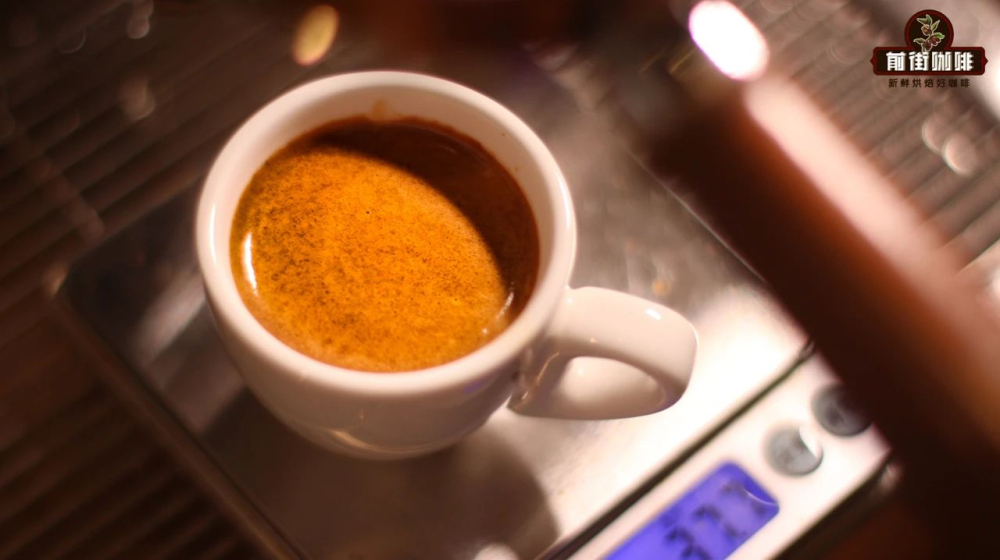
Freshly brewed espresso can be enjoyed directly to savor its intense flavor and rich body. If you prefer a milder drinking experience, you can also adjust it to your taste by adding water or milk. For example, to make an iced Americano, combine 40 ml of double espresso with a cup containing 90 g of ice cubes and 180 ml of cold water, stir well, and enjoy. It delivers a refreshing floral aroma with a touch of fruity acidity and sweetness, making it perfect for summer.
In summary, crafting an espresso with outstanding flavor requires precise control over every step—from bean selection, grinding, dosing, tamping, to extraction. Through continuous practice and fine-tuning, you can also consistently replicate café-quality espresso at home and enjoy each sip’s rich, layered, and delightful taste.
The above content is compiled by CoffeeHunters, a coffee news website.


