







Introduction:As one of the world’s premier coffee-growing regions, Latin America is renowned for its diverse geography and refined processing techniques. From classic Arabicas with Brazilian nut-like profiles to fruity, volcanic-soil-grown beans from Guatemala, each region offers unique flavor characteristics. This article delves into the variety selection, processing methods, regional distribution, and grading systems of eight major coffee-producing countries in Latin America, accompanied by practical brewing tips and flavor descriptions to help you master bean selection and extraction techniques.
Among the world’s three major coffee-growing belts, Latin America stands out with its rich, layered chocolate and nutty profiles. Whether it's the bold sweetness of Brazilian coffee, the balanced acidity of Colombian beans, or the distinctive floral notes of Panama’s Geisha, each region’s distinct geography and processing differences yield highly recognizable cup profiles. This article systematically introduces the coffee varieties, mainstream processing methods, regional distributions, and grading standards of the eight main Latin American countries, along with real-world brewing examples, to provide an in-depth understanding of this region’s diverse appeal and bean selection strategies.
When divided by global coffee-growing zones, the three primary regions are Latin America (including Central and South America), the Asia-Pacific region, and Africa. Further exploration reveals that African regions are known for their pronounced fruit acidity, Latin America showcases cocoa and dark chocolate-like richness, while the Asia-Pacific tends toward herbal and heavier profiles. This article focuses on Central and South America within Latin America, analyzing in depth its coffee flavors and regional characteristics.
The history of coffee cultivation in Latin America dates back to the 18th century, closely tied to Spanish colonial expansion. Spanish is the official language in most Latin American countries, with the exception of Brazil, where Portuguese prevails. Early coffee planting was expansion-focused, with little emphasis on quality—until the rise of the specialty coffee concept led countries to gradually shift toward more refined production. Most Latin American coffee is exported to the United States, followed by European and Asian markets. Overall, Latin American coffee is known for its balance and body, differing greatly from the heavy herbal profiles of Asia-Pacific coffees. Common flavor notes include dark chocolate and nuts, with washed processing being the norm, while Brazil often employs the pulped natural method, producing typically larger and more intact beans.
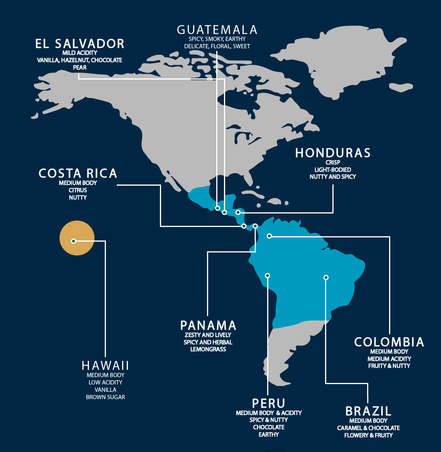
In terms of representative producing countries, whether it's the nuttiness of Brazil, the balanced acidity of Colombia, the floral notes of Panama’s Geisha, the honeyed sweetness of Costa Rica’s honey-processed beans, the classic balance of Jamaican Blue Mountain, or the volcanic characteristics of Guatemala—each showcases its own distinctive regional identity. Below, we will analyze the varieties, processing techniques, and flavor profiles of these regions one by one.
1. Brazil (Flavor Profile: Low acidity, prominent nutty and chocolate notes, good body)
As the world’s largest coffee producer and the second-largest consumer, Brazil has vast plantable areas that effectively offset frequent natural disasters. Compared to other Latin American regions, Brazil’s altitudes are generally lower, and most of its coffee is grown without shade, resulting in more straightforward flavors. In the past, it was even said that “Brazil produces no good beans,” a notion rooted in its early industrialized focus on quantity over quality.
However, in recent years, Brazil has been committed to improving quality by cultivating improved Arabica varieties and flexibly adjusting processing methods based on climatic conditions, successfully showcasing more regionally distinctive flavors. Common processing methods include natural (sun-dried), pulped natural (semi-washed), and washed. Regions with higher humidity tend to favor washed processing, while drier areas often opt for natural or pulped natural.
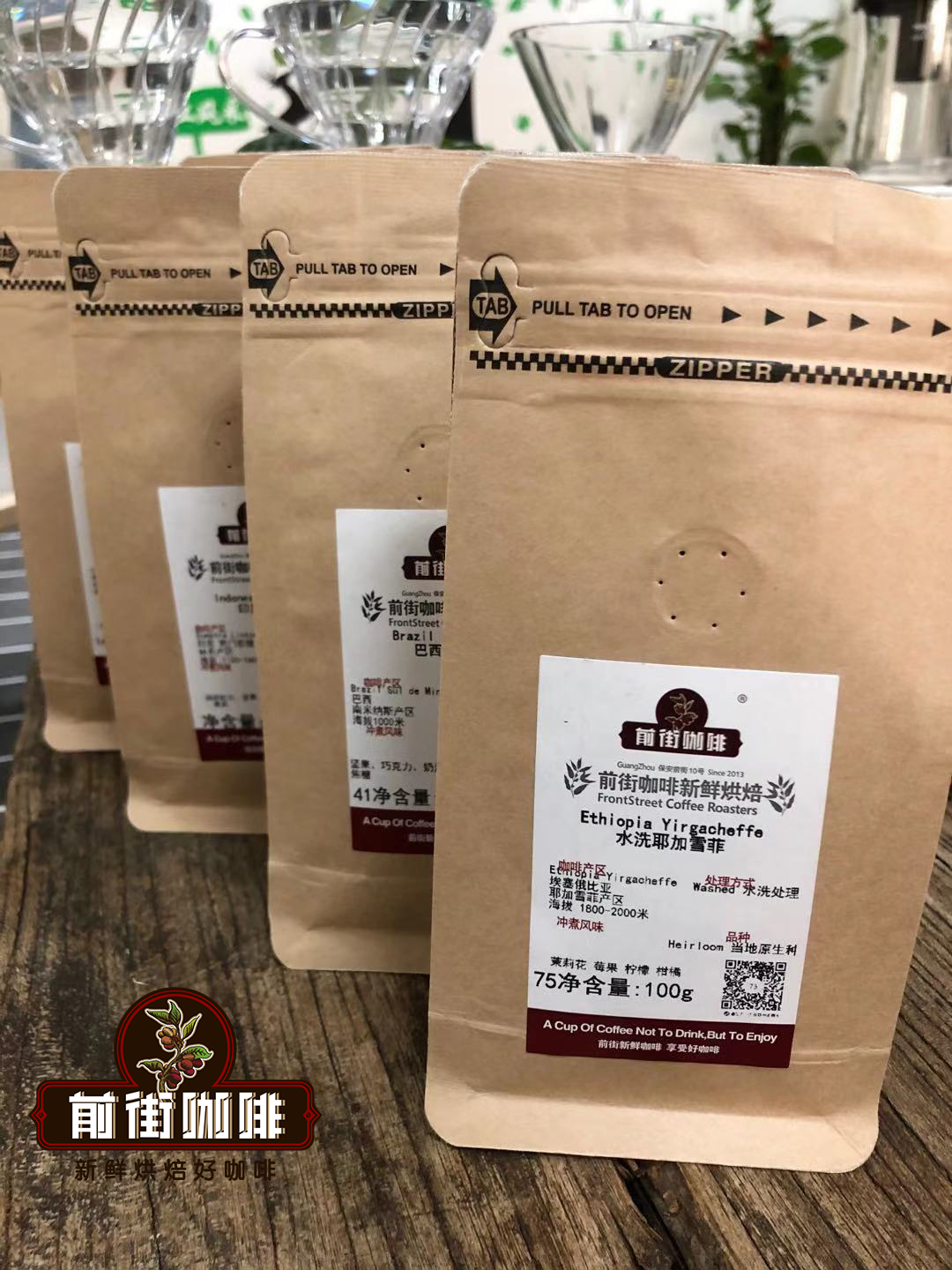
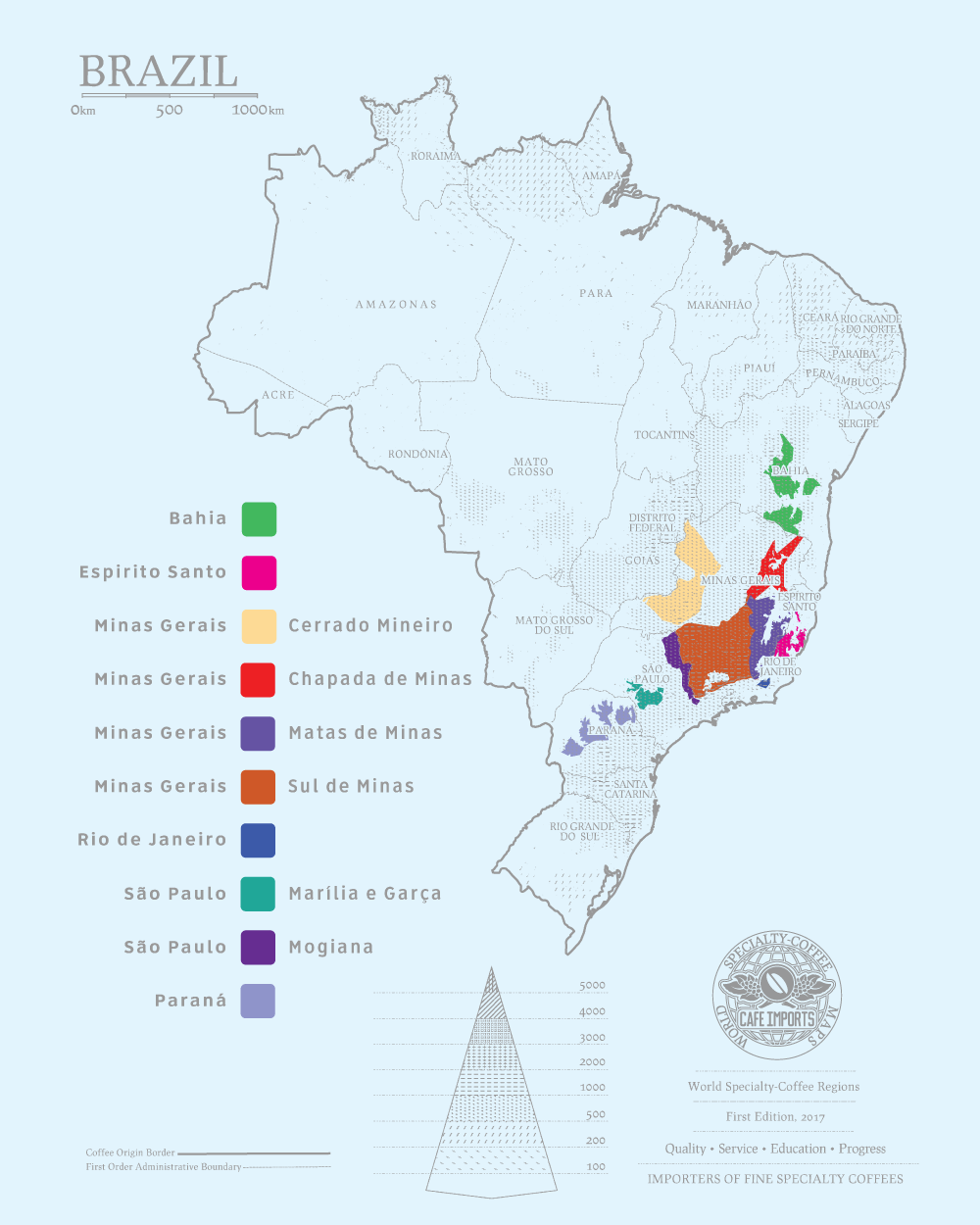
Brazil has 21 states, 17 of which produce coffee, with production mainly concentrated in Minas Gerais, São Paulo, Bahia, and Espírito Santo—these four states together account for 98% of national output and 90% of exports. São Paulo once saw a significant boost in coffee transport capacity due to the construction of the Mogiana Railway, briefly dominating the global market in the 1920s. However, with the rise of other regions, Minas Gerais and Espírito Santo have now become the main producers.
Within Minas Gerais, the Cerrado and Sul de Minas are the main high-quality producing areas. The former lies at elevations between 750 and 1200 meters, while the latter consists of hilly terrain between 700 and 1200 meters. Since 1999, many Cup of Excellence-winning farms have come from Sul de Minas. Additionally, the southeastern mountainous area of the state, at altitudes above 1000 meters, also produces high-quality coffee, while the central-northern regions mostly grow commercial-grade beans.
In terms of grading, as altitude is not an absolute advantage, Brazil uses bean size, defect rate, cupping score, and flavor as grading criteria. Flavor grades, from highest to lowest, are: Strictly Soft (very mild), Soft (mild), Softish (slightly mild), Hardish (harsh), Rioy (iodine-like). Defect rates are calculated per 300g of green beans, with the top grade being NY.2 (6 defects), and the flawless NY.1 being extremely rare. Cup quality grades include Fine Cup (FC) and Good Cup (GC), with FC and GC being the most common. The highest bean size is 19 mesh, but 17 and 18 mesh are considered optimal.
2. Colombia (Flavor Profile: Rich aroma, bright acidity, balanced nut and fruit notes)
As the world’s third-largest coffee producer, Colombia’s climate varies greatly with altitude and region—from tropical rainforest to subtropical—resulting in coffee with less pronounced acidity than African beans but excellent overall balance, featuring both nutty and fruity notes.
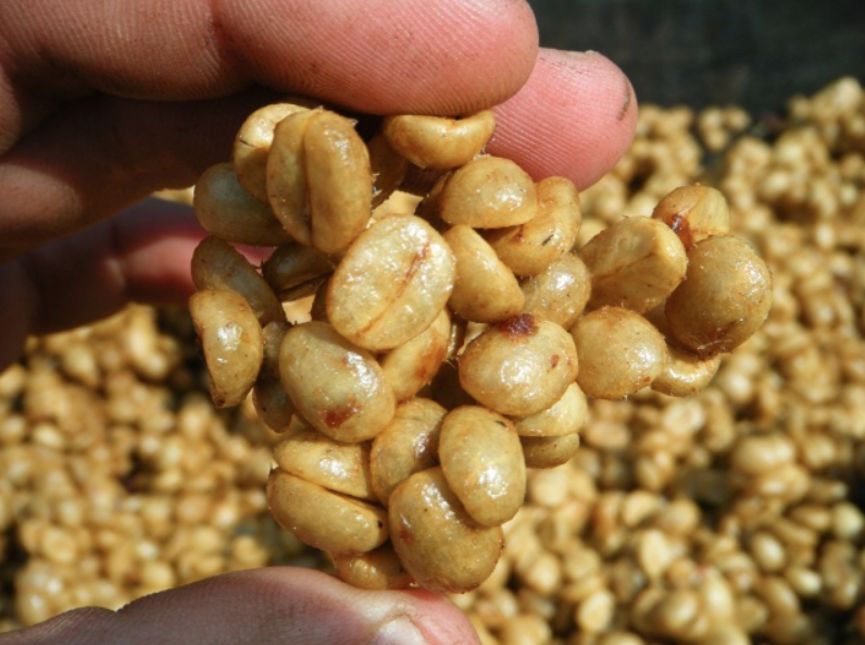
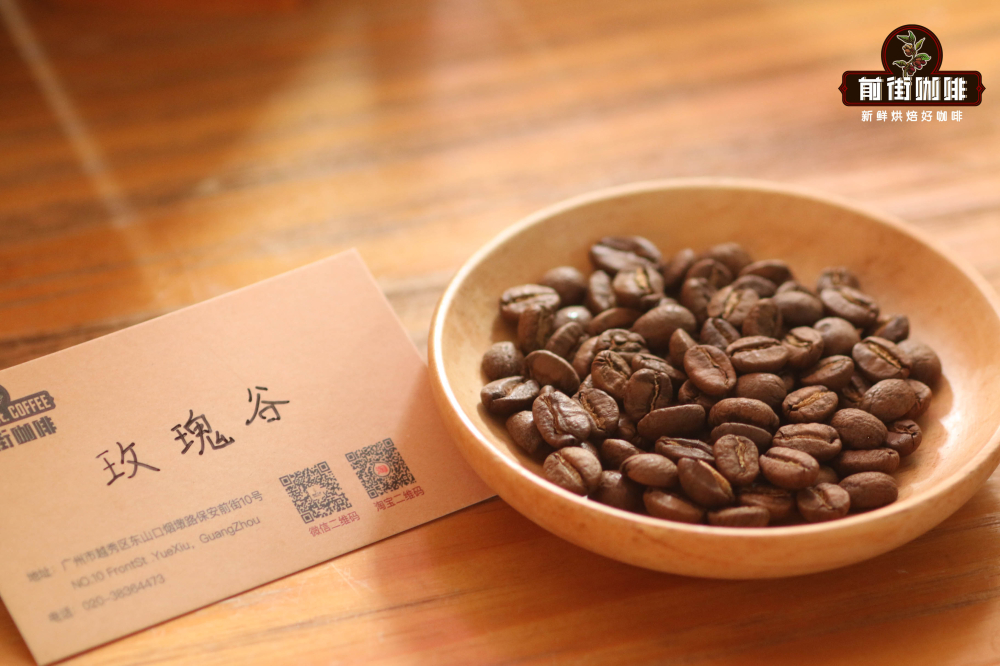
Colombia primarily uses washed processing, and because much of it is grown by smallholder farmers, producers often manage their own washing equipment, allowing for precise quality control. Compared to Brazilian beans, Colombian beans retain more silver skin due to processing differences, giving them a distinctly different appearance. In addition, innovative processes such as anaerobic double enzyme washed at Rose Valley and anaerobic natural at Flower Moon Night have emerged in recent years.
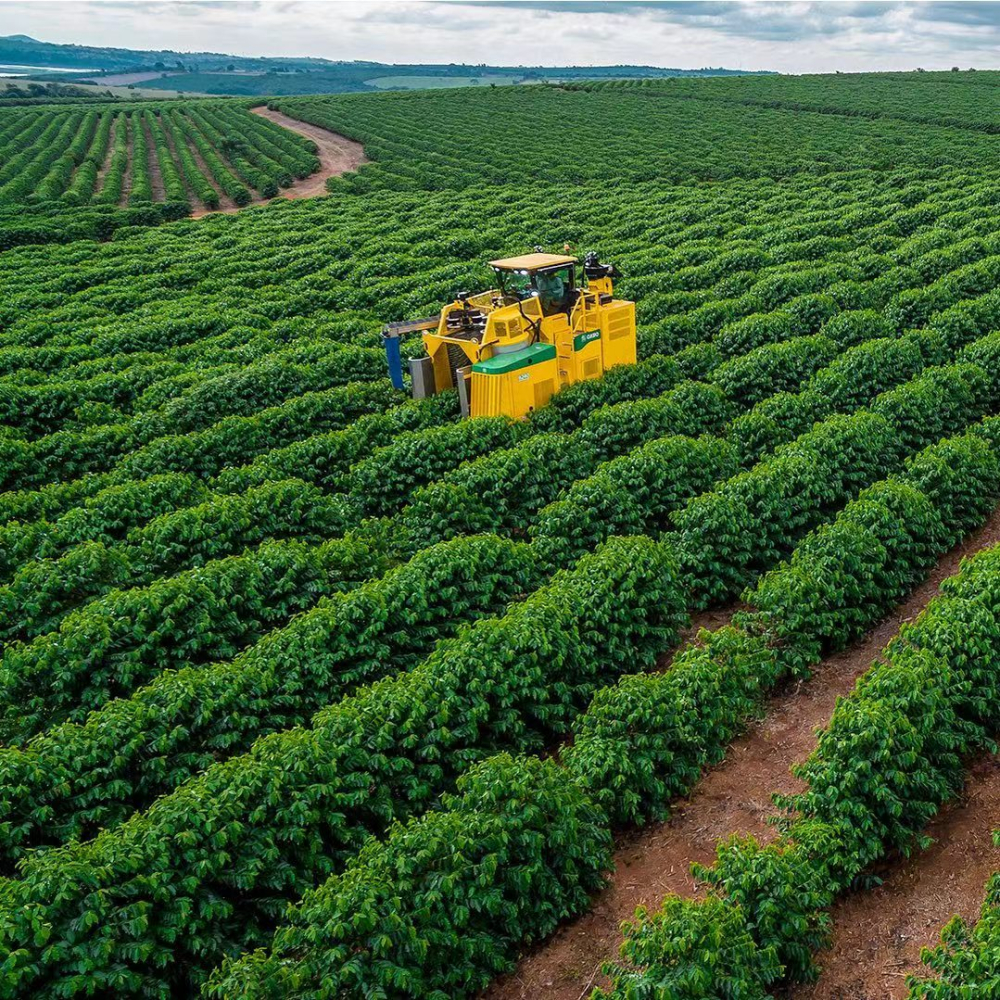
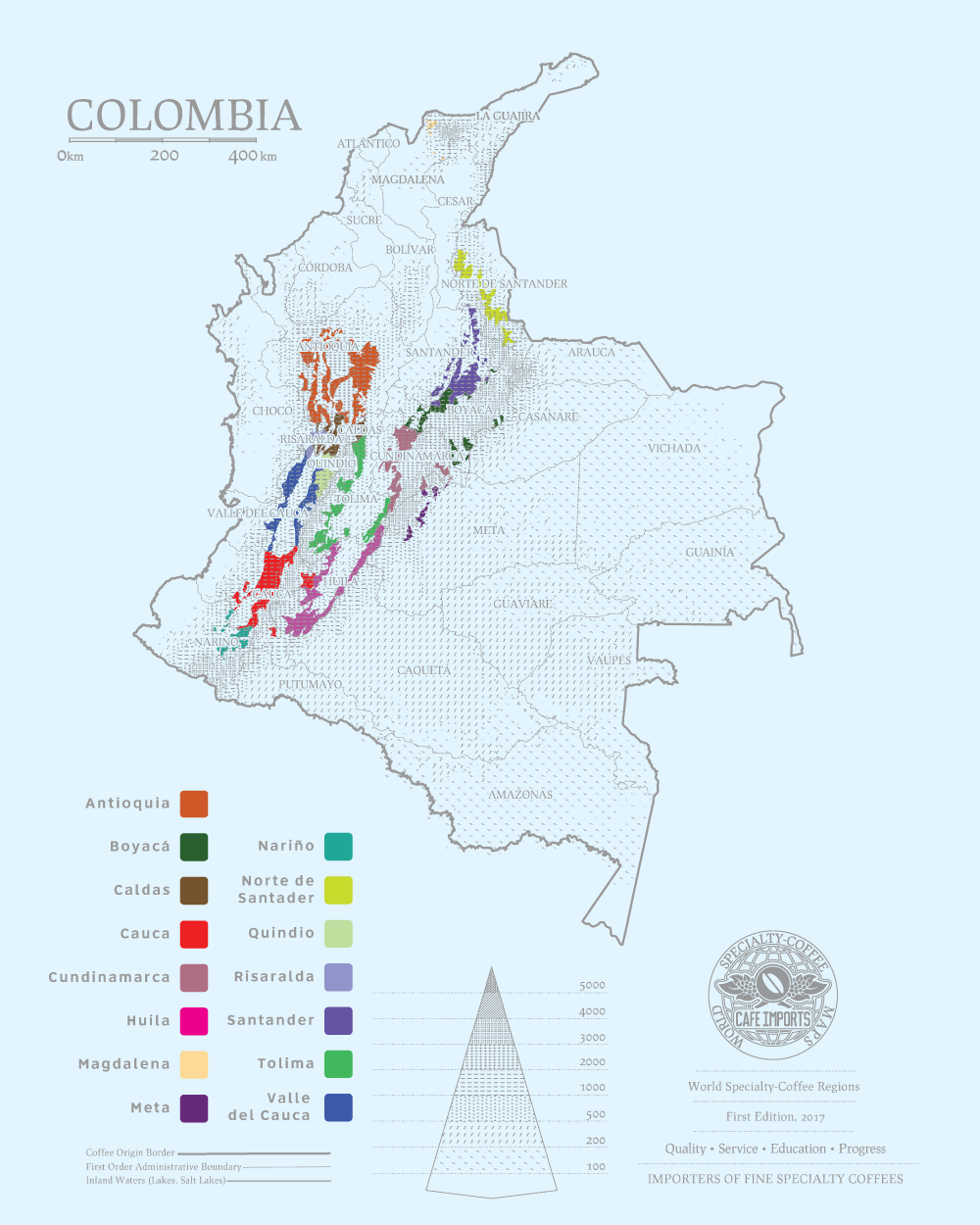
Production regions are divided along the Andes Mountains into northern, central, southern, and eastern zones. The north and south each have one harvest season, while the central and eastern regions have two, enabling Colombia to supply coffee almost year-round. Southern regions, known for high-altitude specialty beans including Huila, Cauca, Narino, and Tolima, are a key source of specialty coffee.
3. Panama (Flavor Profile: Representative of Geisha floral aromas and bright acidity)
Panama is world-famous for its Geisha variety, a success underpinned by its unique volcanic soil, suitable humidity, and meticulous management. The opening of the Panama Canal in the late 20th century further spurred the development of specialty coffee through the introduction of foreign capital and technology.
Geisha is primarily processed via washed and natural methods—the former highlights fresh floral and fruity acidity, while the latter adds sweetness and intensity. Hartmann Estate is also renowned for its red wine process, which simulates wine fermentation conditions to impart unique layers of flavor.

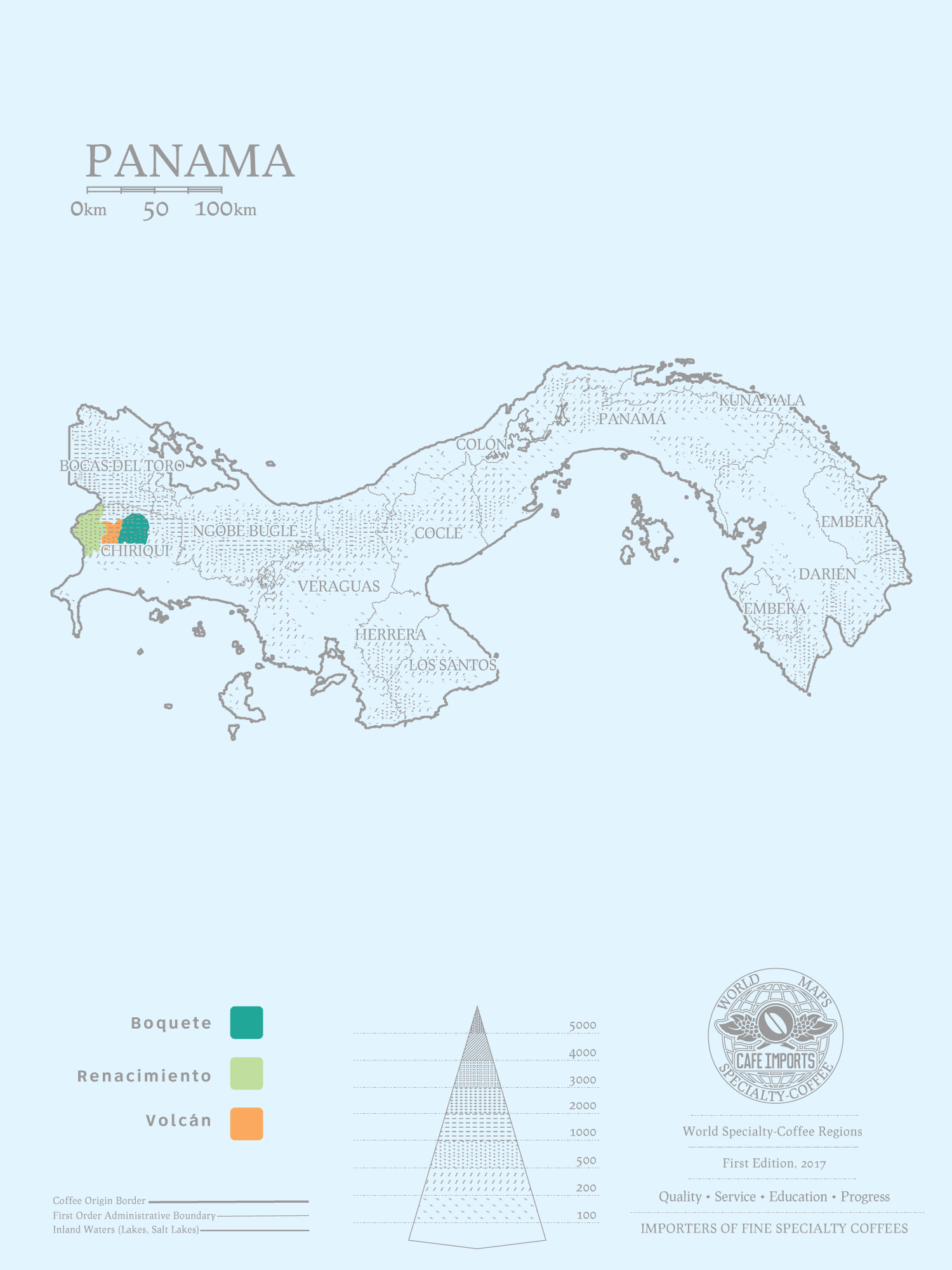
Major producing regions include Boquete, Volcán, Santa Clara, and Candelaria, with Boquete being the highest in elevation and leading in both yield and quality. Volcán is noted for its gentle, balanced flavors.
4. Costa Rica (Flavor Profile: Excellent balance of nuts, caramel, and floral notes)
As one of the earliest Central American countries to cultivate coffee, Costa Rica began exporting to Europe as early as 1820 and received positive acclaim. The government has long supported the coffee industry and legislated that only Arabica may be grown, contributing to its high-quality image.
Costa Rica primarily uses washed processing, but honey processing is more famous—by retaining mucilage during fermentation, it imparts a honey-like sweetness. Depending on the degree of mucilage retention, it is categorized into white honey, yellow honey, red honey, and black honey, with raisin honey being another innovative variation.
Major producing regions such as Tarrazú, the Central Valley, and the Tres Ríos all boast high altitudes and volcanic soils, yielding rich aromas and full-bodied flavors.
5. Honduras (Flavor Profile: Balanced sweet and acidic notes, with body and aroma)
Though a late starter in the coffee industry, Honduras has gradually emerged under the cooperation of the government and Japan’s specialty coffee sector. Its production is dominated by small farms, with about 60% of output coming from farms smaller than 3.5 hectares.
High-quality coffee is mostly processed via washed methods, and the recently popular wine barrel-fermented washed process—such as Sherry coffee beans—uses low-temperature fermentation in whiskey sherry barrels to impart rich sweetness and complex layers.

Major regions include Montecillos, Copán, and Agalta, each with its own characteristics, while the recently popular Sherry coffee comes from the Marcala region.
6. Jamaican Blue Mountain (Flavor Profile: Balanced sweet, sour, and bitter notes, rich and mellow)
Jamaican Blue Mountain coffee is renowned for its strict growing environment and washed processing method. It is grown in the Blue Mountains at 25°N latitude, with fertile volcanic soil and a stable microclimate. In recent years, a natural version has also been introduced, bringing new variations to the traditional flavor.
Blue Mountain coffee is divided into several grades, with Blue Mountain No. 1 being the highest quality, featuring very low defect rates and uniformly sized beans.
7. Guatemala (Flavor Profile: Rich fruity aromas, well-balanced sweetness and acidity)
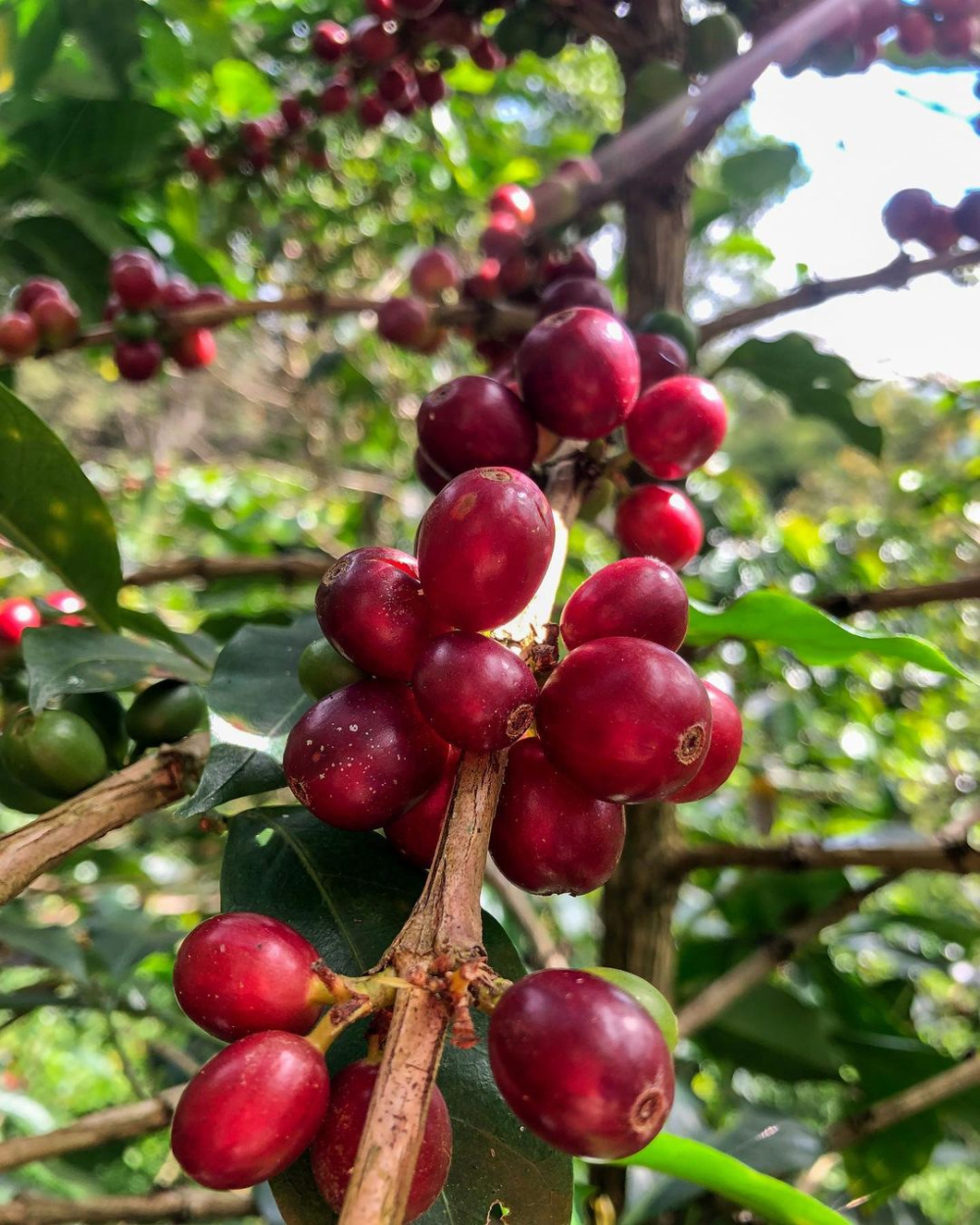
Guatemala’s diverse microclimates, volcanoes, and highlands contribute to its richly layered and fruity coffee flavors. Main varieties include Bourbon, Typica, Caturra, and Catuaí, with washed processing being the primary method and natural as a secondary option.
Production regions are divided into volcanic and non-volcanic areas, with Antigua, Acatenango Valley, and Huehuetenango Plateau being particularly noted for their distinctive flavors.

The above content is compiled by CoffeeHunters, a coffee news website.


