








Introduction:Want to understand how Geisha coffee evolved from a wild Ethiopian variety into one of the world’s top specialty coffees? This article takes you through the discovery of Geisha, explores the story behind its meteoric rise to fame at the BOP competition, and delves into how the high-altitude Boquete growing region contributes to its unique flavors. Additionally, we provide detailed pour over brewing recommendations for the Jade Red Label Natural Geisha, including V60 filter, water temperature, brew ratio, and a three-stage pouring technique—allowing you to easily brew a clean and vibrant cup of Geisha coffee at home.
How did Geisha coffee, once a wild variety deep in Ethiopia’s mountains, rise to become the pinnacle of specialty coffee? This journey is not just the story of a variety’s discovery but also a revolution in the way we experience coffee flavors. From its initial collection in the Kaffa forests in 1931 to its stunning victory at the BOP (Best of Panama) competition in 2004, Geisha captivated global coffee judges and consumers with its distinctive floral and citrus notes. The Peterson family of Hacienda La Esmeralda, through meticulous cultivation and processing, transformed this variety—originally labeled T2722—into the dream coffee it is today for coffee enthusiasts around the world.

Geisha was first discovered in 1931 in Ethiopia’s southern Kaffa region, where researchers collected seeds from wild forests, and the variety was named after its proximity to Geisha Mountain. Subsequently, Geisha was sent to countries such as Kenya, Uganda, and Tanzania for research and trial planting. By 1953, the seeds had been introduced to CATIE, the Tropical Agricultural Research and Higher Education Center in Costa Rica, where it was cataloged as T2722. However, due to its slow growth, susceptibility to disease, and low yield, Geisha remained largely overlooked for decades and was not widely cultivated either in its place of origin or in intermediary regions.
It wasn’t until the 1960s that CATIE distributed T2722 to coffee farmers in Panama, marking Geisha’s official arrival in the country. In the 1990s, Daniel Peterson, owner of Hacienda La Esmeralda, noticed that while many coffee trees on his newly acquired high-altitude farm Jaramillo were affected by leaf rust, the Geisha variety demonstrated relatively strong resistance. This led them to transplant Geisha plants out of mixed varieties and gradually increase their growing altitude to fully realize the variety’s potential. In 2003, during a routine cupping session, Daniel and his sister Rachel discovered that this coffee exhibited an unprecedented clarity and complex aromatic profile, including intense white flowers, citrus, berries, and bergamot—notes that would later define the classic flavor characteristics of Panamanian Geisha.
Shortly thereafter, this previously overlooked variety was named “Geisha” (phonetically translated as “瑰夏” in Chinese), and just two weeks later, it competed in the 2004 BOP competition. To everyone’s amazement, Geisha not only won the championship but also prompted the global coffee community to reevaluate Panama’s coffee potential. Its layered and harmonious flavors—jasmine, peach, blueberry, sugarcane, and citrus—presented a stark contrast to the then-dominant profiles of intense chocolate and nut tones, ushering in a new era of specialty coffee.
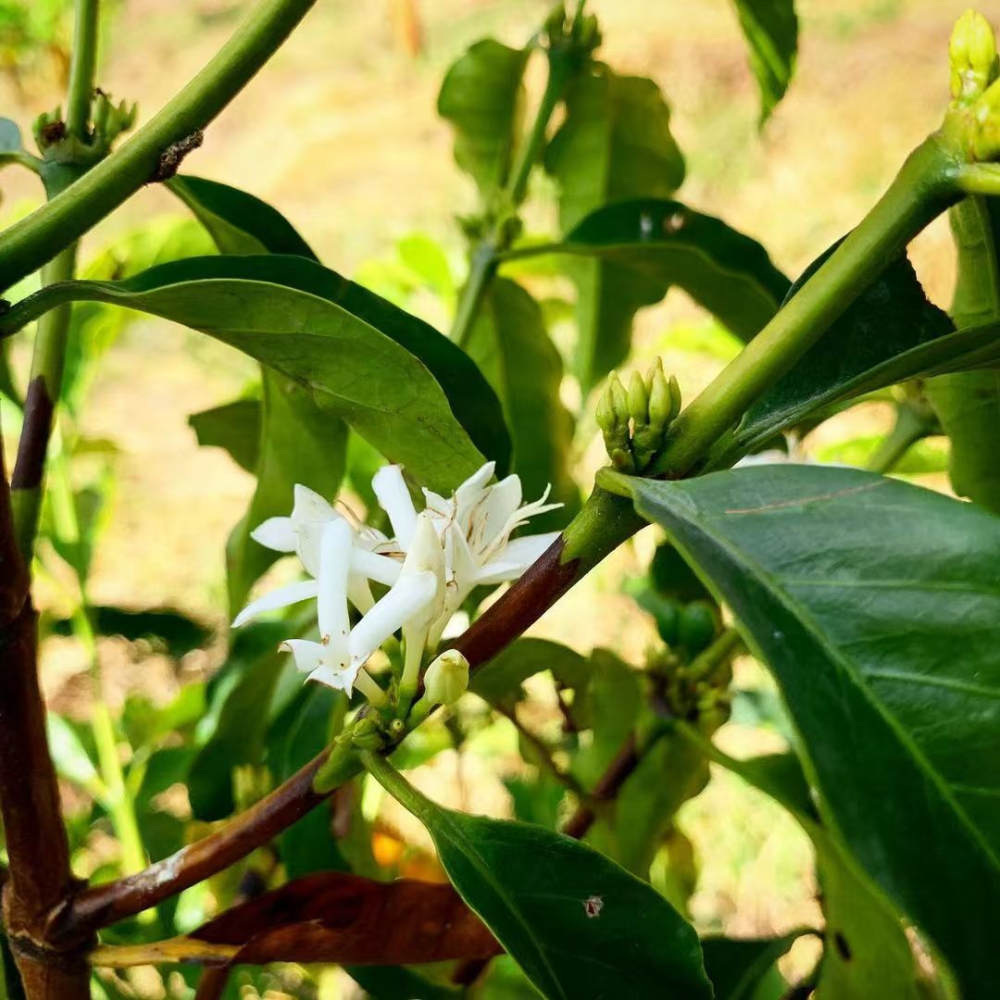
In 2005, the same batch of Geisha won yet another award at the Specialty Coffee Association of America (SCAA) international competition, maintaining its dominance at the top of the specialty coffee world in both 2006 and 2007. Although Geisha is now grown in various regions, including Taiwan and Yunnan, most experts still consider the high-altitude microclimate of Boquete to be one of the best environments for producing classic Geisha flavors.
Panama has three main coffee-growing regions: Boquete, Volcán, and Renacimiento. Among them, Boquete is located in Chiriquí Province, adjacent to the Volcán Barú, with altitudes typically ranging between 1,000 and 2,000 meters. The region’s climate is influenced by both the warm, humid trade winds from the Caribbean Sea and the cool currents of the Atlantic Ocean. Steep mountain terrain, persistent fog, abundant rainfall, and the presence of seven distinct microclimates create the ideal growing conditions for Geisha. Both the renowned Jade Red Label Geisha and the Elida Estate Geisha evaluated by a leading coffee brand originate from this uniquely gifted region.

Geisha is extremely particular about its growing environment—it requires high altitudes, fertile and well-drained soil, and thrives under shaded cultivation to avoid intense direct sunlight. The owners of Hacienda La Esmeralda have pointed out that Geisha is particularly fragile in its early stages of growth and relies on native shade trees and traditional pruning techniques to develop steadily. Moreover, the higher the altitude, the longer the ripening period of the coffee cherries, resulting in more complex and refined flavor accumulation. Currently, Hacienda La Esmeralda divides its Geisha plantations into three core blocks: Cañas Verdes, Jaramillo, and El Velo, which are further subdivided into multiple micro-blocks to ensure traceability for each batch. Among these, the Jaramillo block, with an average altitude exceeding 1,650 meters, is the source of the Jade Red Label Natural Geisha, known for its pronounced rose floral notes, citrus, berry, and honey-like finish.
So, how can you brew this richly flavored Geisha at home using the pour over method? Below are the commonly recommended V60 pour over parameters used by a well-known coffee brand’s stores, tailored for the Jade Red Label Natural Geisha:
Brewing Equipment:V60 Filter
Water Temperature:91-92°C
Coffee Dose:15 grams
Brew Ratio:1:16 (i.e., total brew water volume of 240 grams)
Grind Size:Similar to fine sugar, recommended to sift through a #20 sieve to achieve about 80% extraction rate
Brewing Steps Are As Follows:
1. Place 15 grams of coffee grounds into the V60 filter, then pour 30 grams of water for a 30-second bloom. Start the timer simultaneously, and pour in a slow circular motion from the center outward to ensure even saturation of the coffee bed.
2. Next, pour 120 grams of water to reach a total of 150 grams. You may slightly increase the water flow at this stage, keeping the stream vertical. This step should take roughly 55 seconds to complete.
3. Finally, when the coffee level drops to about half, pour the remaining 90 grams of water to reach a total of 240 grams. Use a small, gentle circular pour to avoid disturbing the coffee bed excessively. The entire brew process should take approximately 2 minutes and 10 seconds. After brewing, gently swirl the coffee in the server before serving.
This Red Label Geisha, when brewed using the pour over method, often exhibits a bright profile led by jasmine and citrus, accompanied by lively tropical fruit acidity. As the coffee cools, tea-like notes and honey sweetness gradually emerge, resulting in a smooth mouthfeel and a long, lingering finish—making it a classic entry-level choice for experiencing the allure of Geisha’s flavors.
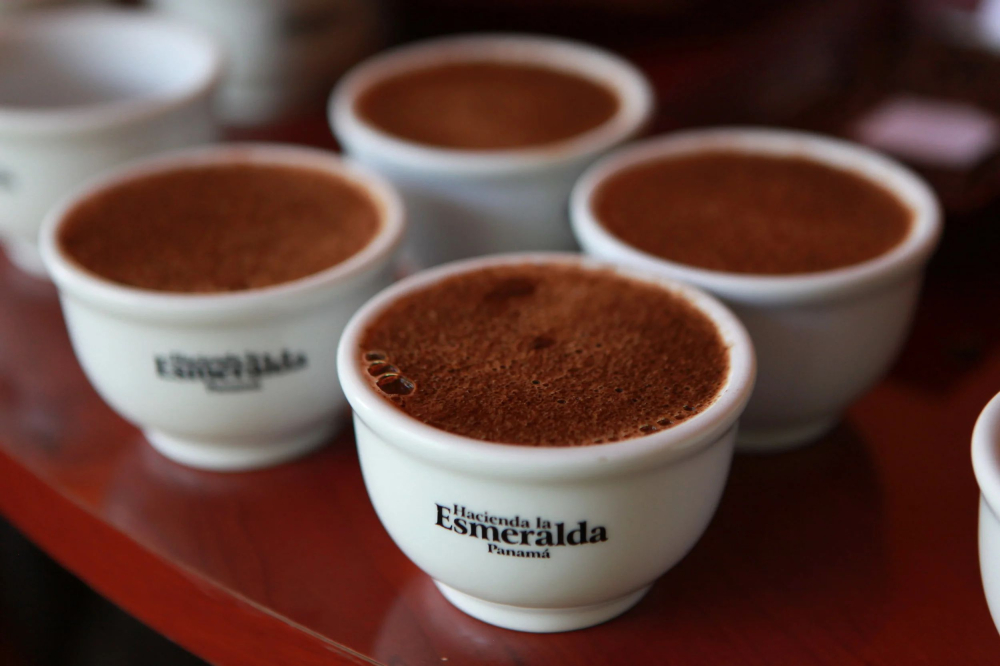
The above content is compiled by CoffeeHunters, a coffee news website.


