








Introduction:Kenyan coffee is renowned for its bright acidity and complex aromas. Among its many attributes, the SL28 and SL34 varieties, along with the AA, AB, and PB grading classifications, are focal points for many pour over enthusiasts. This article delves into the historical origins and flavor profiles of these two classic varieties, explores Kenya’s unique K72 washed processing method, explains in detail the selection criteria and actual differences among various bean grades, and finally provides insights into the characteristics of seven major growing regions along with practical brewing parameters to help you discover your own preferred Kenyan coffee profile.
As a powerhouse of coffee in East Africa, Kenya produces distinctly flavored Arabica beans thanks to its unique geographical environment and refined processing techniques. Located near the equator, Kenya boasts high-altitude volcanic soils and ideal climatic conditions. Its coffee farms are predominantly situated at elevations between 1,600 and 2,100 meters, especially in the mountainous regions around Nairobi, the capital. Due to the large diurnal temperature variation, coffee cherries ripen slowly, allowing the beans to accumulate richer aromatic compounds. This results in the signature bright acidity and layered complexity that define Kenyan coffee.
The coffee industry in Kenya dates back to the late 19th century when British colonists introduced coffee cultivation. However, the foundation of its modern coffee production was laid in the early 20th century with the introduction of Bourbon varieties by the Scottish Mission (St. Austin Mission). After gaining independence in 1964, Kenya established a distinctive coffee auction system that protected the interests of smallholder farmers and promoted quality improvement. Notably, Kenya developed a rigorous grading system and its proprietary K72 washed processing method—both key factors that have helped its coffee carve out a notable place in the global specialty market.

Among the many coffee varieties in Kenya, SL28 and SL34 are undoubtedly the two most celebrated star varieties. SL28 can be traced back to 1931, when researchers at Scott Laboratories discovered a certain coffee tree in Tanganyika (now Tanzania) that exhibited exceptional resistance to drought and disease. After years of selective breeding, it was officially released in 1935. Genetic studies confirm that SL28 belongs to the Bourbon genetic group. Its standout trait is the ability to deliver exceptional acidity and aromatic complexity at moderate altitudes, particularly its unique citrus notes and dark plum flavors, coupled with intense sweetness and balanced mouthfeel—making it a top choice for many coffee aficionados.
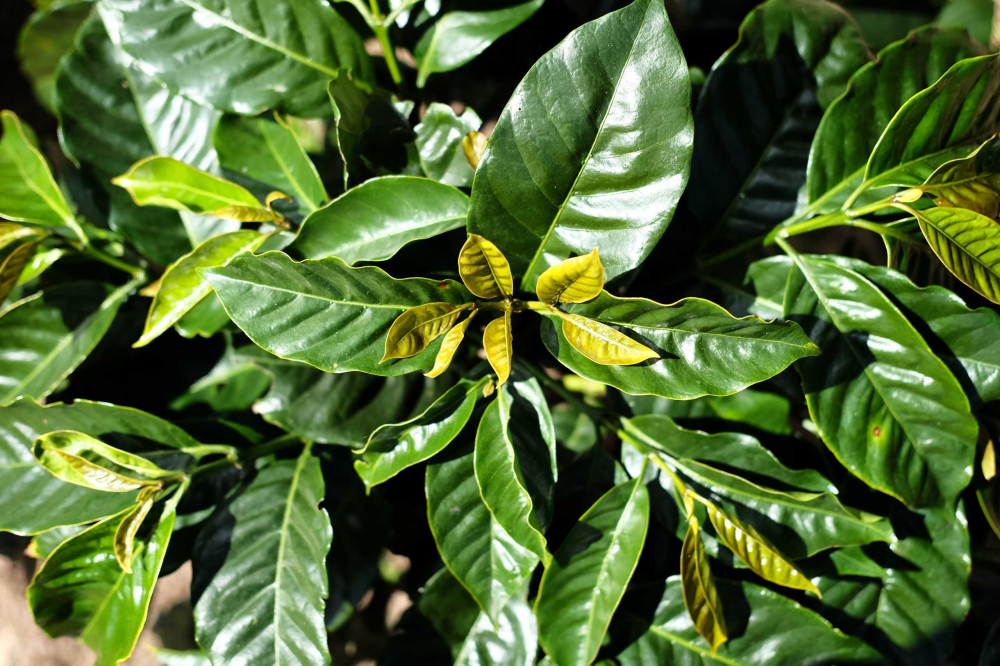
SL34, on the other hand, has a different origin story. Also born at Scott Laboratories in Kenya, it was selected between 1935 and 1939 from the Loresho Estate in the Kabete region. Interestingly, although legend claims it derived from the Bourbon variety of the French Mission, modern genetic testing shows that SL34 is actually closer to the Typica variety—its characteristic copper-colored heart leaf being a telltale sign. This variety thrives at high altitudes, not only exhibiting strong resistance to heavy rainfall but also delivering a bold mouthfeel and vivid citrus acidity, making it a prized gem in many specialty coffee farms.
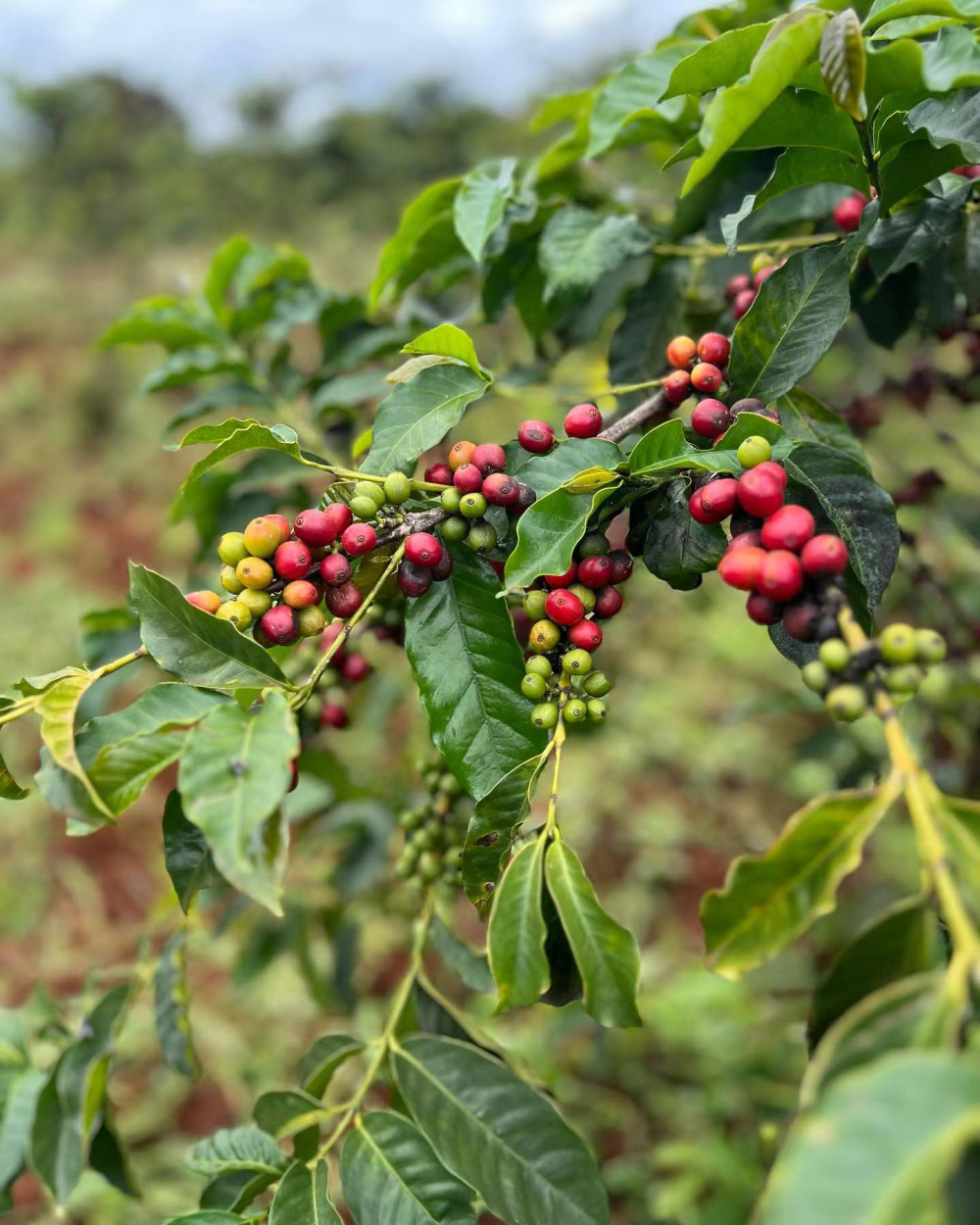
Kenya’s coffee grading system is arguably one of the most stringent in the world, primarily categorizing beans based on size, shape, and hardness. Among the various grades, AA, AB, and PB are the most common and most closely watched. AA-grade beans typically measure between 17 and 18 screen size (approximately 6.7–7.1 mm), often regarded as the crème de la crème of specialty coffee. In particular, those labeled AA TOP are flagship offerings in many coffee shops. However, it’s important to note that bean size does not entirely equate to flavor quality—it’s merely one reference factor in scoring.
AB-grade beans are a blend of beans passing through A (6.80 mm) and B (6.20 mm) screens, generally sized around 15 to 16 mesh (about 6.0–6.4 mm). Though slightly smaller, they often offer unexpectedly good value for money. PB-grade beans are the most distinctive peaberries, accounting for only about 10% of total production. Because each bean has only one fully developed seed, their density is higher, and many coffee lovers particularly appreciate their uniquely intense flavors. Additionally, E-grade refers to large twin beans, while C, T, and TT grades consist of beans with lower size or quality, usually not entering the specialty coffee circulation market.
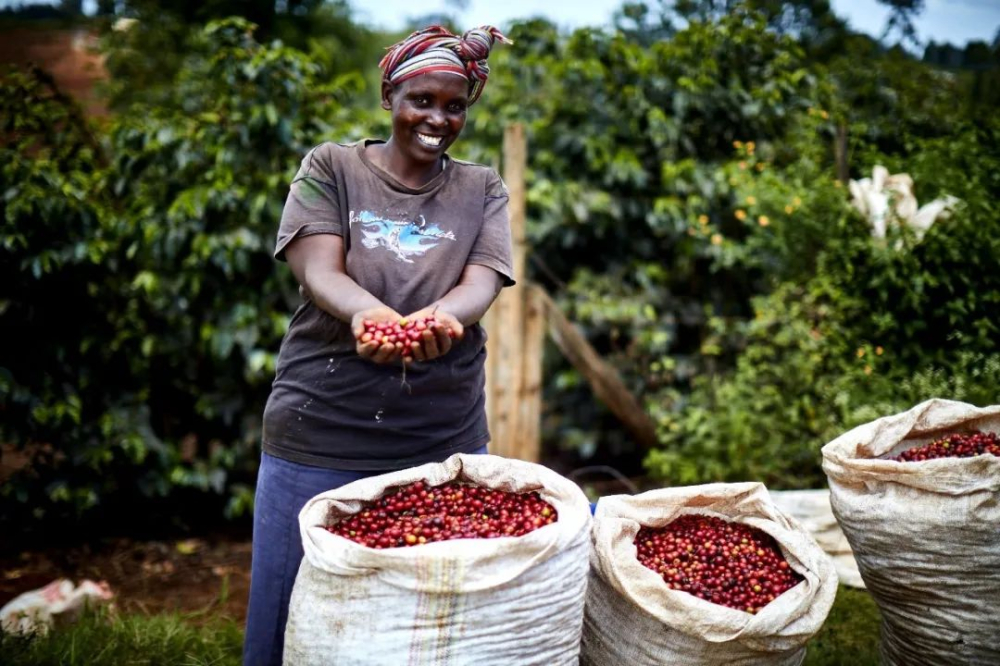
When discussing Kenyan coffee, one cannot overlook its unique K72 washed processing method. Widely regarded as the key to the deliciousness of Kenyan coffee, this method centers around prolonged multiple fermentation and washing stages. Specifically, harvested coffee cherries first undergo water-based density sorting to select only the densest, ripest fruits. After pulp removal, the beans undergo an initial 24-hour fermentation to remove about 80–90% of the mucilage, followed by thorough rinsing with clean water. This process is repeated three times, with each 24-hour fermentation totaling 72 hours—hence the name K72. This method fully develops the coffee’s sweetness, acidity, and complex flavors, particularly its bright fruity acidity and deep aromatic layers, which are hard to match with other processing methods.
Kenya boasts seven renowned coffee-growing regions, each with its own distinct flavor characteristics. The Kirinyaga region, located on the slopes of Mount Kenya, is famed for its intense flavors and rich layers, ranking alongside Nyeri as one of Kenya’s top two premium regions. Nyeri’s coffee is known for its bold blackberry-like acidity and floral-fruit aromas. With an elevation ranging from 1,200 to 2,300 meters, it offers an ideal environment for varieties such as SL-28 and SL-34. The Embu region is celebrated for its balanced flavors. While its acidity may not be as pronounced as Nyeri’s, its overall profile is notably harmonious. Other regions, such as Murang’a and Kiambu, each have their own charm. The former is known for its vanilla and floral-fruity aromatics, while the latter, due to its higher elevation, occasionally faces issues with dieback disease but still manages to produce high-quality coffee beans.
For home brewers looking to prepare Kenyan coffee, a medium-light roast is recommended to highlight its bright acidity and complex flavors. Taking AA-grade beans of the SL28 and SL34 varieties as an example, the optimal roast level should be controlled just before the surface of the beans begins to show oil sheen. For pour over brewing, a V60 dripper is recommended, with water temperature around 90°C, a brew ratio of 1:15, and a grind size of medium-fine (approximately EK43s setting 10). Employ a pulse pouring technique: start with a 30-second bloom using 30 grams of water, then pour in a slow circular motion until reaching 125 grams for the first pour. After the water level drops, continue pouring to 225 grams to complete extraction, keeping the total brew time around 2 minutes. This approach fully showcases the signature bright fruit acidity and aromatic layers of Kenyan coffee.
The above content is compiled by CoffeeHunters, a coffee news website.


