







Introduction:Want to explore the refined flavors of Salvadoran coffee? This article delves into the microclimates of the Santa Ana Volcano region and the characteristics of the Bourbon variety, analyzing the "Chocolate Lover" estate beans—a 50% washed and 50% honey-processed blend. From the growing environment and varietal traits to pour over brewing parameters and flavor profiles, it offers practical brewing inspiration and insights, helping you grasp the nuanced layers of Central American specialty coffee in one go.
Although El Salvador is relatively small in size among Central American countries, it holds a notable position in the global specialty coffee scene. It is not only one of the key birthplaces of improved honey processing techniques, but its coffee is also widely praised for its mild, balanced, and layered flavors. This article focuses on the Bourbon variety grown in the Santa Ana Volcano region, particularly a single-estate bean that combines 50% washed and 50% honey processing. It takes an in-depth look at the growing environment, varietal features, processing methods, and suitable pour over parameters, providing a multi-faceted understanding of this highly regarded coffee.
Coffee cultivation in El Salvador is mainly concentrated in areas above 1,200 meters above sea level, spread across five major producing regions. These areas are often covered with fertile volcanic ash soil. Coupled with high altitudes and cool climates, they contribute to the beans’ good density and complex flavors. Local farmers practice shaded cultivation to reduce the direct impact of sunlight on coffee cherries, which helps stabilize growth and flavor development. Generally speaking, the higher the altitude, the brighter the acidity, and the richer the sweetness and aroma of the coffee.
In terms of varieties, El Salvador primarily grows Arabica, with Bourbon and Pacas being the two main ones. The Bourbon variety originated from a mutation of Typica, with its cherries turning from green to red upon ripening. Like Typica, it is an ancient and high-quality variety. Bourbon is characterized by broad leaves and dense fruiting. Although its yield is relatively low, it boasts outstanding aromas and layers, bright acidity, and an aftertaste often featuring a soft sweetness, with a wine-like finesse that leaves a deep impression.
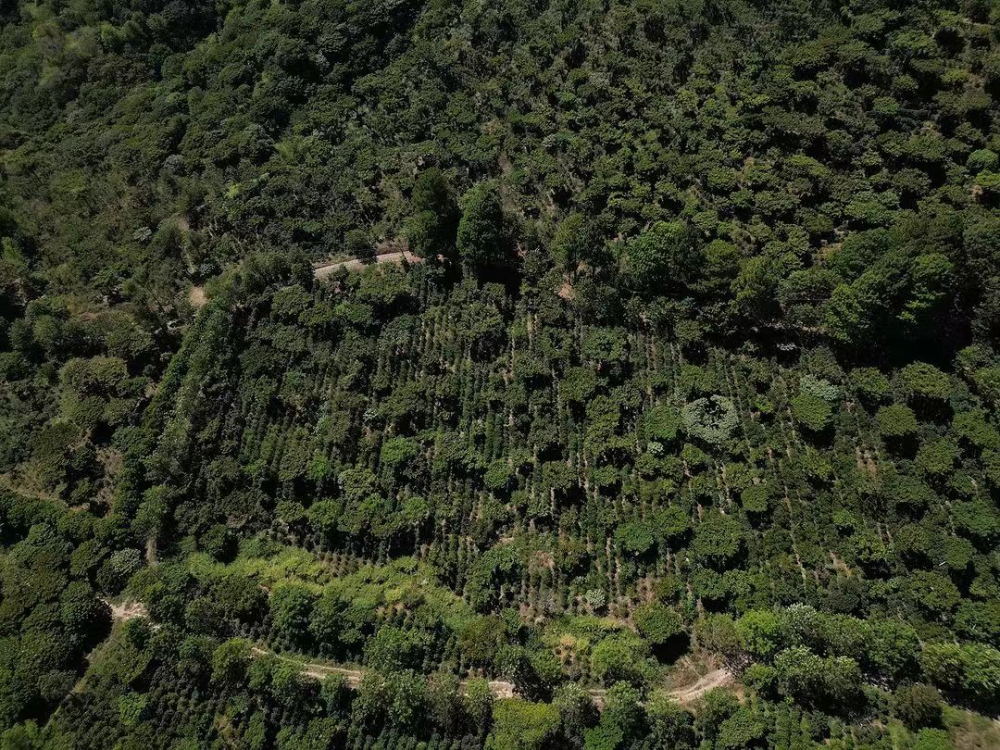
Located in western El Salvador, west of the capital San Salvador, the Santa Ana Volcano region is one of the country’s highest and most representative coffee-growing areas, reaching an altitude of up to 2,381 meters. This volcano is still active and erupted in 2005, impacting local communities. However, thanks to volcanic activity, the surrounding soil is rich in minerals and organic matter, providing excellent conditions for coffee growth. The local coffee planting season generally runs from October each year to March of the following year. With a mild climate, significant day-night temperature variations, and diverse microclimates, it produces coffee with intricate and varied flavors.
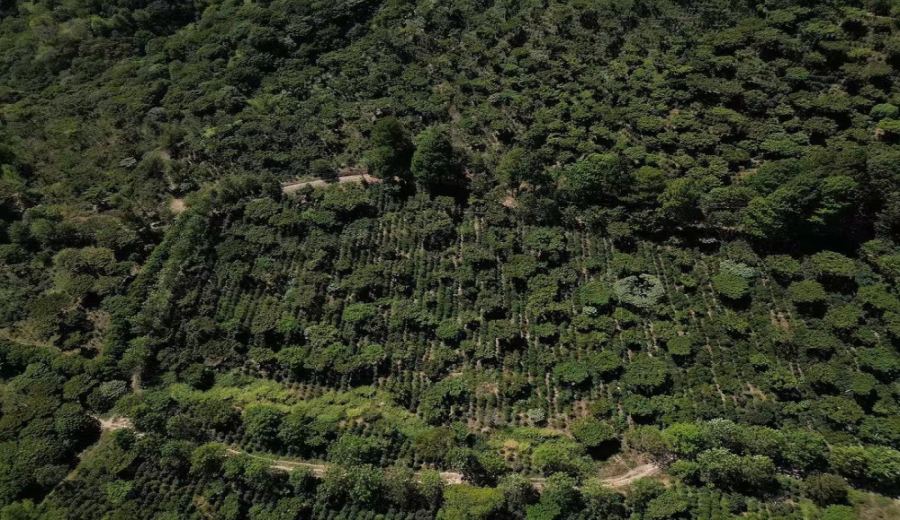
Among them, the "Chocolate Lover Estate (El Guayabo)" is situated on the mountainside of the Santa Ana Volcano, at an altitude of about 1,300 to 1,500 meters. The environment is humid and biodiverse, with well-preserved primary forests and habitats for various wild animals. This estate primarily grows the Bourbon variety and adopts a jungle-style planting method, retaining a large number of native trees for natural shading. This not only aids the healthy growth of coffee trees but also preserves biodiversity. The estate owner emphasizes sustainability and community development, regularly distributing bonuses to support farmers’ livelihoods, demonstrating dual care for the environment and people.
This coffee from the Chocolate Lover Estate is grown at an altitude of about 1,450 meters and is classified as SHB (Strictly High Grown), making it a premium bean produced at extremely high altitudes. Its processing method employs an innovative hybrid approach: half of the beans are honey-processed, and the other half are washed. The interaction between these different processing methods gives the coffee a more three-dimensional flavor profile. This hybrid processing method aims to highlight layers of chocolate, cocoa, and nutty creaminess, hence this particular batch is specially named "Chocolate Lover."
During processing, the honey-processed beans are first sent to a processing facility at an altitude of about 800 meters, where abundant sunlight and strong ultraviolet rays help the coffee cherries dry quickly and effectively release their aromas. Meanwhile, the washed process relies on the region’s abundant water resources to ensure the beans have a clean and bright taste. This combination of the sweetness from honey processing and the clarity from washed processing results in a final coffee that exhibits rich layers and balance in flavor.
According to roasting tests, the green beans of this variety have relatively high density, so it is recommended to use medium heat during roasting and extend the initial drying phase to allow internal moisture to be released evenly. Extending the caramelization time slightly after the first crack can further enhance sweetness and body. Practical roasting reference is as follows: using a Yangjia 800N roaster (capacity of about 300 grams), charge the beans at 180°C with a flame power of 125 and an air vent setting of 3; the turning point is around 1 minute and 39 seconds, and when the roaster temperature drops to 140°C, adjust the air vent to 3.5 and lower the flame power to 100; then, when the beans start to turn yellow and the grassy smell disappears, enter the drying phase, adjusting flame power and air vent settings accordingly until after the first crack, set the air vent to 5, and finally drop the beans at around 194.1°C after about 2 minutes of post-first crack development to preserve optimal sweetness and aroma.
For brewing, it is recommended to use a V60 dripper, with 15 grams of coffee, water temperature controlled at 88–90°C, a 1:15 coffee-to-water ratio, and a grind size of medium-fine (approximately 80% through a Chinese standard No. 20 sieve, similar in coarseness to coarse sugar). Use a pulse pouring technique: start with 30 grams of water for a 30-second bloom, then pour in small circles until reaching 125 grams for the first pour. When the water level drops and the coffee bed begins to show, continue pouring to 225 grams, then stop and wait until the water level in the dripper is about to expose the coffee bed before removing the dripper. The total brew time is about 2 minutes. This setup helps fully showcase the coffee’s dominant notes of nuts, cream, and caramel, while bringing out berry and citrus acidity in the aftertaste, resulting in a balanced and layered cup.
The above content is compiled by CoffeeHunters, a coffee news website.


