








Introduction:Latte coffee is not only the choice of many people when starting their coffee journey, but its beautiful layered visuals are also captivating. What scientific principles make it possible for a latte to display such clear layers? This article will delve into the density relationship between espresso and milk, and from a practical perspective, explore how to control extraction parameters, steam milk, and master the key techniques for achieving stable layering. Whether you’re a coffee beginner or an enthusiast looking to refine your skills, you’ll find useful brewing inspiration here.
Latte coffee is the go-to choice for many coffee lovers just starting out, not only because of its relatively mild flavor, but also due to the impressive visual beauty of its distinct layers. But do you know how these beautiful layers are formed? From the density difference between espresso and milk to the precise technique of steaming milk, each step hides the science behind the latte’s stunning layering.
Looking back at history, the latte actually originates from Italy, where the word "Latte" literally means "milk." Therefore, the literal meaning of latte coffee is "coffee with milk." As early as the 17th century, the practice of mixing coffee with milk had already appeared in Europe, and the term "caffè e latte" did not appear in English literature until 1867. Initially, this coffee was a common breakfast choice for Italians, and it wasn’t until the late 20th century, with the international expansion of brands like Starbucks, that it truly became a globally popular coffee type.

Among the many types of coffee, the latte is especially favored by beginners for its smooth taste and lack of bitterness. Compared to the strong intensity of dark roasts and the bright acidity of light roasts, lattes typically have a lower ratio of coffee to milk, which makes the aroma of the coffee itself more subdued, while the sweetness of the milk can effectively balance the bitterness, making the overall flavor more approachable.
In the specialty coffee scene, some shops use signature blends as the base for lattes to add layers and flavor complexity. For example, some shops use a blend consisting of 70% Honduran Sherry and 30% Ethiopian Natural Red Cherry. The former undergoes low-temperature fermentation in sherry wine barrels, delivering prominent notes of wine, vanilla, and cream; the latter is processed using the traditional natural method, preserving the natural sugars in the fruit pulp and imparting bright berry acidity and fruity aromas. Such a blend allows the latte to remain smooth while showcasing richer layers.
In actual preparation, using the appropriate grind size and extraction parameters is crucial. Taking a typical commercial semi-automatic coffee machine as an example, it is recommended to use a medium-fine grind, with the grind size parameter set around 1.9. Use 20 grams of coffee powder and extract approximately 35 grams of espresso liquid over a period of 26 to 28 seconds. This extraction ratio ensures a moderate coffee concentration, with clear flavors that are not overly intense, helping to achieve better balance with the milk.
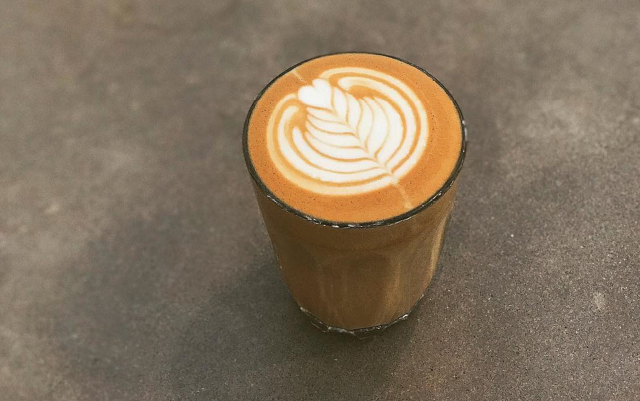
The treatment of milk is equally key to the aesthetic appeal and smooth mouthfeel of latte layering. When using a steam wand to heat and froth the milk, it is recommended to position the steam wand with the tip resting on the edge of the pitcher spout, angled towards the 2 to 3 o’clock direction. Begin with moderate aeration, then quickly create a whirlpool to eliminate larger bubbles, resulting in fine and velvety microfoam. The ideal milk temperature is around 60 to 65°C, at which point lactose partially breaks down, bringing a more natural sweetness, while the milk foam structure becomes more stable, aiding in latte art and layer presentation.
It’s important to note that the milk should be combined with the espresso immediately after frothing, to prevent the foam and milk from separating again if left standing for too long. This not only affects latte art quality but also significantly diminishes the visual layering of the final product.
Additionally, another coffee drink that highlights layering—Dirty coffee—often sparks discussion. The defining feature of a Dirty is the direct pouring of cold milk over hot espresso, utilizing the density difference between the two to create a striking layered effect. Since milk has a slightly higher density than espresso, the coffee floats on top, forming a visual contrast. However, this layering naturally merges over time, so what makes the Dirty most captivating is its “ice-meets-fire” contrast in taste. It’s best enjoyed promptly to experience its optimal flavors.
In summary, the layering in a latte is not just a visual delight—it also embodies the science of density between espresso and milk, as well as precise extraction and milk frothing techniques. Whether you want to recreate a beautiful and delicious latte at home or gain a deeper understanding of the principles behind coffee layering, mastering these basic concepts and techniques will give you greater confidence in appreciating and crafting this classic coffee.
The above content is compiled by CoffeeHunters, a coffee news website.


