








Introduction:Explore the unique charm of Papua New Guinea's Paradise Bird coffee beans, an Ironica variety hailed as the "Little Blue Mountain." With its washed processing and medium-dark roast, it showcases a complex aroma of hazelnuts, toasted bread, and caramel. This article delves into its regional background, grade classification, processing methods, and provides professional pour-over parameters and practical flavor guidance to help coffee enthusiasts better grasp the brewing essentials and tasting layers of this island bean.
Papua New Guinea is located in the southwest Pacific, mostly featuring a tropical rainforest climate, along with fertile volcanic soil and suitable high-altitude conditions, creating optimal circumstances for producing high-quality Arabica coffee. The region primarily grows traditional Typica varieties—seeds first introduced from Jamaica’s Blue Mountain in 1931, which have earned Papua coffee the reputation of being the "Little Blue Mountain." Among them, the washed, medium-dark roasted beans from the Sigri Paradise Bird Estate exhibit captivating notes of nuts, toasted bread, sugarcane, and caramel, with soft acidity and a refreshing, balanced mouthfeel, making it a classic island flavor cherished by many coffee lovers.

If you prefer coffee with a rich, layered body and well-balanced acidity and sweetness, then these beans from the Paradise Bird Estate in Papua New Guinea are an unmissable choice. After undergoing washed processing and a medium-dark roast, they not only emit distinct nutty and cocoa aromas but also carry a gentle citrus acidity and a creamy finish. The overall profile is clean and crisp, perfect for savoring through pour-over brewing.
Papua New Guinea is an island nation in the southwest Pacific, bordering Indonesia, with a mountainous terrain where highlands ranging from 1,300 to 1,800 meters above sea level are especially suited for coffee cultivation. The country was long under British colonial rule until 1931, when the first batch of Typica coffee seeds were introduced from Jamaica, gradually leading to the development of its coffee industry. Today, coffee is the sole cash crop in the country’s highlands, with over two million smallholder farmers relying on coffee cultivation for their livelihoods. Coffee exports account for 40% of the nation’s economy, with production areas mainly concentrated in mountainous regions between 1,500 and 1,900 meters. The humid climate and fertile volcanic soils provide an ideal environment for growing premium Arabica coffee.
Dating back to the 1930s, British colonists introduced Typica coffee from Jamaica to Papua. Because Jamaican Blue Mountain coffee enjoys global renown, the same variety planted in Papua was also given the title of "Little Blue Mountain." Notably, Papua’s production area is located at 6° south latitude, closer to the equator than Jamaica’s Blue Mountain at 18° north latitude. As a result, in addition to the common nutty and balanced flavors of Blue Mountain, Papua coffee also features an added layer of tartness and sweetness from dark fruits, giving it a unique distinguishing character.
In addition to Typica, Papua introduced Bourbon varieties from Kenya in the 1950s and later brought in Mundo Novo and Caturra from Brazil in 1962, gradually diversifying its plantings. Especially after Brazil suffered a severe frost in 1975, Papua New Guinea seized the opportunity to rapidly expand its coffee production scale, becoming one of the important specialty coffee exporting countries in Southeast Asia.
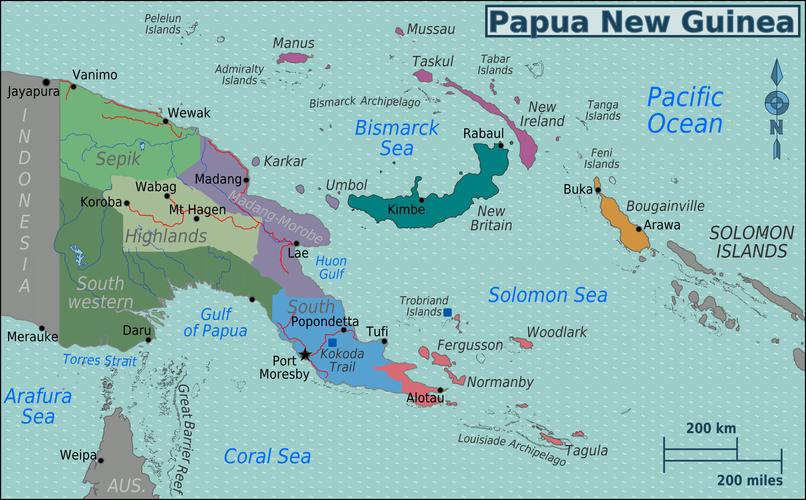
The recommended Paradise Bird coffee beans come from the Sigri Paradise Bird Estate in western Papua New Guinea. Established in 1950, this estate is one of the pioneers of the local coffee industry. The Waghi Valley, where the estate is located, boasts not only rich natural ecology but is also home to Papua’s national bird, the Bird of Paradise. The island-style high-altitude climate here is similar to that of Blue Mountain, and the even closer proximity to the equator allows the coffee to retain Blue Mountain characteristics while also exhibiting more nuanced fruit acidity and sweetness.
These Paradise Bird coffee beans originate from Papua New Guinea, with the production area located at the Sigri Paradise Bird Estate. They are grown at elevations between 1,600 and 1,800 meters, classified as high-altitude specialty-grade Arabica. Their grade is rated AA, a grading system used by Papua as well as East African producing regions such as Kenya and Tanzania. Grading is mainly based on bean size, with AA representing the top tier—beans that are the most plump and consistent in size. Although bean size is not the sole determinant of flavor, in these regions, larger, uniformly ripe beans often lead to more stable and richer extraction performance, as well as better heat conduction and flavor development during roasting.
As a classic Arabica variety, Typica coffee has long been known for its clean, pure flavor profile and balanced mouthfeel. To fully showcase the bright acidity and delicate sweetness of this Paradise Bird coffee, the Paradise Bird Estate uses the washed processing method: after harvesting ripe cherries, they undergo three rounds of 24-hour water fermentation each, followed by thorough washing to remove mucilage and the outer skin, and finally drying. This meticulous process helps highlight the coffee’s bright fruit acidity and subtle aromas, while delivering a long-lasting sweetness and clean aftertaste.
Typica coffee beans generally have lower density. To enhance their nutty and creamy characteristics while preserving their enticing fruity notes, a medium-dark roast is recommended. This roast level can balance the acidity and sweetness layers, transforming the initial citrus acidity into something softer, while gradually revealing a tea-like texture and the rich body of cocoa in the mid-to-late stages. The overall profile is neither overly sharp nor lacking in complexity.
For these Paradise Bird coffee beans, it is recommended to use a Kono filter cone for pour-over brewing to better extract its full-bodied mouthfeel and intense nutty, cocoa aromas. The suggested parameters are as follows: 15 grams of coffee, a 1:15 coffee-to-water ratio, grind size set to approximately 75% passing through a #20 sieve, and water temperature controlled between 88–89°C. During brewing, you can use a staged extraction technique: start with a 30-second bloom using 30 grams of water, then pour in a small circular motion until reaching 125 grams for the first pour. When the water level is about to expose the coffee bed, continue pouring to 225 grams before stopping. Finally, let it drip naturally until the cone is empty, with a total extraction time of around 2 minutes. This method fully highlights the coffee’s layers and full-bodied texture, making every sip rich in detail.
When tasting these Paradise Bird coffee beans, you may notice a hint of unique spicy aroma in the dry fragrance, distinct from the single-toned profile of traditional Blue Mountain. Upon tasting, the sweetness of nuts and toasted bread comes through first, accompanied by subtle fruit acidity, adding vibrancy and dimension to the overall flavor. The aftertaste continues with soft spices and a sweet caramel note, presenting a rich and balanced profile, making it highly suitable for coffee lovers who enjoy full-bodied, well-balanced flavors.
The above content is compiled by CoffeeHunters, a coffee news website.


